Climate impacts on design software — 2050 Materials API integration with Codesign

With this new tool, customers can quickly try different building and material types and receive quick feedback regarding those decisions.
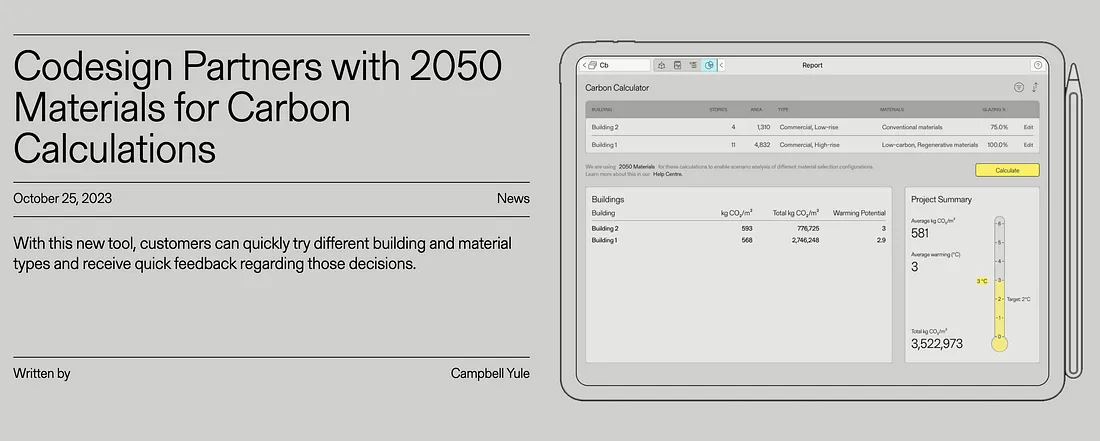
Integration of 2050 Materials’ API within Codesign
As you are undoubtedly aware, the construction industry is responsible for approximately 40% of all global carbon emissions. This is an enormous issue, and there is no single solution.
Codesign is proud to partner with 2050 Materials to bring an early-stage Carbon Calculator to Codesign.
This simple tool takes the building data from Codesign’s building model and combines it with user-selected properties to calculate the carbon impact of the design.
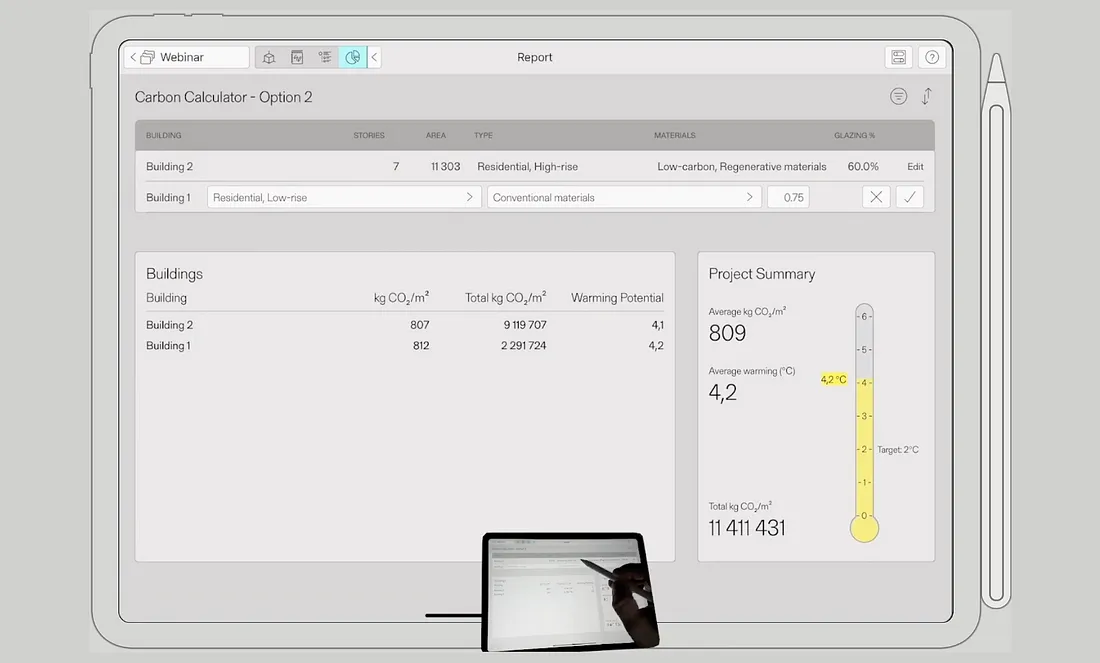
Carbon Calculator on Codesign (see more on here)
With this new tool, Codesign customers can quickly try different building and material types and receive quick feedback regarding those decisions. Combining these calculations with Codesign’s built-in design options allows architects to explore more and assess the outcomes early in the design process, ultimately allowing more informed decisions to be made before the cost of change becomes prohibitive.
Demo of 2050 Materials’ integration within Codesign


Expand your tool’s sustainability capabilities!
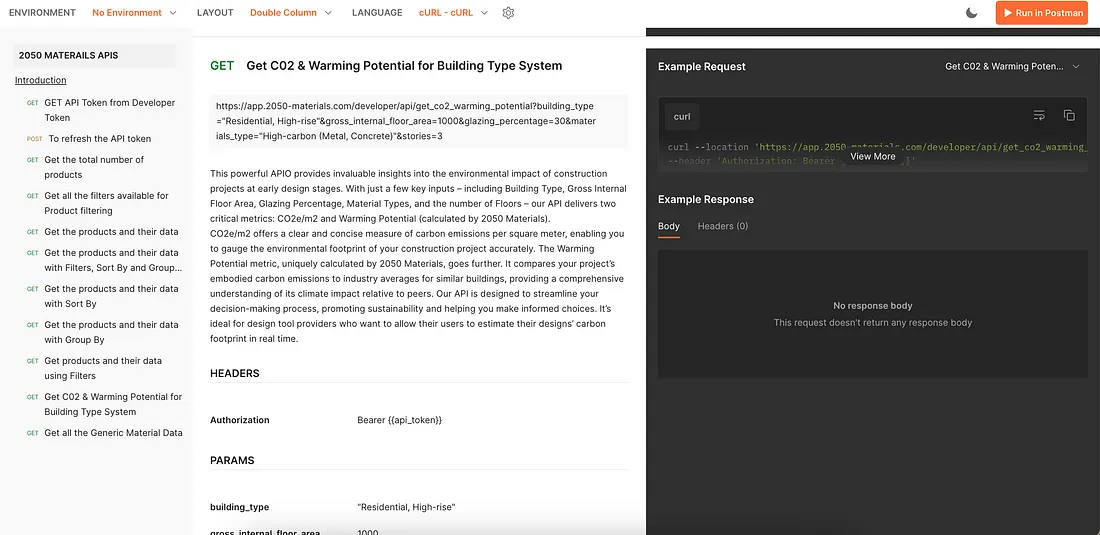
Looking to elevate your Life Cycle Assessment (LCA) tools? Contact us at api@2050-materials.com for access to our comprehensive API. Let your team focus on developing innovative LCA software, while we handle the heavy lifting of data management.
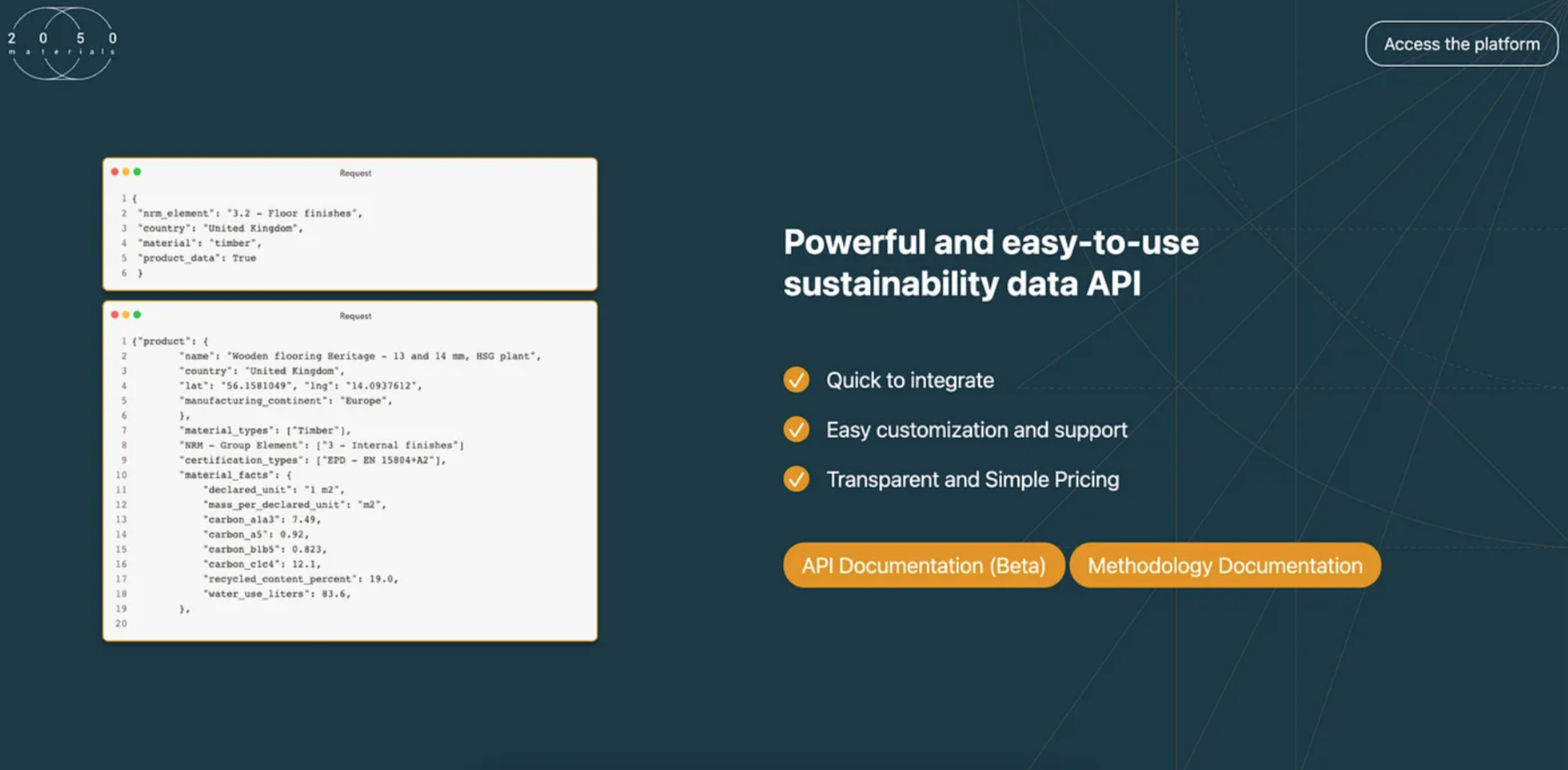
About 2050 Materials
2050 Materials is revolutionizing sustainable construction through data. Our AI-driven algorithms and LCA calculations collect top-notch climate data on building materials. Our API-first model makes integrating this data into your design process a breeze, allowing for real-time environmental impact assessments. Comprised of architects, data scientists, and sustainability experts, we don’t just offer data; we’re long-term partners in building a sustainable future.
Related articles

Turner & Townsend partners with 2050 Materials to strengthen cost & carbon intelligence
Turner & Townsend has partnered with 2050 Materials to integrate verified embodied carbon data directly into its Embodied Carbon Calculator (ECC), enhancing how cost and carbon are assessed together as the dual currencies of construction across project lifecycles.
Read more
How Concular Uses 2050 Materials’ Data Infrastructure to Power CircularLCA
This case study outlines why Concular adopted 2050 Materials’ API, how the integration works inside CircularLCA, and the measurable improvements in completeness and transparency for end users.
Read more
How Implenia Uses 2050 Materials for Early Carbon Decisions
Implenia, Switzerland’s largest construction and real estate company, is setting a new standard for low-carbon building by using the 2050 Materials platform during early design stages. For the first time, embodied carbon benchmarks were applied as a formal evaluation criterion in architecture competitions. By integrating real-time carbon analysis with Swiss standards like KBOB and SIA 2032, Implenia was able to make transparent, cost-effective carbon comparisons across design proposals—well before execution. The result: faster decisions, higher sustainability compliance, and a repeatable method for future low-carbon projects.
Read more