LCA at Herzog & de Meuron: Building an Integrated Digital Workflow
Custom LCA Tools for Seamless Integration
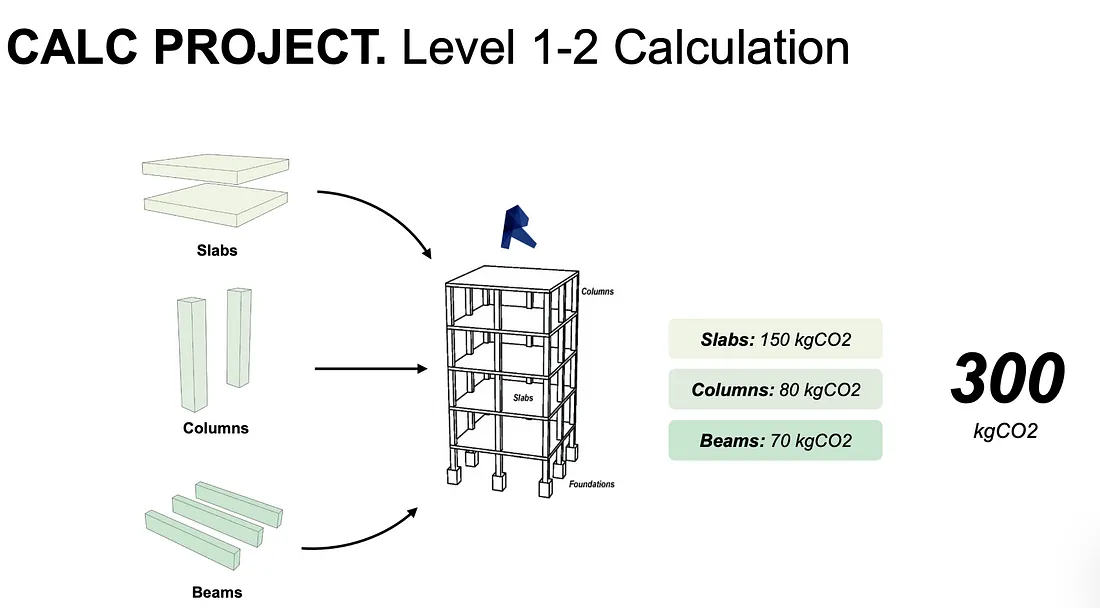
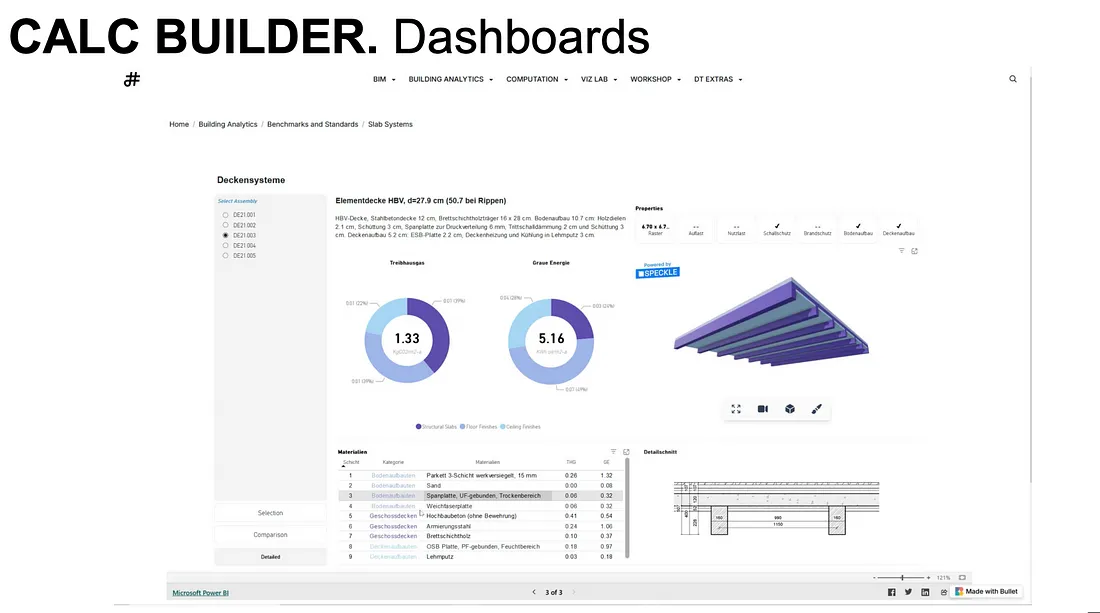
Herzog & De Meuron (HdM) has developed a bespoke Life Cycle Assessment (LCA) system leveraging the 2050 Materials API to tackle the complexities of environmental performance evaluations in architectural design. These tools, integrated directly into their digital workflows, enable continuous and dynamic LCA calculations from concept to completion. The CALC system comprises two modules:
- CALC Builder: A tool for creating reusable assemblies using predefined materials and data libraries.
- CALC Project: A project-specific tool for applying these assemblies, allowing for streamlined calculations across various stages of design.
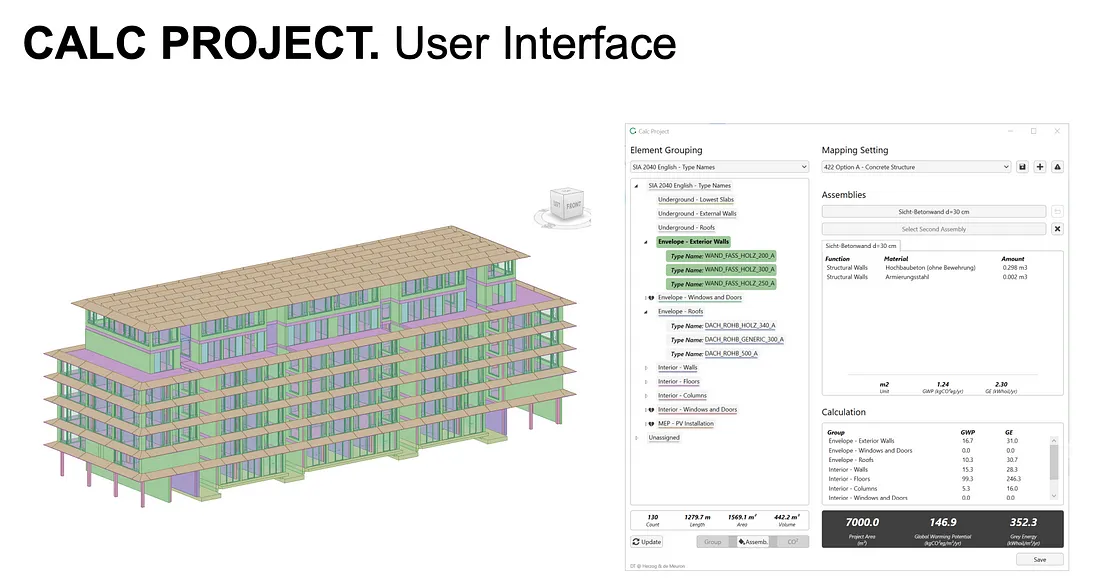
By embedding LCA into their Building Information Modeling (BIM) processes via the Revit platform, HdM ensures environmental assessments are intuitive, flexible, and efficient, enhancing design decisions at every stage.
Technical Implementation: Why an Assembly Builder?
HdM’s approach to LCA focuses on adaptability, driven by the diverse requirements of international projects. This need led to the adoption of an assembly builder model, supported by the 2050 Materials API, which provides verified Environmental Product Declaration (EPD) data and facilitates dynamic material mappings.
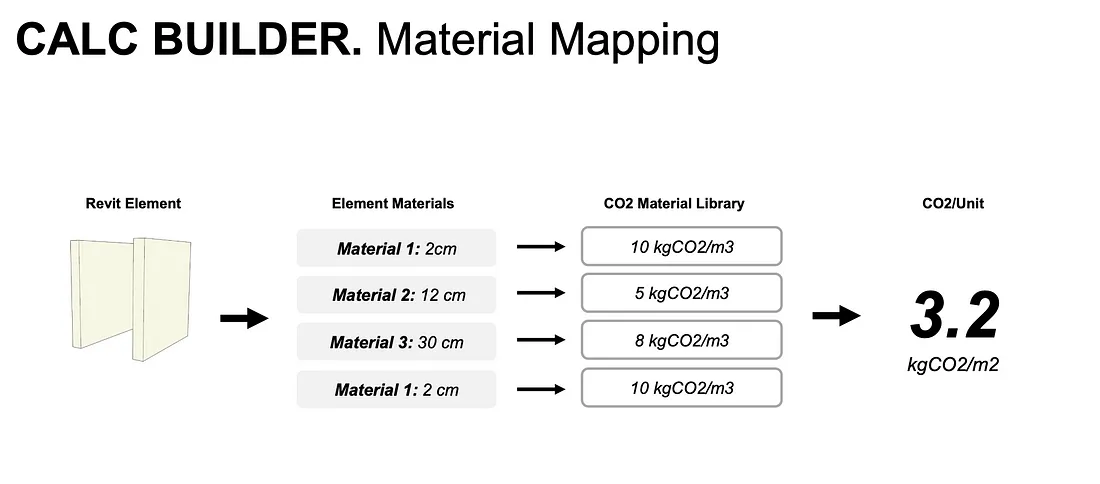
- Data Workflow:
- Material data is sourced and filtered through the API for regional and project-specific requirements.
- Assemblies are pre-calculated using CALC Builder and stored in a centralized repository (Directus), making them accessible across projects.
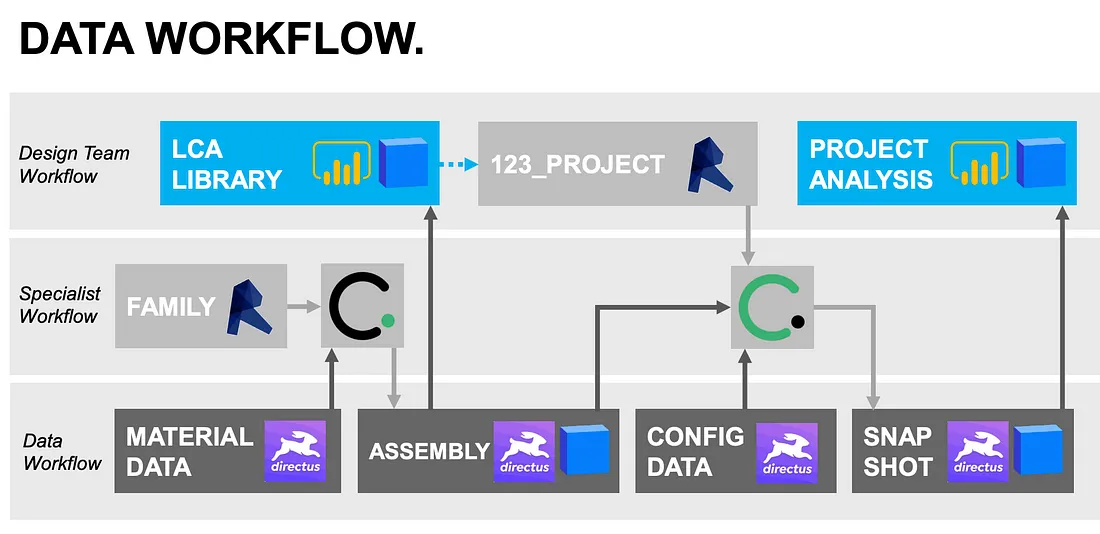
Mapping Models to LCA Inputs:
- BIM elements (walls, slabs, etc.) are grouped and filtered using configuration files to match predefined assemblies.
- These assemblies allow flexibility in scaling from high-level massing models to detailed designs, adapting to the level of available information.
Advantages of an Assembly Approach:
- Efficiency: Pre-calculated assemblies reduce the need for repetitive data entry and calculation.
- Flexibility: Rapid comparisons between design options (e.g., concrete vs. timber structures).
- Standardization: Consistent methodology across diverse modeling standards and international regulations.
Visualization and Analysis:
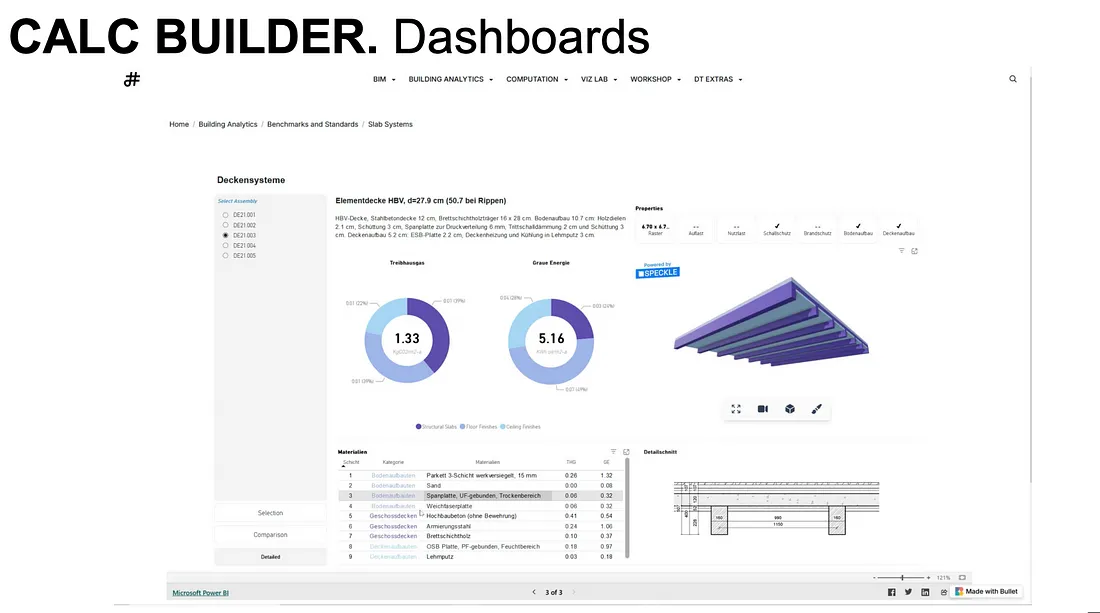
- Results are displayed via PowerBI dashboards, integrating geometric data from Speckle and environmental metrics from Directus. This setup allows teams to analyze and compare project designs in real-time.
Outcomes and Support from 2050 Materials
HdM’s LCA workflow demonstrates how tailored tools can transform sustainability assessments. Key findings include:
- Early-Stage Impact: The assembly approach enables impactful design decisions during initial stages, where the potential to reduce embodied carbon is highest.
- Knowledge Building: Continuous benchmarking and internal data curation foster learning and innovation.
- International Adaptability: By harmonizing diverse BIM standards and regional methodologies, the workflow ensures consistency in LCA calculations globally.
2050 Materials plays a pivotal role by providing a robust API infrastructure and high-quality data, underpinning HdM’s tools. The API ensures access to comprehensive, verified material data, empowering HdM’s design teams to integrate sustainability seamlessly into their workflows.
Summary
Herzog & De Meuron’s custom LCA tools exemplify how architectural firms can address sustainability challenges through innovation and collaboration. By embedding LCA into their design processes, HdM has developed a workflow that is efficient, adaptable, and transparent.
Supported by the 2050 Materials API, these tools not only enhance project-specific outcomes but also contribute to a broader industry shift toward sustainable design practices.
Related articles

Turner & Townsend partners with 2050 Materials to strengthen cost & carbon intelligence
Turner & Townsend has partnered with 2050 Materials to integrate verified embodied carbon data directly into its Embodied Carbon Calculator (ECC), enhancing how cost and carbon are assessed together as the dual currencies of construction across project lifecycles.
Read more
How Concular Uses 2050 Materials’ Data Infrastructure to Power CircularLCA
This case study outlines why Concular adopted 2050 Materials’ API, how the integration works inside CircularLCA, and the measurable improvements in completeness and transparency for end users.
Read more
How Implenia Uses 2050 Materials for Early Carbon Decisions
Implenia, Switzerland’s largest construction and real estate company, is setting a new standard for low-carbon building by using the 2050 Materials platform during early design stages. For the first time, embodied carbon benchmarks were applied as a formal evaluation criterion in architecture competitions. By integrating real-time carbon analysis with Swiss standards like KBOB and SIA 2032, Implenia was able to make transparent, cost-effective carbon comparisons across design proposals—well before execution. The result: faster decisions, higher sustainability compliance, and a repeatable method for future low-carbon projects.
Read more