8 Bricks with Sustainable Properties that will Help Achieve Climate Targets
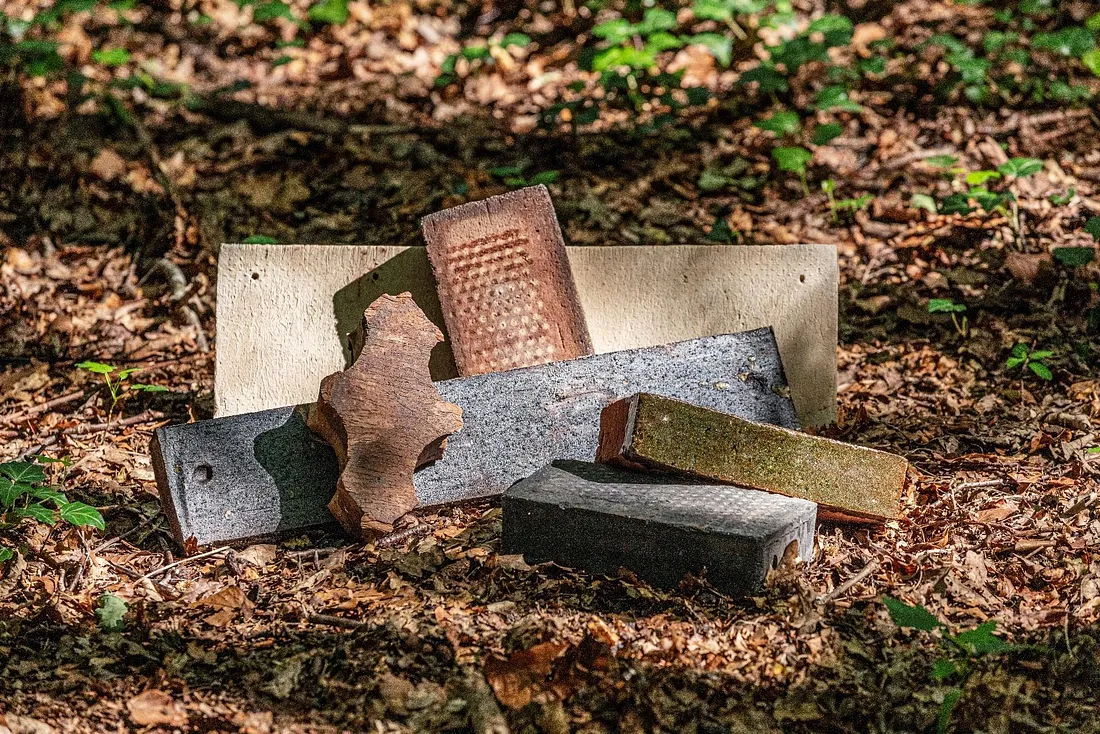
D-bricks on 2050 Materials Platform
In an era where sustainability is not just a trend but a necessity, the construction industry is making strides to minimize its environmental impact. One significant area of innovation is in brick manufacturing, where companies are developing more sustainable alternatives to traditional bricks.
This article and collection dives into the most innovative brick products available today, highlighting their unique features, sustainability performance, advantages, and specific use cases.
1. N10 Negative carbon brick
Product Overview
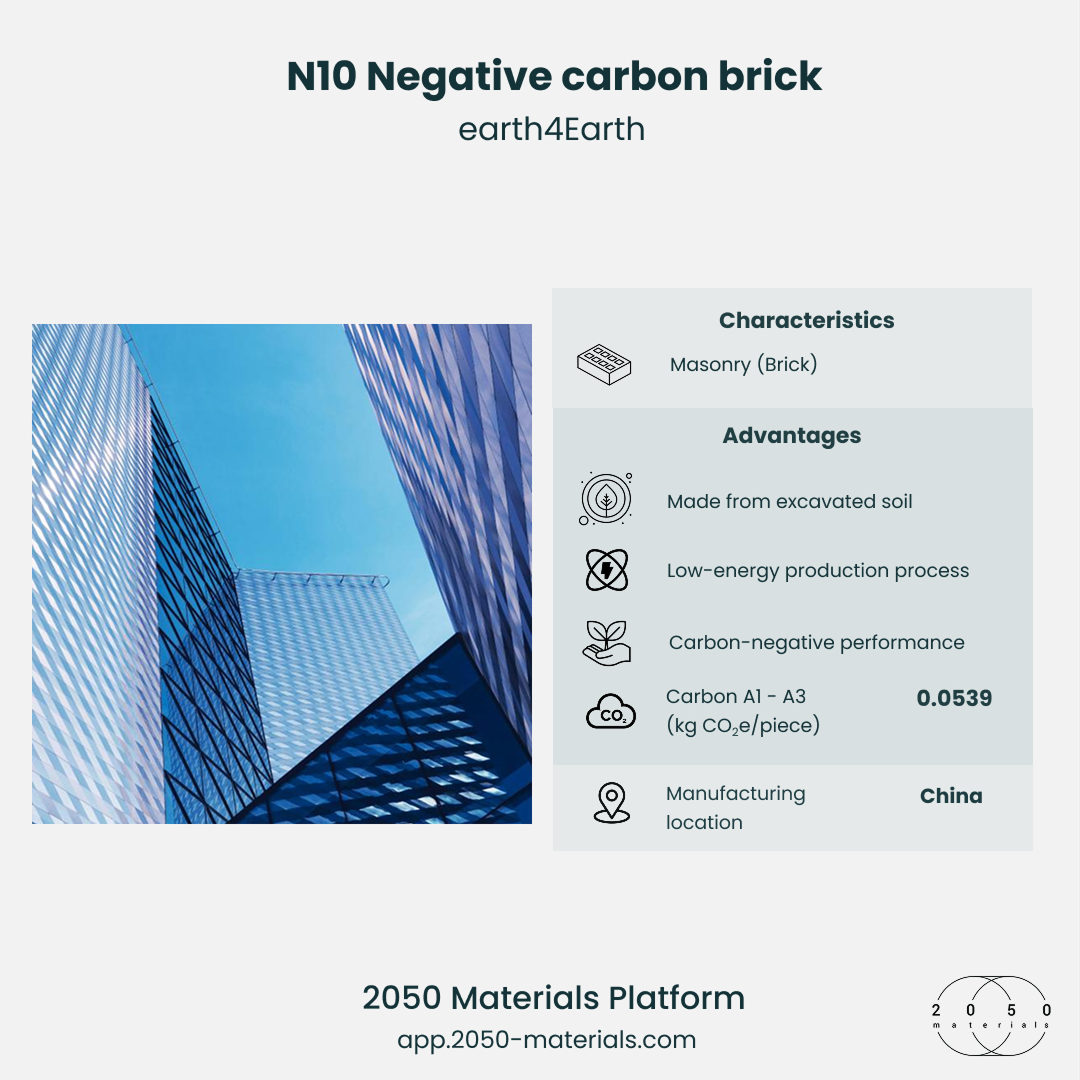
earth4Earth’s N10 carbon negative brick represents a new generation of construction materials designed to actively contribute to decarbonisation. Manufactured using excavated soil combined with a proprietary lime-based binder, these bricks are produced through a decarbonised process that operates at room temperature, avoiding the high-energy requirements of traditional brick production. The N10 variant contains 10% of the binder and is engineered to both perform as a standard construction material and function as a carbon capture solution within the built environment.
Sustainability Performance
The N10 brick achieves a net-negative carbon footprint by permanently storing approximately 0.178 kg of CO₂ per unit. Unlike conventional materials, it continues to absorb CO₂ from the air over time, embedding carbon capture directly into the building fabric. The product has received a third-party verified Environmental Product Declaration (EPD), confirming its carbon negative performance. Its low-energy manufacturing process, which eliminates the need for high-temperature kilns, further reduces embodied carbon compared to traditional alternatives.
Advantages and Use Cases
The N10 carbon negative brick is suitable for projects aiming to integrate material-level carbon reduction strategies into real-world applications. It has already been deployed in a full-scale installation, demonstrating its viability in construction. By combining structural function with ongoing carbon capture, it is well-suited for developments focused on reducing environmental impact while maintaining practical construction requirements.
2. Forterra’s Ecostock Bricks
Product Overview
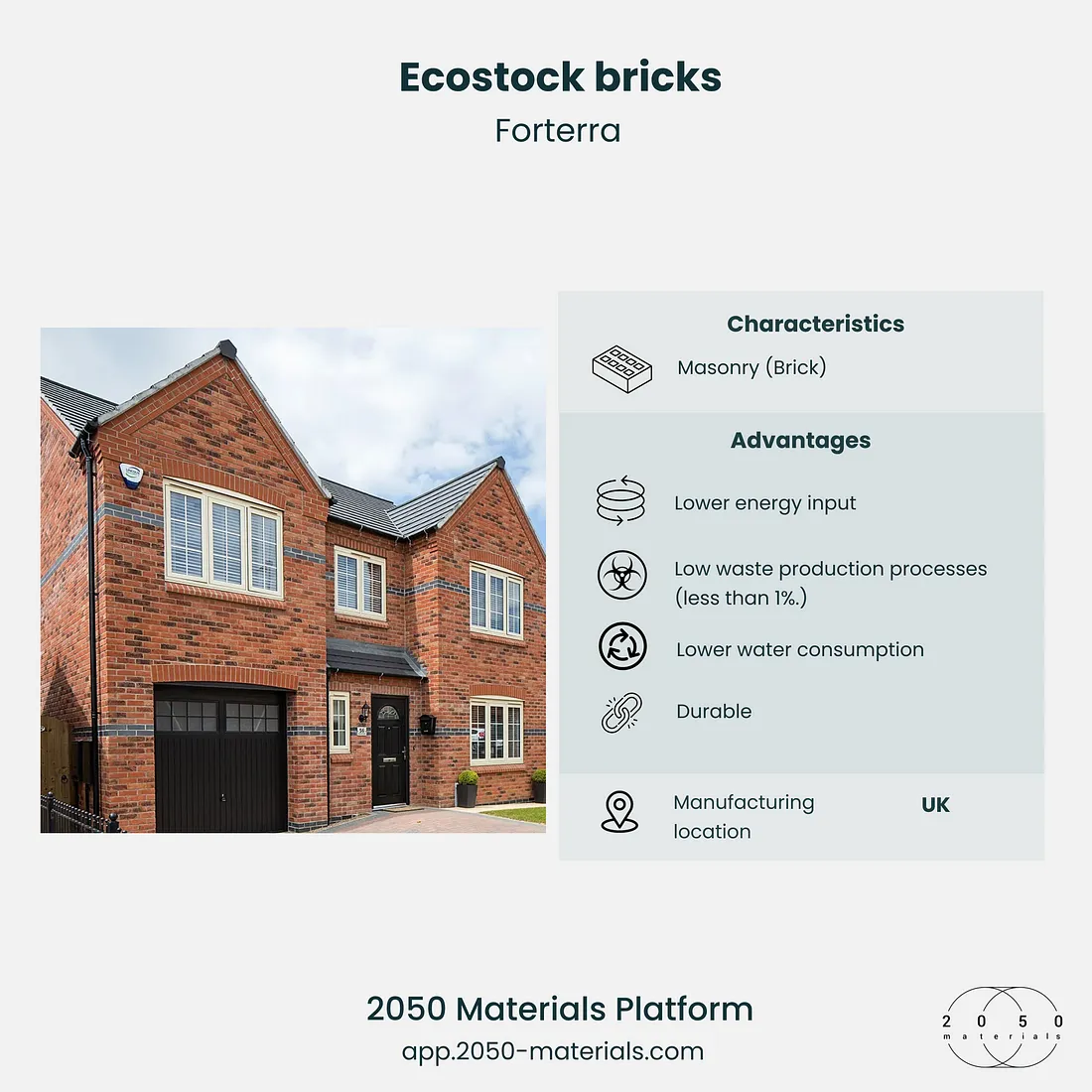
Forterra’s Ecostock range is touted as one of the most interesting stock bricks in the UK. These bricks are designed using the latest technology in sustainability and production efficiency, offering low embodied energy while maintaining high standards in color consistency and dimensional accuracy.
Sustainability Performance
Ecostock bricks feature an embodied carbon of just 171 kgCO2e per tonne, making them a standout in low-carbon construction. They are also responsibly sourced under the BES 6001 certification, ensuring sustainable material usage.
Advantages and Use Cases
The versatility of Ecostock bricks makes them suitable for low carbon residential housing, large-scale commercial buildings, and public sector projects focused on minimizing environmental impact.
3. Ibstock Brick Limited’s Ecoterre
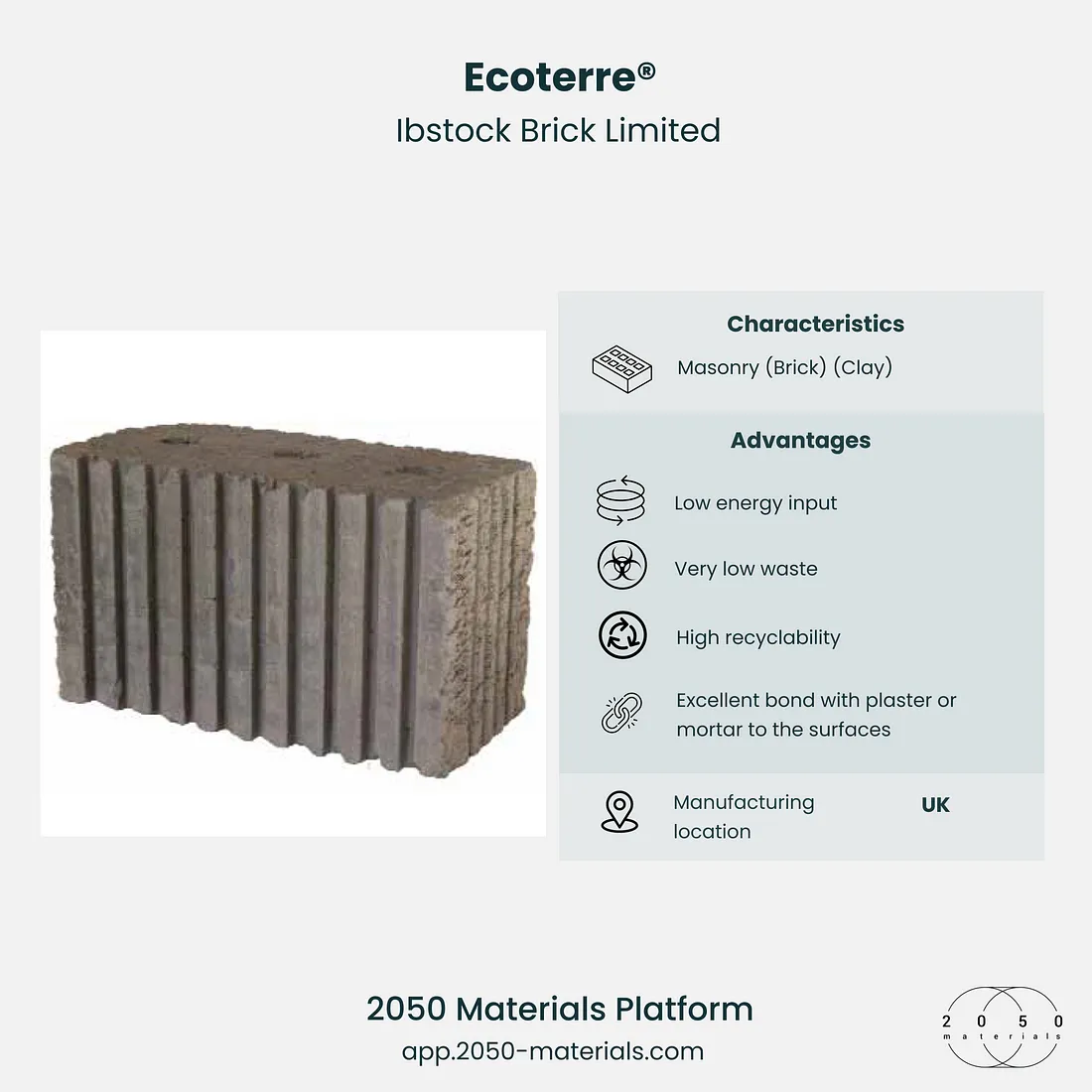
Product Overview
Ecoterre by Ibstock is a range of unfired clay bricks designed for non-load bearing internal applications. These bricks are lauded for their low energy input, minimal waste, and high recyclability.
Sustainability Performance
The unfired nature of Ecoterre bricks significantly reduces energy consumption during production, contributing to their low environmental impact. They also help regulate indoor humidity, improving air quality within buildings.
Advantages and Use Cases
These recyclable bricks are perfect for use in interior walls, particularly in sustainable residential and commercial buildings where indoor air quality and material recyclability are key considerations.
Discover Ecoterre on the 2050 Materials Platform.
4. Biomason’s bioLITH Tiles
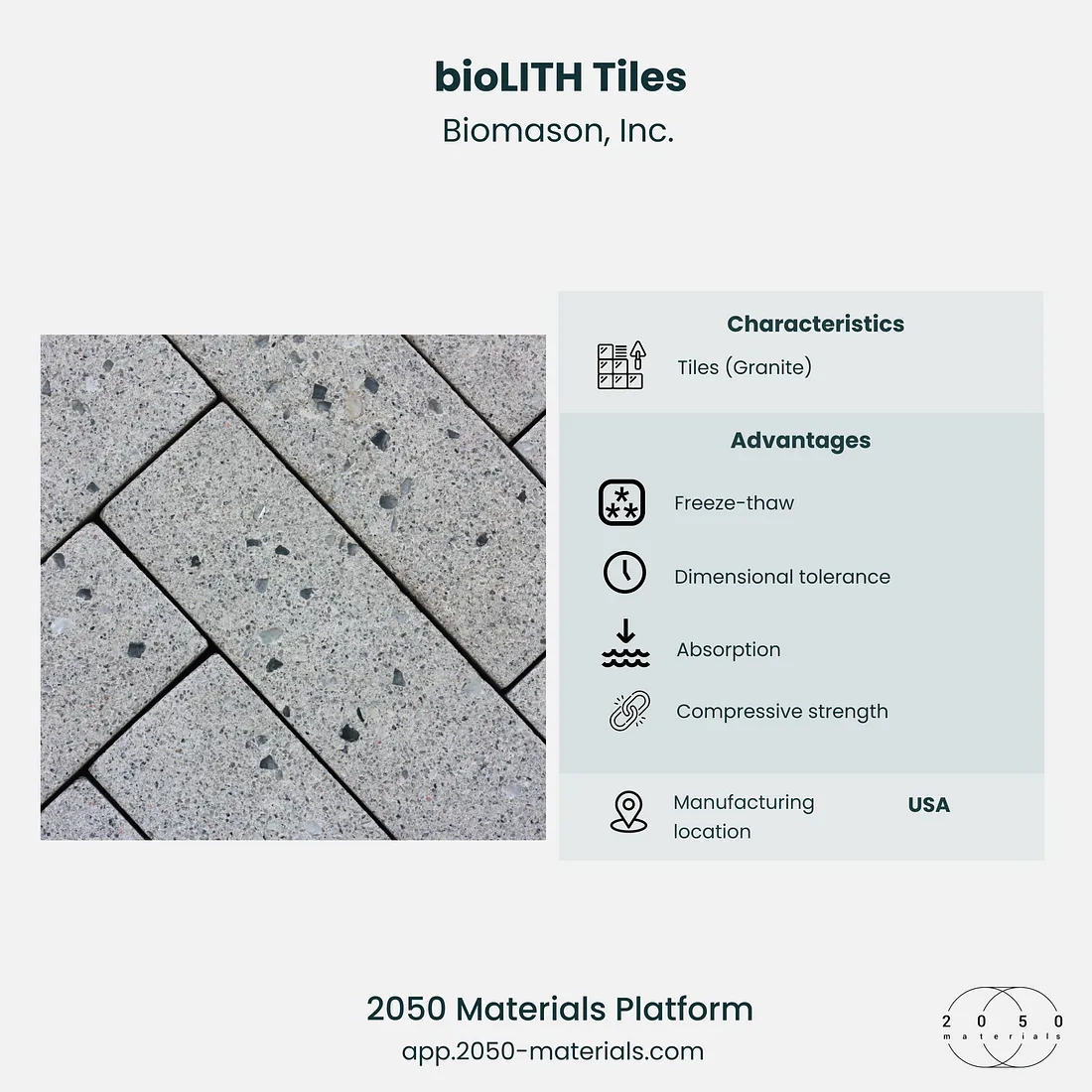
Product Overview
Biomason’s bioLITH is a thin masonry tile that is 100% recyclable and adheres to the Living Building Challenge Criteria, making it a standout product in sustainable construction.
Sustainability Performance
Produced in North Carolina, bioLITH tiles are recyclable and free from harmful chemicals listed on the LBC Red List, making them a safer choice for both the environment and human health.
Advantages and Use Cases
Their thin design makes them ideal for both residential and commercial buildings that prioritize sustainability, particularly in projects aiming for stringent green building certifications.
Discover bioLITH on the 2050 Materials Platform.
5. Kenoteq’s k-Briq
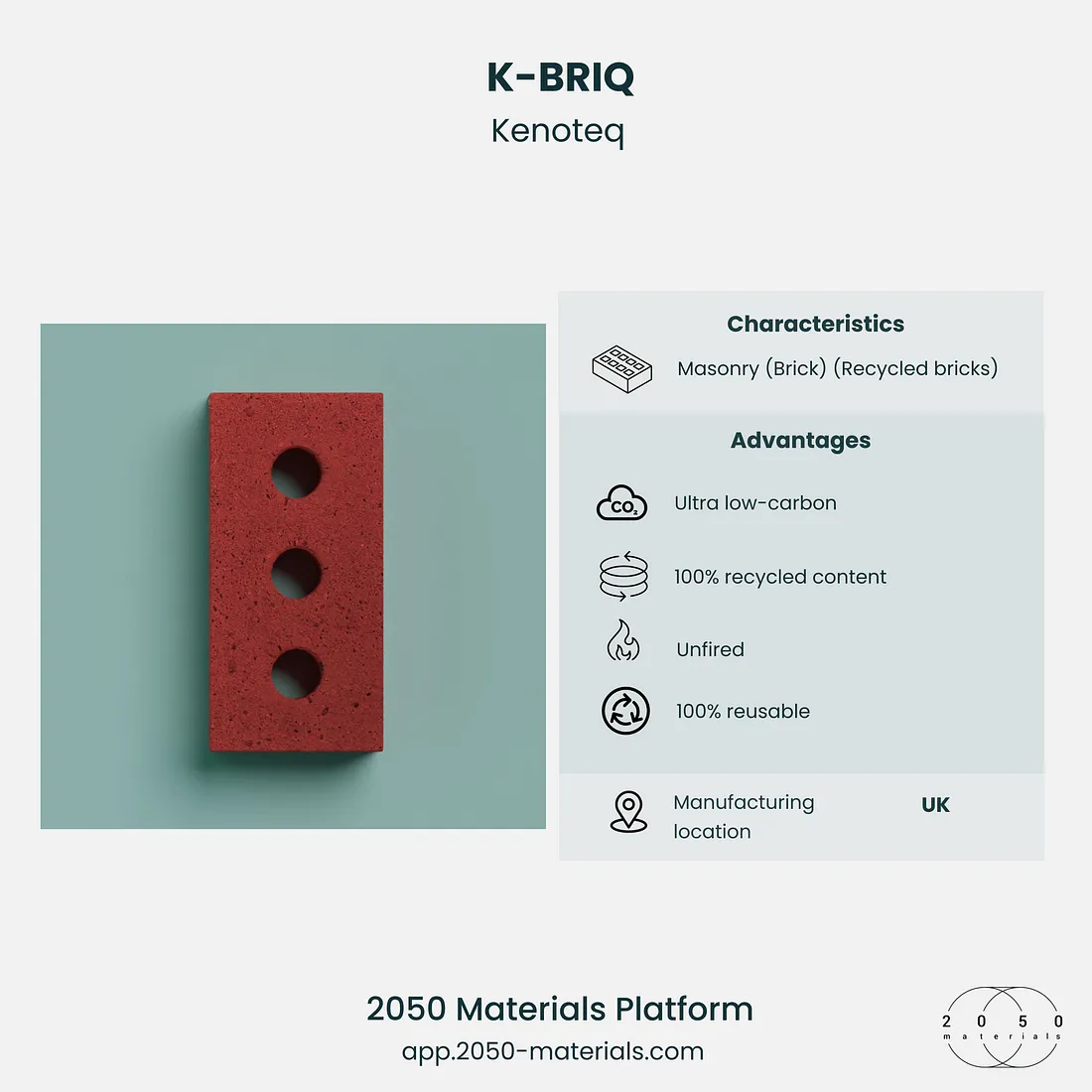
Product Overview
The k-Briq by Kenoteq is an innovative brick made from 90% construction waste. It is designed to generate less than a tenth of the carbon emissions of a standard brick, making it one of the most interesting options available.
Sustainability Performance
k-Briq supports a circular economy by utilizing recycled materials and reducing waste significantly. With its ongoing certification process, k-Briq promises to be a game-changer in reducing the carbon footprint of buildings.
Advantages and Use Cases
k-Briq is well-suited for urban development projects and commercial buildings where environmental credentials are paramount.
Discover k-Briq on the 2050 Materials Platform.
6. FRONT’s WasteBasedBrick
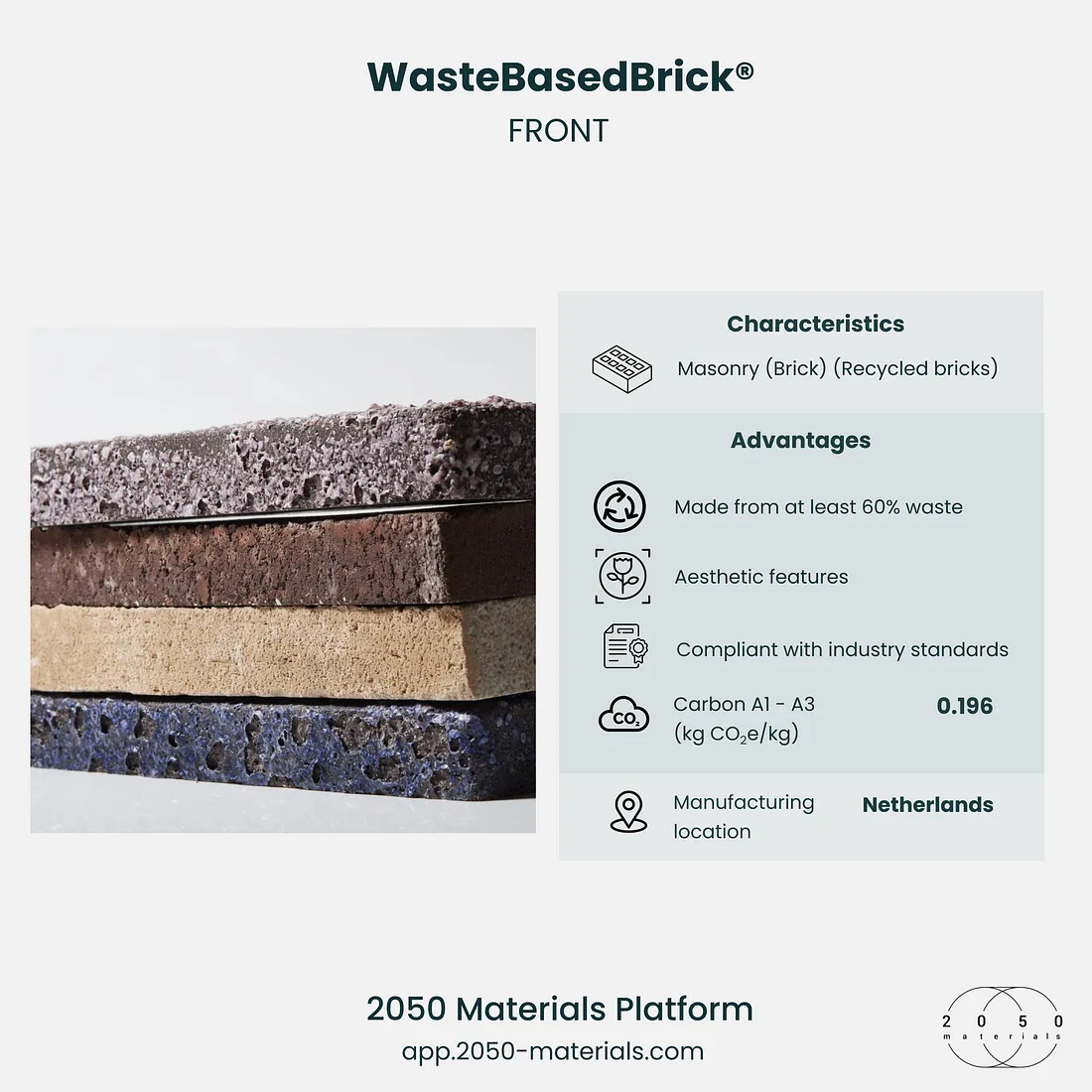
Product Overview
FRONT’s WasteBasedBricks are made from at least 60% waste material, showcasing an innovative approach to recycling in the construction industry.
Sustainability Performance
Fired using ‘forest compensated gas,’ these bricks have a lower embodied carbon compared to traditional bricks, making them an interesting alternative.
Advantages and Use Cases
WasteBasedBricks are ideal for urban construction projects where the reduction of carbon emissions is a priority. Their innovative use of waste materials also makes them suitable for modern architecture projects.
Discover WasteBasedBricks on the 2050 Materials Platform.
7. Petersen Tegl’s D-bricks
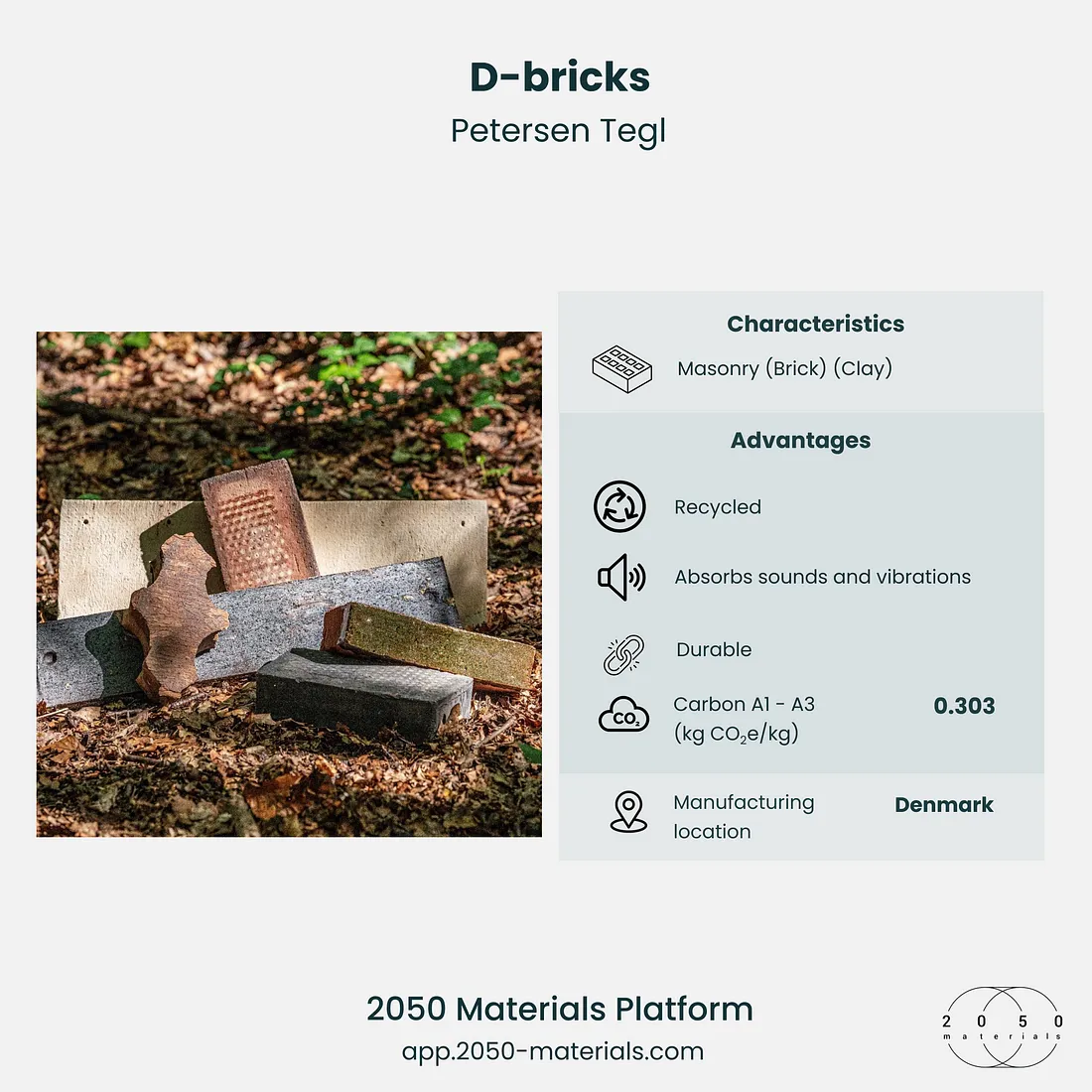
Product Overview
Petersen Tegl’s D-bricks, available in various models such as D33, D37, D71, and D70, are coal-fired bricks that offer a unique aesthetic and high durability, making them a popular choice in architectural projects.
Sustainability Performance
These bricks are manufactured in Denmark and adhere to the ISO 50001 standard, which ensures energy management and efficiency in production. While coal-fired, Petersen Tegl is committed to minimizing environmental impact through efficient processes.
Advantages and Use Cases
D-bricks are known for their distinctive appearance, making them ideal for high-end residential and commercial projects that prioritize both aesthetics and durability. Their robust nature also ensures long-lasting performance in various climatic conditions.
Discover D-bricks on the 2050 Materials Platform.
8. Michelmersh’s Lindfield Yellow Multi
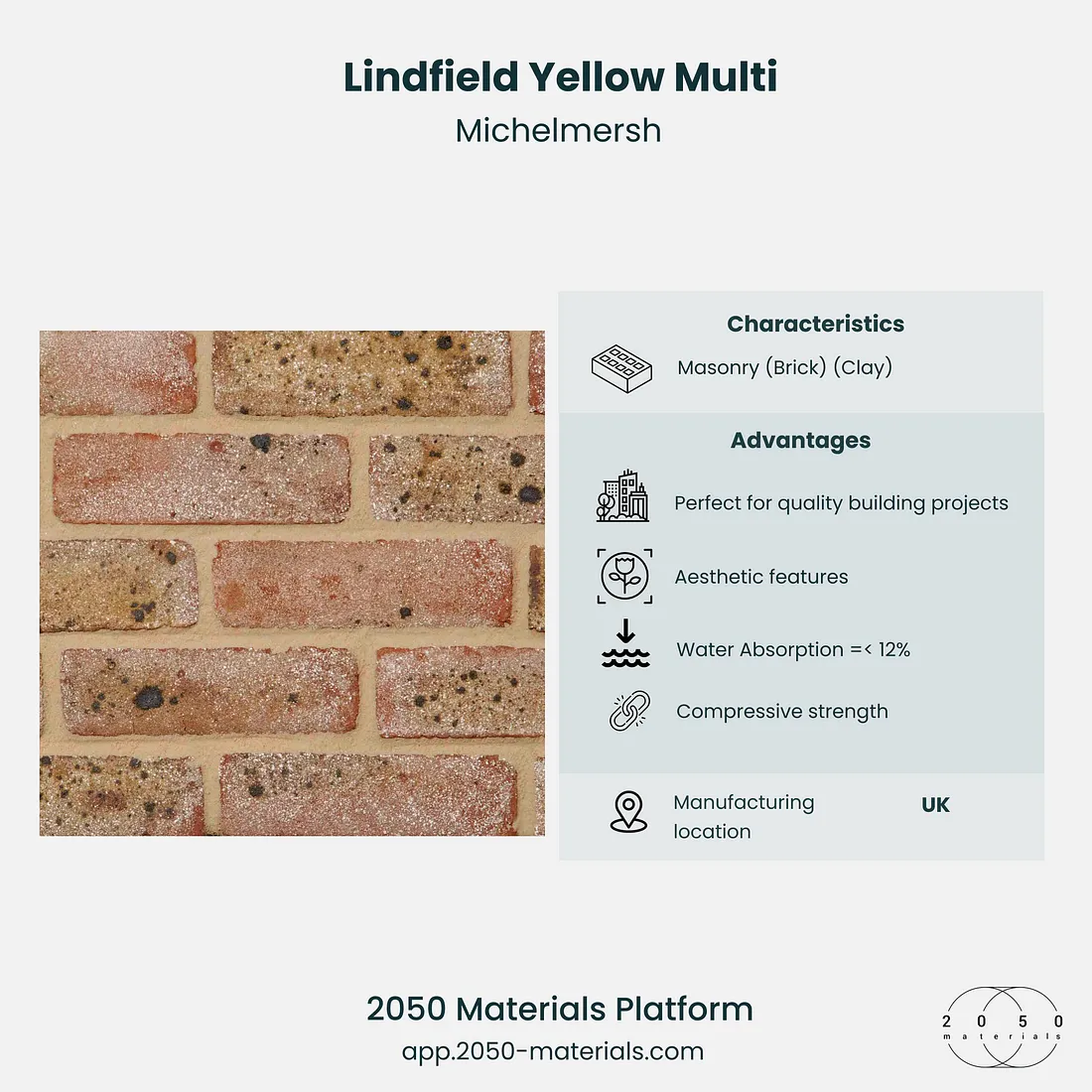
Product Overview
Lindfield Yellow Multi is a popular brick option from Michelmersh, available in several variations, including Anthracite and Danehill Yellow. These bricks are known for their high quality and distinctive coloring, often used in traditional and modern architecture.
Sustainability Performance
These bricks are produced in the UK and meet both ISO 14001 and ISO 50001 standards, ensuring environmental management and energy efficiency during production. Michelmersh’s commitment to sustainability is reflected in their responsible sourcing and manufacturing practices.
Advantages and Use Cases
Lindfield Yellow Multi bricks are versatile, making them suitable for a wide range of applications, from residential homes to commercial buildings. Their aesthetic appeal and compliance with high sustainability standards make them an excellent choice for projects aiming for both visual impact and environmental responsibility.
Discover Lindfield Yellow Multi on the 2050 Materials Platform.
Conclusion: A New Era of Low Carbon Bricks
As the construction industry continues to evolve, the adoption of low carbon materials such as these innovative bricks is crucial. Each product mentioned above not only meets the functional requirements of traditional bricks but also offers significant environmental benefits, from reducing embodied carbon to enhancing recyclability. By choosing these sustainable options, builders and architects can contribute to a greener future while maintaining the aesthetic and structural integrity of their projects.
With this collection of bricks paving the way, the future of construction looks not only strong but also sustainable.
Related articles
Reading Between the EPD Lines
Two EPDs can report almost the same A1 to A3 carbon figure and still deserve very different levels of trust. Here is how to read the fine print.
Read more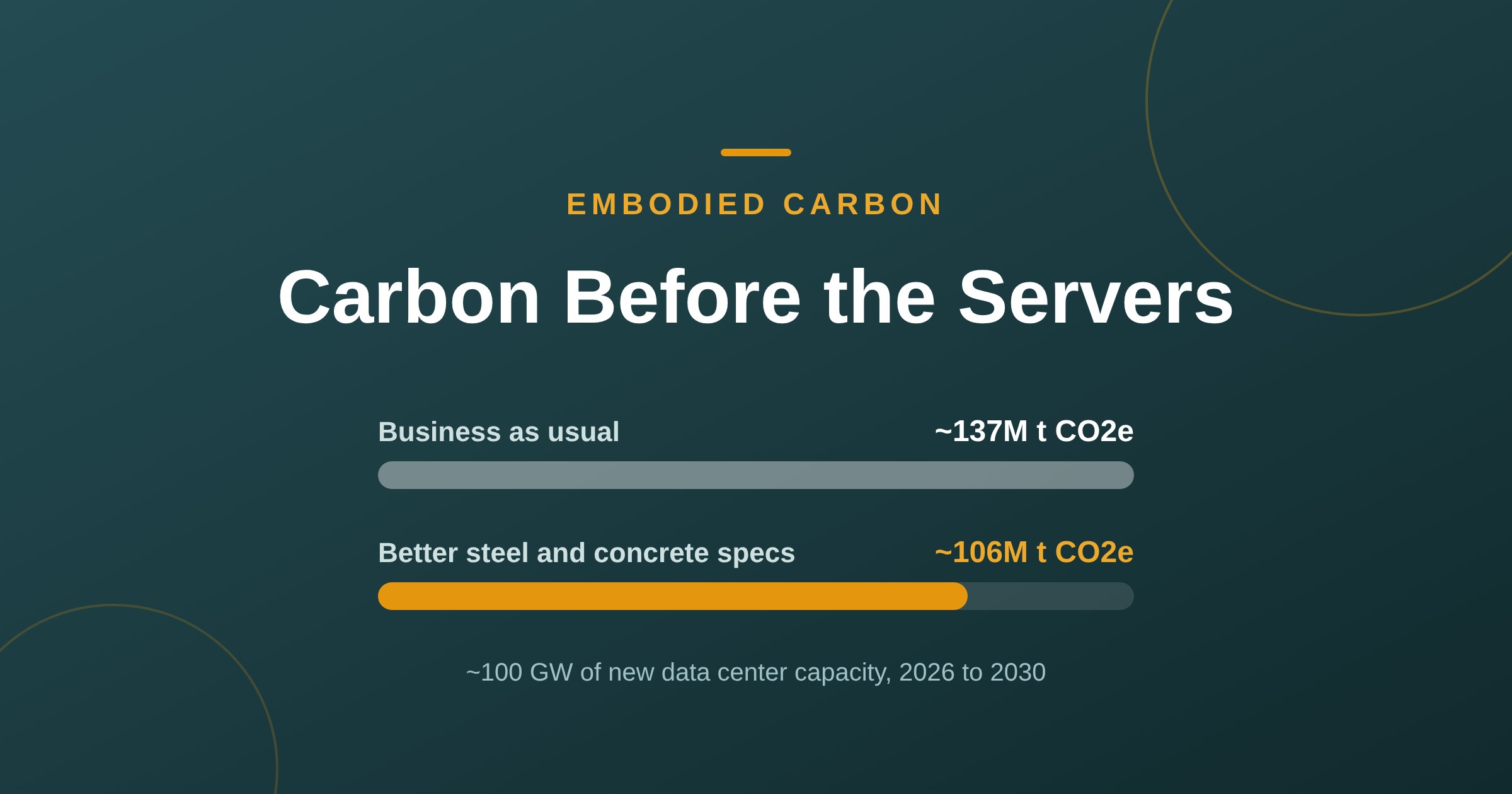
Data Centers’ Hidden 137M-Tonne Carbon Bill
New data centers could lock in ~137M tonnes of CO2e before a single server switches on. GGBS concrete and recycled steel could cut about 31M of it.
Read more
Built to Beat the Heat
This summer's drought wasn't a fluke, it was a preview. Here's the material data that actually decides whether a building shrugs off a heatwave or quietly cooks behind a great winter U value: decrement delay, solar reflectance, SHGC, and the real products behind each one.
Read more