
PFAS Compliance Meets Countdown

The PFAS Reckoning
For: manufacturers, architects and sustainability teams|Category: chemicals and compliance|Read time: about 8 minutes
Forever chemicals have quietly waterproofed, sealed and stain proofed buildings for half a century. The regulatory clock on that just started, and most of the industry has not noticed yet. What happens when a chemical family this deeply embedded suddenly becomes a liability line item?
Right now, mostly nothing. A few states have started enforcing new rules. A handful of manufacturers have quietly reformulated. Everyone else is treating PFAS the way the industry once treated crystalline silica in engineered stone: as somebody else’s problem, for now.
That window is closing faster than most specifications assume. We have watched this shape before. A material becomes standard practice because it performs brilliantly and nobody asks too many questions about the chemistry behind it. Then the evidence catches up, the regulators catch up, and the industry ends up reformulating under deadline pressure instead of choice. Engineered stone went through exactly that arc over crystalline silica, and that same shift is what created the opening for distributors like CaraGreen to build a business around recycled glass, paper composite and other alternative surfaces. PFAS in sealants, membranes and insulation is now walking the same path, just a few years behind it.
Where the Chemistry Is Actually Hiding
PFAS, short for per and polyfluoroalkyl substances, is not one ingredient hiding in one product. It is a family of thousands of compounds, prized for exactly the properties a building envelope needs: repel water, repel oil, resist heat, resist weathering, keep performing for decades without touch ups. Which is precisely why it ended up almost everywhere.
Not every use is equally settled. Spray foam insulation is a genuine argument, not a proven case. Industry groups maintain that the blowing agents used in modern closed cell foam are not PFAS under current US federal rules, while researchers keep flagging surfactants used earlier in the manufacturing process. Sealants, waterproofing membranes and weatherproofing treatments have a much clearer paper trail, and a much shorter list of excuses.
The Clock That Already Started
Start with the United States. A cluster of states, including Colorado, Connecticut, Vermont, Washington, Illinois, New Jersey, Oregon, New York, New Mexico and Maine, brought new PFAS restrictions into effect in January 2026. None of them name sealants, membranes or insulation as a specific banned category yet, so anyone reading the headlines as “construction materials banned” is getting ahead of the actual text.
What the new laws do instead is force transparency first and prohibition later. Minnesota’s Amara’s Law requires anyone selling a product in the state that contains intentionally added PFAS to report it, full stop, regardless of category, which quietly nets in plenty of building products that no consumer facing ban has ever mentioned. That reporting deadline, already pushed back twice, now lands on 15 September 2026. Then, on 1 January 2032, Minnesota moves from reporting to an outright ban on nonessential PFAS uses, and Maine reaches a near identical milestone the same year. A slower, final bucket in Maine’s law, covering categories like foams and HVAC equipment, does not land until 2040.
The pressure is not fake. It is procedural, and procedural pressure is exactly the kind that catches unprepared manufacturers off guard, because there is no single dramatic ban date to circle on a calendar.
Meanwhile in Brussels, the long promised universal PFAS restriction under REACH is inching forward rather than sprinting. The relevant committees closed a public consultation in May 2026 and are expected to send a final recommendation to the European Commission by the end of the year, with the Commission likely to publish its own restriction text sometime in 2027. That date matters for the paperwork, not for the market. Committee members have already signaled a preference for time limited exemptions over an immediate blanket ban, and uses like sealing are among the sectors being considered for extended transition periods that could stretch into the mid 2030s. Realistically, most of the EU’s actual market effects will not land before 2029, and construction specific carve outs could run later still.
Who Actually Needs to Pay Attention
This is not only a compliance team’s problem.
Manufacturers
Need to know now if a product line is exposed, before it ends up in a reporting form or a headline.
Architects
Have specified plenty of these products for weatherproofing without realising there is now a liability tail attached.
Quantity surveyors
Need to start pricing in that reformulated products often cost more and behave differently on site.
Contractors
Are the ones who get stuck mid project if a product is suddenly pulled or reformulated.
Sustainability teams
This is the moment to point out that a strategy built only around carbon has been missing chemical risk the whole time.
The Certification Gap Is the Opportunity
Here is the part most coverage of PFAS misses. There is currently no dominant, trusted, construction specific certification that simply says a product is PFAS free. GreenScreen Certified has seven published standards, covering things like cleaners, furniture fabrics and food packaging. None of them cover building materials. Declare, from the International Living Future Institute, added roughly 4,844 PFAS compounds to its Red List back in 2022, but its own rules still allow temporary exceptions for uses like some exterior coatings, precisely because no substitute exists yet for every application. NSF launched its first dedicated PFAS Free certification in March 2025, and it is scoped to nonfood products and food contact equipment, not sealants or membranes.
Put plainly: almost nobody has built the label that buyers will eventually ask for. That is either a gap or a head start, depending on which side of it a manufacturer sits on. Manufacturers who reformulate and certify early are not just avoiding a future problem. They are building the trust that specifiers will default to once the pressure actually arrives, in much the same way early movers on embodied carbon data ended up setting the reference point everyone else got measured against.
Where This Goes on 2050 Materials
This is exactly the kind of shift the 2050 Materials platform exists to make visible before it becomes a headline. Every product listed carries verified data across its full life cycle, not just a carbon number, and that includes chemical content and certifications where manufacturers choose to disclose them. As PFAS free formulations and certifications start to appear across sealants, membranes and insulation, they become searchable, comparable and filterable in the same place specifiers already go to compare embodied carbon.
Recap and What to Do About It
The PFAS reckoning in construction is not a single ban you can put on a calendar. It is a slow moving procedural squeeze made up of reporting deadlines, phased bans and a European process that rewards whoever starts reformulating early rather than whoever complies latest.
Manufacturers should be auditing their sealant, membrane and insulation lines now, before a Minnesota reporting form forces the question for them. Architects and sustainability teams should stop treating chemical content as a footnote to carbon data. Quantity surveyors and contractors should start pricing in the very real possibility that a specified product gets reformulated, repriced or pulled mid project.
Related reading
Manufacturer Spotlights
The 2026 Surface Revolution: A Global Briefing
Bans, tariffs and billion dollar verdicts are reshaping the surfacing industry, and what designers and fabricators need to know about the shift away from high silica engineered stone.
Read more
Manufacturer Spotlights
H.G. Matthews: Beyond the EPD
Why the most meaningful manufacturers treat a published Environmental Product Declaration as the beginning of continuous improvement rather than the finish line.
Read more
Industry Resource
CaraGreen
A distributor of recycled glass, paper composite and other sustainable surface materials, positioned as an alternative to high silica engineered stone.
Visit site
Related articles
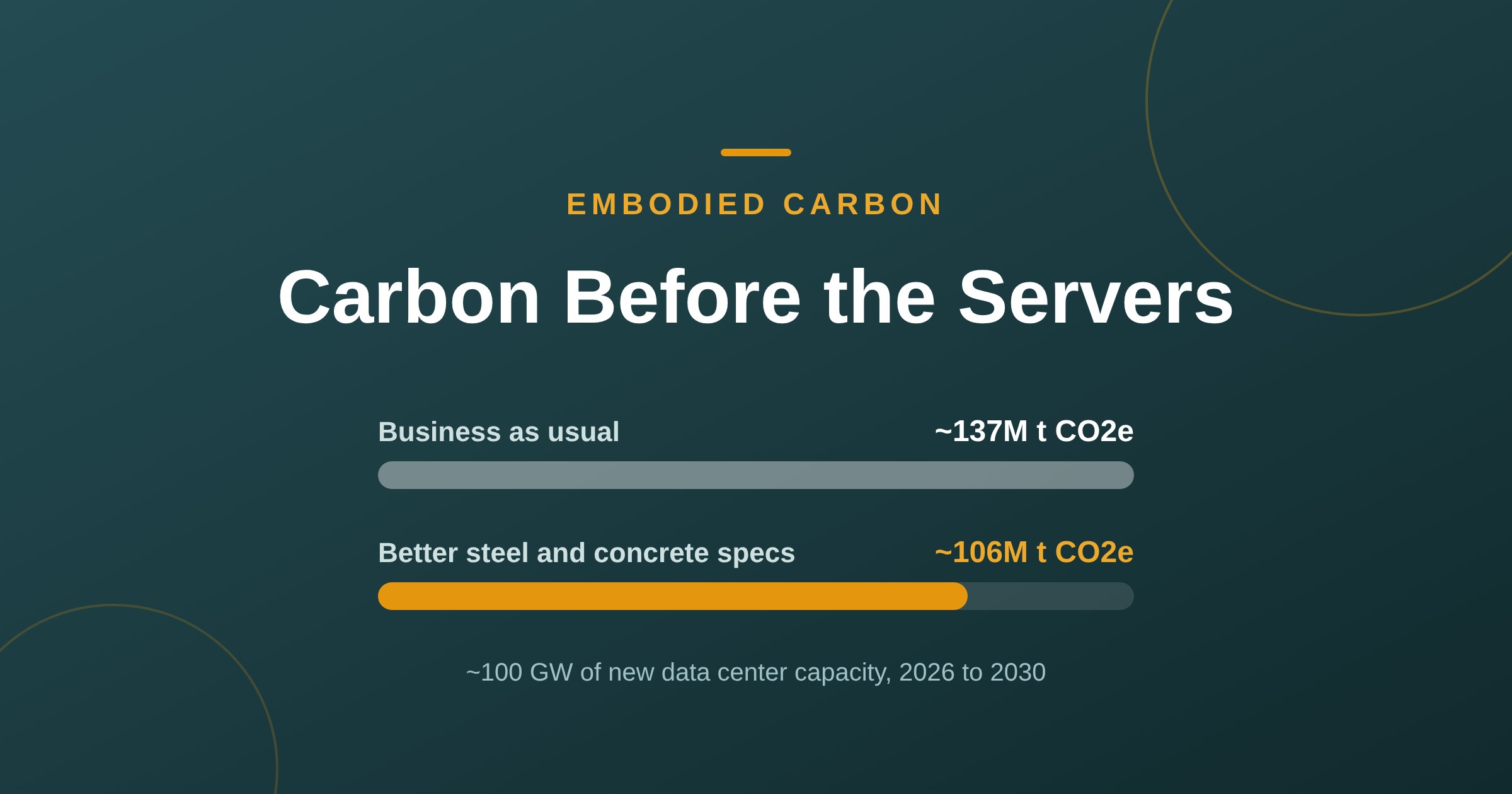
Data Centers’ Hidden 137M-Tonne Carbon Bill
New data centers could lock in ~137M tonnes of CO2e before a single server switches on. GGBS concrete and recycled steel could cut about 31M of it.
Read more
Built to Beat the Heat
This summer's drought wasn't a fluke, it was a preview. Here's the material data that actually decides whether a building shrugs off a heatwave or quietly cooks behind a great winter U value: decrement delay, solar reflectance, SHGC, and the real products behind each one.
Read more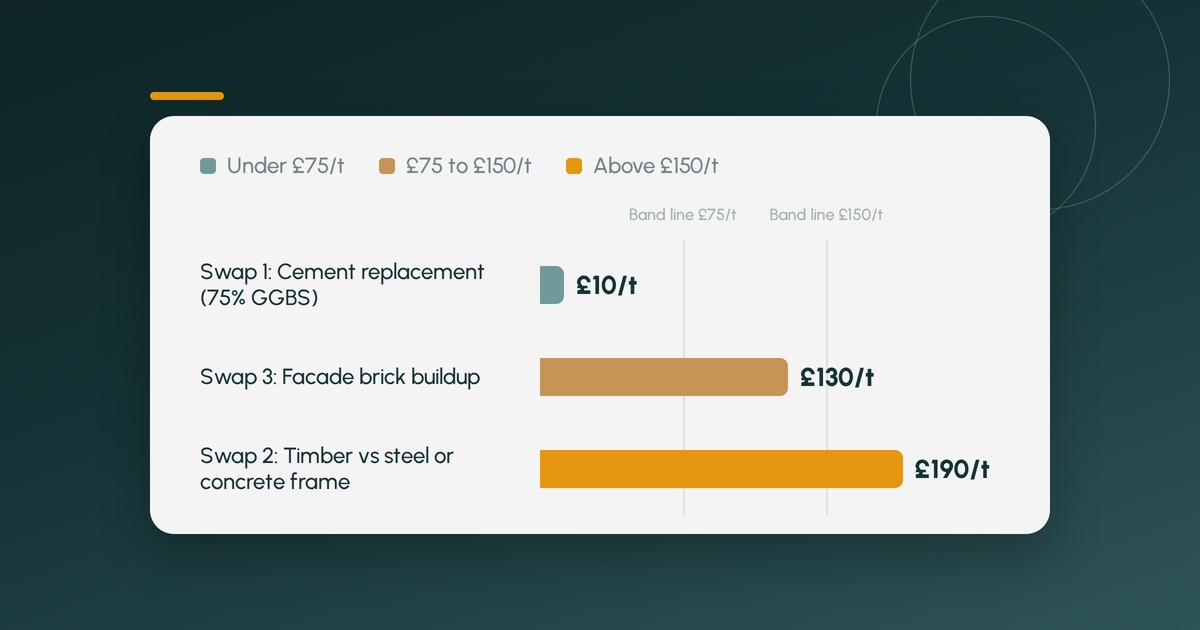
The Cost per Tonne Test for Embodied Carbon Swaps
Not every embodied carbon cut is worth paying for. Test any swap on cost per tonne of CO2e, see which band it falls in, and try the free calculator.
Read more