The Most Interesting Brick Products with EPDs on the 2050 Materials Platform
Environmental Product Declarations (EPDs) are increasingly used in construction to improve transparency around material impacts. In the bricks category, they can help designers and specifiers compare products more consistently and understand how different materials and manufacturing approaches are described by suppliers.
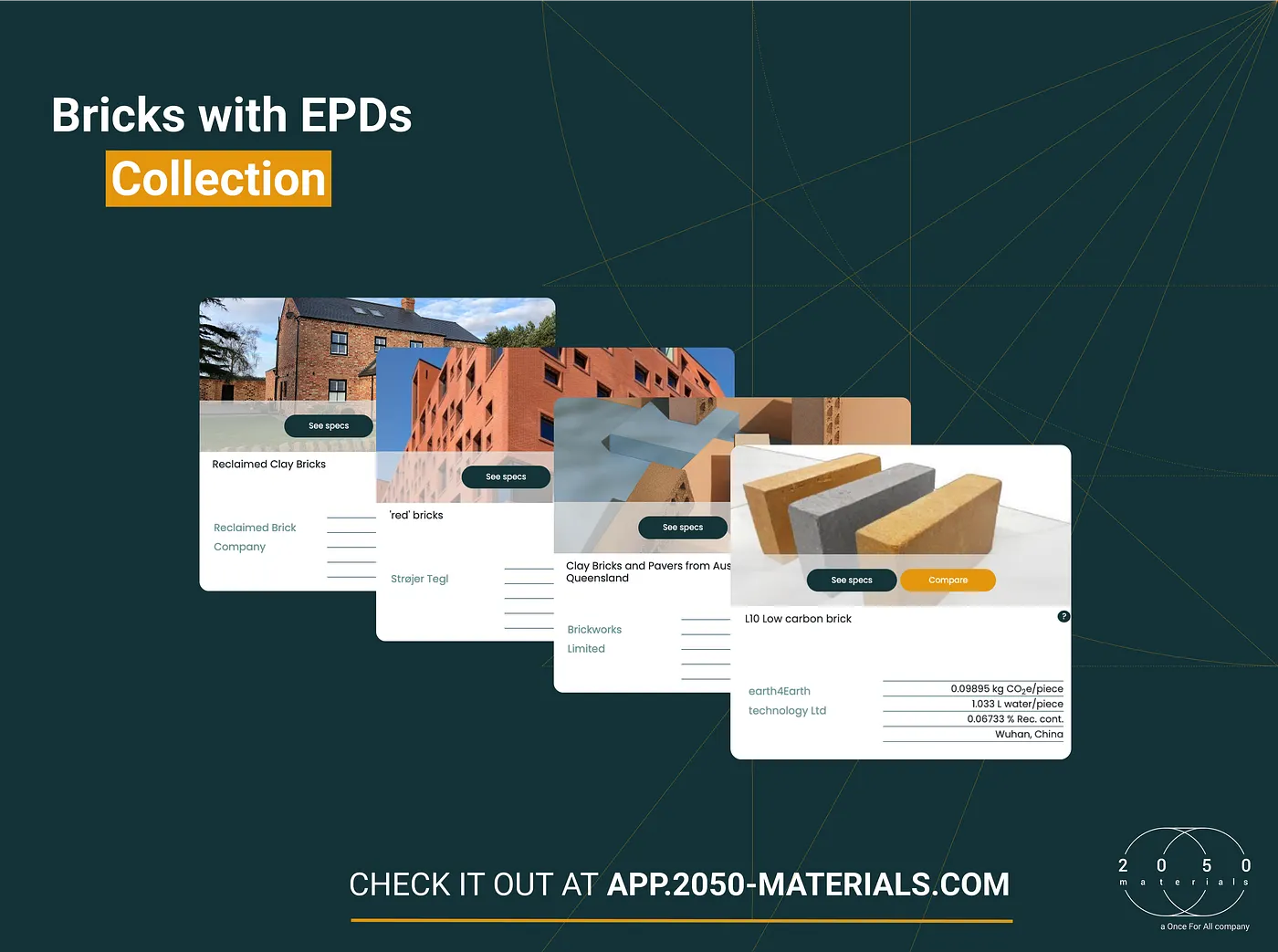
This collection brings together a range of brick with EPDs listed on the 2050 Materials Platform. They include earth-based bricks, handcrafted bricks, clay bricks, reclaimed bricks, reused clinker bricks, and other specialty brick products.
1. L10 Low Carbon Brick by earth4Earth
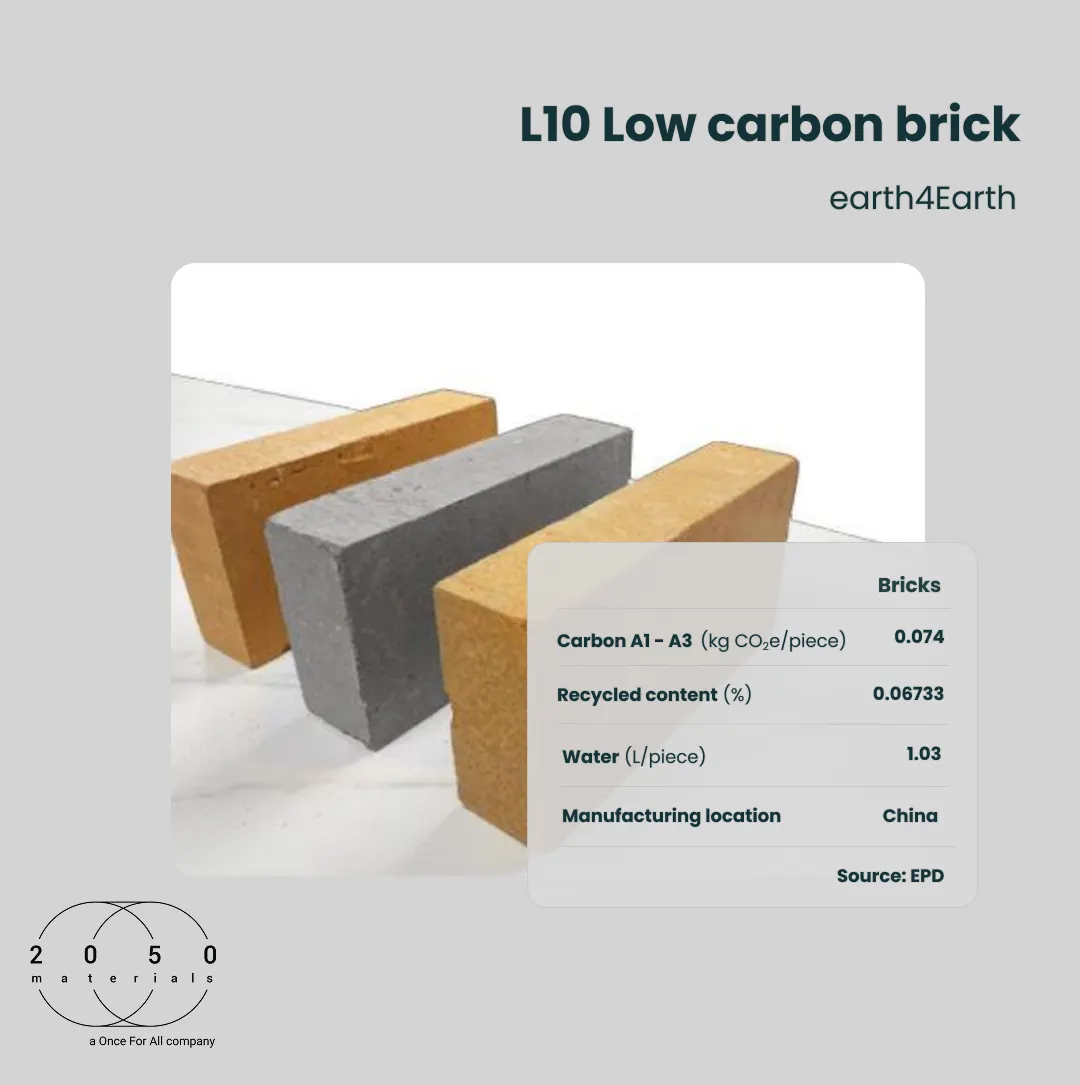
Kicking off this article is the L10 Low carbon brick by earth4Earth. The L10 Low carbon brick is an earth-based masonry unit made from excavated soil combined with a lime-based binder. Unlike conventional clay bricks, it is produced through compression and low-temperature curing, eliminating the need for kiln firing.
The product is designed to absorb CO₂ during its use phase through carbonation, storing carbon within the material as stable carbonates. At end of life, the brick can be crushed and reused as soil or construction material, supporting circular material flows.
Sustainability Performance
Sustainability performance in brick products is typically influenced by raw material sourcing, manufacturing processes, and end-of-life options.
For the L10 brick:
- No kiln firing → significantly reduced manufacturing energy
- Made using excavated soil that would otherwise go to landfill
- Uses a lime-based binder that enables carbonation over time
- Designed to absorb CO₂ through carbonation during its lifecycle
- Can be crushed and reused in new bricks or returned to the soil at end of life
- Carbon remains stored in the material as stable carbonates after use
- No manufacturing waste (all material reused internally)
Advantages
- Low embodied carbon
- CO₂ absorption through carbonation during use
- No high-temperature kiln firing required
- Utilises waste soil, supporting resource efficiency
- Fully recyclable with circular end-of-life pathway
Use Cases
- Low-carbon and net-zero developments
- Pilot and innovation-driven construction projects
- Circular economy construction systems
- Projects targeting embodied carbon reduction and carbon storage
earth4Earth also offers additional products, including N10 and N30 carbon-negative bricks, supported by Environmental Product Declarations (EPDs).
2. Wood-Fired Bricks by HG Matthews
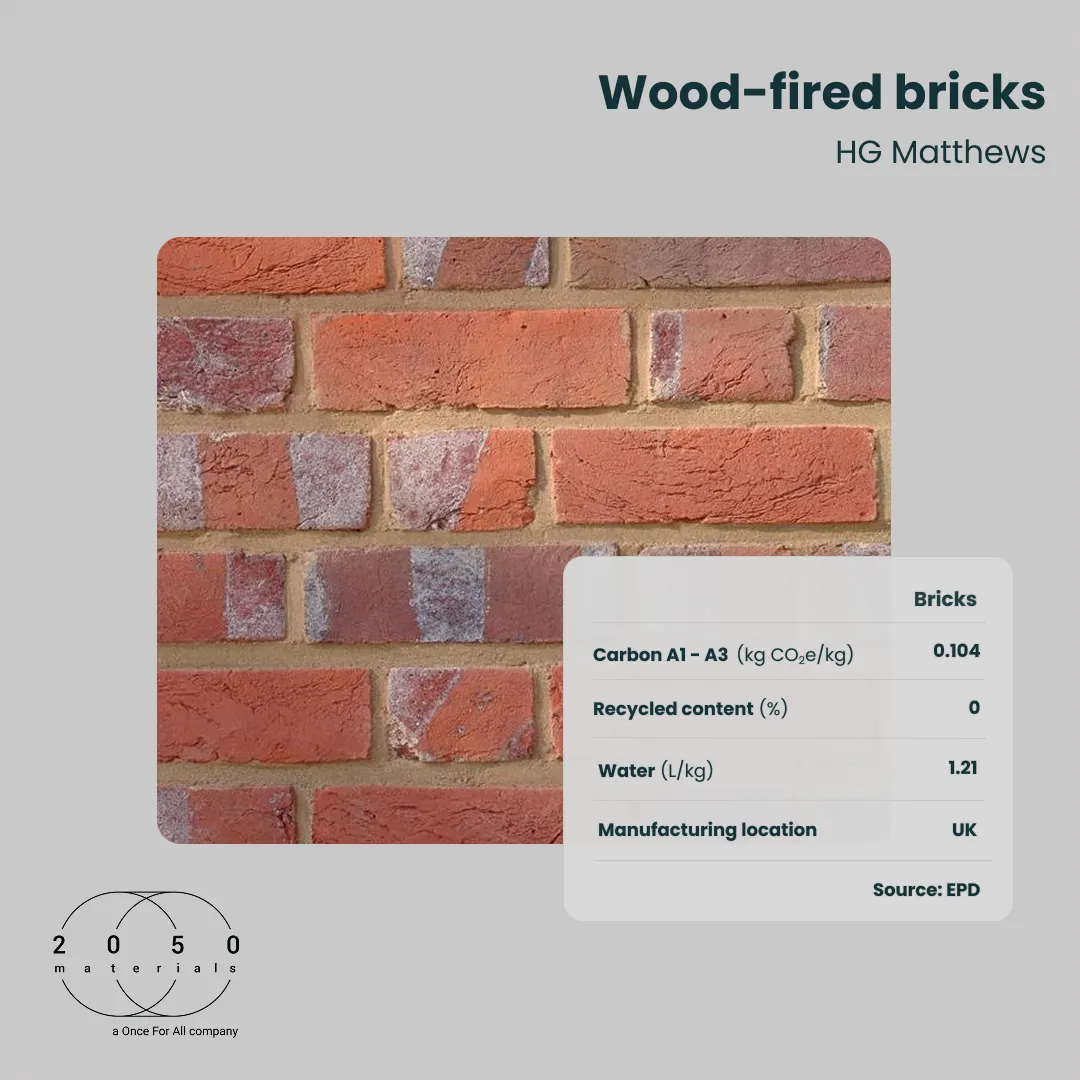
The Wood-fired bricks by HG Matthews are clay masonry units manufactured in the United Kingdom using locally sourced clay. The bricks are produced at the HG Matthews Brickworks in Chesham, where clay is extracted, processed, shaped, dried, and fired to achieve the required performance characteristics.
The bricks are made entirely from UK-sourced clay and are used in construction applications including walls, façades, and pavements. Masonry bricks are described as durable materials with properties such as thermal mass and fire resistance, making them suitable for residential and commercial buildings.
Sustainability Performance
The environmental performance of HG Matthews wood-fired bricks reflects a combination of traditional manufacturing and documented lifecycle transparency through a verified EPD.
Key environmental considerations include:
- Lifecycle assessment covering product stage, transport, and end-of-life stages (cradle-to-gate with additional modules)
- Environmental impacts primarily associated with raw material supply, transport, and manufacturing processes
- Reference service life defined under standard conditions
- End-of-life scenarios including demolition, transport, waste processing, and disposal
- Recycling of brick material into secondary applications such as aggregate
Advantages
- Standardized lifecycle assessment aligned with EN 15804
- Durable material suitable for construction applications
- Established recycling pathways for material recovery
Use Cases
- Masonry wall construction
- Building façades
- Pavement and external applications
- Residential and commercial buildings
3. Bricks by Jay Jalaram Brick Works
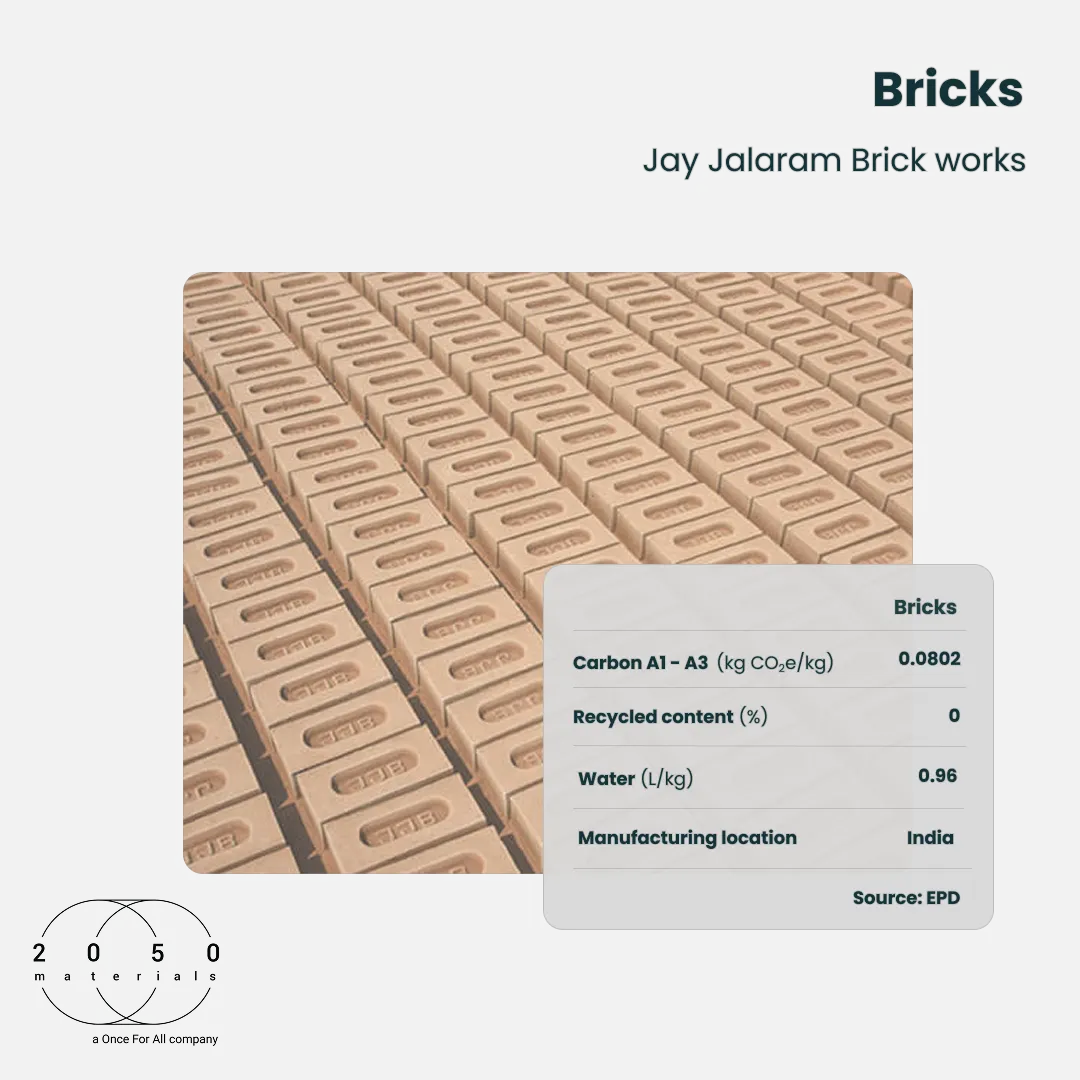
The Bricks by Jay Jalaram Brick Works are clay-based masonry units produced in India using a combination of traditional hand-molding techniques and semi-mechanized processes. The manufacturing process includes clay preparation with additives (such as fly ash), shaping, drying, and kiln firing to achieve the required strength and durability.
While rooted in traditional brick-making methods, the process also incorporates controlled production stages, enabling consistency across different brick types while maintaining a handcrafted aesthetic.
Sustainability Performance
This product reflects a traditionally manufactured clay brick, combining manual production methods with controlled processing stages. The environmental profile is shaped by raw material extraction, transport, and kiln-based firing.
Key environmental considerations include:
- Use of clay-based raw materials with supplementary inputs such as industrial byproducts (e.g. fly ash)
- Manufacturing processes that combine traditional forming techniques with controlled drying and firing stages
- Environmental impacts primarily driven by kiln firing and transportation distances
- Potential to reduce reliance on virgin raw materials through the inclusion of supplementary materials
- End-of-life scenarios that allow for partial reuse and recovery of materials
- Overall impact influenced by logistics, particularly transport to site
Advantages
- Incorporation of supplementary materials such as fly ash
- Combination of traditional craftsmanship and controlled production processes
- Established and widely understood material performance
- Suitable for a broad range of construction applications
- Potential for material recovery and reuse at end-of-life
Use Cases
- Residential and commercial construction
- Projects valuing handcrafted or textured brick aesthetics
- Developments where regional sourcing minimizes transport impact
- Applications where moderate service life is acceptable
Discover the full properties by visiting the 2050 Materials Platform.
4. ‘red’ bricks by Strøjer Tegl
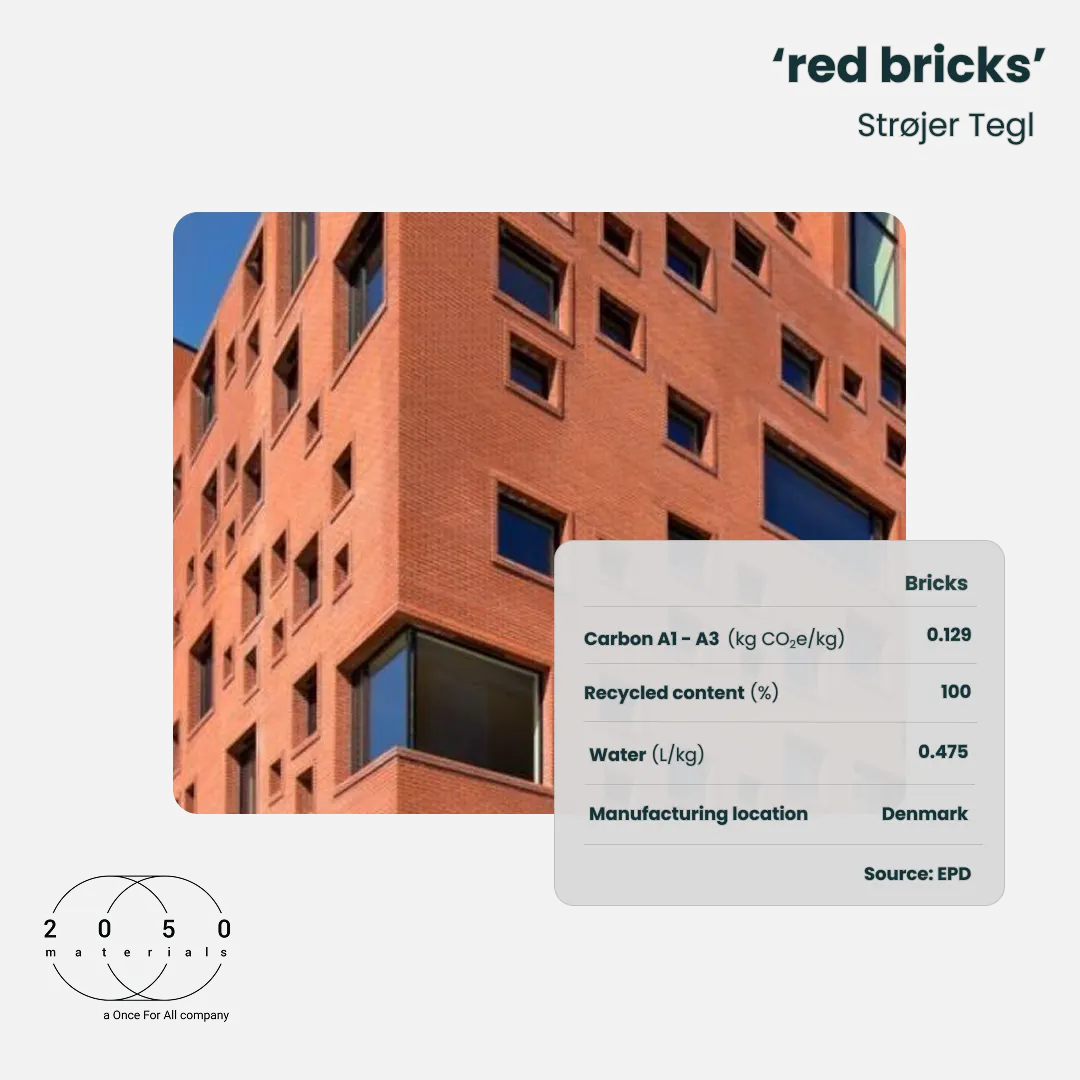
The ‘red’ bricks by Strøjer Tegl are high-quality Danish clay bricks manufactured at Vedstaarup Teglværk using red firing clay. A distinguishing feature of this product is the incorporation of stonewool powder (≈2%), an upcycled byproduct from insulation manufacturing, into the raw material mix.
Surface finishes are achieved using engobe coatings and controlled firing techniques, enabling a wide range of tones and textures while maintaining consistent material performance.
The bricks are produced using certified renewable electricity and a combination of natural gas and wood firing in tunnel kilns.
Sustainability Performance
This product represents a conventional fired clay brick manufactured with a combination of established processes and incremental material and energy optimizations. Production incorporates certified renewable electricity alongside traditional kiln firing methods.
Key environmental considerations include:
- Use of a mix of energy sources, including renewable electricity and kiln fuels
- Inclusion of a small proportion of upcycled material (stonewool) within the raw mix
- Environmental impacts primarily associated with raw material extraction, transport, and firing processes
- Limited impacts during the use phase, with no significant maintenance requirements
- Long service life, contributing to extended material durability
- End-of-life scenarios that support high levels of material recovery and recycling
- Potential environmental benefits beyond the system boundary through reuse of crushed brick material
Advantages
- Verified environmental data available through an EPD
- Integration of renewable electricity in manufacturing
- Incorporation of upcycled industrial byproducts
- Durable material with long service life
- High potential for recycling and reuse at end-of-life
- Flexibility in appearance through varied firing and finishing techniques
Use Cases
- Architectural brick façades
- High-quality masonry requiring aesthetic variation
- Residential and commercial developments
- Projects targeting lower embodied carbon without using reclaimed materials
Discover more products by Strøjer Tegl by visiting the 2050 Materials Platform.
5. Reclaimed Clay Bricks by Reclaimed Brick Company
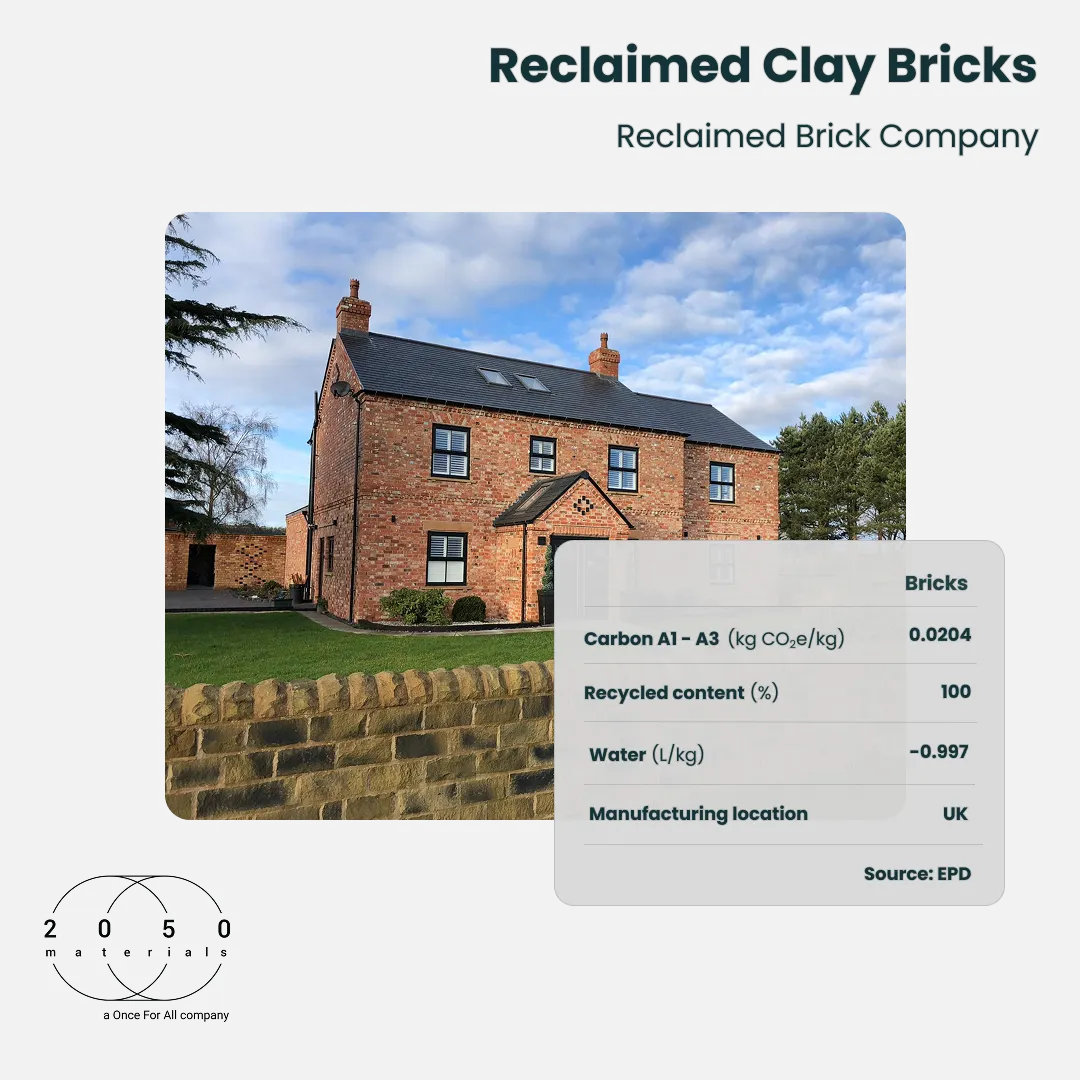
The Reclaimed Clay Bricks by Reclaimed Brick Company are salvaged clay masonry units recovered from demolition sites across the UK and prepared for reuse through manual selection, cleaning, and grading processes.
Unlike newly manufactured bricks, these units retain their original material properties and embodied characteristics, requiring no re-firing or reprocessing, and are reintroduced into the construction cycle as secondary materials.
Sustainability Performance
The environmental performance of reclaimed clay bricks reflects a circular material model, where the product is derived entirely from secondary sources and upstream production impacts are excluded in line with EN 15804 cut-off rules.
Key environmental considerations include:
- Use of fully reclaimed clay bricks with no primary raw material extraction
- Processing limited to recovery, sorting, and manual cleaning, with no industrial manufacturing required
- Low energy demand associated primarily with handling, storage, and logistics
- Environmental impacts largely influenced by transportation rather than production
- Long service life with minimal maintenance requirements
- End-of-life scenarios that enable material recovery, including reuse as aggregate
- Accounting approach that includes avoided burdens associated with material reuse
This positions reclaimed clay bricks as a resource-efficient alternative to newly manufactured masonry, particularly where local sourcing reduces transport-related impacts.
Advantages
- Eliminates the need for energy-intensive kiln firing
- Derived entirely from reclaimed materials
- Minimal processing requirements compared to new brick production
- Retains value from existing building materials
- Long service life with low maintenance needs
- Supports circular construction and waste reduction
- Potential for recovery and reuse at end-of-life
Use Cases
- Heritage restoration and façade matching
- Adaptive reuse and conservation projects
- Low-carbon new-build developments
- Architectural applications prioritizing reclaimed aesthetics
- Interior and exterior design with character materials
More information on the Reclaimed Bricks on the 2050 Materials Platform.
6. Reused Clinker Bricks by Harris ApS
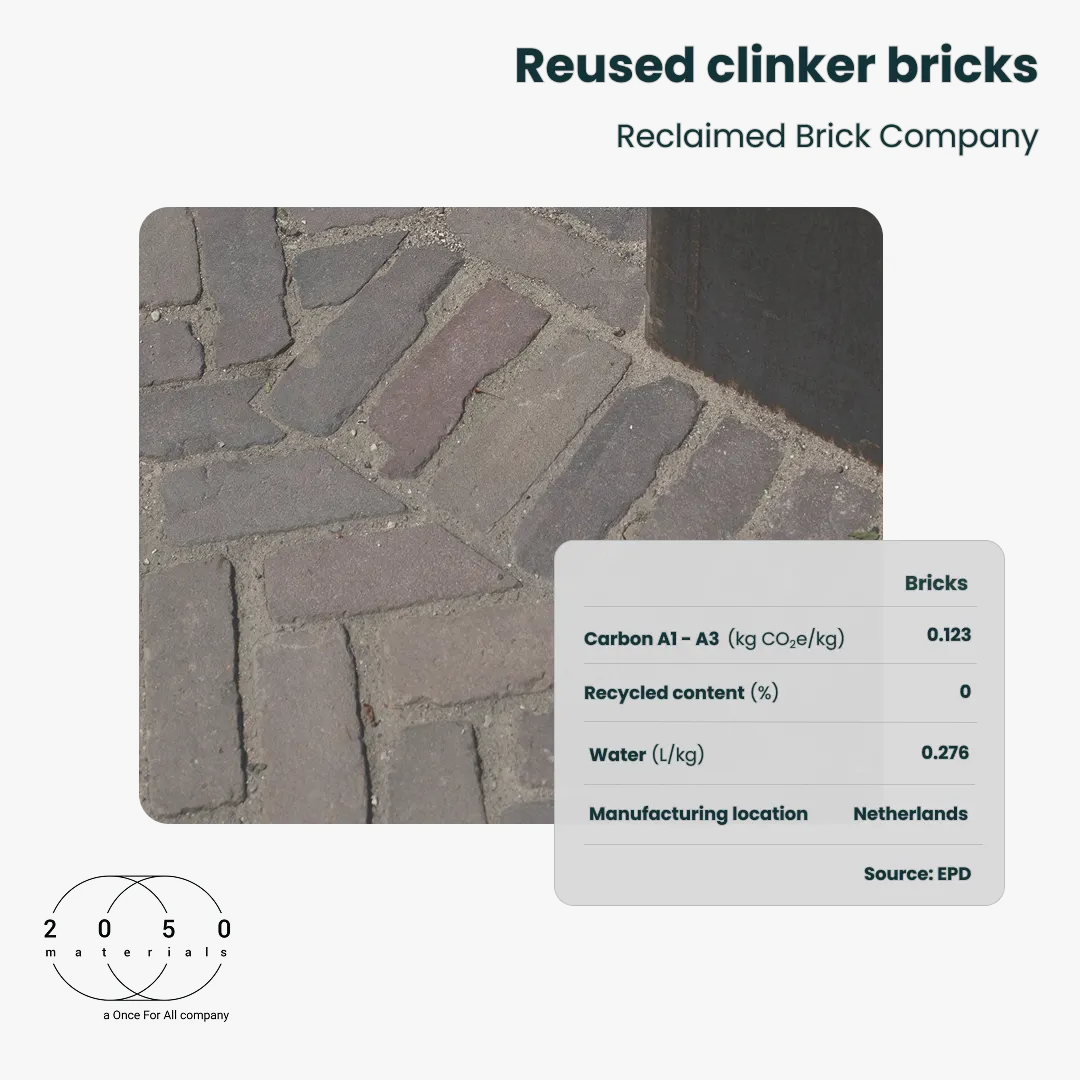
The Reused clinker bricks by Harris ApS are reclaimed masonry units sourced from demolition and renovation projects and repurposed for use in a range of pavement applications, including industrial, street, and landscape environments.
These bricks are recovered, sorted, and transported for reuse without undergoing a new firing process, preserving the material’s original high-temperature performance characteristics while extending its lifecycle.
Sustainability Performance
The environmental performance of reused clinker bricks is characterized by the avoidance of primary brick manufacturing impacts, as the original production burdens are not allocated to the reused product in accordance with EN 15804 cut-off principles.
Key environmental considerations include:
- No manufacturing impacts attributed to the reused bricks, as original production is excluded from the system boundary
- Processing limited to recovery, sorting, and distribution rather than industrial production
- Environmental impacts primarily associated with transport and logistics
- Installation requiring no additional energy, with materials typically placed manually
- End-of-life scenarios that prioritize recycling, with material commonly processed for use as secondary aggregate
- System boundaries aligned with circular economy principles, excluding upstream production impacts
This positions reused clinker bricks as a circular construction material, where environmental impacts are largely decoupled from traditional energy-intensive firing processes.
Advantages
- Avoids emissions associated with new brick manufacturing
- Extends the lifecycle of existing construction materials
- Retains the durability and performance of originally fired bricks
- Requires minimal processing prior to reuse
- Supports high levels of material recovery at end-of-life
- Contributes to circular construction and reduced demand for virgin resources
Use Cases
- Industrial paving and heavy-load environments
- Streetscapes and public realm projects
- Landscape and garden applications
- Projects prioritizing circular material strategies
More about the Reused Clincker Bricks and their properties on the 2050 Materials Platform.
7. Rochedale Bricks & Pavers by Brickworks Limited
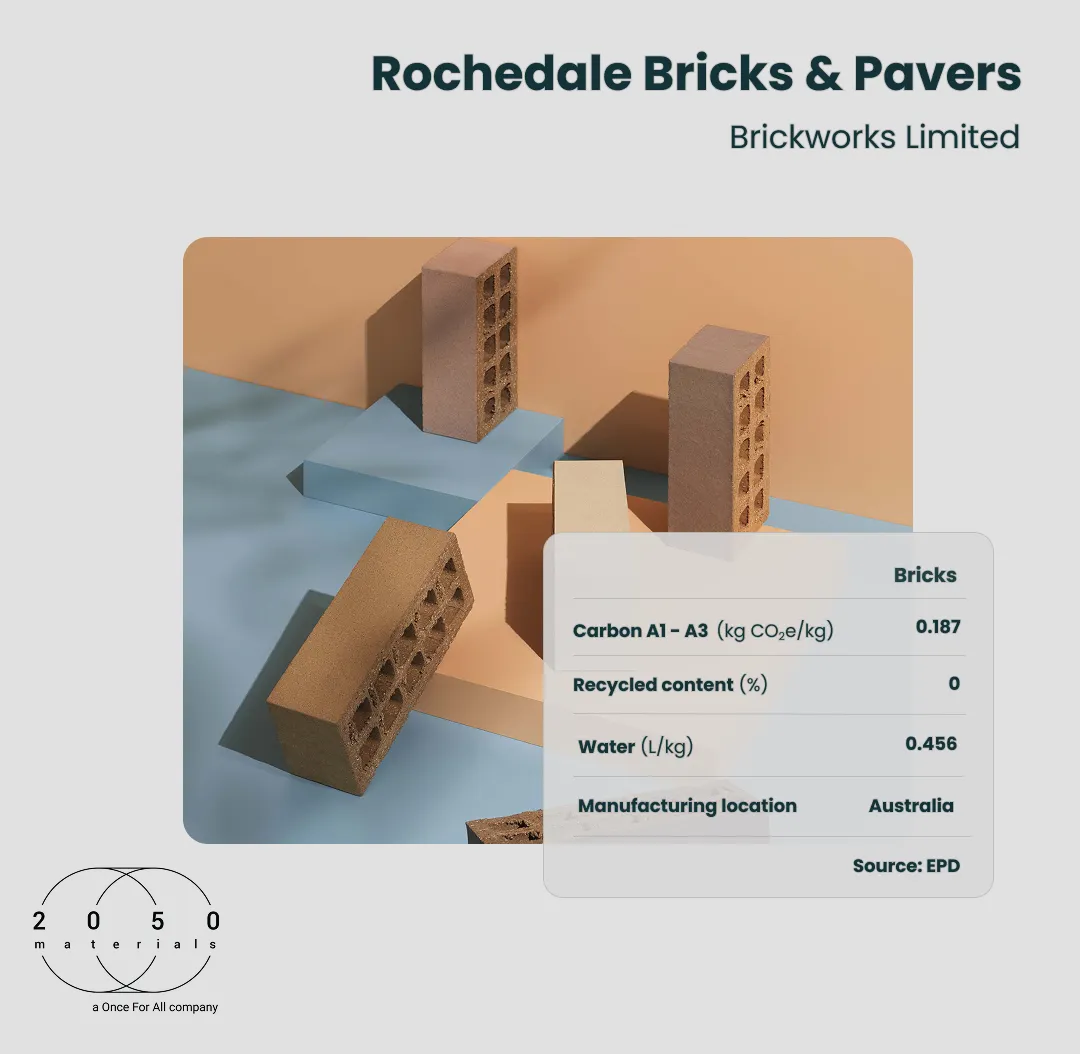
The Rochedale Bricks & Pavers by Brickworks Limited are clay-based masonry products manufactured in Queensland, Australia. The products are made primarily from quarried clay, combined with small amounts of additives and oxides to achieve specific colours and finishes.
Production follows a conventional industrial process involving raw material extraction, mixing and milling, extrusion into shape, controlled drying, and kiln firing, primarily using natural gas as the energy source. This process is consistent across both brick and paver products and is designed to deliver uniform performance and durability.
Sustainability Performance
The environmental performance of clay bricks is primarily driven by energy-intensive manufacturing processes, particularly the firing stage in high-temperature kilns.
Key environmental considerations include:
- Environmental impacts concentrated in the product stage, driven by raw material processing and kiln firing
- Manufacturing reliant on thermal energy (predominantly gas-fired kilns), which is a major contributor to emissions
- Raw materials largely sourced locally, helping to limit transport-related impacts
- End-of-life pathways that include recycling into secondary aggregate as well as landfill disposal
- Recycled brick material capable of substituting virgin aggregates, contributing to downstream environmental benefits
- Lifecycle assessment structured in accordance with EN 15804, covering product and end-of-life stages
This positions clay bricks as a durable but energy-intensive construction material, with environmental performance closely tied to manufacturing efficiency and fuel sources.
Advantages
- Supported by standardized, EPD-backed environmental data for lifecycle assessment
- Consistent material composition and controlled industrial production
- Durable material with long service life in construction applications
- Established recycling pathways contributing to material recovery
- Alignment with internationally recognized standards such as EN 15804 and ISO 14025
Use Cases
- Residential and commercial walling systems
- Paving and landscaping applications
- General-purpose masonry across standard construction projects
Discover more products by Brickwork by visiting the 2050 Materials Platform.
8. LESS Rose Bricks by Egernsund Wienerberger
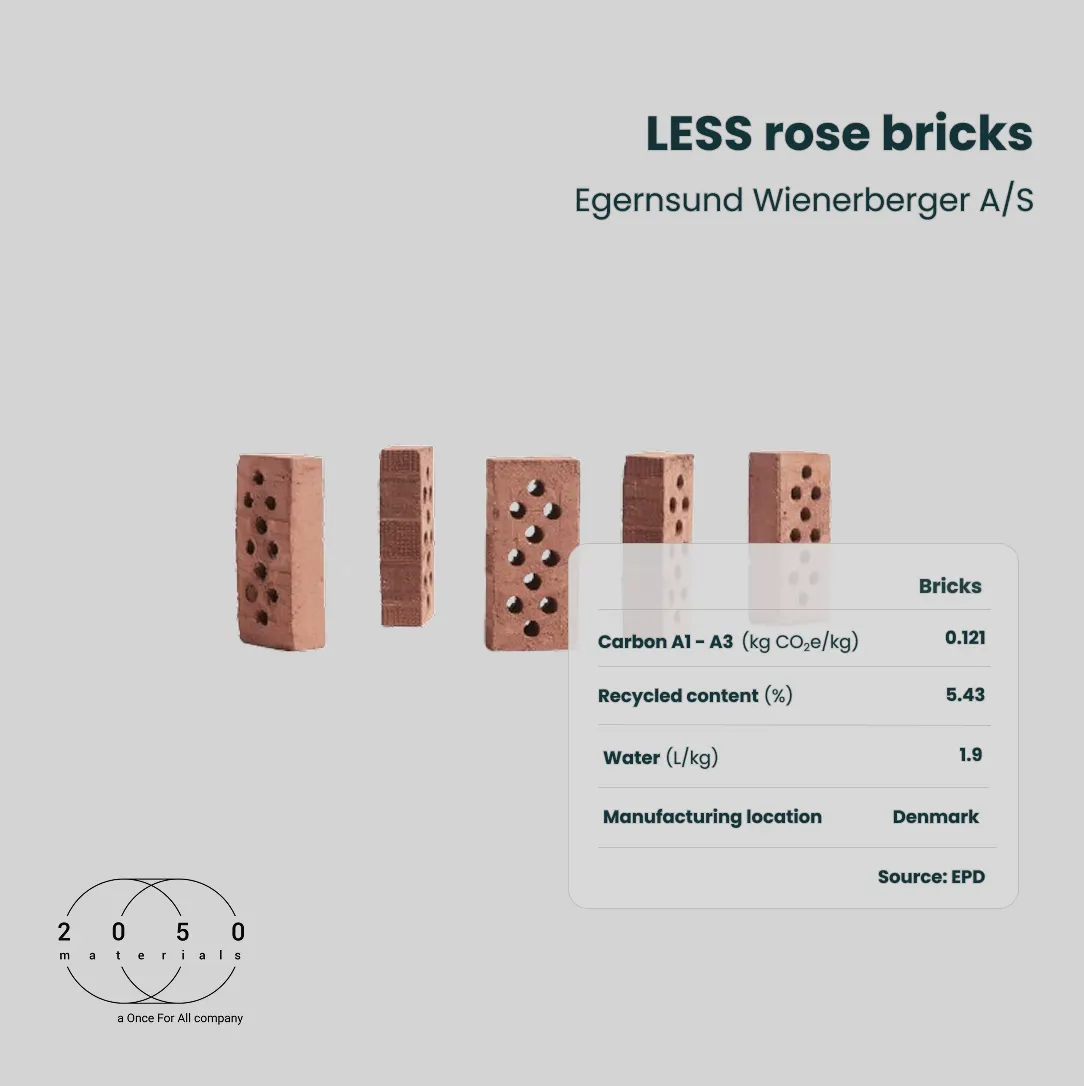
The LESS Rose Bricks by Egernsund Wienerberger are clay masonry units manufactured in Denmark at the Petersminde Teglværk facility. These bricks are produced using a blend of Danish yellow- and red-firing clays, combined with minor materials such as sand and chamotte to achieve the desired structural and aesthetic properties.
The LESS product line incorporates perforations, reducing material mass per unit while maintaining performance. Manufacturing is powered using ‘bionatural gas’ and certified green electricity, reflecting a shift toward lower-impact energy inputs in brick production.
Sustainability Performance
The environmental performance of the LESS brick range reflects a combination of material efficiency and lower-impact energy inputs during manufacturing.
Key environmental considerations include:
- Use of alternative energy sources in production, including bio-based gas and certified green electricity
- Reduced material mass through perforated design, lowering resource use per unit
- Full lifecycle assessment coverage, including product, construction, and end-of-life stages
- End-of-life scenarios dominated by recycling into secondary applications such as road base
- Minimal reliance on landfill disposal in typical end-of-life pathways
- Negligible environmental impacts during the use phase, with no significant maintenance requirements
This positions the LESS brick system as an optimized fired clay product, combining conventional durability with improvements in energy sourcing and material efficiency.
Advantages
- Production supported by lower-impact energy sources compared to conventional firing approaches
- Cradle-to-grave EPD coverage enabling whole-life carbon assessment
- High durability with long service life typical of clay masonry
- Reduced material use through perforated brick geometry
- Strong recyclability at end-of-life, supporting circular material flows
Use Cases
- High-quality residential construction
- Architectural façades with performance and aesthetic requirements
- Loadbearing and non-loadbearing wall systems
- Projects targeting reduced embodied carbon outcomes
9. Glazed Brick by Randers Tegl
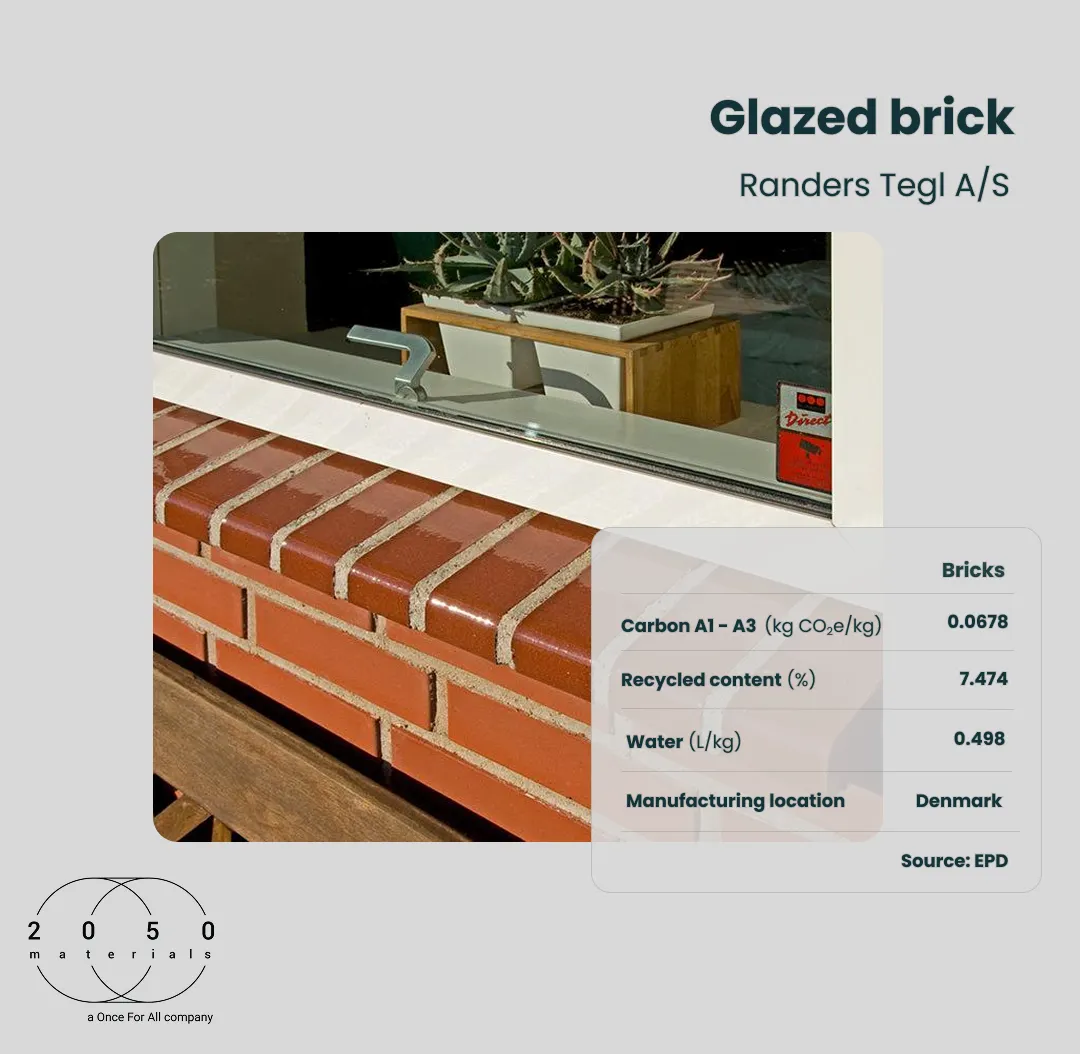
The Glazed Brick by Randers Tegl is a clay masonry unit manufactured in Denmark, composed primarily of 94–97% clay with minor additions of chamotte and additives to achieve required performance characteristics.
Produced at the Vindø facility, these bricks are fired in high-temperature kilns and finished with a ceramic glaze, creating a dense and durable surface suitable for both structural and architectural applications. The manufacturing process utilizes guarantees of origin (GoO) for electricity and biomethane, supporting reduced fossil energy dependence.
Sustainability Performance
Environmental performance is documented through a cradle-to-grave Environmental Product Declaration, covering all lifecycle stages from raw material extraction through end-of-life.
Key environmental considerations include:
- Use of renewable energy certificates for both electricity and gas consumption, including biomethane
- Full lifecycle assessment across all stages, from production to disposal and beyond system boundaries
- No environmental impacts associated with the use phase under standard conditions
- End-of-life scenarios dominated by recycling into secondary construction materials such as crushed aggregate
- High durability with long service life, supporting long-term material efficiency
- No presence of substances of very high concern within the product
The environmental profile is primarily influenced by the firing process during manufacturing, where energy use and process emissions represent the largest contribution to overall impact.
Advantages
- Lower-impact production supported by renewable energy sourcing strategies
- Cradle-to-grave lifecycle transparency for whole-building assessment
- No operational or maintenance-related environmental impacts during use
- Long service life typical of fired clay construction products
- Strong end-of-life recyclability supporting circular construction practices
Use Cases
- Architectural façades requiring durability and consistent finish quality
- Residential and commercial masonry construction
- Loadbearing and non-loadbearing wall systems
- Projects targeting reduced lifecycle environmental impact and material transparency
Beyond the Kiln: Rethinking What a Brick Can Be
Bricks listed with EPDs highlight an important shift in how construction materials are evaluated — not just by tradition or performance, but by the transparency of their lifecycle data. What becomes clear from this collection is not a single definition of a “better” brick, but a widening spectrum of approaches.
Some products focus on rethinking raw materials, such as earth-based systems using excavated soil. Others reflect continuity in established fired clay processes, now documented through EPD frameworks. Reclaimed and reused bricks introduce another dimension entirely, where the value lies in extending the life of existing materials rather than producing new ones.
Rather than pointing to one solution, the dataset shows that material choice is increasingly about context — availability of data, project requirements, and the balance between new production and reuse. As more products are documented through EPDs, the role of the specifier shifts from assumption to evaluation, using comparable data to guide decisions.
This is where the real transition is happening: not just in how bricks are made, but in how they are understood, selected, and specified within the built environment.
Discover more collections with innovative products on the 2050 Materials blog.
Related articles
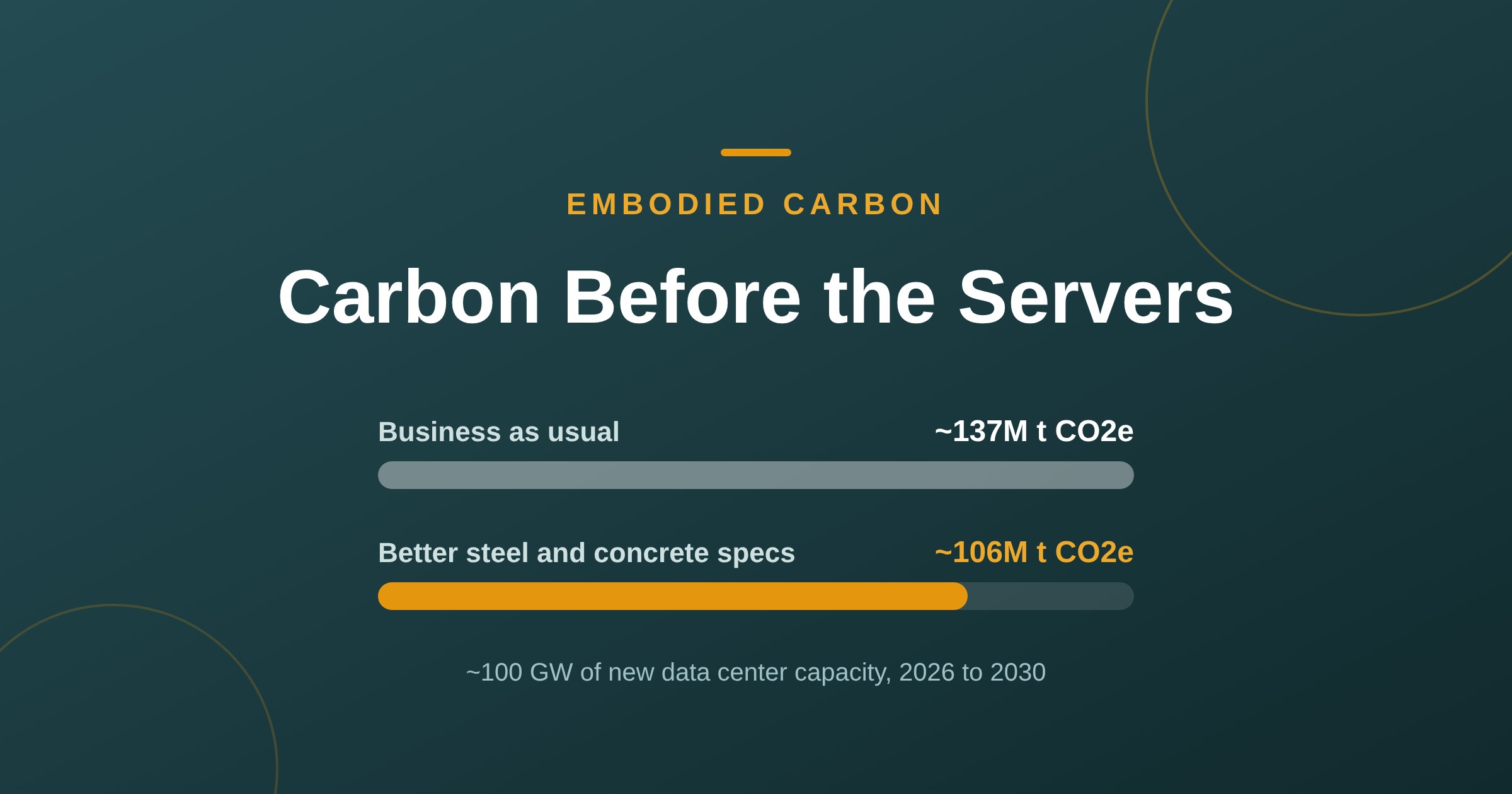
Data Centers’ Hidden 137M-Tonne Carbon Bill
New data centers could lock in ~137M tonnes of CO2e before a single server switches on. GGBS concrete and recycled steel could cut about 31M of it.
Read more
Built to Beat the Heat
This summer's drought wasn't a fluke, it was a preview. Here's the material data that actually decides whether a building shrugs off a heatwave or quietly cooks behind a great winter U value: decrement delay, solar reflectance, SHGC, and the real products behind each one.
Read more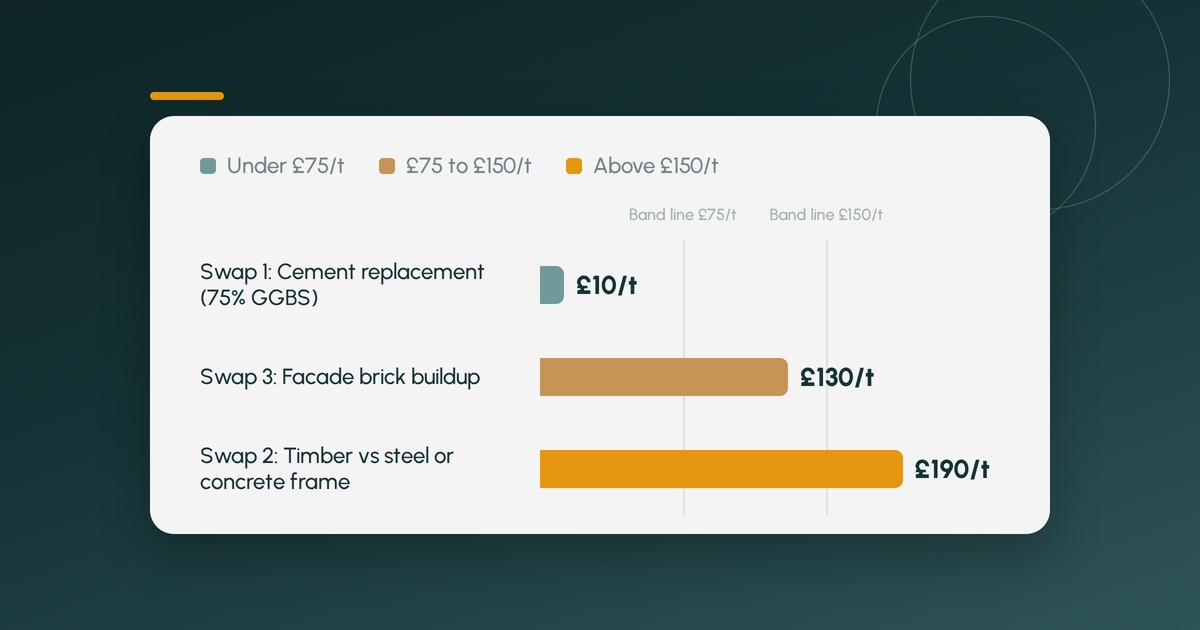
The Cost per Tonne Test for Embodied Carbon Swaps
Not every embodied carbon cut is worth paying for. Test any swap on cost per tonne of CO2e, see which band it falls in, and try the free calculator.
Read more