7 Mindful Things For a Better Climate

This article sheds the light on how structural engineers and designers can create designs that utilise materials efficiently to lessen their impact on the environment.
Here are 7 mindful things you can do for a better climate.
Upgrade existing buildings wherever viable
Existing buildings can be upgraded in a variety of ways, from space planning to significant structural changes. For example the superstructure may be demolished yet the foundations might be reusable.
If it is not feasible to reuse existing products from the building being replaced, then sustainable materials / products can also be used in other building applications to enhance the environmental performance of the building.
Ecorok
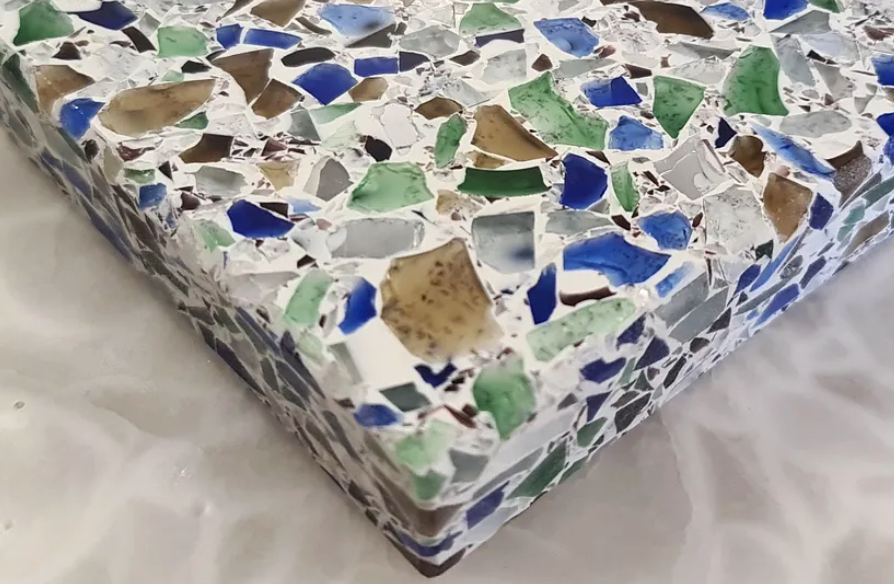
An example is Ecorok, designed and manufactured by Diamik Glass. These sustainable worksurfaces are produced from recycled glass aggregates and have been through years of development in order to result in beautiful, hardwearing and hygienic alternatives to imported, mined products.
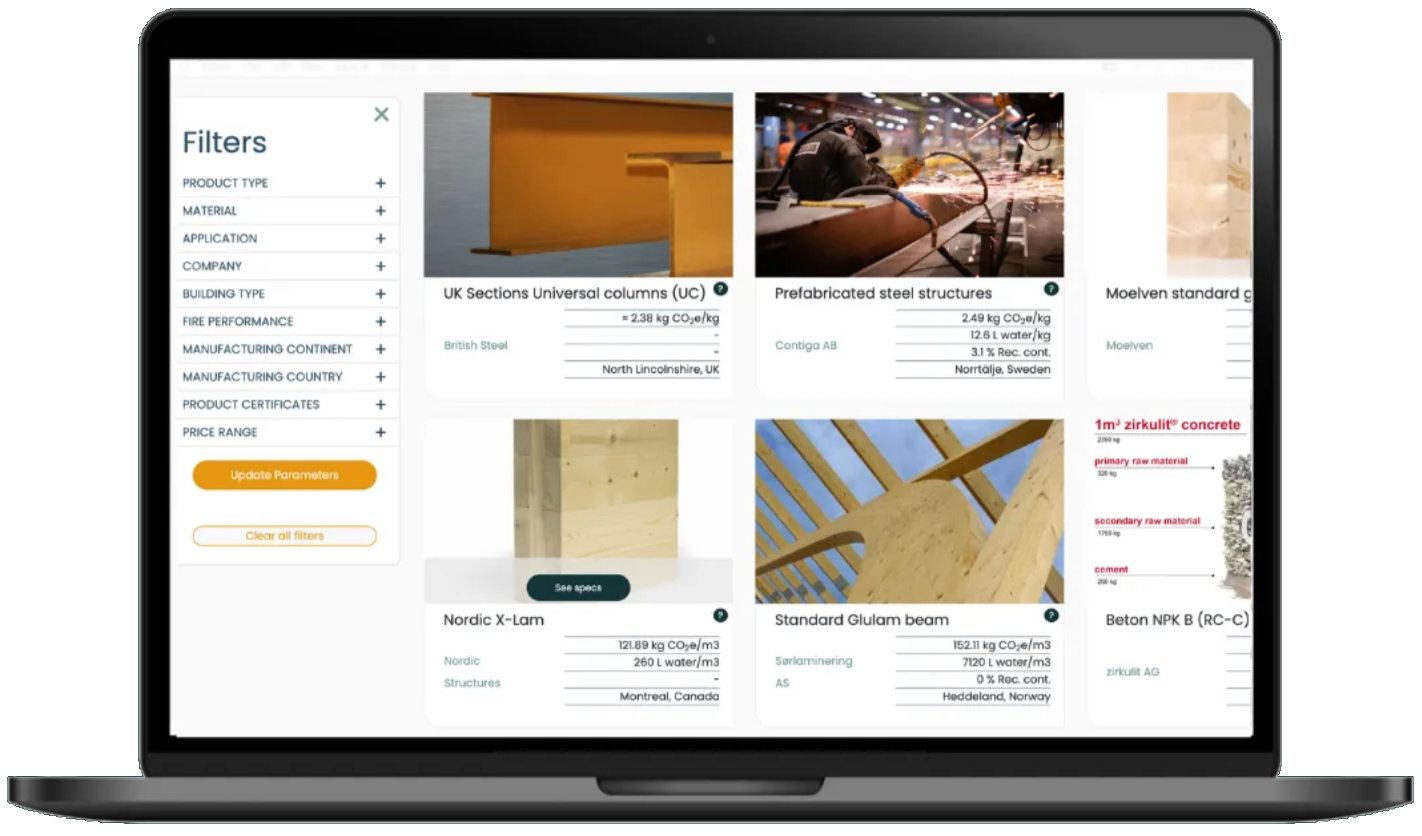
You can browse more beautiful and sustainable materials on 2050-Materials.
Boost utilisation
The final utilisation ratios of our structural elements are negatively impacted by the ease of building, the perceived danger of construction errors, and the lack of significant fines for overdesign.
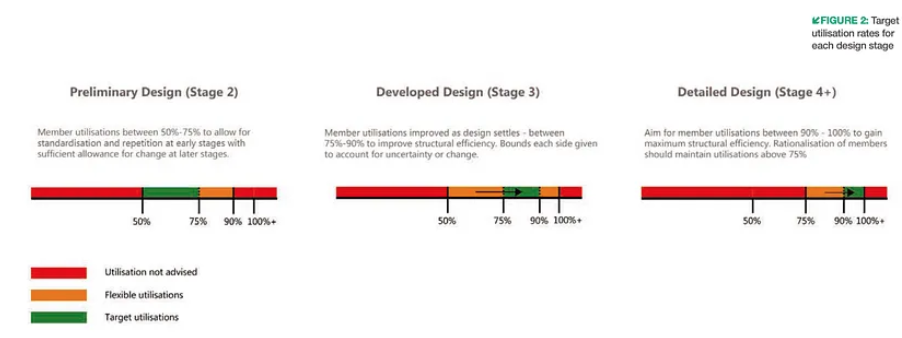
 Average utilisation ratios for typical steel buildings were determined to be below 50% by Moynihan and Allwood.
Working to greater minimum utilisations necessitates adequate quality controls, such as:
1- Working to lower utilisation ratios allows designers flexibility and room for late design changes.
2- Contractual requirements for design revision; coloring utilisation ratios in BIM models; and suggestions that project managers allocate a specific amount of time or money in bids or budgets for optimisation.
The value of the time and money spent on design creation and refinement, as well as the potential material savings that could result in cost and carbon reductions, must be made clear to the project team.
Examine serviceability standards
It is worthwhile to pursue the relaxation of those criteria in cooperation with the client and larger project team if the limiting utilisation of a structural part is for a serviceability criterion.
“We should not be designing buildings with initial redundancies which may never be needed” Natasha Watson
Focus on cutting back on grids likewise floor slabs
According to numerous studies, floors typically represent 40–50% of a building’s embodied carbon. Reducing the size of the structural grid is a foolproof method of lowering the amount of material needed for floors, according to structural sensitivity.
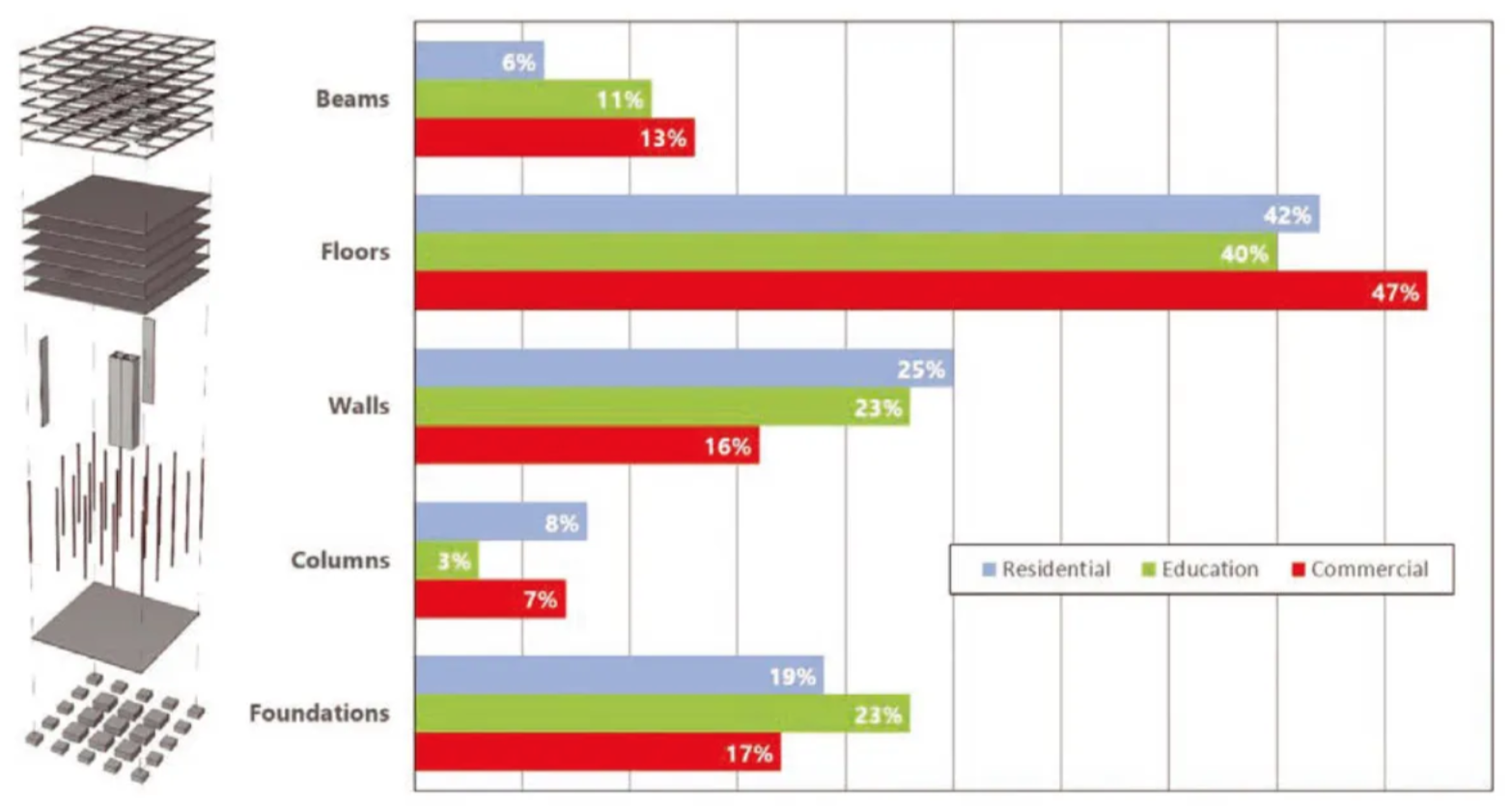
Concentrating your efforts on improving the floor slabs of the structures can result in significant embodied carbon savings when time and/or budget are limited for a project.
Do not use CEM 1 designations.
Portland cement manufacture accounts for the majority of the carbon embodied in concrete, thus if possible, CEM-1 mixes should be avoided. Use 20% replacement cement at the very least for the superstructure, substructure, and blinding.
Subcontractors may request a change of mix to CEM 1 during a project’s construction in order to have higher early-day strengths to make up for missed program. However, working with the subcontractor will allow you to identify the necessary strengths at the necessary periods and compare them to the typical strength gain curves for your initial design mix, alleviating the requirement for a CEM 1 mix.
Continue to learn, communicate, and share
In order to prevent climate change and guide ourselves toward a more sustainable future, we must cooperate and exchange knowledge so that we may learn from our mistakes and advance more quickly.
Register on 2050 Materials to make this easier
We built 2050 Materials to guide architects and designers design truly sustainable buildings.
The core of all work we do revolves around problems such as the MEP one, as well as solutions and actions to mitigate them. Join the free platform here, and reach out to us at info@2050-materials.com if you need additional support for a project.
Related articles
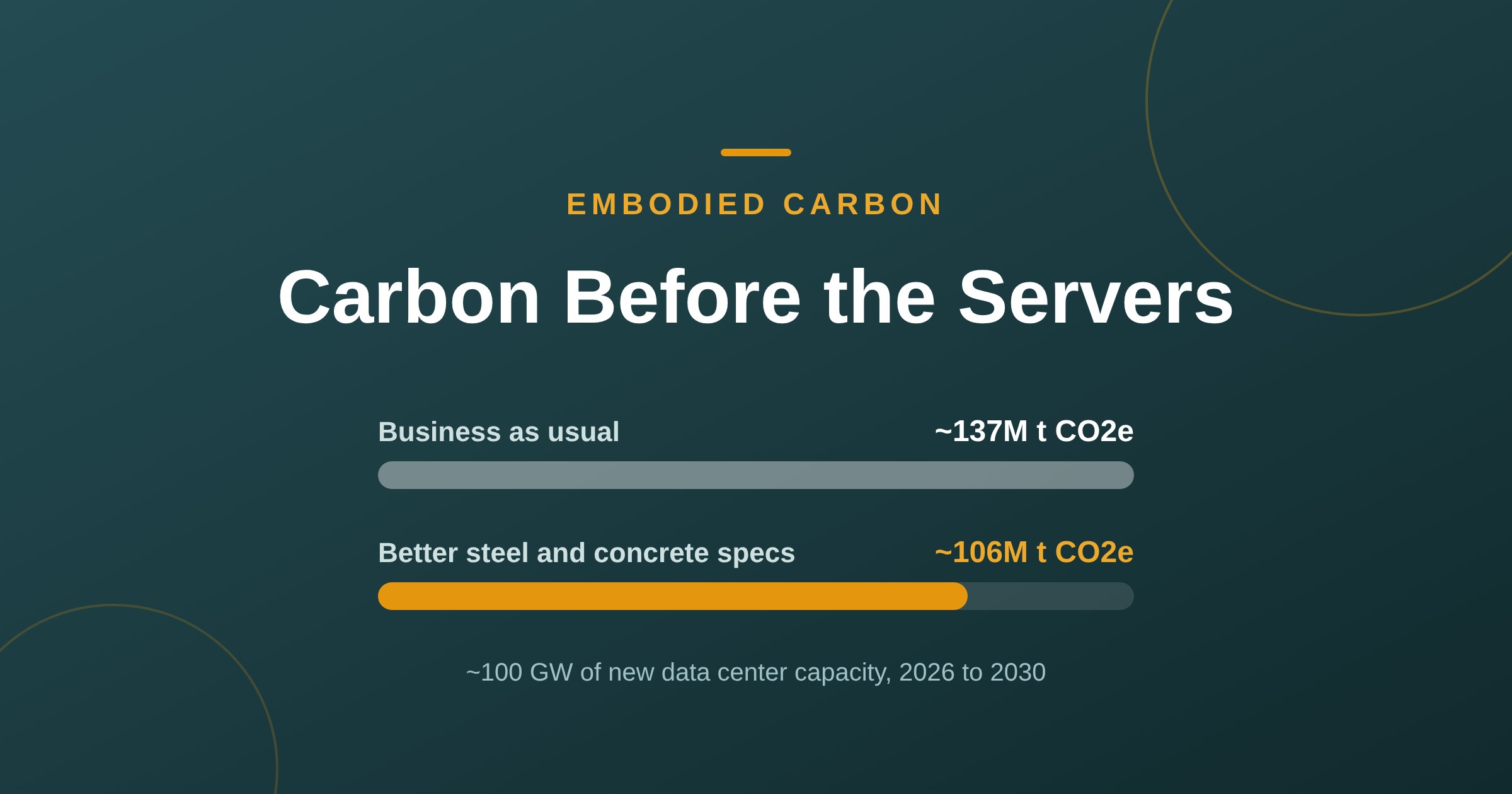
Data Centers’ Hidden 137M-Tonne Carbon Bill
New data centers could lock in ~137M tonnes of CO2e before a single server switches on. GGBS concrete and recycled steel could cut about 31M of it.
Read more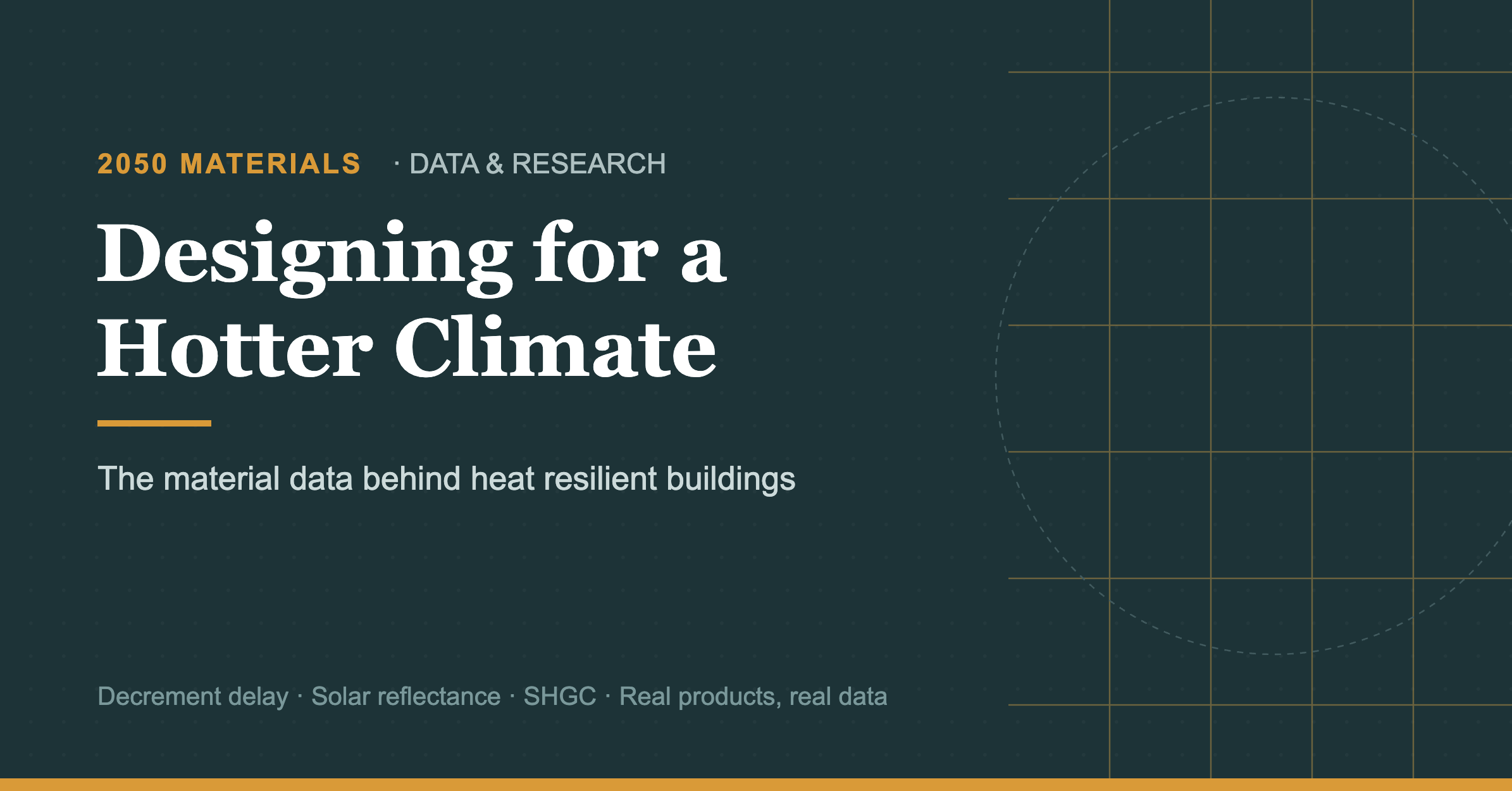
Built to Beat the Heat
This summer's drought wasn't a fluke, it was a preview. Here's the material data that actually decides whether a building shrugs off a heatwave or quietly cooks behind a great winter U value: decrement delay, solar reflectance, SHGC, and the real products behind each one.
Read more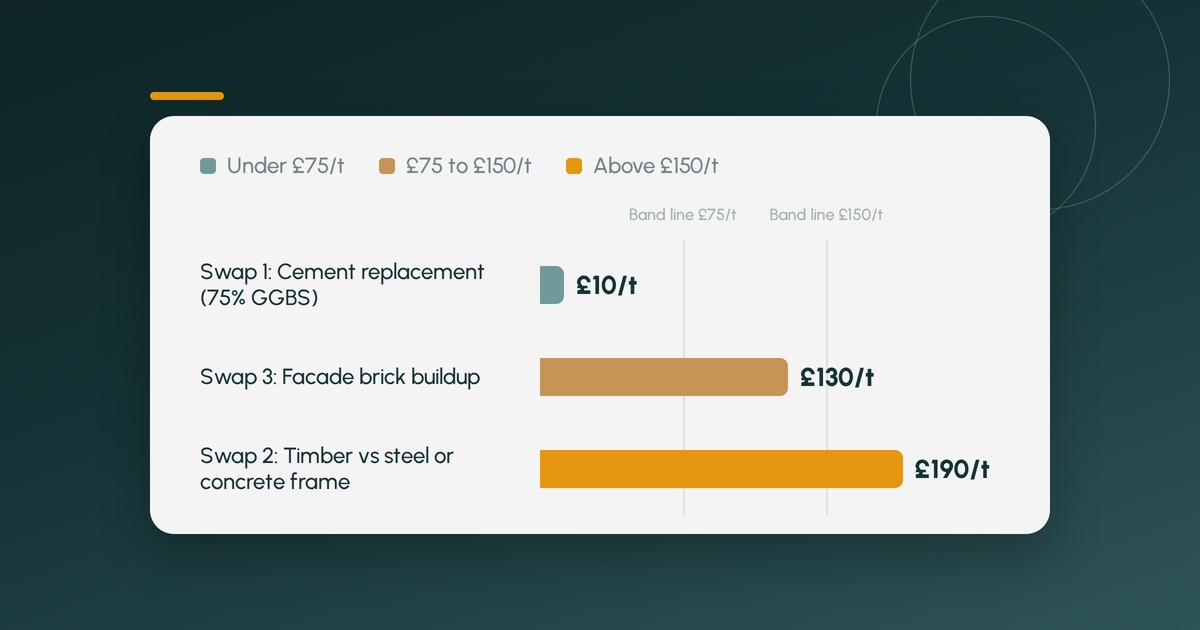
The Cost per Tonne Test for Embodied Carbon Swaps
Not every embodied carbon cut is worth paying for. Test any swap on cost per tonne of CO2e, see which band it falls in, and try the free calculator.
Read more