Data Centers’ Hidden 137M-Tonne Carbon Bill
Everyone is arguing about how many megawatts an AI data center burns once the servers switch on. Almost nobody is talking about what happened before that: thousands of tonnes of CO2e already locked into the steel and concrete, poured and cured months before a single GPU boots up. That carbon shipped already. It is sitting in the foundations. And unlike the electricity bill, nobody is watching it.
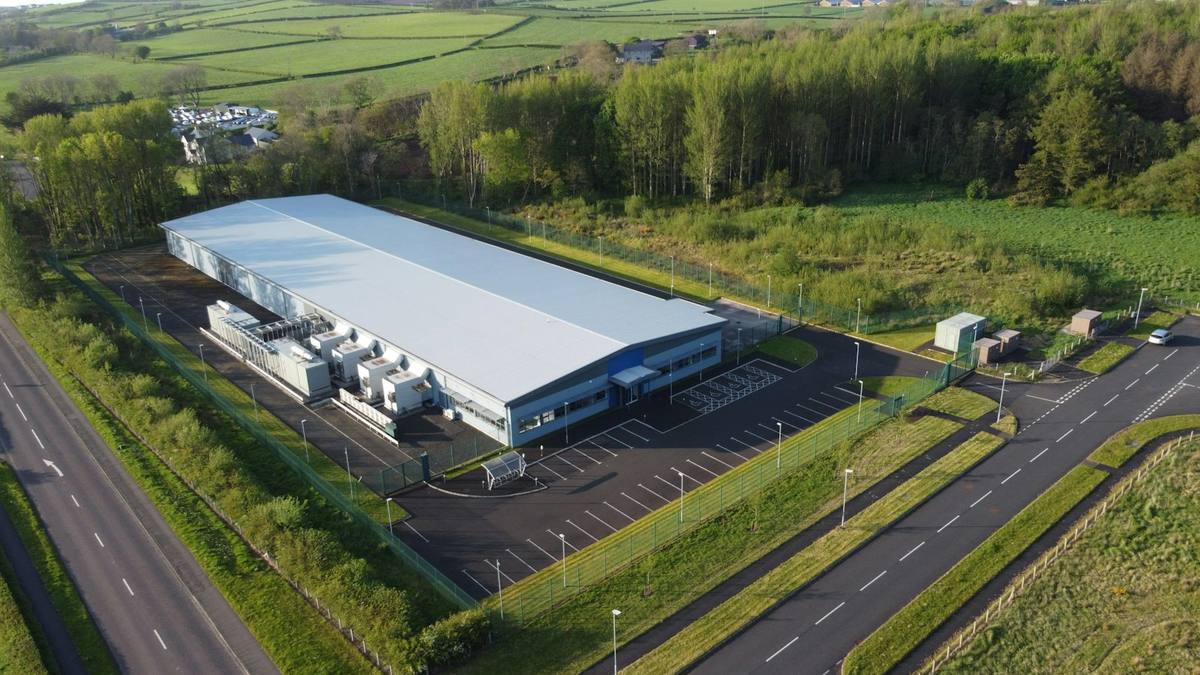
Where a data center’s embodied carbon actually concentrates, by material.
The boom, by the numbers
Data center construction is not a side effect of the AI race, it is the AI race, expressed in rebar. JLL’s 2026 Global Data Center Outlook puts nearly 100 gigawatts of new capacity going up between 2026 and 2030, doubling global capacity to around 200 gigawatts. The Americas hold about half of global capacity and are growing at a projected 17 percent annual clip through 2030, with the US accounting for roughly 90 percent of the region’s capacity. Price tag: about $3 trillion, split between roughly $1.2 trillion of real estate value and $1 to $2 trillion of fit-out for GPUs and networking. Construction costs are climbing too, from $7.7 million per megawatt in 2020 to $10.7 million in 2025, on their way past $11 million next year.

The bill that ships before the electricity does
Embodied carbon: the emissions baked into the building before it does anything at all.
Building materials and construction processes account for roughly 15 percent of global greenhouse gas emissions, according to the 2024 GRESB Real Estate Benchmark, cited by Equinix. Cement alone is responsible for around 8 percent of global CO2 emissions, according to Chatham House. Data centers concentrate that problem: a Gensler report, via Data Center Frontier, found concrete alone can account for up to 80 percent of a data center’s embodied carbon, depending on how much steel is in the mix.
Put an actual number on one building and it stops being abstract. A Purdue University study, “The True Environmental Cost of Data Centers”, measured four real facilities and found an average of about 18,800 tonnes of CO2e baked into construction, before a single server ships. Scale that across just the growth of the US market in a single year, 2025, and the same study projects roughly 1.83 million additional tonnes of CO2e, from structural concrete, steel and site piping alone, based on an expected 25 percent increase in data center construction.
These are averages from a handful of studied buildings and one country’s projected growth, not an audited global total, and the flight comparison uses a single domestic route (Edinburgh to London, per Our World in Data) as its unit. The point is the order of magnitude, not the decimal point: embodied carbon in this buildout is not a rounding error.
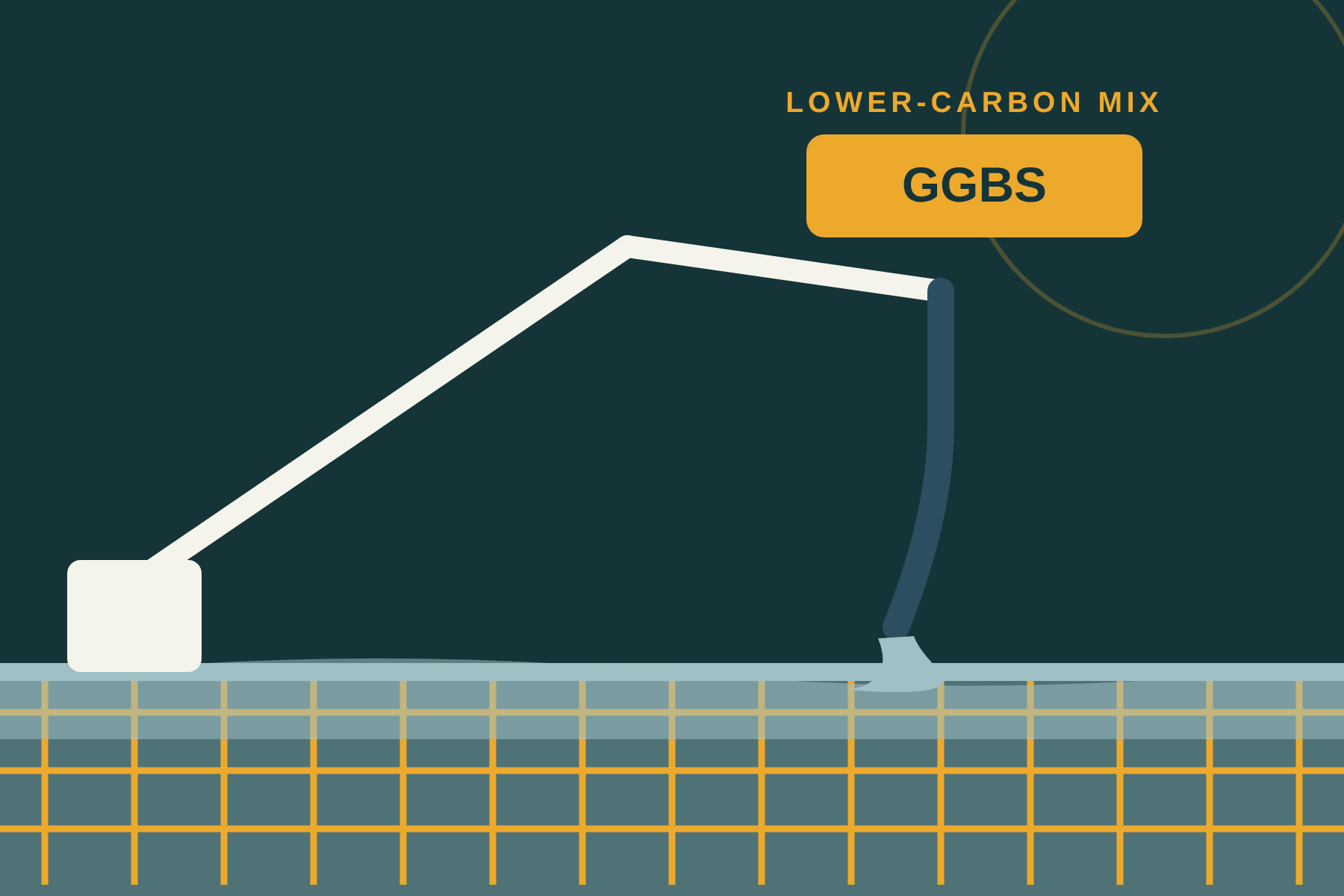
Swapping to 75% GGBS cut embodied carbon by 48% on a real project, the Harwell EPAC development.
The two decisions that actually move this number
Not the PPA. Not the chip. The spec sheet.
Two material choices do almost all the work here, and both are boring, unglamorous, and entirely within a project team’s control before ground is even broken.
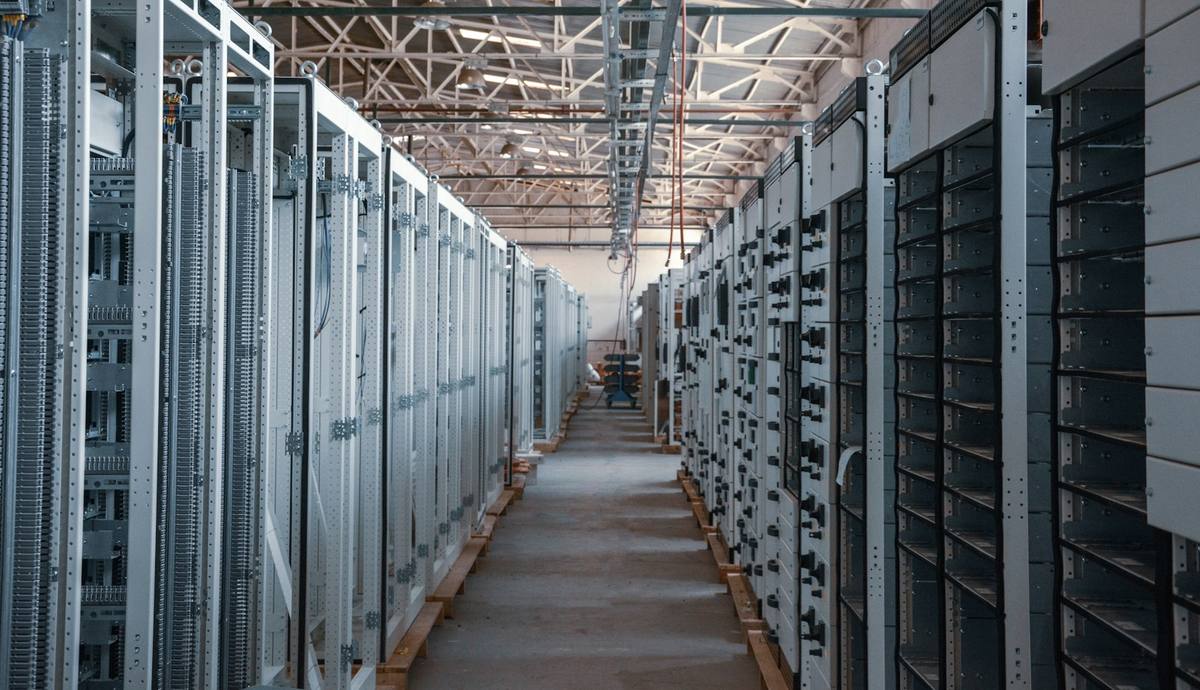
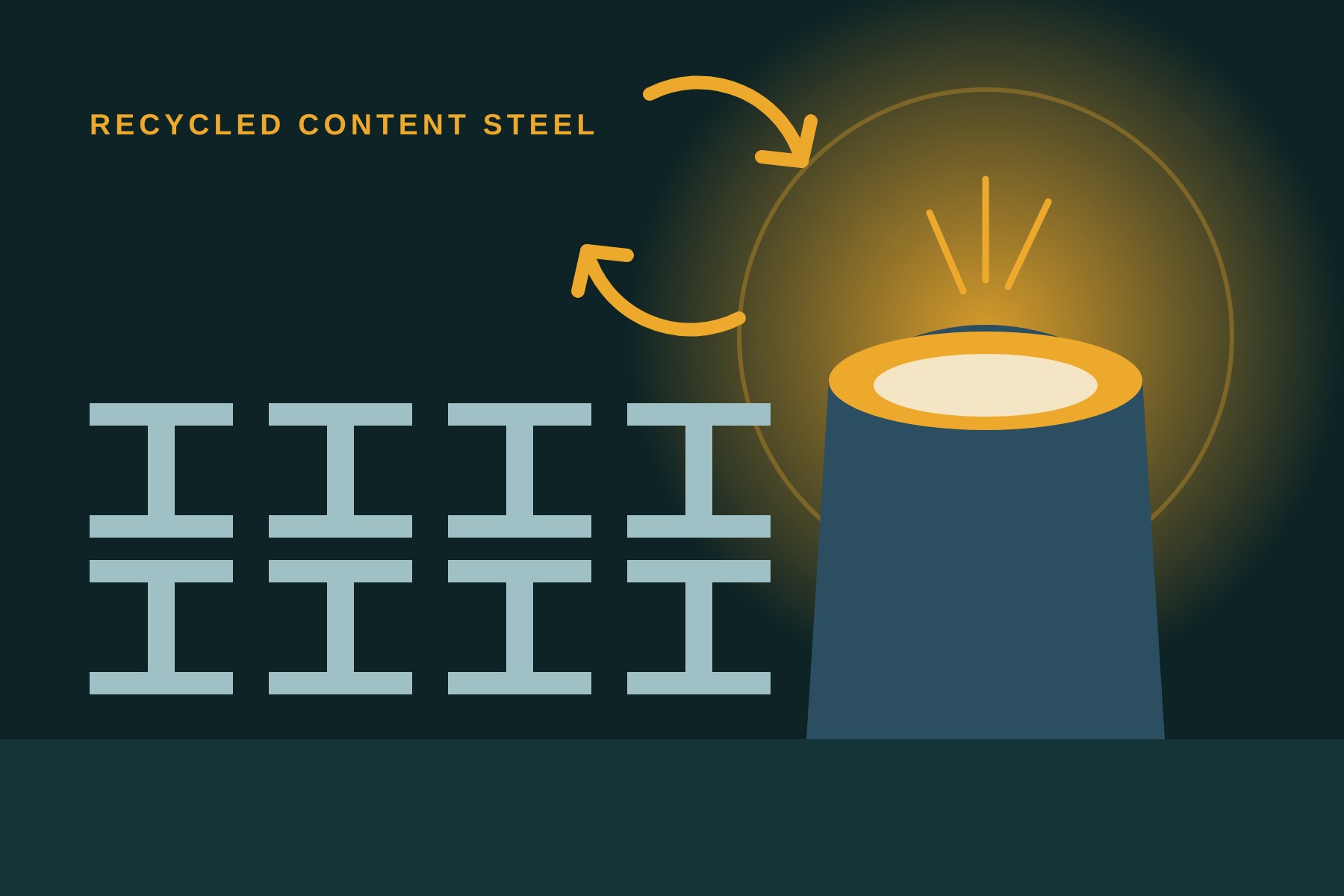
Steel. Primary, virgin steel made in a blast furnace can carry an embodied carbon footprint up to five times greater than high-recycled-content steel, per the Carbon Leadership Forum’s Carbon Smart Materials Palette. Electric arc furnaces, which run on scrap, emit less than half the CO2 of the older basic oxygen furnace process, and use an average of 93 percent recycled content versus a roughly 30 percent scrap ceiling for BOF steel. Specify recycled-content structural steel and you are not making a marginal improvement, you are picking a different emissions category entirely.
Concrete. Swapping a share of Portland cement for ground granulated blast-furnace slag, GGBS, is not theoretical. On the Harwell EPAC project in the UK, 7,500 cubic meters of structural concrete specified at 75 percent GGBS cut embodied carbon by 48 percent against a standard Portland cement mix, 1,494 tonnes of CO2e instead of 2,867. Microsoft has set a goal of mix designs that cut concrete’s embodied carbon by more than 50 percent, and Meta has developed an AI-optimized mix with 40 percent lower carbon emissions, both via Data Center Frontier.
Recycled steel is not infinite. The recycled steel available today is only enough to supply around 30 percent of global steel demand, so virgin production is not going away soon. And GGBS, the same material that makes low-carbon concrete possible, is itself a byproduct of primary blast-furnace ironmaking. Push the industry too hard toward recycled steel and electric arc furnaces, and you shrink the supply of the slag that makes low-carbon concrete possible in the first place. These two fixes are quietly tangled together, not independent levers.
Virgin, blast-furnace steel can carry up to five times the embodied carbon of high-recycled-content steel.
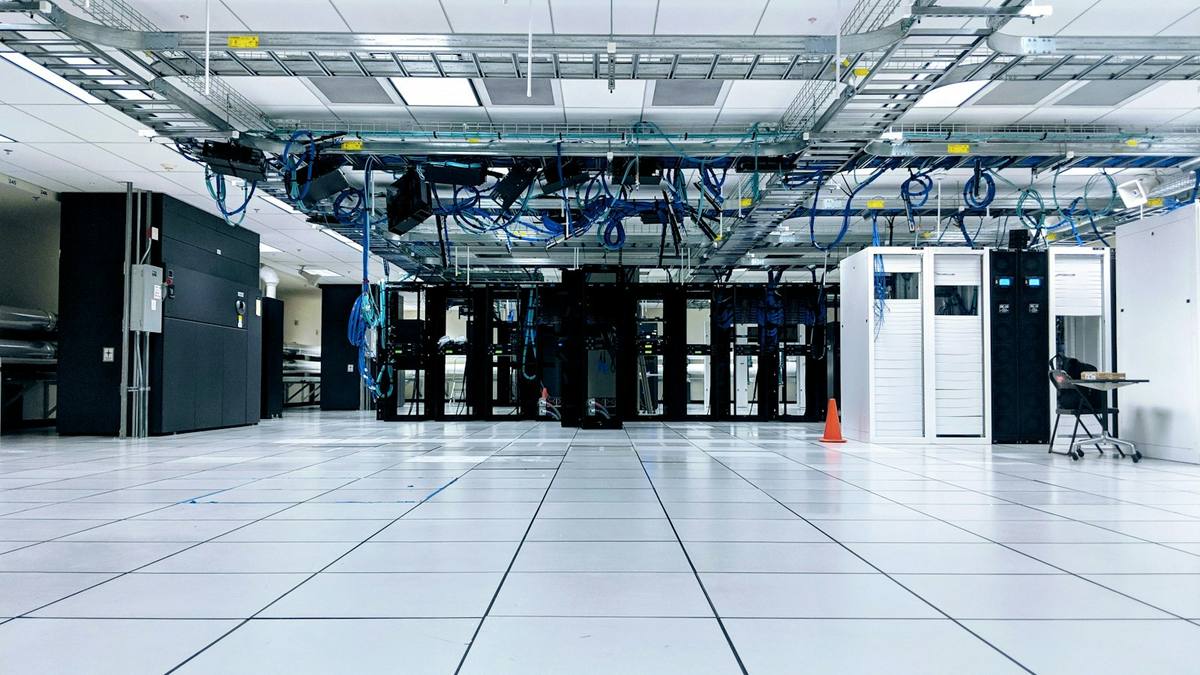
What if the whole buildout used better specs?
Not one building. All ~100 gigawatts of it.
Run the same two decisions, GGBS in the concrete and recycled content in the steel, across the entire pipeline JLL is projecting rather than a single building, and the number stops being a rounding error and starts being a headline. We could not find a published per-megawatt embodied carbon benchmark for data centers, so this is a modeled estimate, not an audited total: it takes Purdue’s own per-facility average, divides by a real average data center size, 13.75 megawatts, the mean of 2,132 US facilities in an arXiv analysis of US data center capacity, to get an implied ~1,370 tonnes of CO2e per megawatt, then applies that rate to JLL’s ~100 GW of new global capacity through 2030.
This combines two real but separately sourced numbers: Purdue’s ~18,800 tonne average building, and a 13.75 MW mean facility size from a sample of 2,132 US data centers (median 4.5 MW, so a few very large sites pull the mean up). Purdue’s four buildings are US projects, and the JLL buildout is global, so the scaling is rough. Dividing by the 4.5 MW median instead would give a total several times higher. Treat it as an order of magnitude, not a forecast.
Two levers, applied alone and together, across the entire 2026–2030 buildout, not just one building.
Try it: what would greener specs actually save?
Two material decisions, at either scale
Modeled on the Purdue study’s ~18,800 tonne CO2e average data center, split an illustrative 65% concrete / 30% steel / 5% other (Gensler reports concrete can be up to 80% in data centers). A different split moves the result: roughly 26 to 36 million tonnes saved at the default settings. Toggle the scope, then move the sliders.
Worth reading, or worth ignoring
Worth reading
- A concrete mix design with a published Environmental Product Declaration, not just a marketing claim
- Steel specified by recycled content percentage, not just the word “sustainable”
- A developer who can tell you the embodied carbon number for the structure, not only the operational PUE
Worth ignoring
- “This data center is carbon neutral”, based only on a renewable energy contract, with the concrete underneath never mentioned
- “Sustainable materials” with no percentage, no product, and no way to check it
- Scope 3 embodied carbon left out of a sustainability report entirely, because operational emissions are easier to measure
AI did not invent embodied carbon, it just supersized the construction schedule fast enough that the industry has to make these material decisions at a pace it has never faced before. The fix is not a breakthrough. It is a spec sheet: how much recycled content, how much GGBS, checked against real product data instead of a press release. That is a decision every one of these hundred gigawatts still gets to make.
Before you spec a product for the next build, check its actual embodied carbon rather than take a brochure’s word for it. That is what the 2050 Materials platform is for.
Sources referenced
- Embodied Carbon: The Unseen Emissions That Enterprises Can’t Ignore, Equinix
- Why Cement is a Major Contributor to Climate Change, Chatham House
- Leading the Charge for Low-Carbon Green Concrete in Sustainable Data Center Construction, Data Center Frontier
- The True Environmental Cost of Data Centers, Purdue e-Pubs / CIB Conferences
- Which form of transport has the smallest carbon footprint?, Our World in Data
Related articles
Built to Beat the Heat
This summer's drought wasn't a fluke, it was a preview. Here's the material data that actually decides whether a building shrugs off a heatwave or quietly cooks behind a great winter U value: decrement delay, solar reflectance, SHGC, and the real products behind each one.
Read more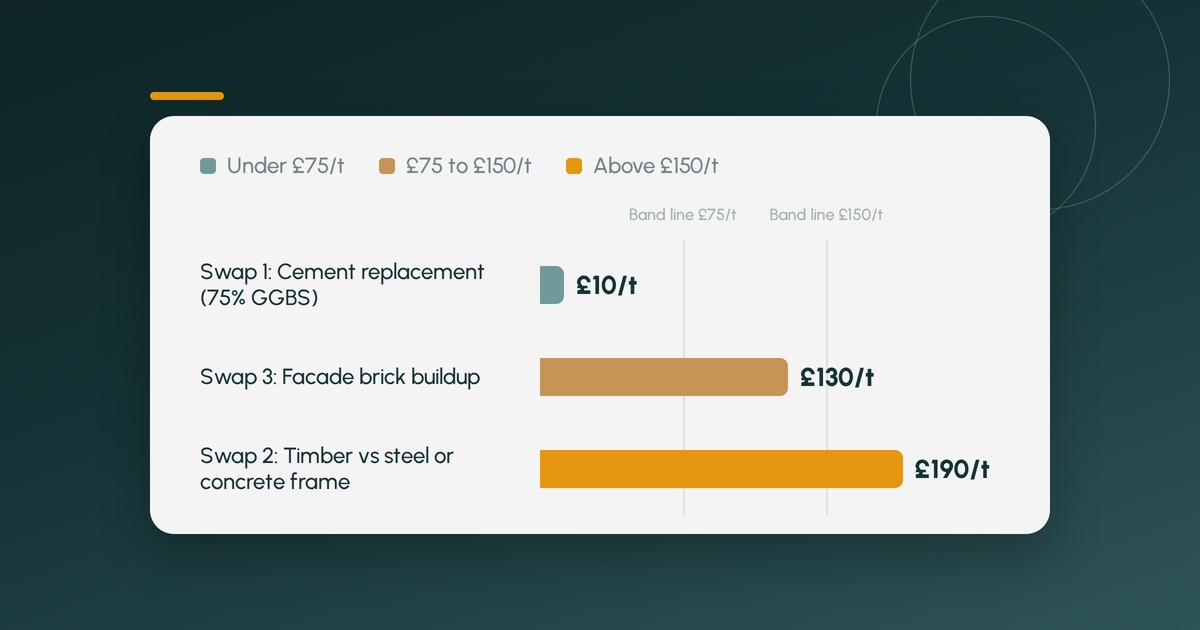
The Cost per Tonne Test for Embodied Carbon Swaps
Not every embodied carbon cut is worth paying for. Test any swap on cost per tonne of CO2e, see which band it falls in, and try the free calculator.
Read more
PFAS Compliance Meets Countdown
Sealants, membranes and insulation are next in line for PFAS restrictions. The window to get ahead of it, rather than scramble to catch up, is closing.
Read more