This summer didn’t feel like an anomaly. It felt like a trailer for what’s coming. The European summer of 2026 delivered exceptional heat and widespread dryness from Portugal all the way up to southern Finland, with below average rainfall from April through June and not much sympathy from the sky since. By August, four of Europe’s biggest rivers, the Loire, Po, Rhine and Danube, had dropped to record lows, and the forecast basically shrugged and pointed to more of the same through autumn. At one point roughly half of the EU and the UK was under drought at some level, and five countries logged nearly 10,000 excess deaths linked to the heat in June alone. Not exactly a footnote.
Wildfires, cracked reservoirs and stranded barges get the headlines, fair enough. What gets less airtime is what all of this means for the buildings being specified this week, buildings that will still be standing in the 2040s and 2050s, in a climate showing zero signs of cooling off. Heat resilience isn’t a nice line on a sustainability slide anymore. It’s a material choice, made one project at a time, and it turns out there’s data behind it you can check the same way you’d check embodied carbon.
Why more insulation won’t save you
The instinct is always the same lever: chuck in more insulation. Fair instinct, wrong problem. That reflex comes from decades of designing for heating, and it doesn’t just transfer over to a cooling problem because you’d like it to. Researchers picking apart England’s Part O overheating rules keep landing on the same awkward finding, and Swiss retrofit studies back them up: insulation that’s brilliant at keeping heat in during winter isn’t automatically any good at keeping it out in summer. Materials with real heat storage capacity, wood fibre boards among them, delay heat getting into a building by hours longer than the lighter, low mass stuff manages.
2050 Materials‘ own resilience taxonomy splits this out into hazard specific KPIs instead of one tidy carbon number, because a crack healing rate matters for one hazard and a lambda value plus thermal storage capacity matters for heat, and treating them as the same metric helps nobody. Aerogels sit at one extreme, nano-porous, barely conductive, brilliant when you’re desperate for a thin build up. Mineral wool sits at the other, prized as much for shrugging off temperatures above 1000°C as for its everyday U value.
That lag has a name, and it’s a good one: decrement delay. It’s the gap between peak heat outside and peak heat finally showing up on the inside face of your wall or roof. Get that gap into the range below and the heat turns up after dark, right when purge ventilation can chuck it back out again instead of trapping it indoors till breakfast.

Illustrated Guides to Insulation Materials
Our Illustrated Guides to Insulation Materials turn the decrement delay data behind this exact table, straw sailing in at 21 hours, PUR limping in at 3.5, into a visual reference sorted by carbon performance and resource origin, built for exactly the decision this section is asking you to make.
Envelope and thermal mass: where the delay actually comes from
This is where the product you actually pick starts to matter. Dense, high specific heat insulation, wood fibre, hemp, cellulose, holds onto and delays heat far better than the lightweight foam boards that got specified mainly for a good winter U value. Neither material is wrong, exactly. But a spec built entirely around winter performance can be quietly carrying a summer overheating risk nobody priced in, and nobody notices until July.
Products here are picked for the specific property in question, decrement delay, reflectance, SHGC, thermal mass, or generation, not for being the single lowest carbon option around. Natural materials usually win on both. Where they don’t, we’ve said so.
On the platform: envelope products worth checking for decrement delay
- Gutex Wood Fibre insulation boards, Gutex Thermoflex and Gutex Thermofloor, used to reduce thermal bridging and lower overheating risk in timber frame builds
- Thermo Hemp Combi Jute Insulation mats and the Natur-Chanv hemp panel, combining thermal regulation with moisture control
- SteicoFlex wood fibre insulation and Thermafleece Cosywool, both adding high thermal mass with acoustic benefits for roofs, walls and floors
- Ecocel cellulose fibre insulation, recycled and fire treated, and the Thermablok Aerogel Insulation Blanket for thin, high heat build ups
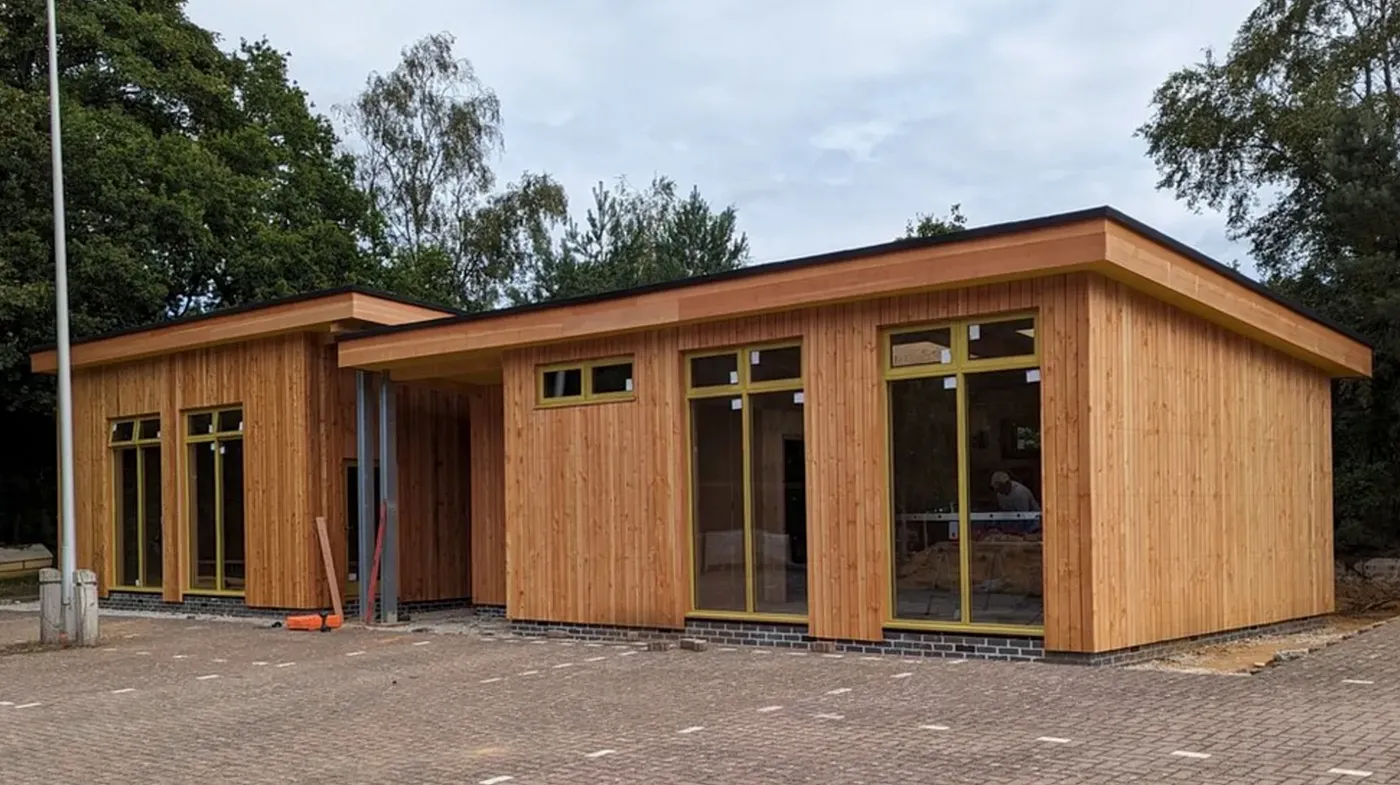
- The ADEPT External Wall System, pairing hygroscopic natural insulation with a documented reduction in summer overheating on a real training facility build
Roofs and facades: this is where it gets dramatic
If the wall build up is all about delay, the roof and facade are all about reflection and shade, and the numbers here are bigger than most people expect, dramatically bigger. A white surface with a solar reflectance of 0.8 warms up by only about 10°C under strong sun. A dark surface with a reflectance of 0.05 warms up by roughly 50°C. Same sun, wildly different afternoon.
wall surface temperature drop after greening a west facade, Lausanne renovation
Smart Landlord, Aug 2026
cut in annual cooling energy use from cool roof retrofits
Passive cooling systematic review, 2026
On the platform: roof, facade and shading products
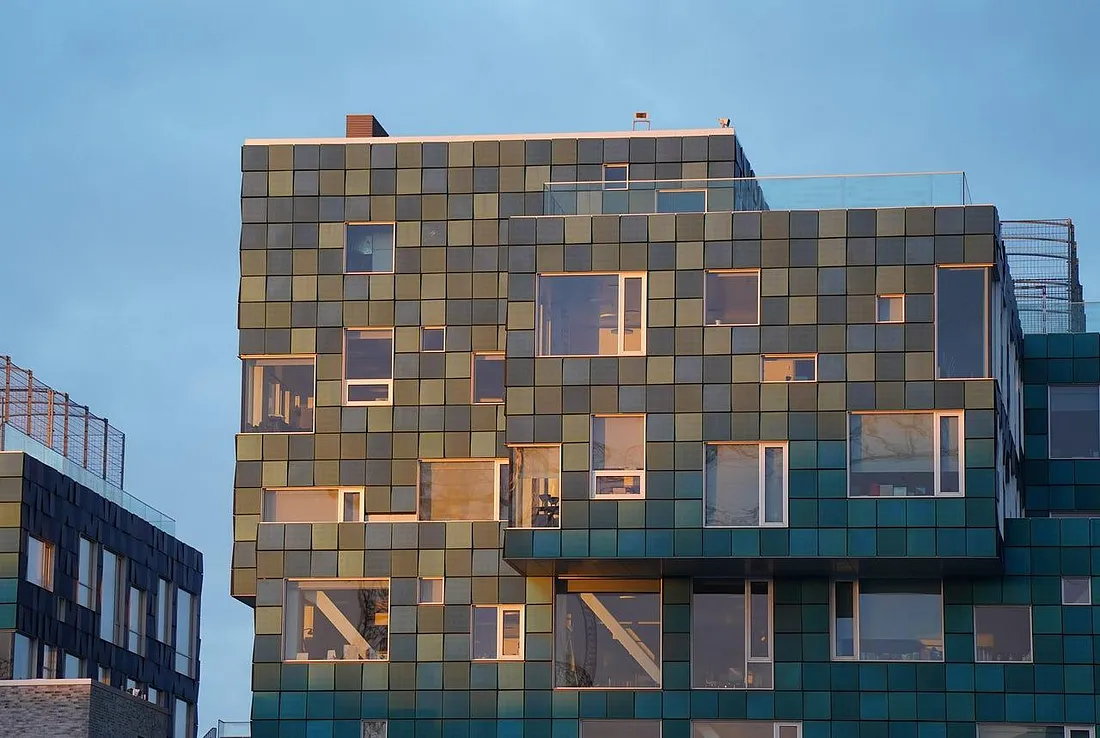
- SolarLab’s building integrated photovoltaic facade cladding, generating power while shading the wall behind it and cutting cooling demand
- Cembrit Solid fibre cement rainscreen cladding, back ventilated to manage moisture and reduce the load on the insulation behind it
- The ModCell Straw Technology, a prefabricated straw panel system supporting green certification routes for external walls
- Sioen’s Type II Technical Textile, already specified for sun shading elements and roof coverings in tensile structures
Glazing and solar control
Windows are usually where a heat resilient spec quietly falls apart, and here’s the kicker: a triple glazed unit chosen purely for a great winter U value can still let in more than enough solar gain to roast a south facing room in July. Solar control glass, using low-e or spectrally selective coatings, is built specifically to cut that solar heat gain coefficient, and in a heatwave that number matters a lot more than the U value ever will.

On the platform: glazing worth checking against solar heat gain, not just U value
- The Double Vitrage CLIMAPLUS ORAE by Saint-Gobain, a double glazing system made with 64% recycled glass and a carbon footprint of just 18.4 kg CO₂/m²
- The Prestigio Section PVC window by Alphacan, available in double or triple glazing with U values as low as 1.0 W/m²K
- Solar control glass more broadly, worth cross checking by SHGC alongside U value wherever a facade has significant west or south facing glazing, via the facade category
Ventilation, thermal mass and the PCM option
The other half of this equation is what happens once heat gets past the envelope anyway, because some of it always will. Heavy materials, concrete, brick, clay, soak up heat all day and hand it back at night, and paired with an actual night ventilation plan, that trick alone kept a Zurich pilot building at a maximum indoor temperature of 25.4°C in June 2026 with zero mechanical cooling. Not bad for something so low tech. Purge ventilation only earns its keep, though, if there’s somewhere for that stored heat to actually go, which loops straight back to the decrement delay point above. If thermal mass is being added on purpose rather than just inherited from the structure, the curated collection of brick products with EPDs on the platform is a sensible place to start looking.
Where thermal mass just isn’t buildable, phase change materials are increasingly stepping in to do the job instead. They’re flexible enough to hide inside walls, ceilings, floors, roofs, facades, glazing systems, even BIPV elements, which makes them a genuine retrofit option rather than a shiny new build only feature. Worth watching closely on the platform, since more PCM linked EPDs keep landing, and this category sits at exactly the intersection of the carbon data already tracked here and the thermal performance data this whole article has been making the case for.
Time to simplify heat resilient material selection
The same database you already use to check embodied carbon has been quietly holding the decrement delay, reflectance and SHGC figures behind every product in this article too, from early design all the way through to procurement.
More products worth checking on the platform
Beyond the envelope, roof and glazing choices above, a handful of other categories keep turning up again and again in heat resilience specs, either adding thermal mass on purpose or cutting solar gain right at the roof plane.
Natural Building Systems’ Roof System
Demountable hemp based roof cassettes, combining thermal regulation with a circular, disassemble and reuse design.
Hemp Concrete Block, PAL36
A lightweight, biodegradable block from Nature Fibres Inc., suited to non-structural walls needing added thermal mass without the weight of standard block.
KOBE Hemp Fibre
A hemp based insulation option worth comparing against wood fibre and cellulose on decrement delay, not just lambda value.
Natural Stone facades
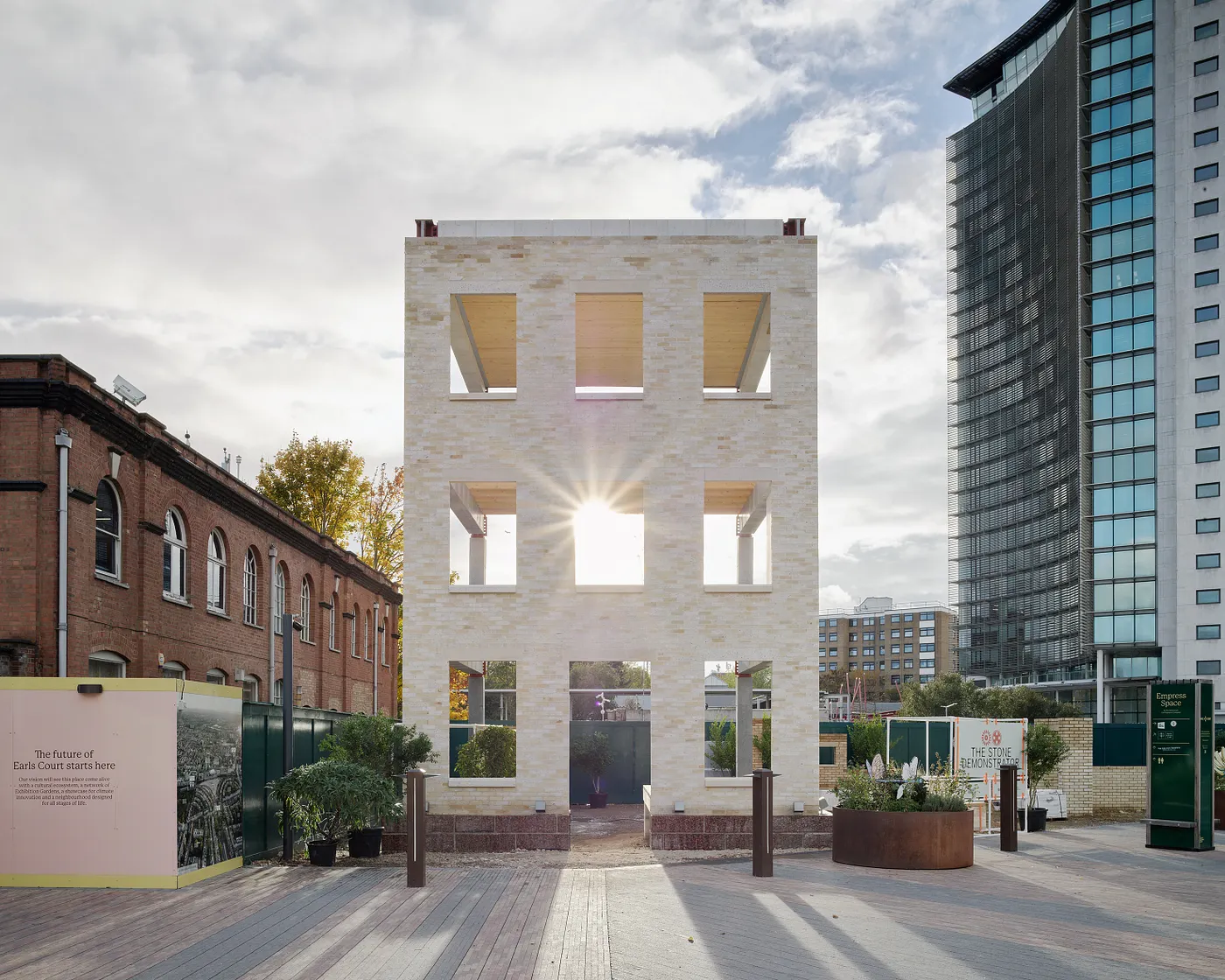
High mass, high durability facade material, listed on the platform’s structural and facade resilience taxonomy alongside self healing and permeable concretes.
BDO Terracotta Orange, BISOL
A monofacial photovoltaic panel designed to integrate with terracotta coloured roofs, generating power while adding a shading layer over the roof deck.
Viridian Solar PV16–405–M10
A 405W mono-crystalline rooftop module by Marley, reducing the area of exposed dark roof surface while offsetting cooling load with generation.
Skip the search, start from a shortlist
Pre-filtered, EPD-backed picks like the Insulation Materials, Resilient Cork, Progressive Hemp-Based, and Bio-based Materials collections, put together by our team so you’re never starting from a blank search.
Where the platform earns its keep here
What do the envelope, the roof and the glazing all have in common? A comparable, verified number that never made it into the room before the spec was signed off. For heat resilience, that number is decrement delay, solar reflectance, SHGC, or a PCM’s latent heat capacity, and it’s sitting right next to the EPD data you’re already searching on the platform.
For envelope and insulation choices: search by material family, wood fibre, hemp, cellulose, aerogel, rather than by U value alone, because summer performance and winter performance have a habit of not moving together. The curated insulation collection is the fast way to line those families up side by side.
For roof, facade and glazing decisions: cross check reflectance, shading and SHGC claims against the manufacturer’s own EPD, the same way you’d never take an embodied carbon figure at face value either.
For teams building out full assemblies: the same product database you use for cost and carbon checks can flag a thermal mismatch long before it becomes a Part O headache later in the project.