Oct 15

e4E Brick Slips: All the Brick, None of the Kiln

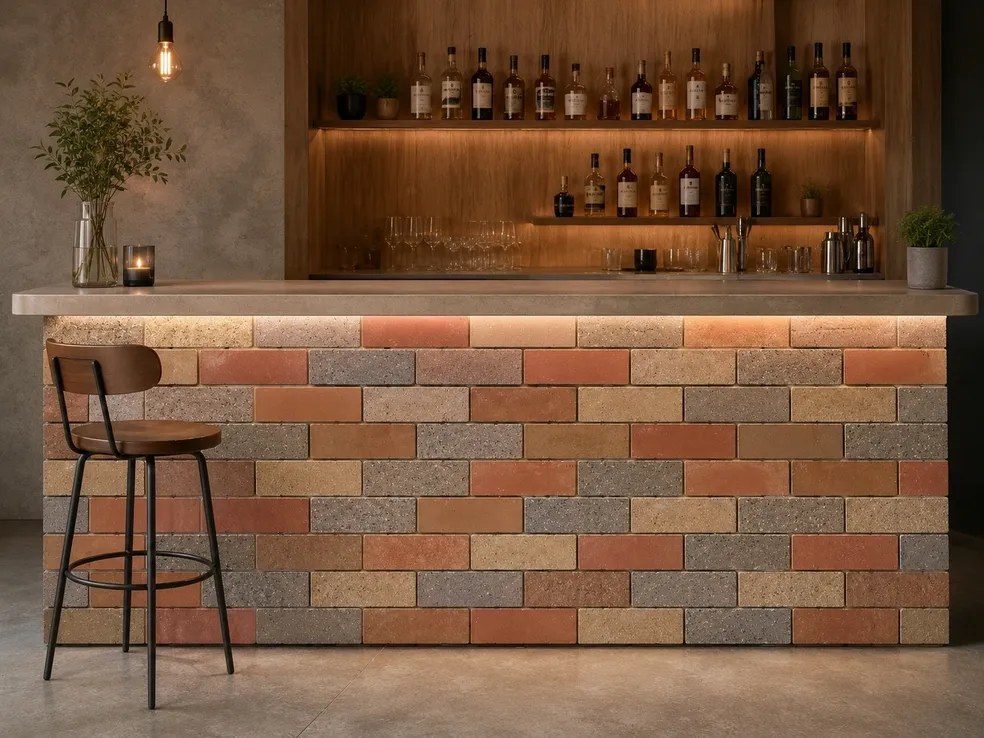
A bar front clad in e4E brick slips in grey, cream, orange and red

2050 Materials · Manufacturer Spotlight

e4E Brick Slips: All the Brick, None of the Kiln

A brick slip gives a wall the look of brickwork in a slim 20 mm unit. earth4Earth (e4E) makes theirs from excavated soil, presses them instead of firing them, and has L10 and N10 in stock in the UK right now.

A bar front clad in brick slips in grey, cream, orange and red

Most brick stories start with a kiln. This one skips it. e4E has turned its soil based materials into brick slips, the thin cladding units that put a brick finish on façades and interior walls. Here is what they are, how they are made, what you can specify and where to check the data on the 2050 Materials platform.

New to e4E? We have already covered the company and its technology and its first UK project in Manchester. This time the spotlight is on the slips.

The format

What makes a slip a slip?

A brick slip is a thin cladding unit that creates the appearance of brickwork. e4E produces slips either by pressing them directly into moulds or by cutting them from full sized bricks. e4E slips are 20 mm thick and suitable indoors and out. They can be installed using suitable adhesive and pointing mortar, or incorporated into a compatible brick slip system, subject to confirmation of the substrate, fixing method and intended application.

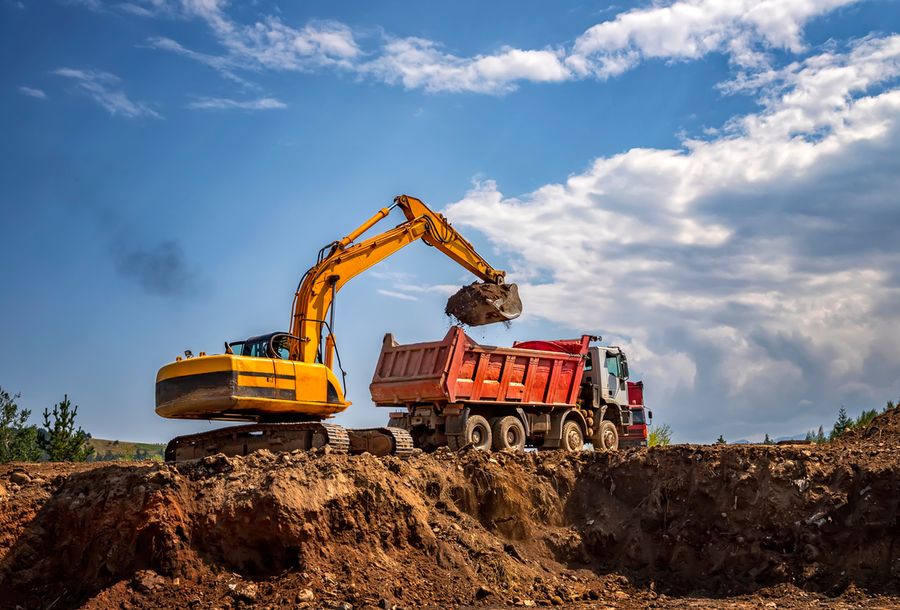
An excavator loading excavated soil onto a truck

Soil in, slip out

The recipe is soil, sand and a lime based binder. The soil is excavated material from construction projects that would otherwise head to landfill. The slips are compressed rather than fired, and they are fully recyclable.

Two routes to a slip

Pressed or cut

e4E makes slips in two ways: pressing them straight into slip moulds, or cutting them from its full sized bricks. The route shapes what you can choose.

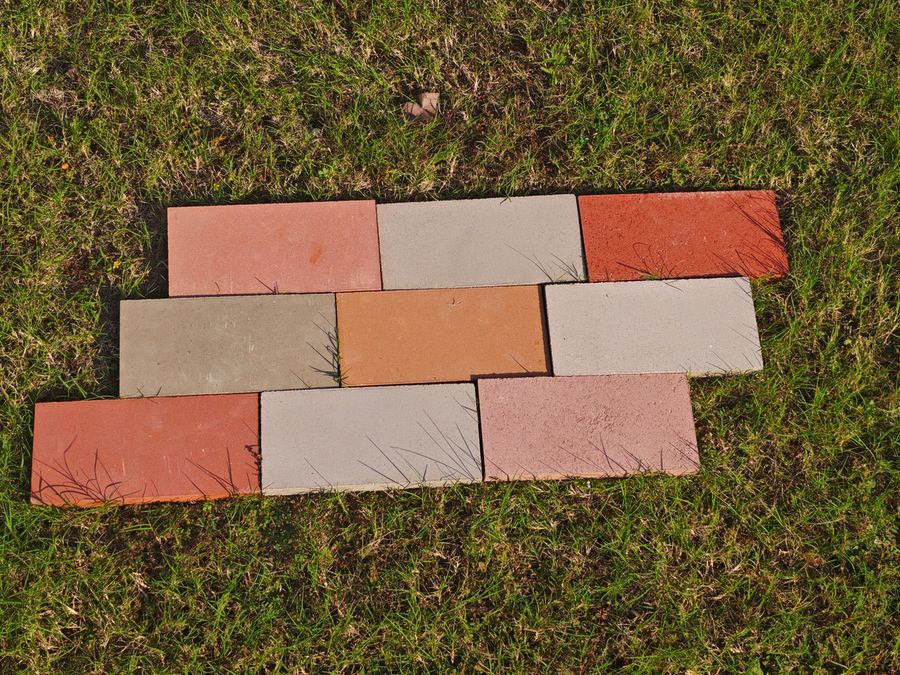
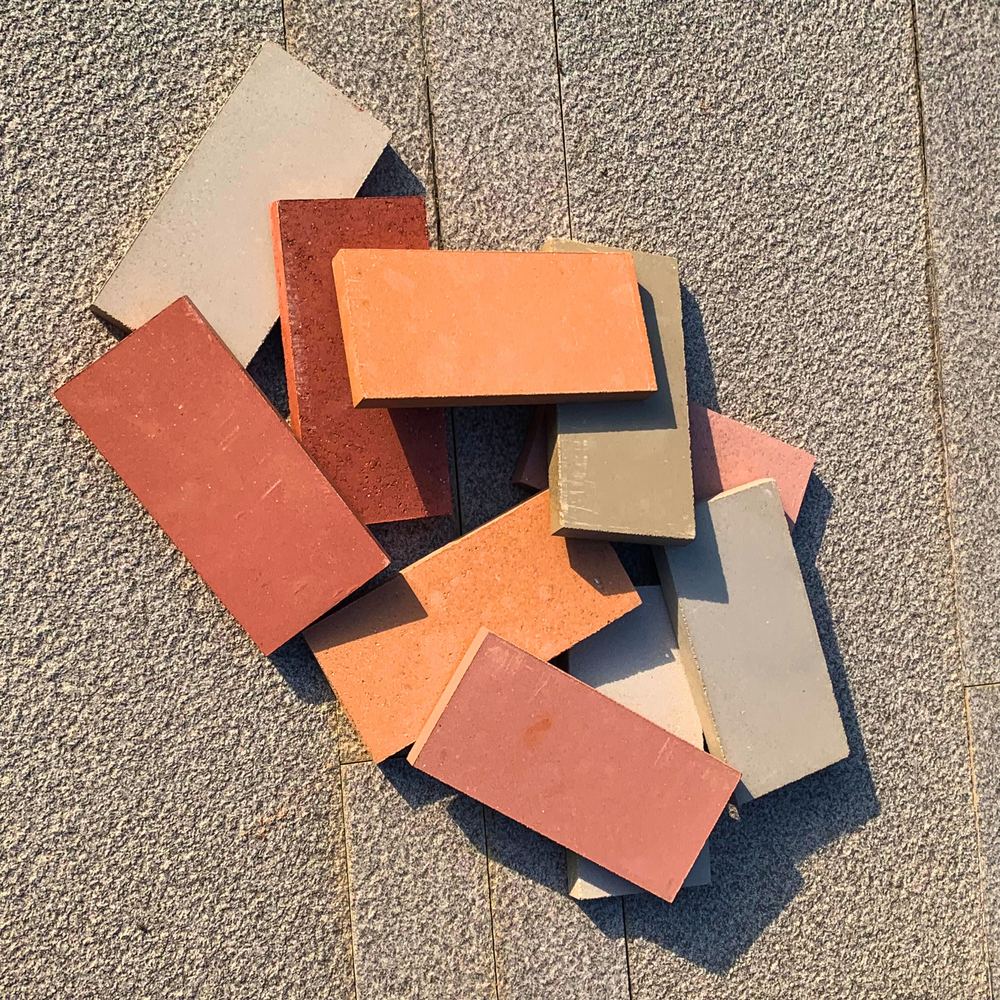
Compressed e4E brick slips in a range of earth tones

Compressed slips

Pressed into moulds

A range of earth toned colours, with bespoke colour and size options also available.
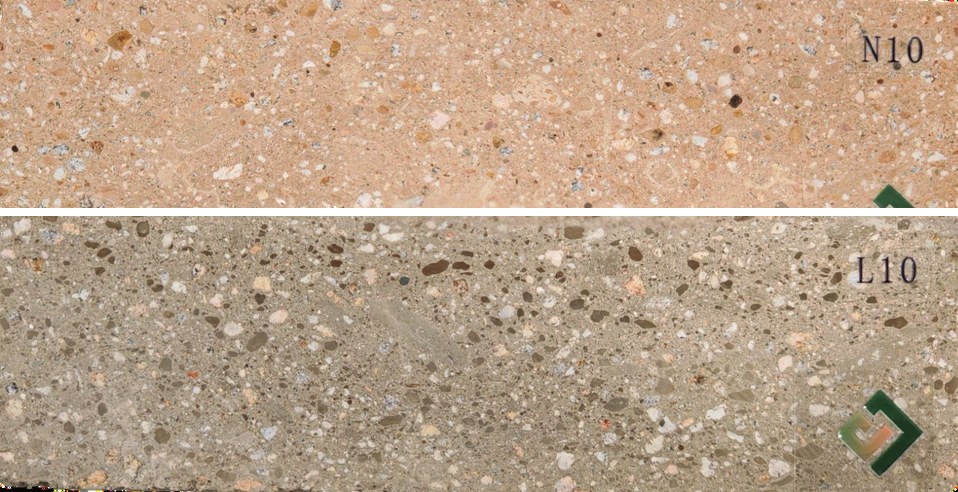
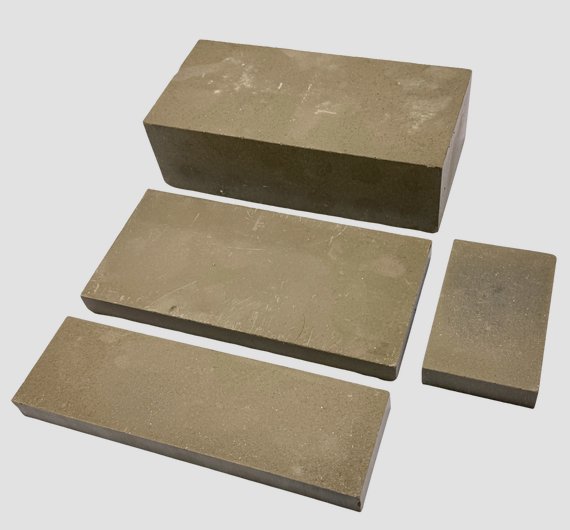
An e4E N10 cut brick slip above an L10 cut brick slip

Cut slips · L10 and N10

Cut from full sized bricks

Natural Grey for L10, Natural Yellow for N10, in the stock size of 215 x 65 x 20 mm.

Specifying

Sizes, weights and numbers

Three formats cover full wall runs, detailing and creative layouts: 215 x 102.5 mm, 215 x 65 mm and 102.5 x 65 mm, all 20 mm thick.
20mm thickness
3Slip formats
3Brick EPDs published
60Approx. slips per m² for the 215 × 65 mm format with 10 mm joints
e4E brick slips in three formats
  • L10 is the low carbon option, made from soil and a binder of hydrated lime and recycled pozzolans.
  • N10 uses e4E’s proprietary binder, produced through a room temperature process.
  • N30 is the third version, carrying 30% e4E binder.
  • All three come in the same sizes.
Slip data

Weight and CO₂ absorbed, per slip

Manufacturer reported figures from the e4E 2026 brochure for 20 mm thick slips. CO₂ absorption represents estimated uptake during use, rather than the product’s net lifecycle carbon footprint. The published EPDs referenced below cover full sized bricks; the slip figures should not be interpreted as separately verified brick slip EPD results.

Format L10 N10 N30
215 x 102.5 mm 872 g · 52 g CO₂ 867 g · 51 g CO₂ 783 g · 140 g CO₂
215 x 65 mm 580 g · 34 g CO₂ 583 g · 35 g CO₂ 500 g · 89 g CO₂
102.5 x 65 mm 263 g · 16 g CO₂ 272 g · 16 g CO₂ 239 g · 43 g CO₂

L10 uses 10% hydrated lime, N10 uses 10% e4E binder and N30 uses 30% e4E binder.

More about how they are made

  • Low temperature curing, no kiln firing. The EPDs list the process as mixing, moulding via compression and low temperature curing.
  • Mineral composition. The brick EPDs declare 100% minerals by mass, with no metals, fossil or bio based materials.
  • Returned to the earth. At end of life, the material is crushed and reused as a soil conditioner or planting substrate.
  • Substances. No REACH SVHC substances above 0.1% (1000 ppm).
  • Standards. The bricks are UKCA and CE marked and meet EN 771-1 with at least 10 MPa compressive strength.
Verified data

The EPDs behind the range

e4E has third party verified EPDs through EPD Hub for its L10, N10 and N30 bricks. Each declares one 3.0 kg brick, so the figures below are brick data, not slip data. In the EPDs, CO₂ absorption in use is modelled from the carbonation of the lime component over a 100 year reference service life.

L10 Low carbon brick
Declared unit: 1 brick, 3.0 kg
Manufacturing (A1 to A3)0.0286 kg CO₂e
CO₂ absorbed in use (B1)0.178 kg
Reference service life100 years
Verification
​EPD Hub verified
Source: EPD Hub HUB-4708, valid until December 2030

See the full environmental data on 2050 Materials.

N10 Negative carbon brick
Declared unit: 1 brick, 3.0 kg
Manufacturing (A1 to A3)0.00832 kg CO₂e
CO₂ absorbed in use (B1)0.178 kg
Reference service life100 years
Verification
​EPD Hub verified
Source: EPD Hub HUB-3866, valid until August 2030

See the full environmental data on 2050 Materials.

N30 Negative carbon brick
Declared unit: 1 brick, 3.0 kg
Manufacturing (A1 to A3)0.0254 kg CO₂e
CO₂ absorbed in use (B1)0.534 kg
Reference service life100 years
Verification
​EPD Hub verified
Source: EPD Hub HUB-4829, valid until January 2031

See the full environmental data on 2050 Materials.

Where they go

Use cases

  • Feature walls. e4E slips have already been used for feature walls in offices and restaurants.
  • Façades and interiors. Suitable for indoor and outdoor use, so one material can run from the reception wall to the front elevation.
  • Slip systems. They can be incorporated into compatible brick slip systems, with suitability confirmed for the specific system and application. e4E is also developing a rail system of its own.
  • Seen in the wild. A showcase of e4E slips in a brick rail system is on display in the bar area of Wei Dao restaurant in Croydon, London.
L10 and N10 slips are available to buy nowIn stock in the UK with two to three weeks dispatch. Samples are available in the e4E online shop.

Order a sample →

For orders and enquiries, email info@earth4Earth.co.uk or call 02082 434668. More detail on the range is on the e4E brick slips page.

e4E and 2050 Materials

Specifying low carbon cladding means checking numbers, not slogans. 2050 Materials is where specifiers compare construction materials by verified lifecycle data, and e4E’s range is listed there, including the third party verified EPDs for the L10, N10 and N30 bricks.
View e4E on the platform →

e4E brick slips in a range of colours on a stone surface

Photo credits: e4E, taken from earth4earth.co.uk.
Previous CaraGreen’s Organoid Wildspitze: A Wallcovering Grown, Not Manufactured

Related articles

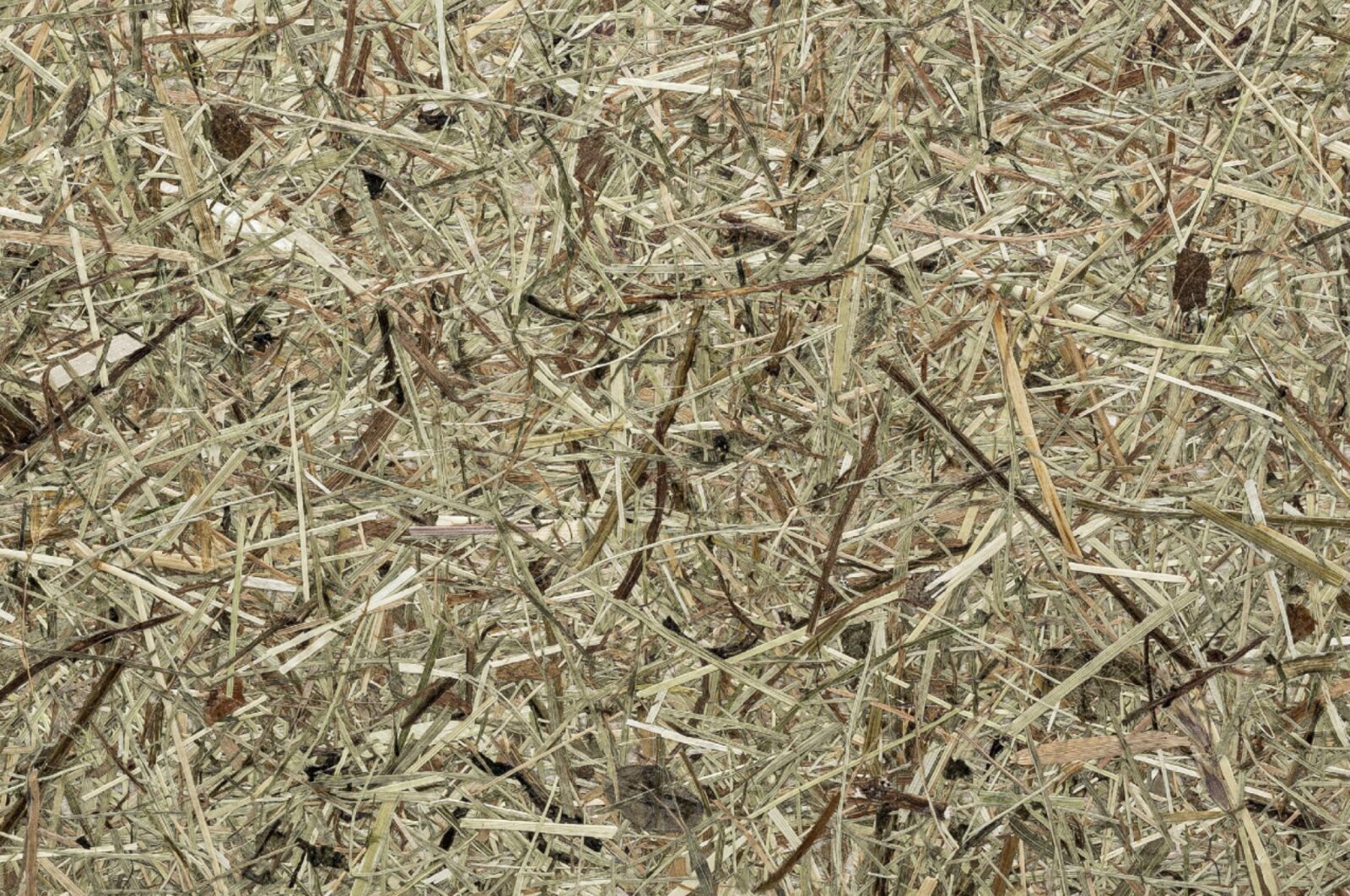
Close-up of Organoid Wildspitze wallcovering by CaraGreen, made from hand cut alpine hay pressed onto a flax fleece backing
Manufacturer Spotlights Oct 15

CaraGreen’s Organoid Wildspitze: A Wallcovering Grown, Not Manufactured

CaraGreen's Organoid Wildspitze is a wallcovering made from hand cut alpine hay, backed by a third party verified EPD showing 2.2 kg CO2e/m² GWP and stored biogenic carbon.

Read more
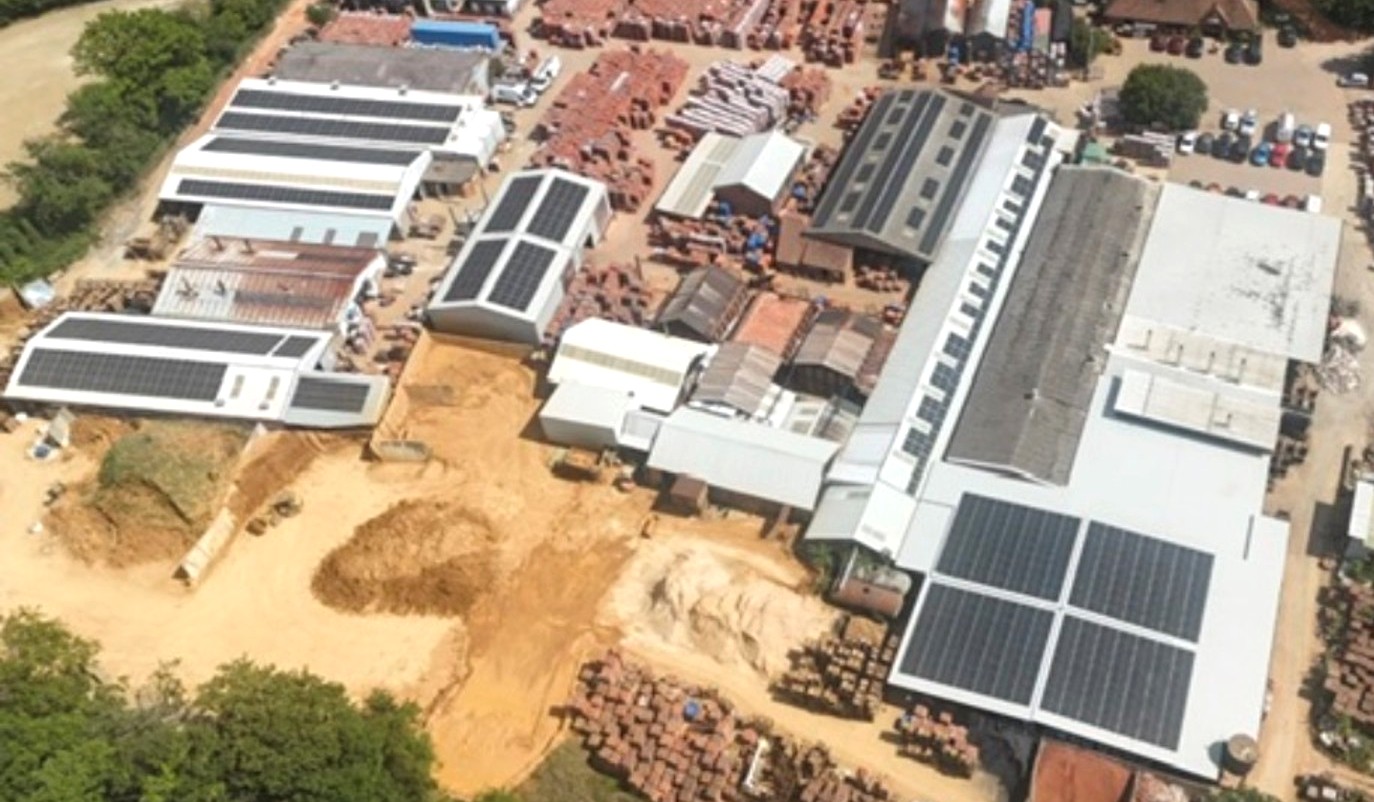
Aerial view of the 300kW solar PV installation on H.G. Matthews' Brickworks roof in Bellingdon
Manufacturer Spotlights Aug 17

H.G. Matthews: Beyond the EPD

H.G. Matthews' new solar-biomass energy system at The Brickworks, Bellingdon is cutting diesel use and lowering embodied carbon, the latest step in a track record of measurable, verified environmental improvement backed by published EPDs.

Read more
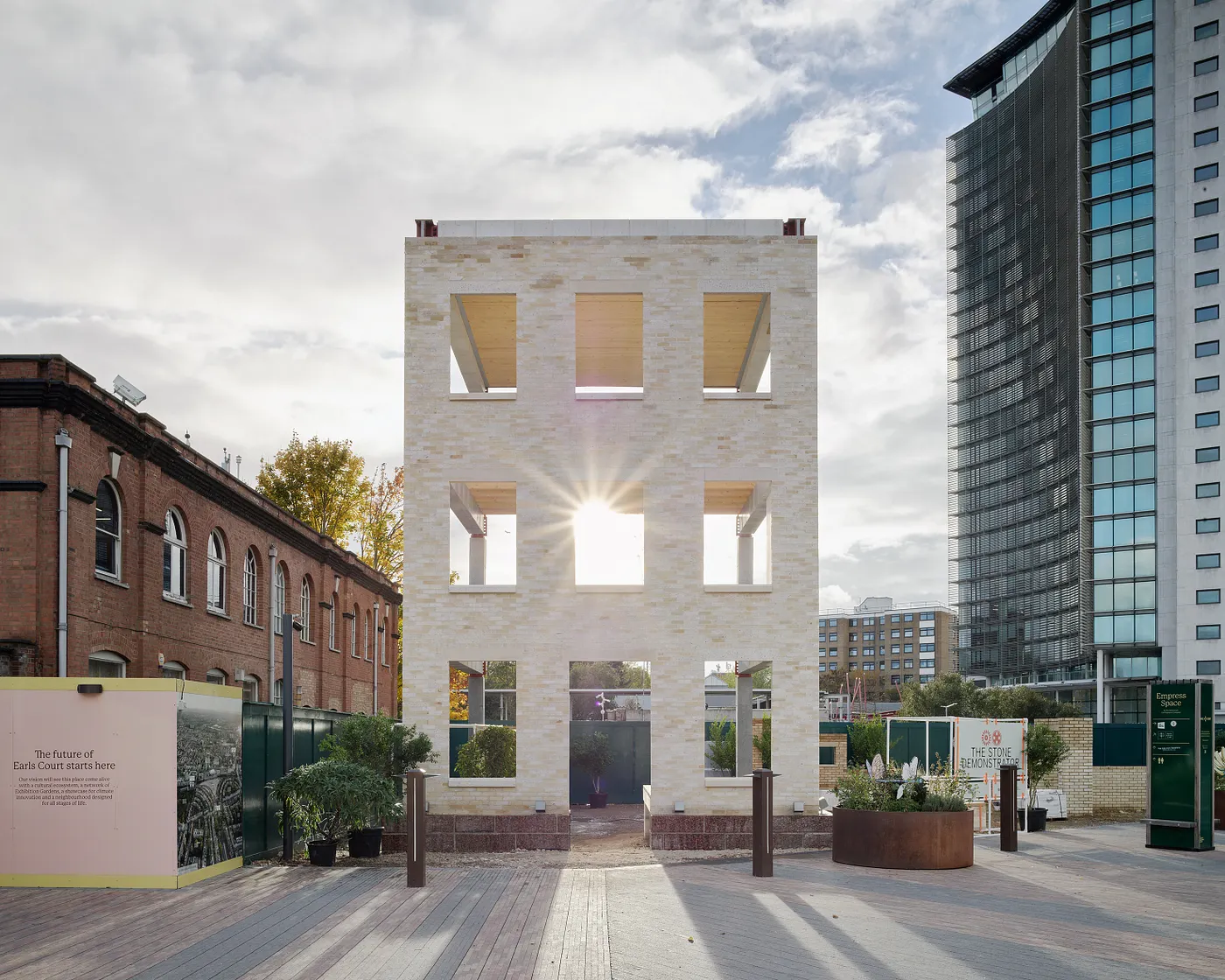
Stone Demonstrator installation showing structural stone construction at Empress Space, London
Manufacturer Spotlights Apr 30

Hutton Stone and the Stone Demonstrator: Building the Case for Structural Stone

Hutton Stone contributes to the Stone Demonstrator, showcasing how structural stone can reduce embodied carbon while rethinking modern construction systems.

Read more