Linoleum Flooring for a Reduced Environmental Impact

As climate targets become increasingly urgent, every material choice in construction and interior design matters — down to the floors we walk on. Linoleum and natural flooring materials have re-emerged as high-performing options thanks to their low carbon footprints, natural ingredients, and long-term durability. This article and collection explores some of the most compelling low carbon products in the Linoleum & Natural Flooring category, based on verified environmental data.
Each product listed has been assessed through Environmental Product Declarations (EPDs) or similar certifications, ensuring transparency in embodied carbon, material sourcing, and life cycle impact. Whether you’re designing for residential, commercial, or high-traffic spaces, these options deliver reduced environmental impact without compromising on performance or aesthetics.
Let’s take a closer look at the top low carbon linoleum flooring solutions available now — what makes them different, how they perform, and where they’re best used.
1. CORQUES LIQUID LINO by Duracryl International BV

CORQUES LIQUID LINO is a seamless liquid linoleum flooring solution manufactured by Duracryl International BV, based in the Netherlands. Unlike traditional linoleum sheets, this 2mm-thick product is poured on-site, creating a continuous surface without seams. It combines natural ingredients and durability with ease of maintenance and repair, making it well-suited for modern, performance-oriented projects.
Sustainability Performance
This product stands out for its full life cycle assessment as detailed in its EPD, covering stages from raw material production (A1-A3) to assembly (A4-A5), maintenance (B2), and end-of-life (C1-C4, D). The use of natural materials and the minimized transport and installation emissions contribute to its significantly lower carbon footprint compared to typical vinyl or synthetic floor coverings. Modules like B1, B3, and others not applicable are transparently accounted for with a value of zero.
Advantages
- Seamless application for hygiene and aesthetic benefits
- Natural material composition
- Comprehensive life cycle emissions reporting
- Low maintenance and easy repair processes
- Low VOC emissions for healthier indoor environments
Use Cases
- Healthcare and education facilities requiring hygienic surfaces
- Commercial interiors with design flexibility
- Renovations where minimizing seams and joins is a priority
- High-traffic public areas seeking low carbon material alternatives
Know more about this product and its performance on the 2050 Materials Platform.
2. Legato Flooring by Mannington Commercial
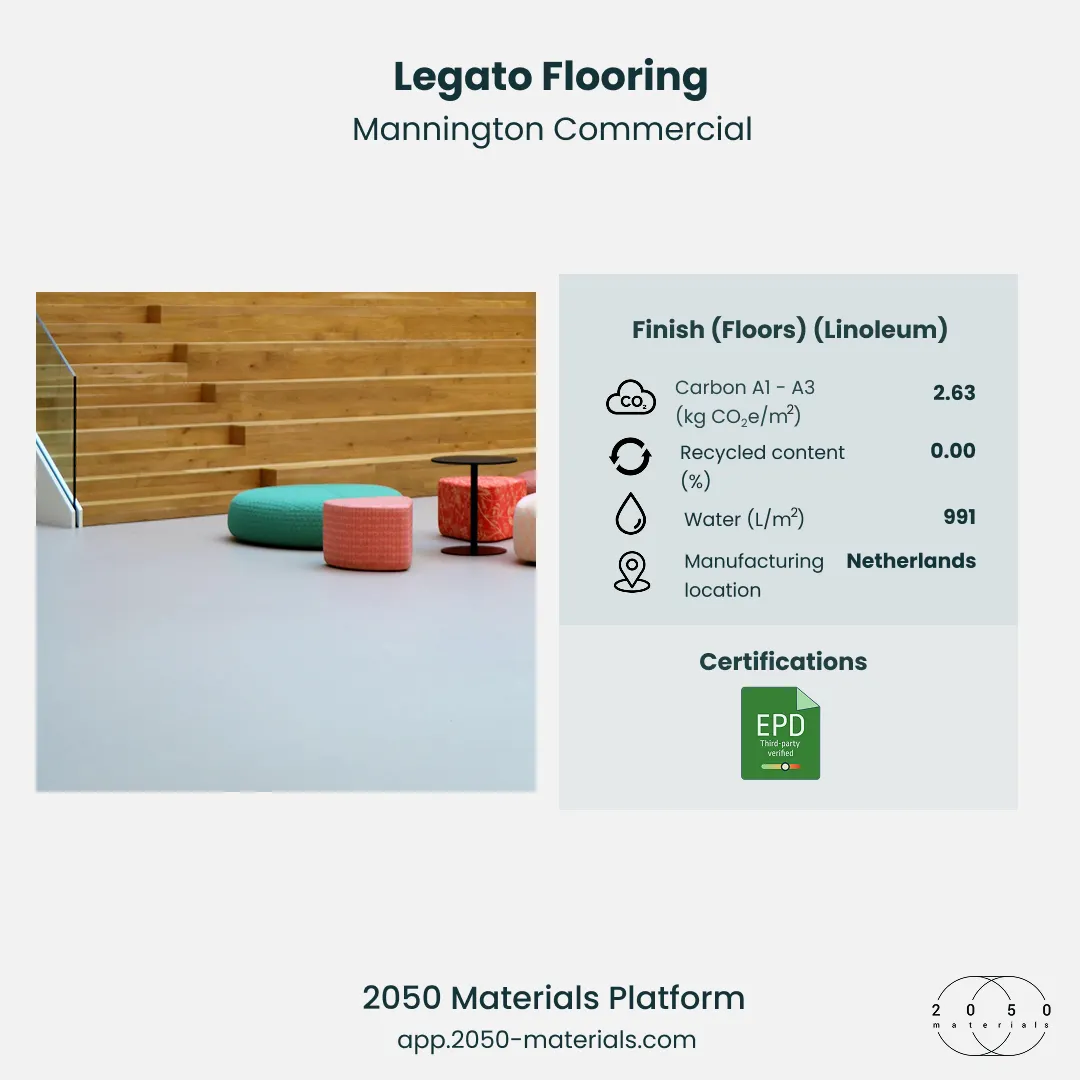
Legato Flooring is a liquid-poured linoleum floor manufactured by Mannington Commercial. It uses the same core natural ingredients as traditional linoleum but offers a faster and more flexible installation due to its seamless, poured-on-site design. This makes Legato an appealing option for projects where time, hygiene, and aesthetics are critical.
Sustainability Performance
Backed by an EPD, Legato demonstrates a low carbon footprint. It incorporates resilient natural ingredients with minimal synthetic content and provides improved lifecycle performance thanks to its seamless design and reduced installation waste.
Advantages
- Liquid application for uniform, joint-free surfaces
- Uses renewable, naturally derived materials
- Fast installation reduces project turnaround times
- High resiliency and color stability over time
- Improved cleanability and longevity
Use Cases
- Hospitals, clinics, and labs requiring sterile environments
- Educational and childcare facilities
- Large-scale commercial interiors
- Projects requiring on-site customization of flooring design
Know more about this product and its performance on the 2050 Materials Platform.
3. Veneto Silencio xf2 3.8mm by Tarkett
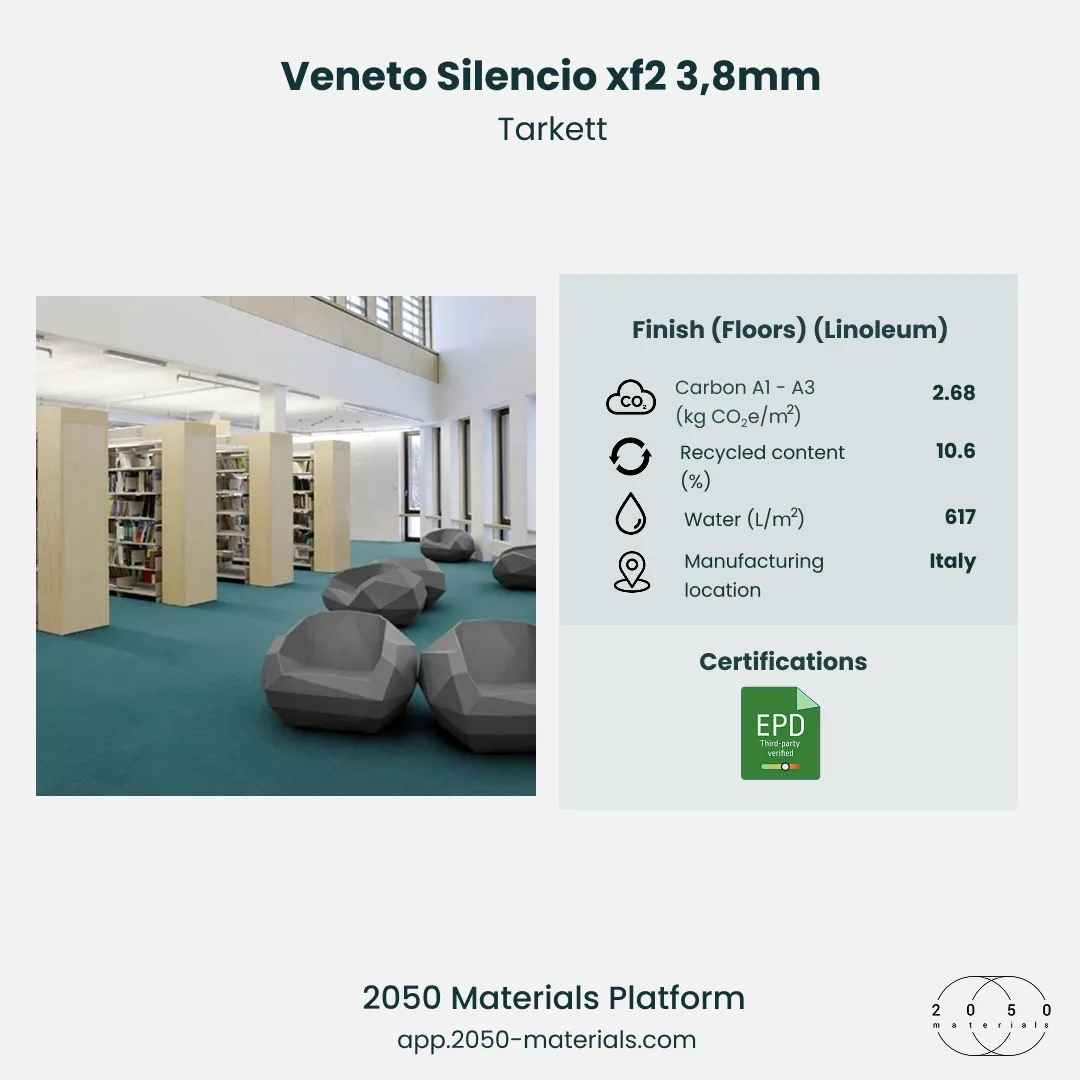
Veneto Silencio xf2 3.8mm by Tarkett is an acoustic linoleum flooring system designed to reduce impact sound transmission. It is supplied in 2m-wide sheets and integrates additional layers such as cork flour and polyurethane foam for enhanced sound insulation. This product is ideal for environments requiring noise reduction and durability.
Sustainability Performance
With a verified EPD and PEFC-certified wood flour, Veneto Silencio balances acoustic function with low environmental impact. Its composition includes linseed oil, jute, cork flour, and mineral fillers — all contributing to a lower embodied carbon profile. The added acoustic layer does not compromise its recyclable and health-safe features.
Advantages
- Acoustic insulation properties reduce noise by up to 19 dB
- 3.8mm thick for added resilience and underfoot comfort
- Made from natural, renewable materials
- PEFC-certified wood content
- Low VOC emissions for indoor air quality
Use Cases
- Schools, libraries, and universities
- Office and co-working environments
- Healthcare settings requiring quiet zones
- Hotels and hospitality projects
Know more about this product and its performance on the 2050 Materials Platform.
4. DLW Linoleum Compact by Gerflor
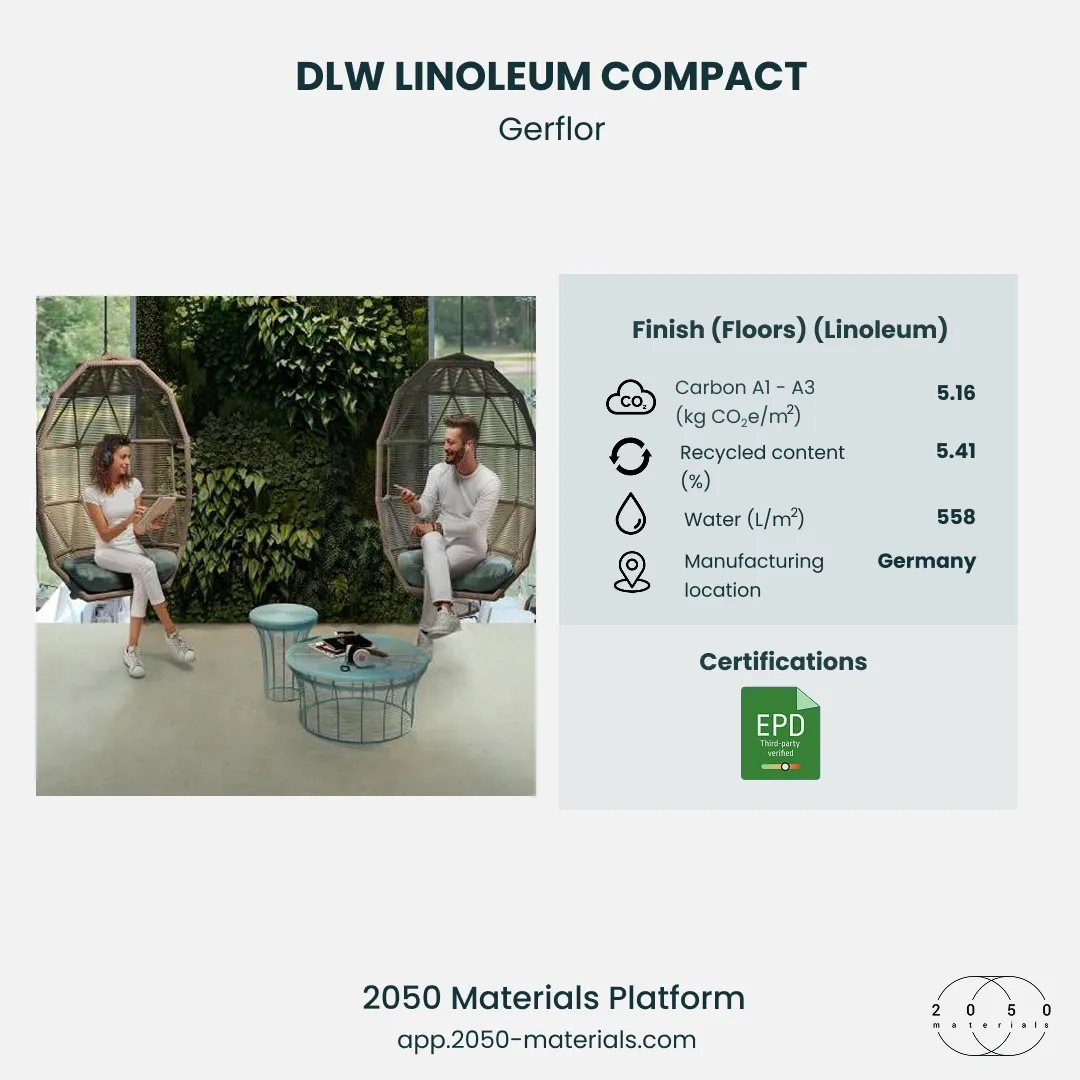
DLW Linoleum Compact is a 2.5mm thick flooring solution by Gerflor, available in multiple designs including Marmorette, Colorette, Uni Walton, and more. This product is tailored for a wide range of applications — from industrial to high-traffic commercial settings.
Sustainability Performance
The EPD for DLW Linoleum Compact confirms a strong low carbon profile. The product adheres to EN ISO 10874 standards and contributes to reduced environmental impact through its long lifespan and minimal maintenance needs. Its design variety allows specifiers to select low carbon options without aesthetic compromise.
Advantages
- Wide range of visual designs
- Durable construction for long service life
- Meets multiple global performance standards
- Backed by an EPD for lifecycle transparency
Use Cases
- Educational institutions
- Industrial and commercial buildings
- Offices and high-traffic retail areas
- Renovation and new-build projects requiring design flexibility
Know more about this product and its performance on the 2050 Materials Platform.
5. Linoleum Flooring — Veneto xf2 2mm by Tarkett S.P.A
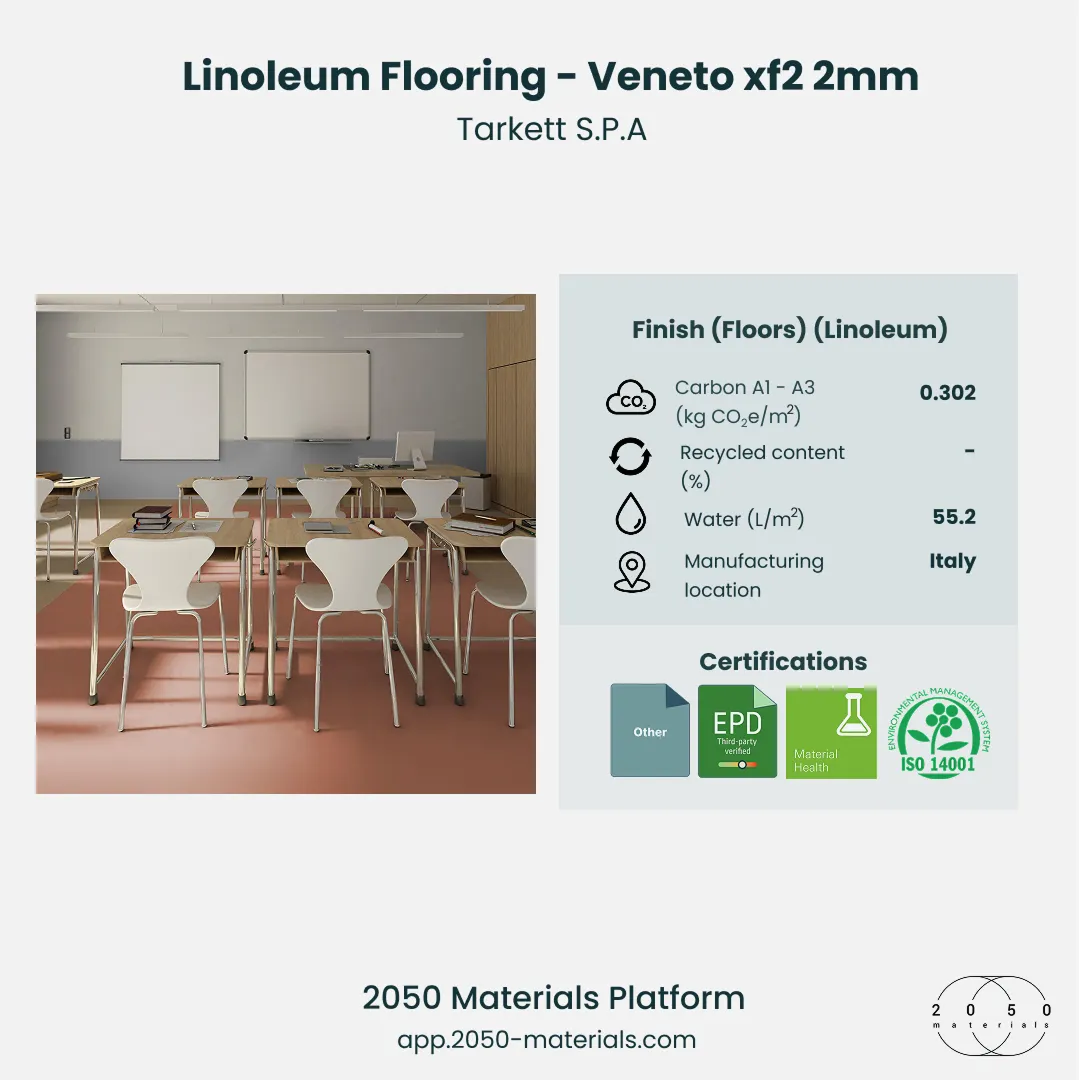
Manufactured by Tarkett S.P.A, this version of Veneto xf2 2mm linoleum flooring is made of 94% natural raw materials, including jute, wood flour, cork, and linseed oil. It is a high-performance, 2mm-thick resilient floor covering designed for long-term use.
Sustainability Performance
This product carries multiple certifications including EPD, ISO 14001, and Material Health, demonstrating transparency and commitment to low carbon design. With 78% of materials sourced from rapidly renewable resources and VOC emissions below 10µg/m³, it contributes to healthier and lower impact interiors.
Advantages
- High use of natural, renewable ingredients
- Low VOC emissions and phthalate-free
- Compliant with ISO and health material standards
- Durable and 100% recyclable
Use Cases
- Commercial and office settings
- Residential buildings focused on air quality
- Schools, museums, and civic projects
- Spaces requiring resilient, long-life flooring
Know more about this product and its performance on the 2050 Materials Platform.
6. Linoleum Flooring — Veneto xf2 2mm (Cradle to Cradle) by Tarkett S.P.A
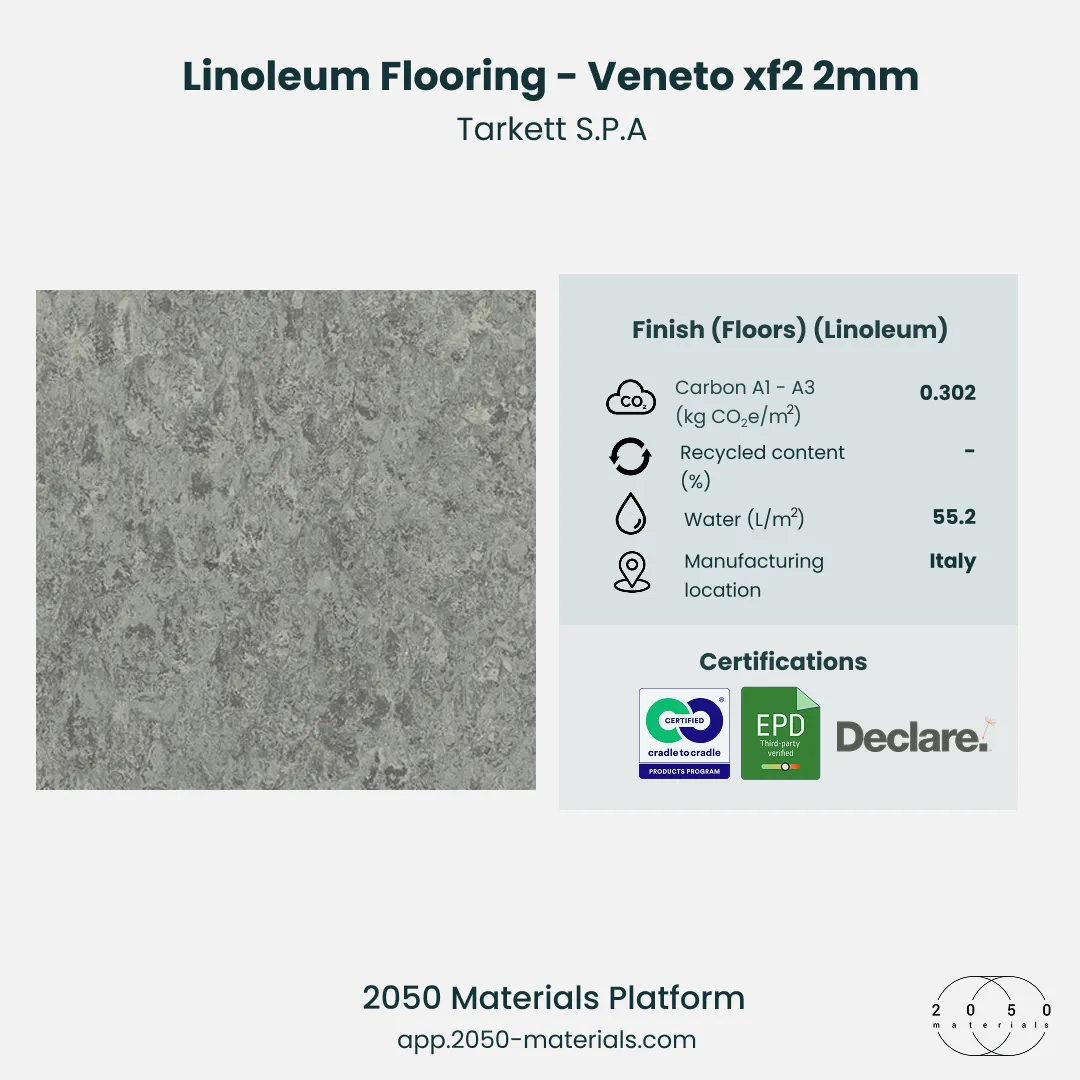
Another variant of Veneto xf2 2mm, this version emphasizes circularity. Produced by Tarkett S.P.A, it meets Cradle to Cradle and Declare label standards. It’s built to close the loop — with materials designed to return to nature or industry.
Sustainability Performance
In addition to an EPD, this product has Cradle to Cradle and Declare certifications, showcasing a rigorous assessment of its ingredient health, recyclability, and carbon profile. It uses 94% natural materials and aligns with EN-ISO 24011 standards.
Advantages
- Designed for circularity and material reuse
- Verified with Declare and Cradle to Cradle labels
- Low embodied carbon due to high natural content
- Promotes product transparency
Use Cases
- Projects with strong focus on circular economy goals
- Long-term commercial and civic installations
Know more about this product and its performance on the 2050 Materials Platform.
7. Revêtement de sol Marmoleum 2.5mm by Forbo Flooring Systems
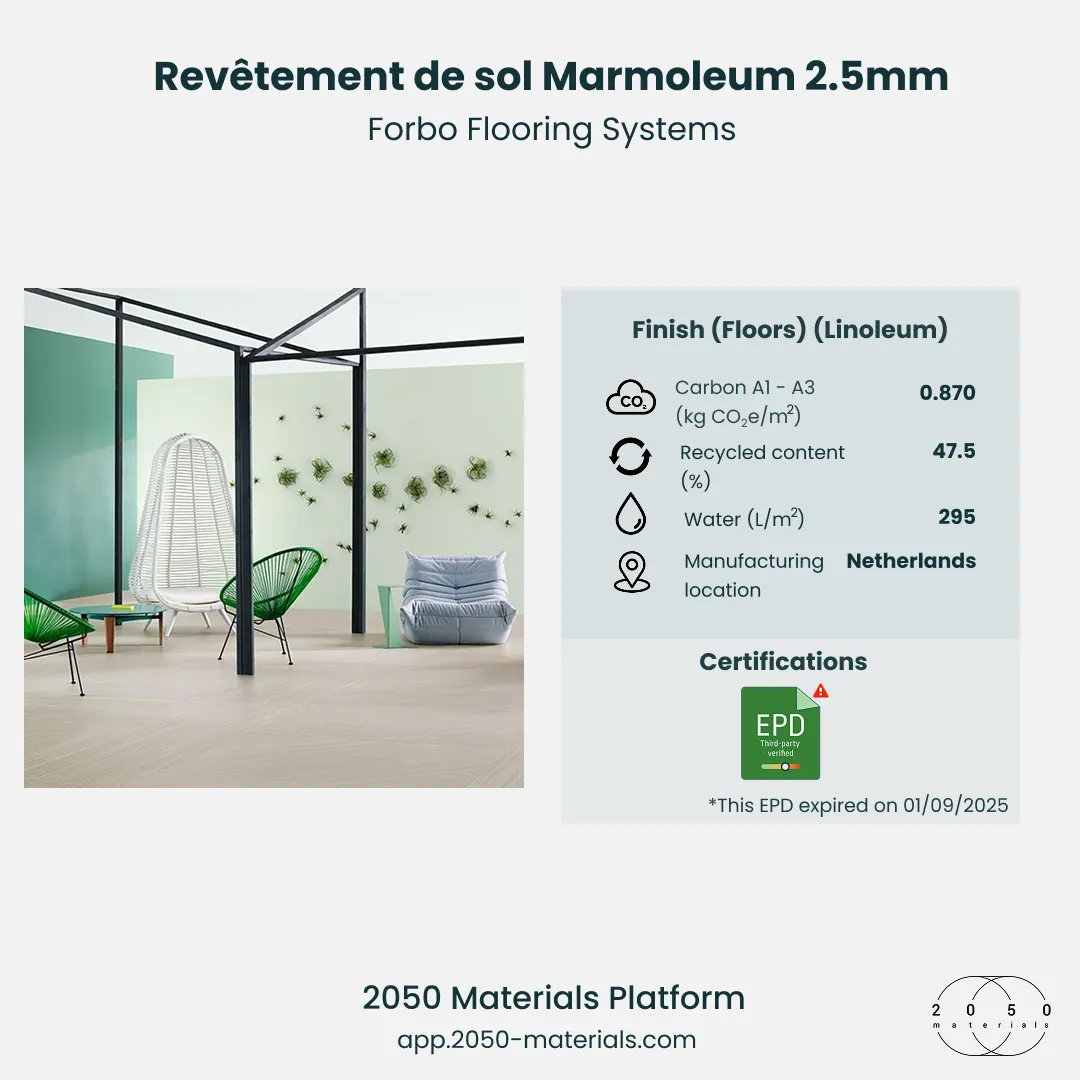
Marmoleum 2.5mm by Forbo Flooring Systems is a durable, natural flooring solution supplied in 2m-wide sheets. Designed for glue-down application, it’s suitable for new builds or renovations, excluding humid environments.
Sustainability Performance
Forbo is well-regarded for its environmental transparency and Marmoleum’s high natural content. The product’s density (3.0 kg/m²) and 2.5mm thickness offer resilience and comfort with a lower carbon footprint than synthetic alternatives.
Advantages
- Sheet-based for uniform installation
- Based on natural linoleum ingredients
- High durability for long-term use
- Can be installed in a wide range of spaces
Use Cases
- Housing and apartments
- Renovation of public buildings
- Community centers and cultural venues
- Interiors requiring hard-wearing surfaces
Know more about this product and its performance on the 2050 Materials Platform.
Choosing Low Carbon Linoleum: Smarter Materials for Better Buildings
As building professionals, designers, and clients look for ways to meet stricter carbon targets, low carbon linoleum and natural flooring products present a practical path forward. The materials featured in this collection represent the forefront of low impact design — combining natural content, responsible manufacturing, and verified emissions data.
Whether it’s the seamless liquid applications of CORQUES LIQUID LINO and Legato Flooring, the acoustic benefits of Veneto Silencio, or the circular economy features in Tarkett’s Cradle to Cradle offering, these products demonstrate that reducing embodied carbon doesn’t mean sacrificing performance or design flexibility.
By choosing verified, low carbon flooring materials, project teams contribute not only to lower building emissions but also to healthier, longer-lasting interiors that align with global sustainability goals.
Related articles
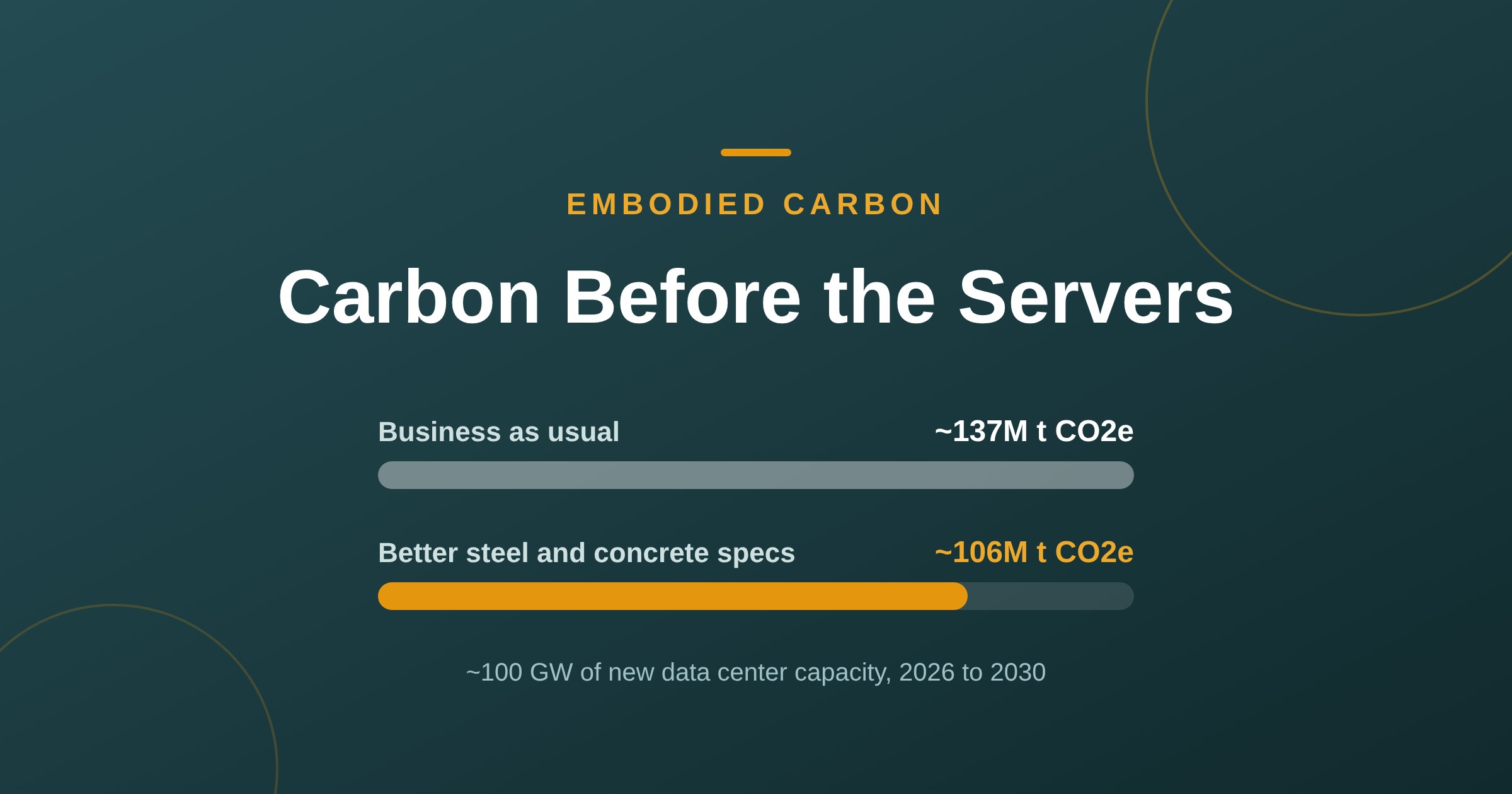
Data Centers’ Hidden 137M-Tonne Carbon Bill
New data centers could lock in ~137M tonnes of CO2e before a single server switches on. GGBS concrete and recycled steel could cut about 31M of it.
Read more
Built to Beat the Heat
This summer's drought wasn't a fluke, it was a preview. Here's the material data that actually decides whether a building shrugs off a heatwave or quietly cooks behind a great winter U value: decrement delay, solar reflectance, SHGC, and the real products behind each one.
Read more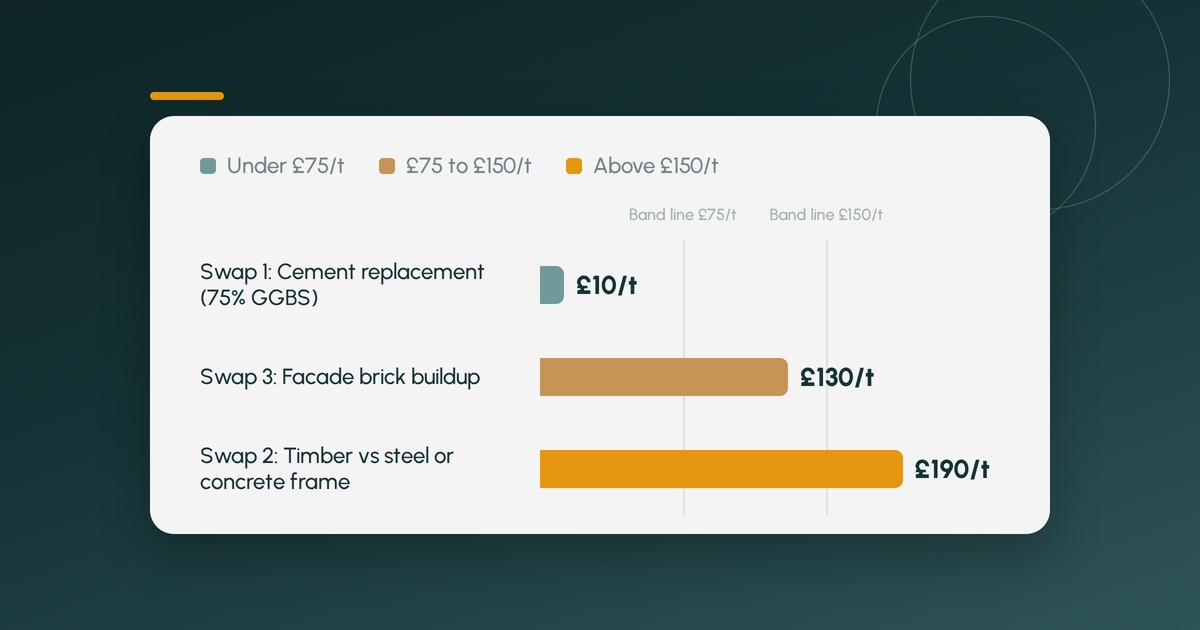
The Cost per Tonne Test for Embodied Carbon Swaps
Not every embodied carbon cut is worth paying for. Test any swap on cost per tonne of CO2e, see which band it falls in, and try the free calculator.
Read more