
The 2050 Materials Manifesto

Why is a random year in our name?
The World Green Building Council aims to have a net-zero construction sector by the year 2050. Investors and decision makers are setting ambitious targets.
2050 Materials exists today, to allow sustainable construction to materialize way before the year 2050.
Complexity sucks
Our mantra is “Nothing is complicated, just poorly explained”. Through our work, we want to transform the processes of sustainable construction to something that is so easy to do, that it doesn’t make sense to not do it.
Sustainable buildings look better, make their tenants happier, avoid climate catastrophes and have higher ROIs.
What is wrong and how are we fixing it?
Buildings are responsible for 39% of global carbon dioxide emissions, and 50% of global resource use. A third of this massive impact comes from processes to make, transport and dispose of building materials that hold up our houses and offices. In a last minute effort to avoid climate catastrophes, governments and regulators are adapting best practices and laws to enforce the building of greener houses, cities and offices.
We think that’s great, but still fails to address two key problems:
- Transparency → How do we analyse and compare materials for new buildings, if the data is not there?
- Simplicity → In the presence of data, do we all need to become climate and sustainability specialists to interpret it? How is one expected to use the data?
2050 Materials is a group of friends, consultants, sustainability specialists, scientists and computer nerds who are laser focused on a single goal:
 Democratize sustainable construction and create a movement to increase transparency in the built environment.
Care to join us?
If you want to work with us to build the cities of the future, reach out to us at info@2050-materials.com
Related articles
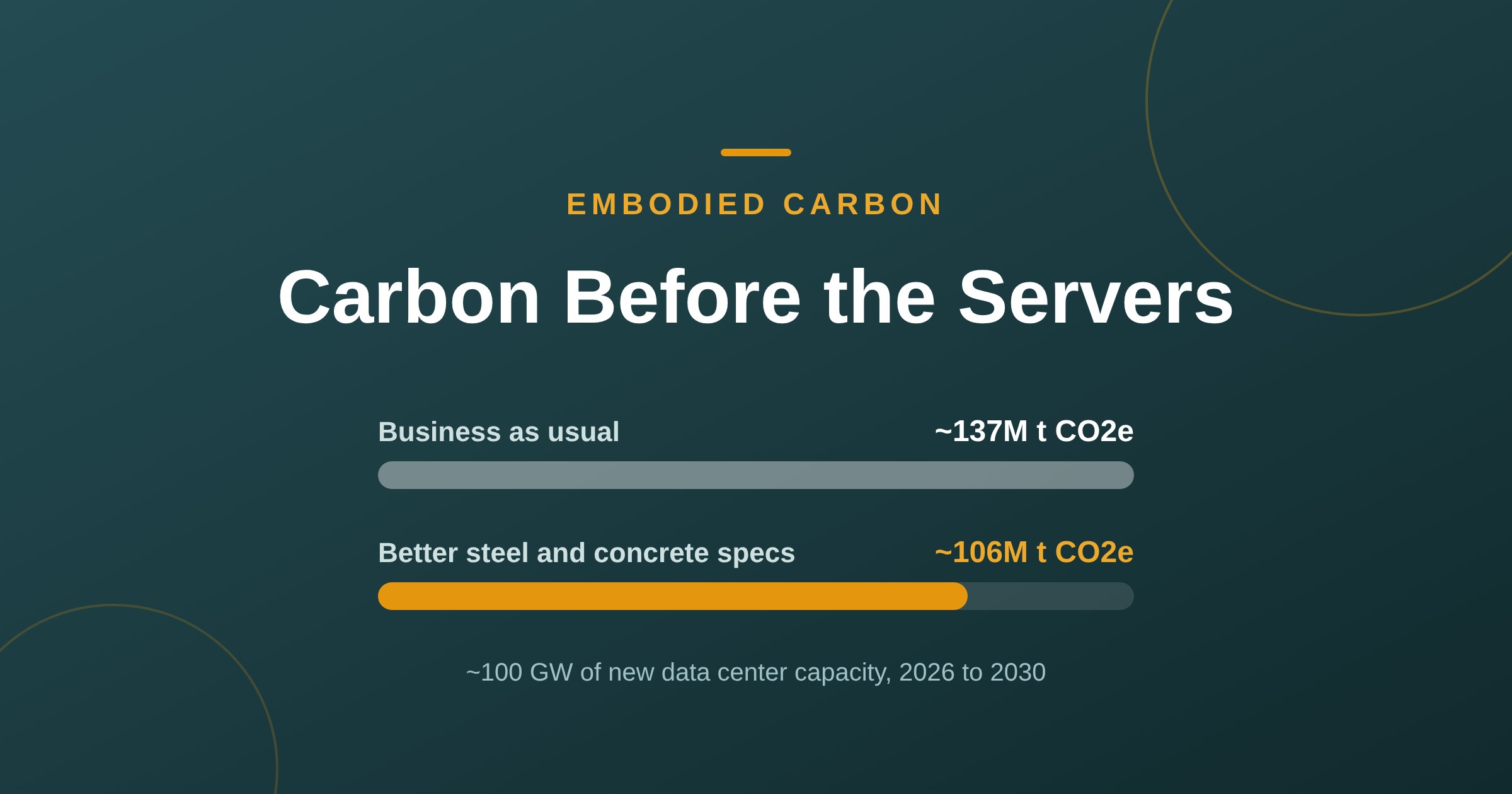
Data Centers’ Hidden 137M-Tonne Carbon Bill
New data centers could lock in ~137M tonnes of CO2e before a single server switches on. GGBS concrete and recycled steel could cut about 31M of it.
Read more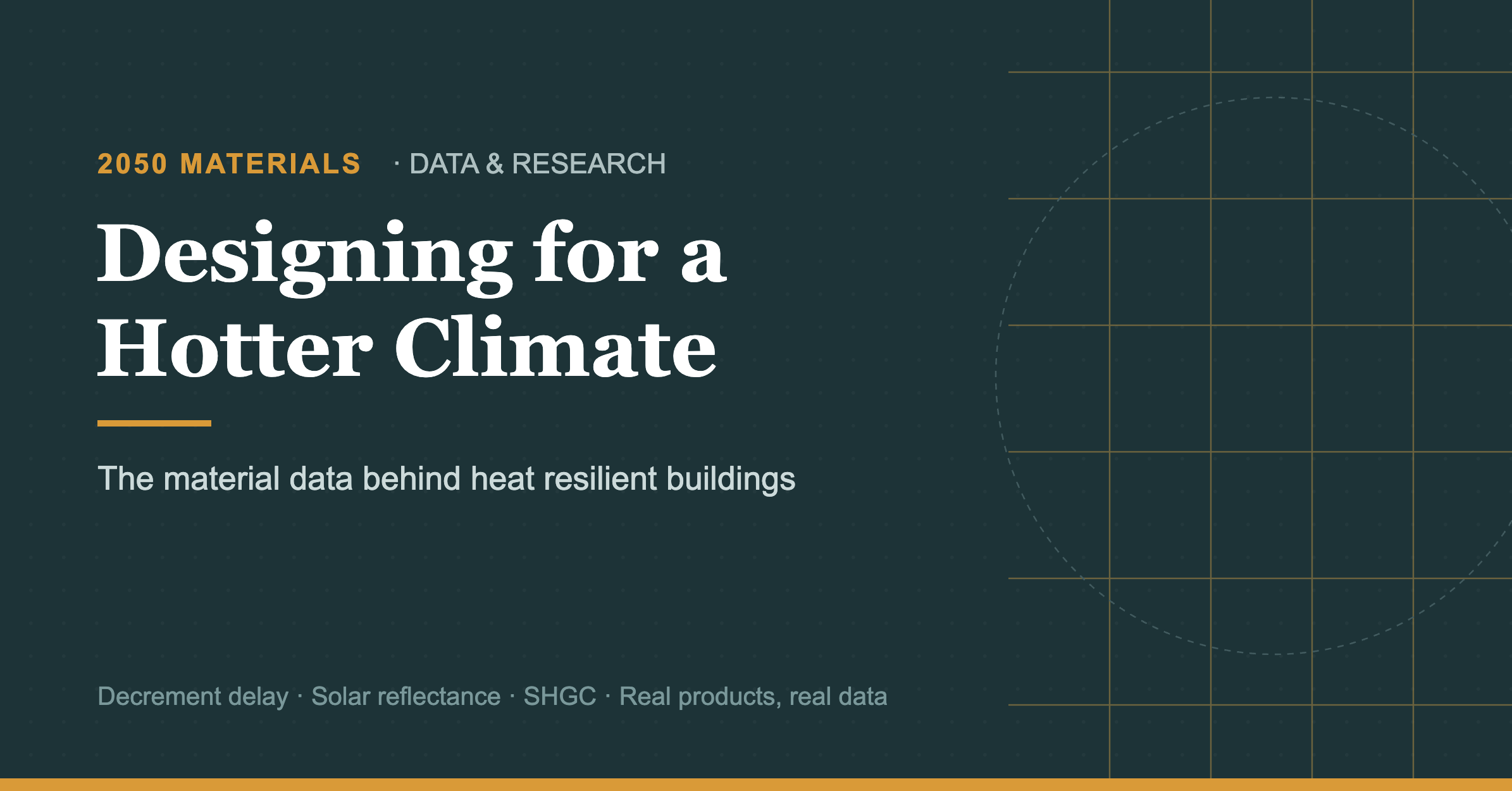
Built to Beat the Heat
This summer's drought wasn't a fluke, it was a preview. Here's the material data that actually decides whether a building shrugs off a heatwave or quietly cooks behind a great winter U value: decrement delay, solar reflectance, SHGC, and the real products behind each one.
Read more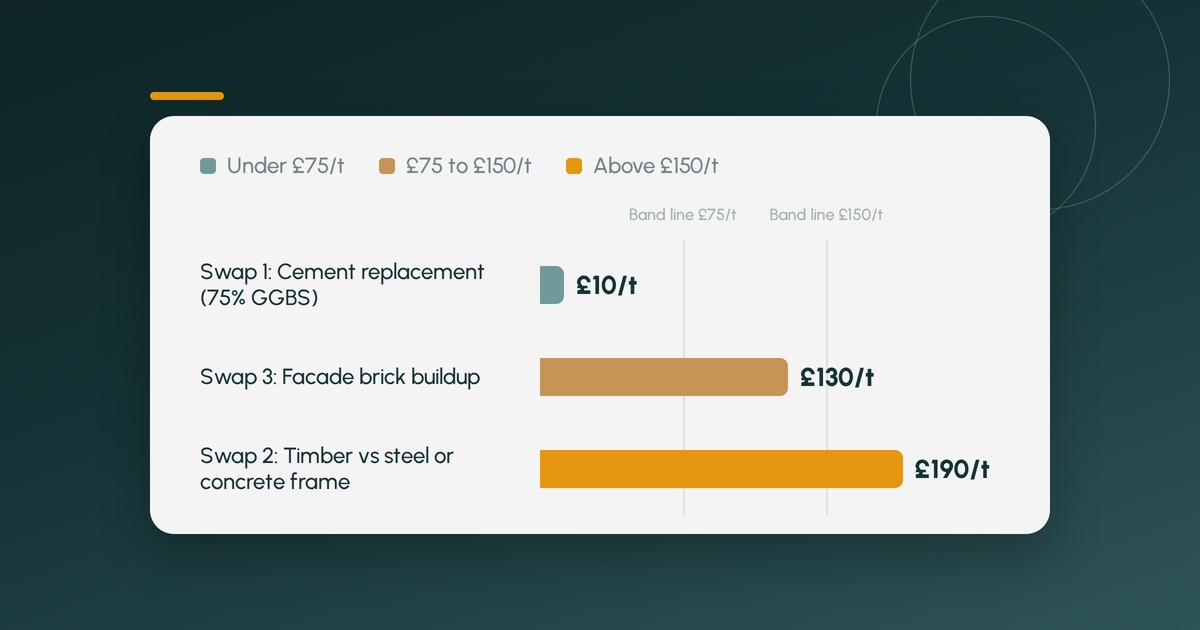
The Cost per Tonne Test for Embodied Carbon Swaps
Not every embodied carbon cut is worth paying for. Test any swap on cost per tonne of CO2e, see which band it falls in, and try the free calculator.
Read more