Why healthy building materials matter

Today, the design and construction industries are buzzing about “Material Innovation.”
Designers, architects, and manufacturers learn about new items almost daily from all around the world that demonstrate both small- and big-scale material innovation. These new developments always address issues like waste minimization and reuse, general sustainability, and growing digital and biological production techniques.
As we examine and celebrate these material advances, there is one theme — or, more accurately, one lens — that must be emphasized alongside all others.
That lens is the effect of materials on human health and well-being.
Many of us are only vaguely aware of the relationship between human health and material selection, topped with a few buzz words from this realm. However, it is important to consider these issues while evaluating our most promising material advancements.

 Understanding how our current material and product choices are physically influencing communities is more important than ever, and it’s also more important than ever to consider how our future design and construction decisions may affect people’s health.
Are healthy materials actually relevant?
We come into contact with harmful substances and pollutants in our daily lives more frequently than we realize, from VOC-emitting wet paint to carpeting laced with formaldehyde; from building insulation packed with flame retardants to chemicals that remain in our food packaging. Toxic substances from these architectural and construction materials may find their way into our bodies through a variety of means, including ingestion, inhalation, and contact.
The area of a community that is most exposed to such harmful substances and pollutants is frequently also the area where major health problems are most likely to occur. Children, new mothers, and their unborn children are among those most vulnerable to health effects while also being most exposed. Another example is disadvantaged neighbourhoods with houses that may be made of subpar materials and products.
What can you do about it?
The core of all work at 2050 Materials revolves around these problems and their mitigation. The starting point to sustainable and healthy material selection is the availability of data.
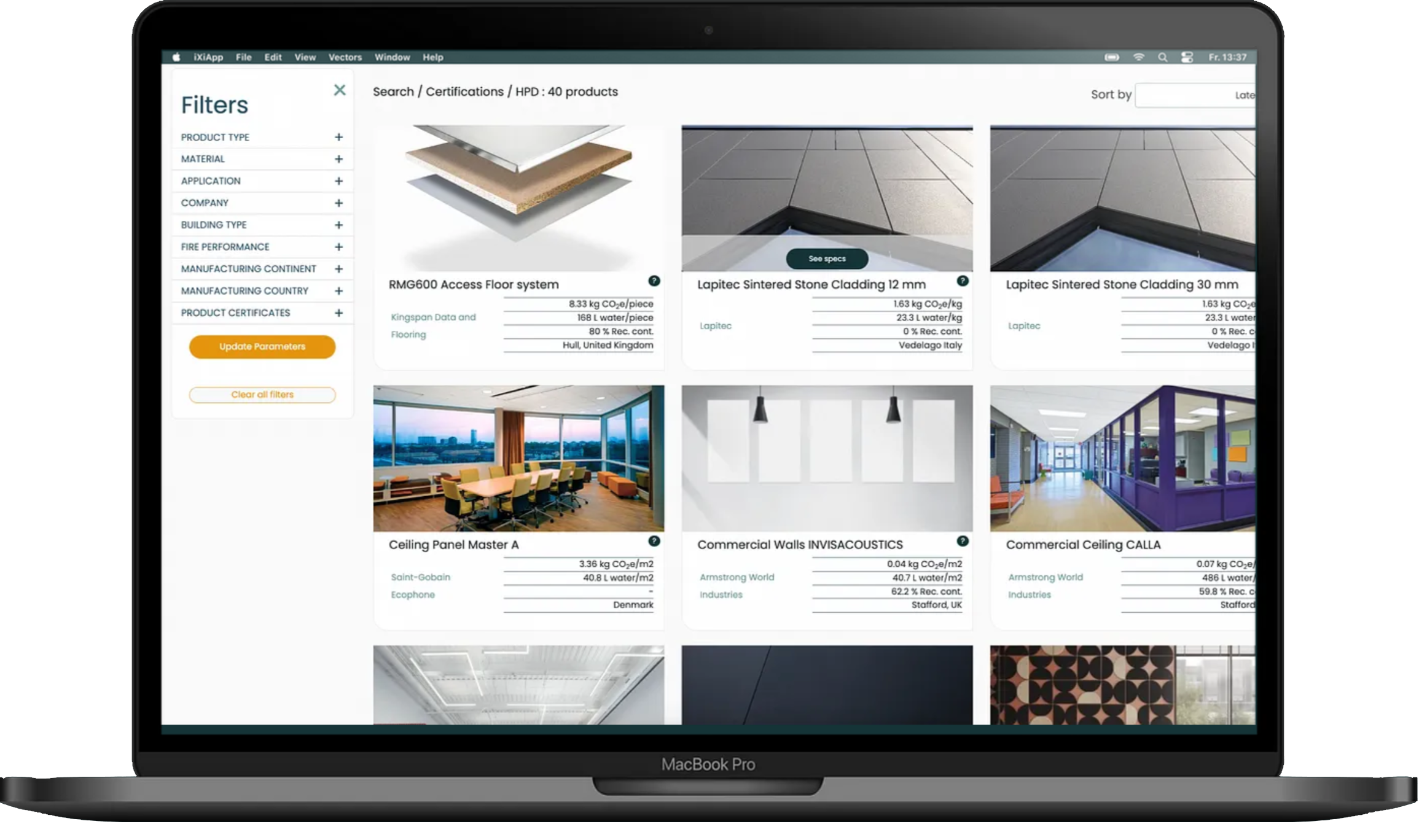
With the tools for evaluation and an extensive product library, 2050 Materials democratises these kinds of assessments for the sector. It aims to inform designers, architects, and builders about the importance of using healthy materials in the first place.

Related articles
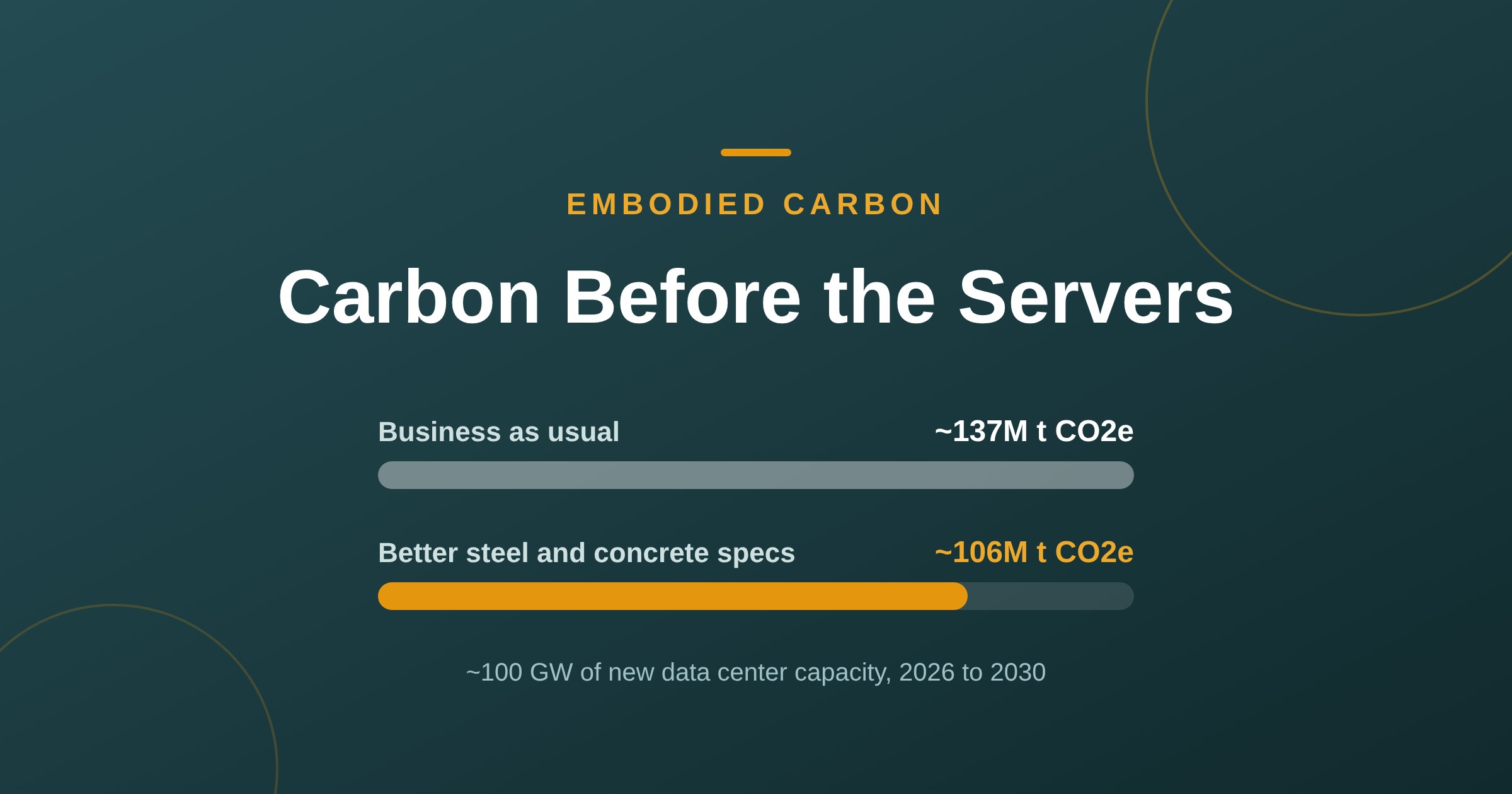
Data Centers’ Hidden 137M-Tonne Carbon Bill
New data centers could lock in ~137M tonnes of CO2e before a single server switches on. GGBS concrete and recycled steel could cut about 31M of it.
Read more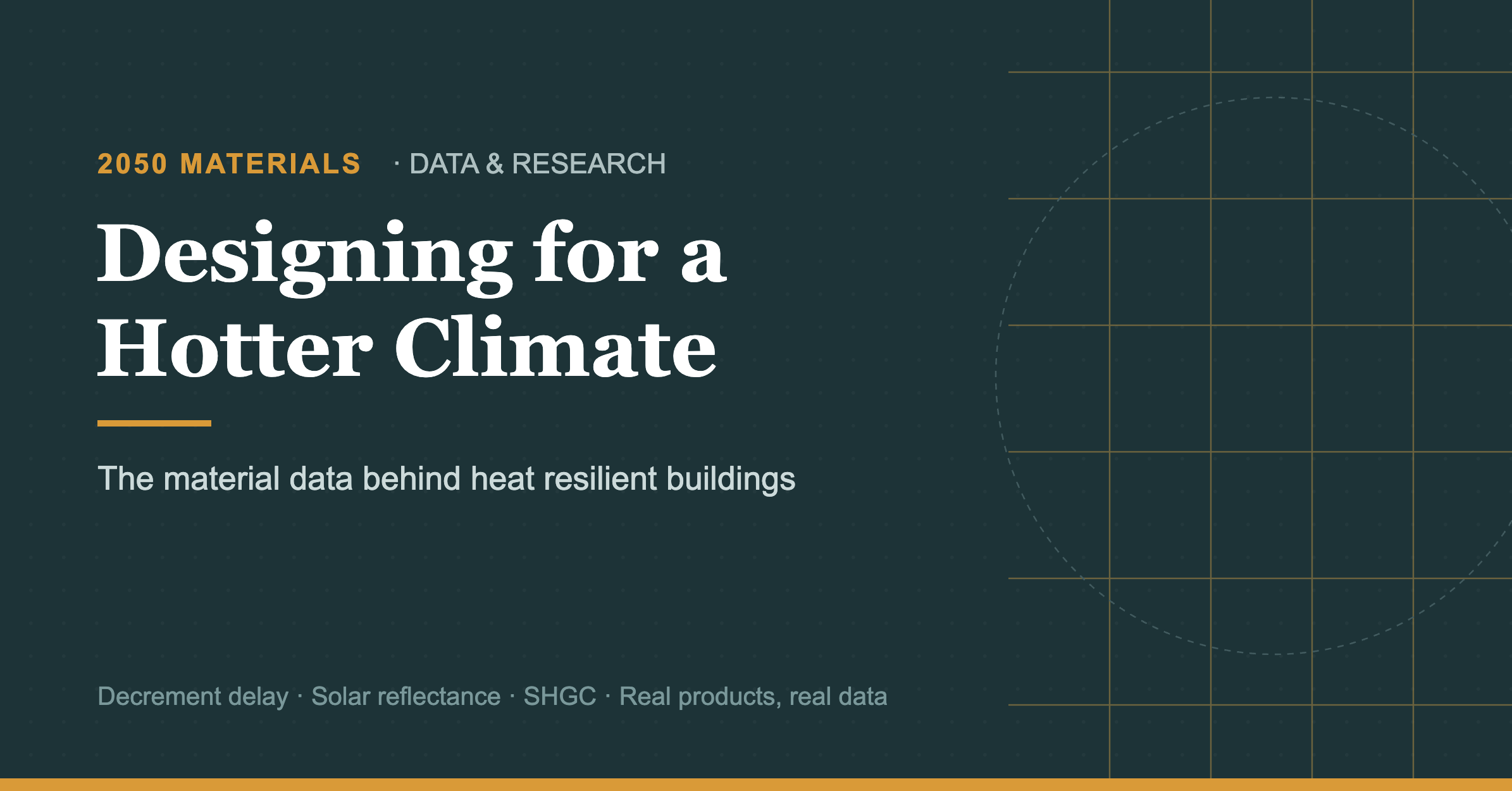
Built to Beat the Heat
This summer's drought wasn't a fluke, it was a preview. Here's the material data that actually decides whether a building shrugs off a heatwave or quietly cooks behind a great winter U value: decrement delay, solar reflectance, SHGC, and the real products behind each one.
Read more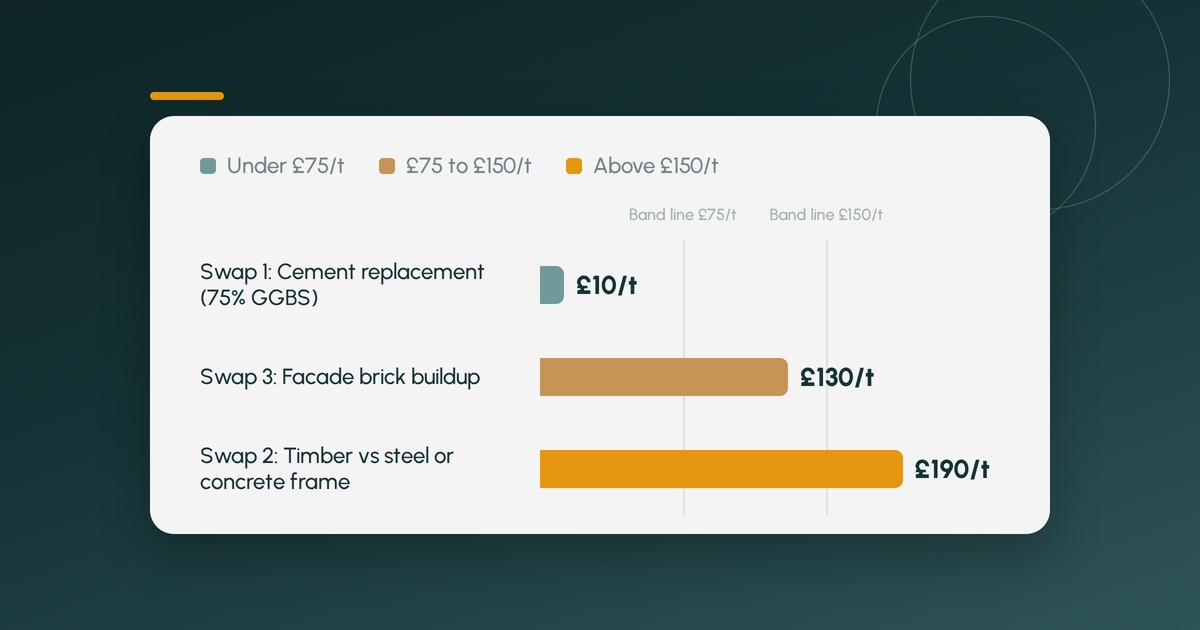
The Cost per Tonne Test for Embodied Carbon Swaps
Not every embodied carbon cut is worth paying for. Test any swap on cost per tonne of CO2e, see which band it falls in, and try the free calculator.
Read more