
2050 Materials Product Passport: RMG600 Access Flooring System by Tate
The RMG600 Raised Access Flooring System by Tate which is tested to the PSA:2021 leading raised access floor standard, is especially well suited for general office settings with high concentrations of building services, such as electrical power, data, telecom, air conditioning or environmental control, security, and fire detection and suppression, in the floor void.
In this article, we will analyse other key features and benefits of RMG600 Raised Access Flooring System while exploring Tate’s Net Zero targets for 2030.
Product features
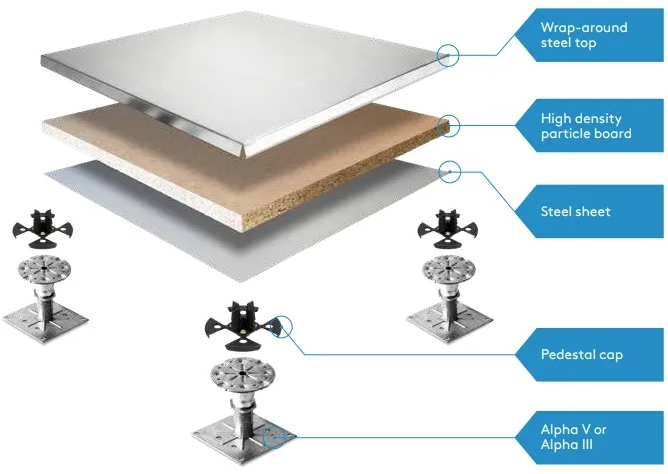
The RMG600 is a 600mm x 600mm panel consisting of a high-performance and FSC-certified particleboard core that is encapsulated by a galvanised steel shell. The galvanised steel shell comprises a top layer wrapped around and laminated to the core, which is mechanically fixed to the bottom steel sheet for greater strength, as well as to provide full electrical continuity and static dispersion of the system where required.
The raised access floor system has a 3x static load safety performance factor under PSA MOB PS/SPU specification, while it offers the flexibility of finished floor heights ranging from 57mm to 1200mm using standard pedestals.
Its unique wrap-around construction makes panel removal and replacement easy while improving panel edge strength. Apart from enabling quick and easy access to the floor void for circulation, distribution, or management purposes, it has effective sound and fire-inhibiting performance.
Manufacturing and Installation processes
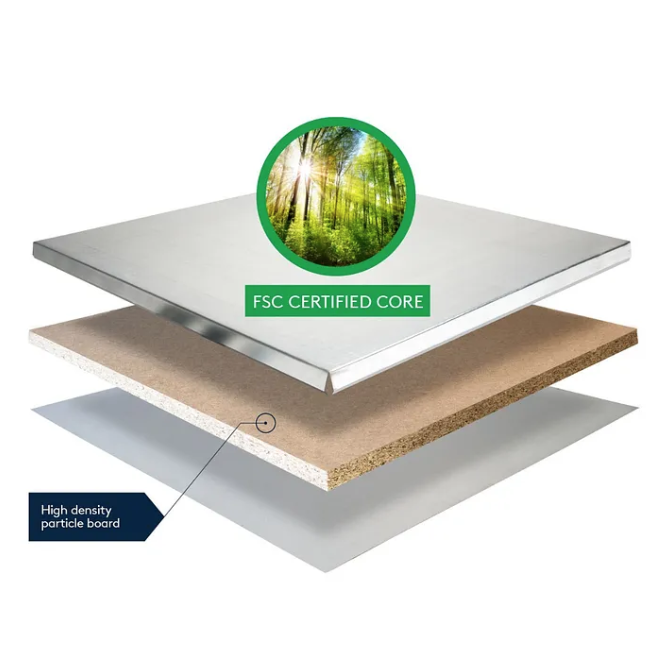
The panels are made at Tate’s factory in Hull, UK. The process involves cutting and trimming the particleboard and galvanised steel sheet, followed by the encapsulation of the board in the steel sheet. The manufacturing process is covered by both the site’s ISO 9001:2015-certified quality management system and its ISO 14001-certified environmental management system. Any metal or chipboard waste generated during the manufacturing stage is segregated and recycled.
As for the installation process, it is pretty straight forward. All that is required is the application of an adhesive to the sub-floor to retain the pedestal stability.
 RMG600 panels carry a 25-year warranty.
Take-back scheme and end-of-life
Tate operates a product take-back scheme. Site offcuts and used panels can be removed from site and shredded. The steel will be recycled and the chipboard will be used for energy recovery. Alternatively, the shredded chipboard can be used in animal bedding. When removed at the end of its life, over 99% of the components of a Tate raised access flooring system can be recycled. To achieve this encapsulating steel should be separated from chipboard; metal and chipboard can then be recycled or recovered in separate streams.
Why use a raised access floor system?
Raised access floors offer a variety of advantages that significantly enhance adaptability, longevity, easy maintenance, and life cycle costs reduction. Here are some important benefits to consider:
- Raised flooring makes it possible to quickly configure office space, which can result in 75% cheaper office churn expenses.
- Including an underfloor plenum can cut energy use by up to 20% while also lowering fan and air movement noise.
- Raised flooring makes it possible to eliminate or minimise the depth of plenums in suspended ceilings.
- Reduced costs for commercial remodelling and a greater degree of flexibility to change office layouts with little disruption.
Tate on target for net-zero
Tate Data and Flooring aims to support the Sustainable Development Goals (SDGs) through the relentless development of solutions with lower embodied carbon than what is already on the market. In parallel, Tate Data and Flooring also drives its Planet Passionate vision which aims to advance its environmental performance across the areas of carbon, energy, circularity and water.
Our mission is to accelerate a net zero emissions future with the wellbeing of people and planet at its heart — Tate
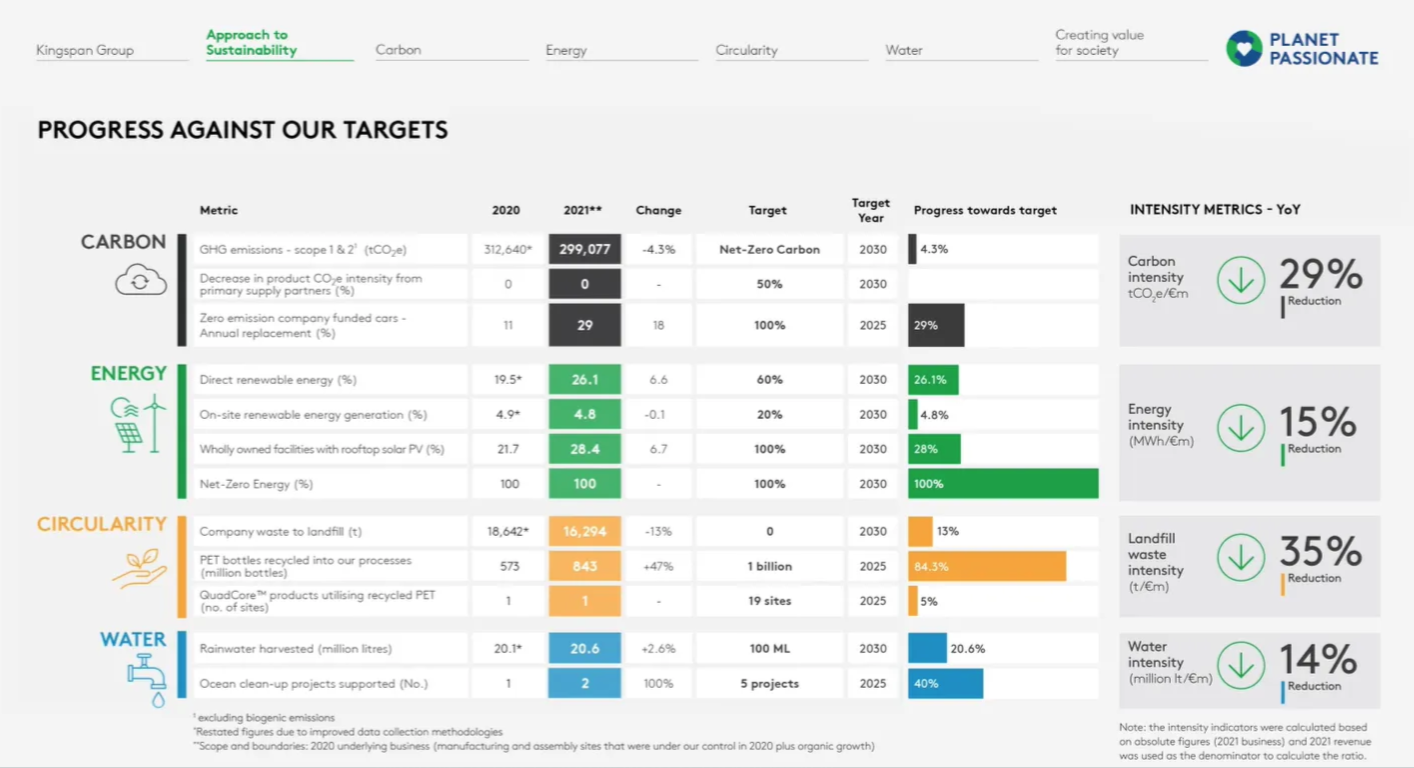
Throughout Planet Passionate Report 2021, the sustainable approach of Tate demonstrates how their initiatives and progress related to their operations and business models aim to contribute significantly in the transition to a more resilient built environment.
Let’s take a look at the most important targets set by Tate for the next years below:
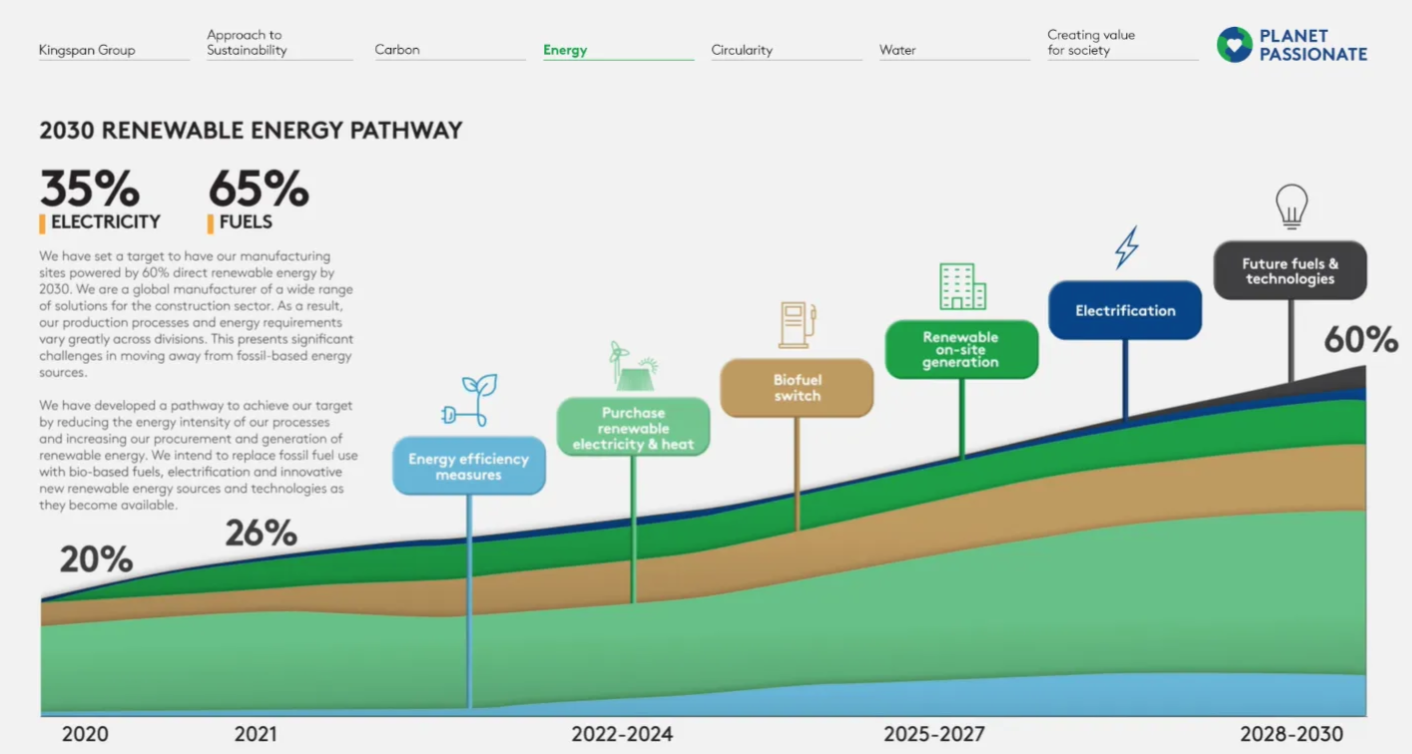
2030 Renewable Energy pathway
It is also worth highlighting the most challenging targets set by Tate regarding energy:
- 60% direct renewable energy use by 2030;
- 20% on-site renewable energy generated by 2030; and
- 100% install Solar PV systems on all wholly owned facilities.
Circularity vision
As for circularity at Group level, one of Tate’s key targets regarding circularity is Zero Company Waste to landfill by 2030.
The division has already reached this target in the Irish site, while also striving to increase the recycled content of its product range.
A big challenge that comes with huge positive impact if successfully achieved.
2050 Materials Product Passport
RMG600 Access Flooring System
At 2050 Materials, we build synergies and push manufacturers to become more climate-conscious. This is achieved by offering initiatives to help demonstrate transparency and awareness on the environmental impact of their products. One such initiative is the Product Passport.
If you are unfamiliar with the concept, our product passports centralise all essential environmental and technical information about products and enhance circularity, while playing a valuable role in the design phase.
Currently, there are still many difficulties in finding the specifications of products in a streamlined and efficient manner, which means a profound misunderstanding of the materiality of buildings and consequently, their economic, social, and environmental value. Hence, 2050 Materials and Tate aim to shed light on materials information while supporting architects in conceptualising buildings as material banks, fostering regenerative approaches and circularity in the built environment.
As you can see on the label below, the product passport shows at a glance the key environmental and health features as well as certifications.
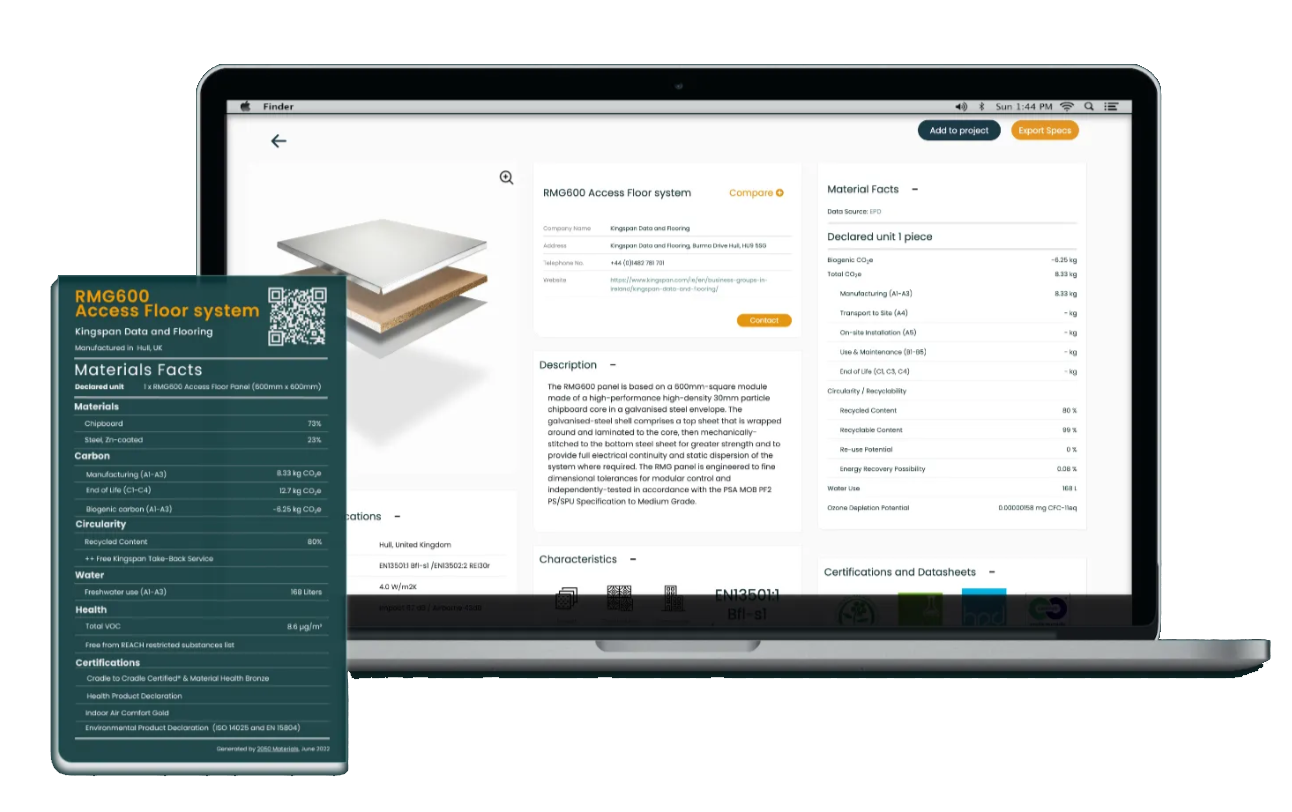
On top of that, you can find all associated technical specifications, as well as download all certifications and data sheets through the RMG600 product page on the 2050 Materials platform.
2050 Materials — Designers & Manufacturers
If you are specifier working on commercial projects, striving to design with sustainability at heart; you should absolutely check RMG600 access flooring system along with hundreds of innovative, circular and sustainable products listed on the free, open-source 2050 Materials platform.
Equally, if you are a manufacturer trying to align your products with the climate emergency, you should be on 2050 Materials to get your products in front of thousands of our environmentally-conscious specifiers.
Reach out to manufacturers@2050-materials.com to book a demo, or simply visit our website to get started.

Related articles
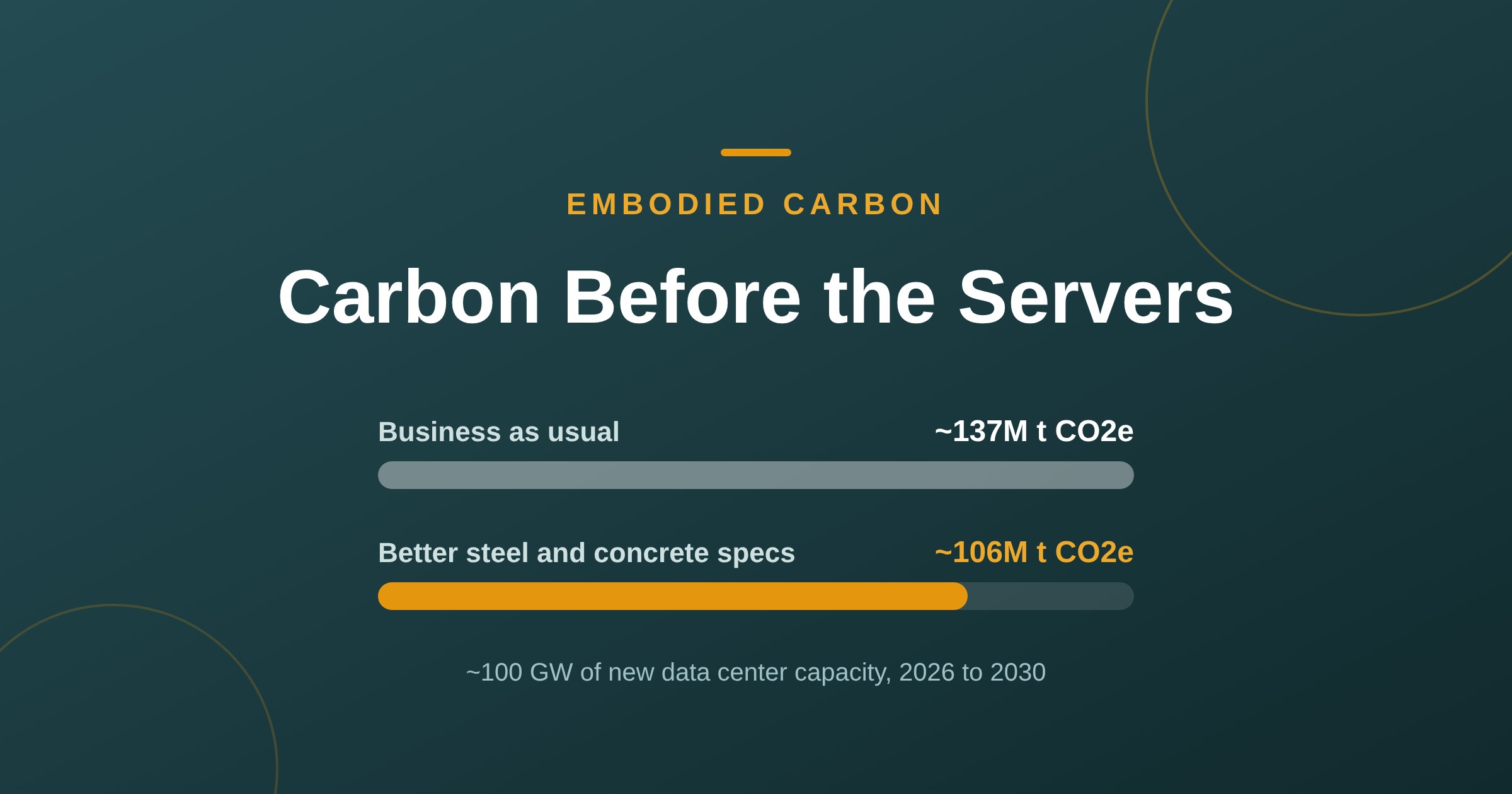
Data Centers’ Hidden 137M-Tonne Carbon Bill
New data centers could lock in ~137M tonnes of CO2e before a single server switches on. GGBS concrete and recycled steel could cut about 31M of it.
Read more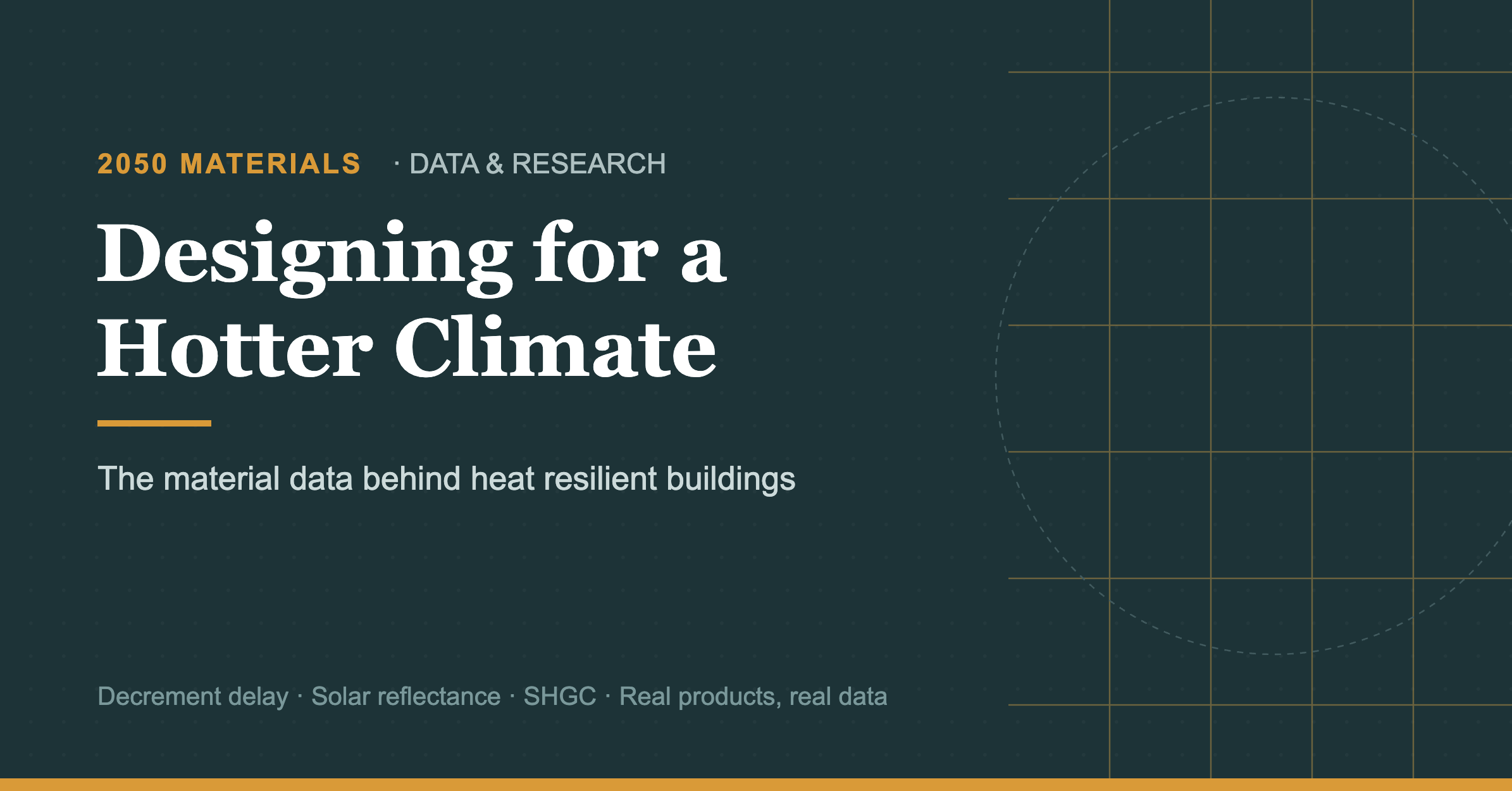
Built to Beat the Heat
This summer's drought wasn't a fluke, it was a preview. Here's the material data that actually decides whether a building shrugs off a heatwave or quietly cooks behind a great winter U value: decrement delay, solar reflectance, SHGC, and the real products behind each one.
Read more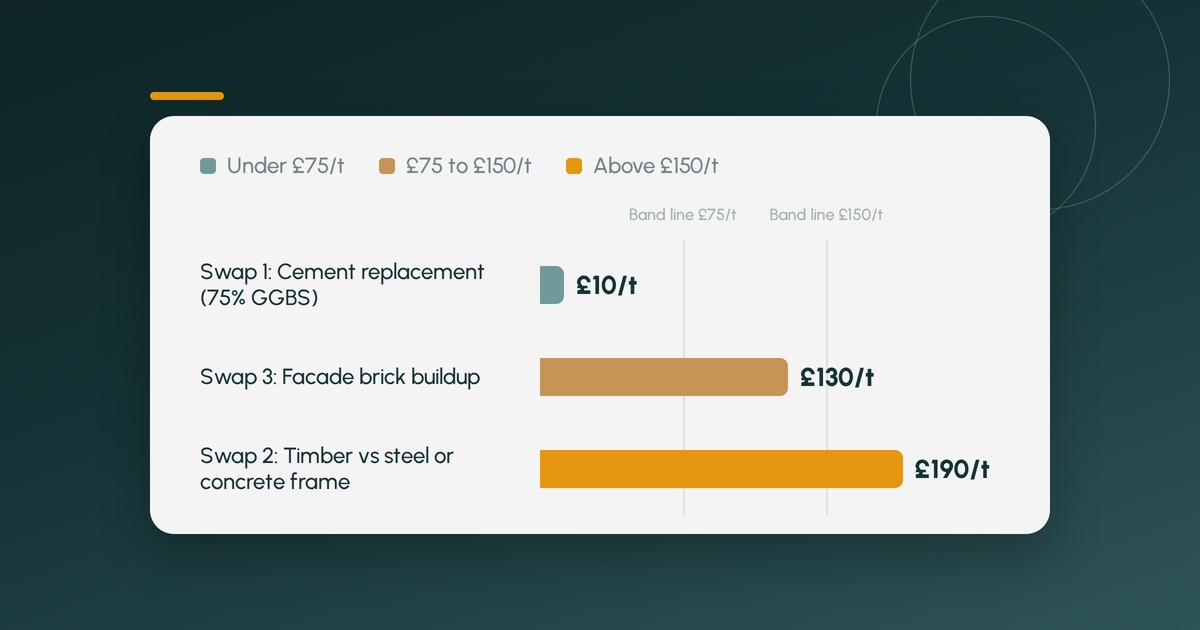
The Cost per Tonne Test for Embodied Carbon Swaps
Not every embodied carbon cut is worth paying for. Test any swap on cost per tonne of CO2e, see which band it falls in, and try the free calculator.
Read more