2050 Sustainable Materials Series: Straw Bale
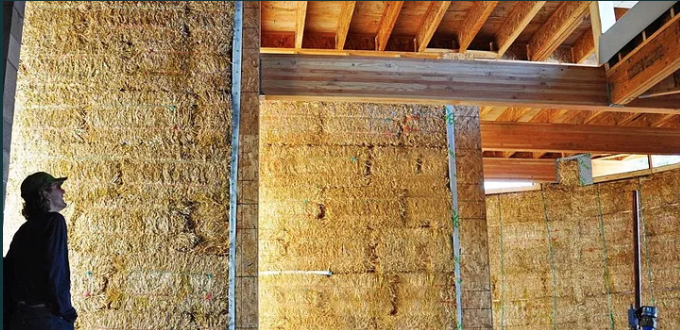
Evidence of straw used as a construction material dates back from the Palaeolithic era all the way to the 21st century.
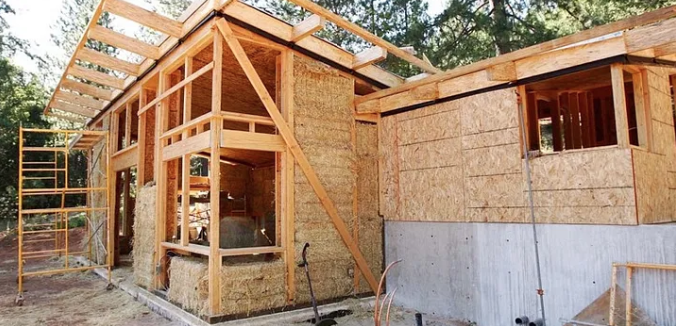
In more modern times, and specifically in the 20th century in Nebraska, United States, the rapid advancement in farming equipment led to a boom in straw bale construction. Its use spanned across a wide range of project types such as housing, churches, museums and other low-rise public buildings.
Straw is a bio-based material that reduces waste disposal requirements significantly, but most importantly, it’s easily accessible worldwide. It typically boosts local sourcing while it minimises transport requirements between the raw material source and construction sites.
Case study:
In Switzerland, Werner Schmidt architects designed and delivered a modern 2700sqft / 250sqm multi-storey house.
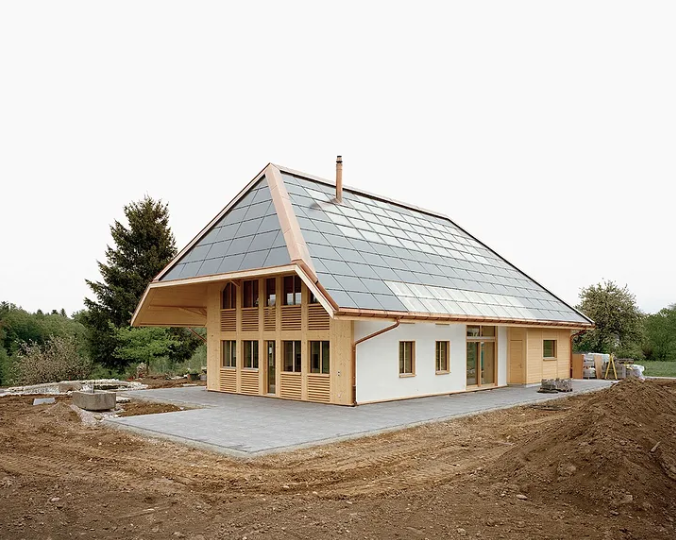
The location of the site is in the midst of a huge and open cultivated landscape, in a small village in the Swiss Canton Berne. The owner requested a modern, light-flooded and self-sustaining house.
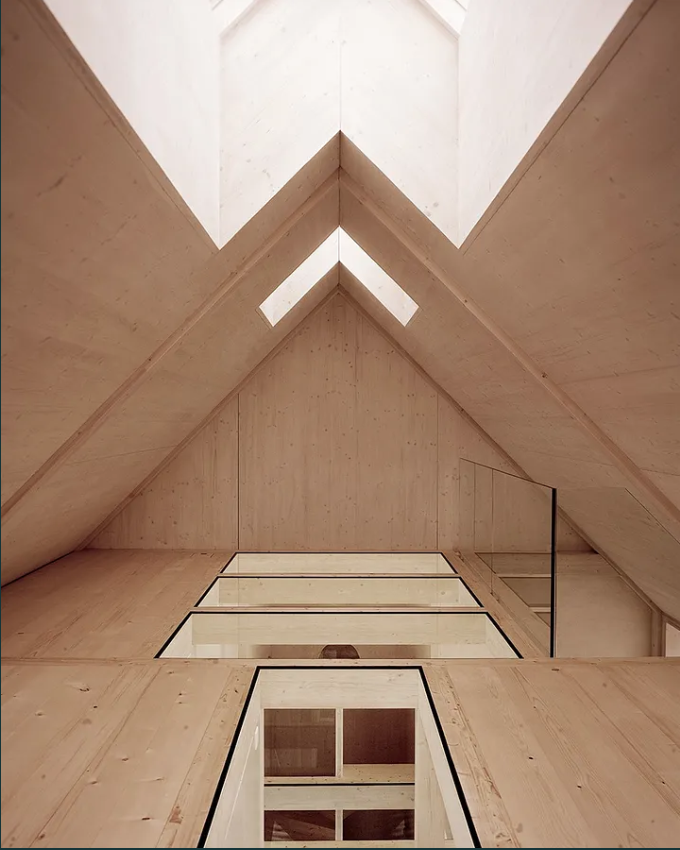
Werner Schmidt came up with a solution that needs as little heating as possible and produces as much thermal and electrical energy as possible. Inside the house, glass ceilings ensure daylight penetration through the whole building.
The internal layout comprises minimal use of partitions, allowing the occupants to live and work in a big, open-plan elegant space.
In addition, the 80-centimetre-thick straw-bale walls guarantee minimal heat loss, while the electrical and thermal energy gained by the solar panels is stored in a home battery system and a 5000-l solar tank located in the basement. In colder days, the stored energy can be utilised to provide enough heating for the whole house.
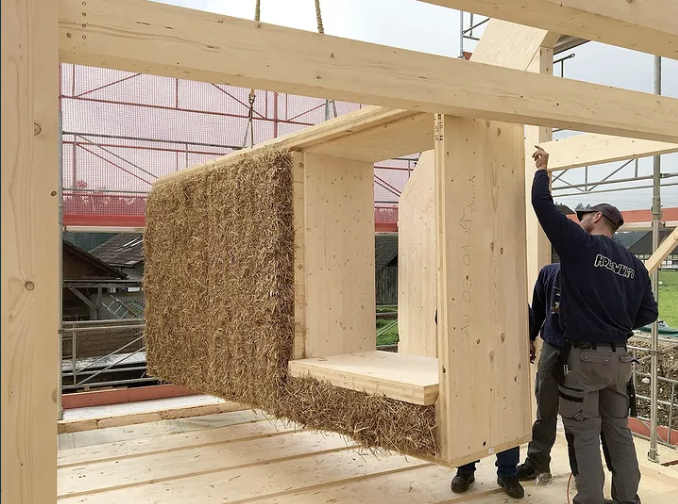
This is a superb example of combining traditional building techniques and modern technology.
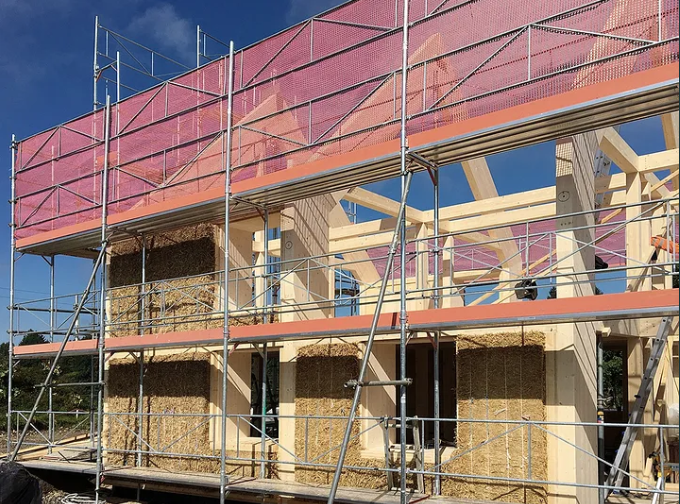
Advantages of straw-bale construction:
First and foremost, the key benefit is that straw and clay (which is required for bonding) are abundant materials, making them readily available at very low cost. With regards to technical advantages, it offers:
- Insulation properties:
Straw has excellent insulating properties; its thick structure absorbs large amounts of heat that is radiated constantly into the room, minimising heat loss and providing a pleasant indoor climate. It is ideal for keeping the building warm during the winter and pleasantly cool during the summer, enhancing both the embodied carbon impact of the building but also reducing operational emissions. - Ease of construction:
Straw-bale construction products can replace bricks, insulation, and facade materials, enabling for efficient, environmentally-friendly, all inclusive alternatives. The skills for its construction techniques can be mastered in just a few days, allowing for shorter construction programmes and lower labour costs. - Low costs:
Since straw is an agricultural by-product, it is cheap and available in most regions of the world, with minimal transportation requirements.
Disadvantages of straw-bale construction:
- NIA impacts:
The dimensions of a typical straw-bale external wall range between 450–500mm, meaning that it takes up more net internal area than a standard brick or blockwork wall, which typically ranges between 250–300mm. - Planning permissions and insurance:
Straw is not considered to be a conventional building material and isn’t typically included in national building codes. Thus, higher and more persistent efforts are required to obtain the necessary planning permissions. The appointment and expertise of local architects, consultants or engineers with experience in natural materials can be a speedy resolution to this issue. - Insects and mold:
Straw bales will harbor both of those things if they are consistently wet or relentlessly exposed to high-humidity areas such a showers and sinks without adequate protection. Even though conventional buildings are also prone to these, straw is more sensitive to such things than wood-constructed and fiber glass-insulated structures.
When put on a scale, we really think it’s a no-brainer — There’s huge potential offered by this material that isn’t being sufficiently utilised.
Panchami Pandharikar, Environmental Designer
2050 Materials — Public beta launch
2050 Materials has just opened up the platform beta to the public, meaning that any specifier or manufacturer can enrol and use it without any restrictions. If you are a manufacturer working on bio-based or sustainable materials, you should absolutely be on the platform!
Feel free to visit it, browse through, and list your products here:
2050 Materials Beta Platform
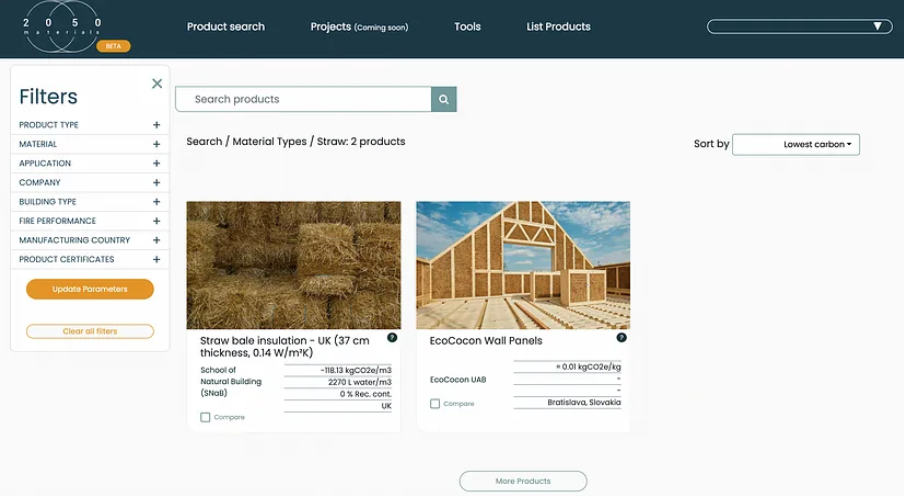
2050 Materials Beta Platform — Sneak peek
Related articles
Built to Beat the Heat
This summer's drought wasn't a fluke, it was a preview. Here's the material data that actually decides whether a building shrugs off a heatwave or quietly cooks behind a great winter U value: decrement delay, solar reflectance, SHGC, and the real products behind each one.
Read more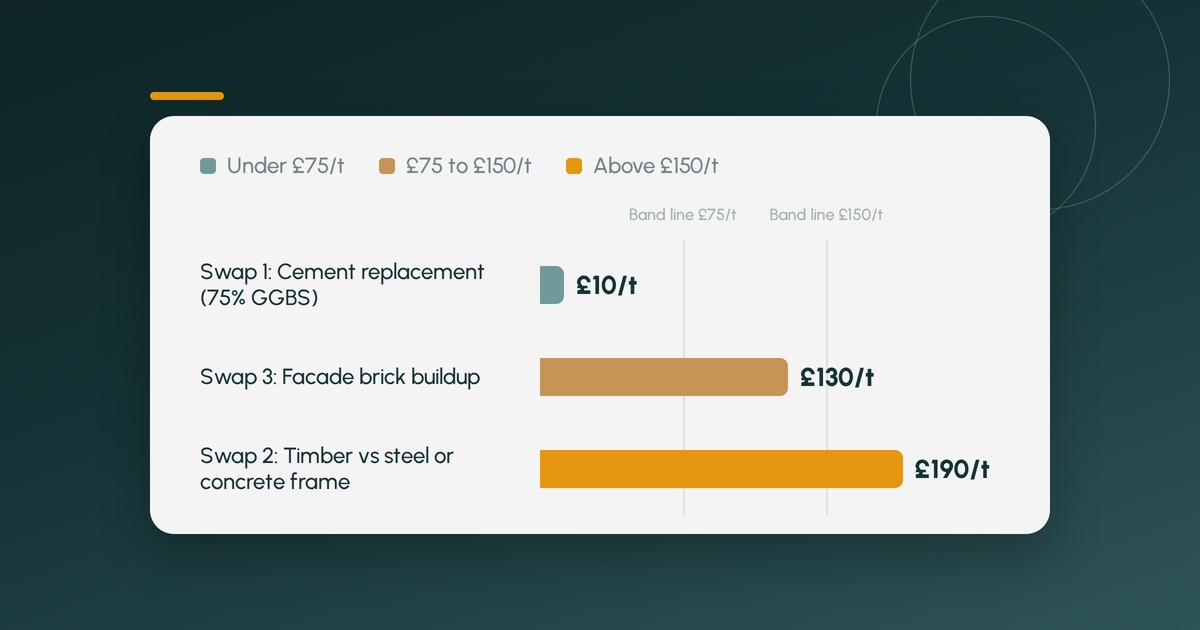
The Cost per Tonne Test for Embodied Carbon Swaps
Not every embodied carbon cut is worth paying for. Test any swap on cost per tonne of CO2e, see which band it falls in, and try the free calculator.
Read more
PFAS Compliance Meets Countdown
Sealants, membranes and insulation are next in line for PFAS restrictions. The window to get ahead of it, rather than scramble to catch up, is closing.
Read more