Proceed with Caution
The following short document outlines a few things to look out for when comparing materials on the 2050 Materials platform.
How can you compare products?
3 simple steps
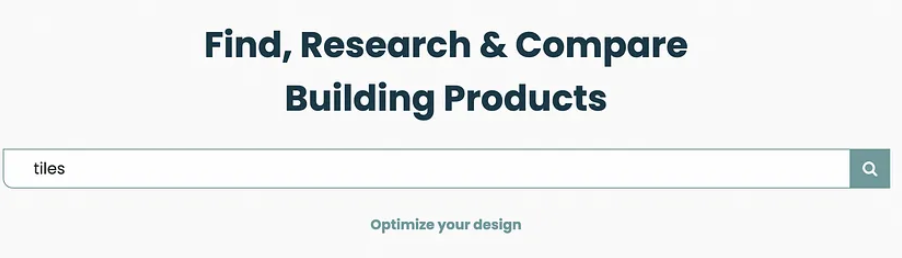
- Search for a product type (e.g. Tiles)
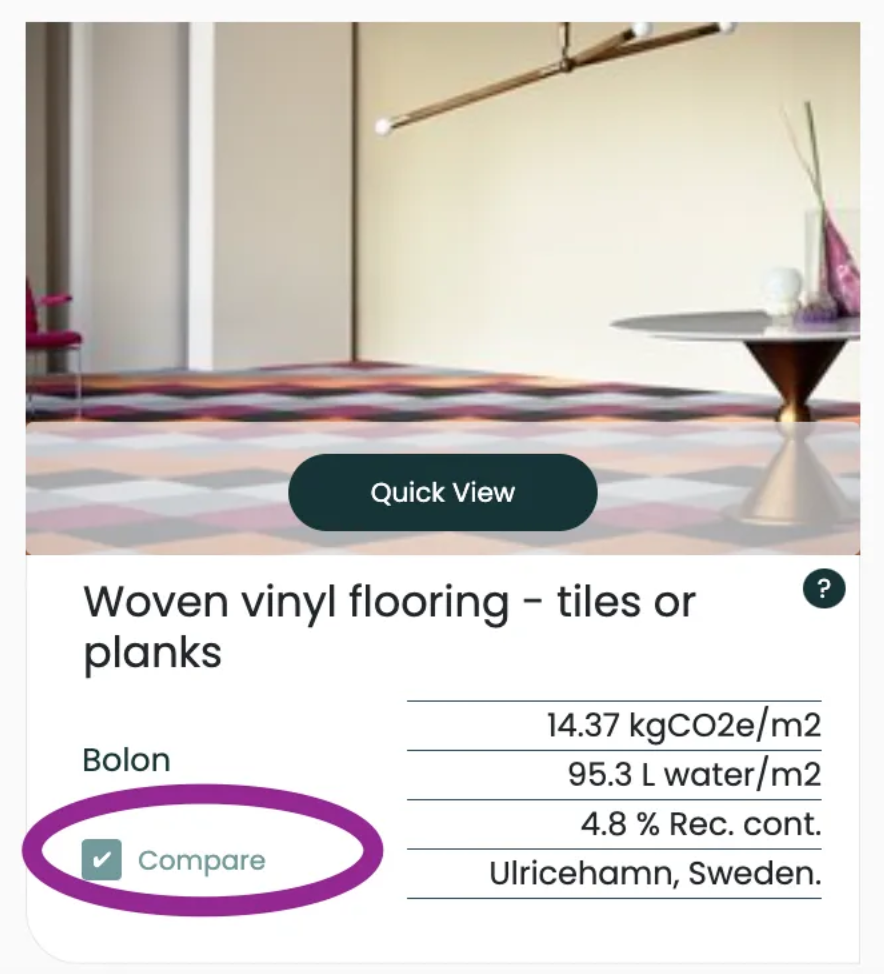
2. Click the “Compare” checkbox on 2–4 products you would like to compare.
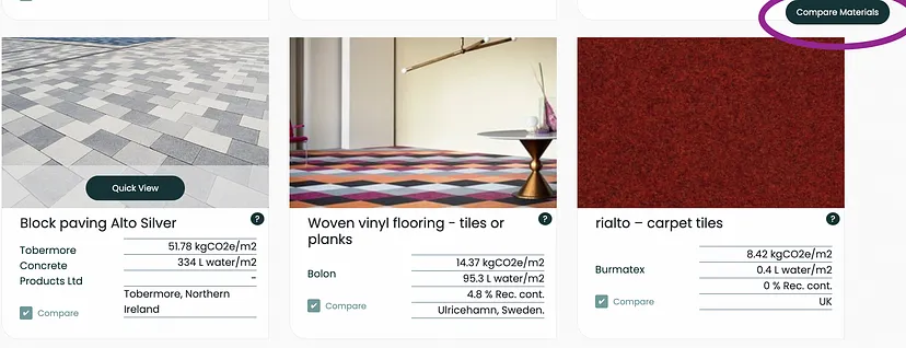
3. Once you’ve selected a few products, click the “Compare” button on the top right
What should you look out for when comparing products?
- Compare products that serve the same function
Comparing tiles with precast concrete panels or paint will not be very insightful. - Ensure the data is of equal quality, or follows the same standard
Although this is a tricky one, try to make sure that the data comes from the same type of assessment (e.g. EPD following ISO) - Make sure you the declared unit for each product is the same
Comparing the carbon footprint of 1kg of concrete vs 1m3 of concrete will yield confusing results. We are working on giving you the ability to transform declared units soon! - When comparing Material Facts, try to ensure the same life-cycle stages are covered.
A product may appear to have better performance if different life-cycle stages are covered.
Are there any issues we missed? Reach out to us at info@2050-materials.com to contribute to maximizing transparency in the sector.
The 2050 Materials team
Related articles
Built to Beat the Heat
This summer's drought wasn't a fluke, it was a preview. Here's the material data that actually decides whether a building shrugs off a heatwave or quietly cooks behind a great winter U value: decrement delay, solar reflectance, SHGC, and the real products behind each one.
Read more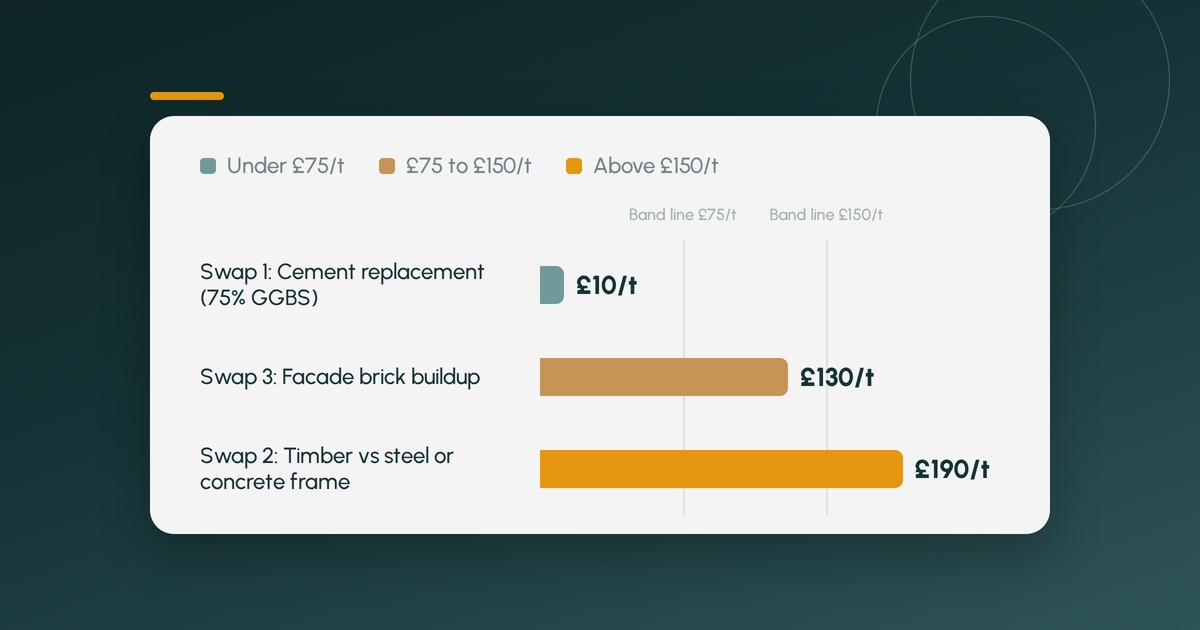
The Cost per Tonne Test for Embodied Carbon Swaps
Not every embodied carbon cut is worth paying for. Test any swap on cost per tonne of CO2e, see which band it falls in, and try the free calculator.
Read more
PFAS Compliance Meets Countdown
Sealants, membranes and insulation are next in line for PFAS restrictions. The window to get ahead of it, rather than scramble to catch up, is closing.
Read more