5 things to look out for in material library, fit for the needs of 2023?
 tl:dr — Times are changing. If you are looking for a product library to serve the multiple new requirements that a sustainable construction sector is creating, here’s the 5 things to look out for: (1) Comprehensive information, (2) Transparent information, (3) Designer-first, (4) BIM-able, (5) Available through API
What’s new?
The construction industry has been under constant pressure to reduce its carbon footprint and minimize its impact on the environment. One of the ways in which this can be achieved is by using materials that are low-carbon, circular, regenerative, and energy-efficient.
Developers, specifiers and builder are responding to this challenge by looking for various material libraries.
But what exactly does a library need to include in order to stand up to the challenge?
The 5 things you need in a material library
A material library in 2023 needs to meet certain criteria. Here are five things that (in our view) are necessary to have in a digital library in 2023 to ensure it empowers designers, engineers, and contractors to build climate-neutral cities:
- Comprehensive information
The library must provide comprehensive information about the materials it contains. This information should include the material’s composition, performance characteristics, sustainability credentials, and environmental impact. This will allow designers, engineers, and contractors to make informed decisions about the materials they use. - Transparent information
It’s tempting to generate ESG-like metrics that try to summarise all sustainability information of products into a single number. However, doing so will only make the industry more opaque, and open opportunities for manufacturers to greenwash. Data should be simple enough to understand, but should always link back to a (preferrably third-party verified) assessment. - Designer-first
Libraries and databases that look like they are made for an IT-department in the 90s can no longer power the needs of the industry. Designers have a disproportionate amount of impact in the sustainability performance of future buildings, and a sustainable materials library should be something they want to use, not something they feel forced to use. - BIM-able
The library should be integrated with BIM software to enable seamless integration of materials into design models. Designers and engineers need a real-time visualisations of how materials will look and perform in real-world scenarios. - Available through API
The industry needs a flow of the same data from design to construction. Since the industry uses (and will continue to use) countless software solutions, internal process, and other tools, a digital library needs to be able to be integrated in other solutions. It enables transparency and continuity of sustainable processes by allowing users to access and integrate the data into their own systems, applications, and workflows. By providing an API, a digital material library can become an integral part of the sustainable construction ecosystem, enabling transparency and continuity of sustainable processes.

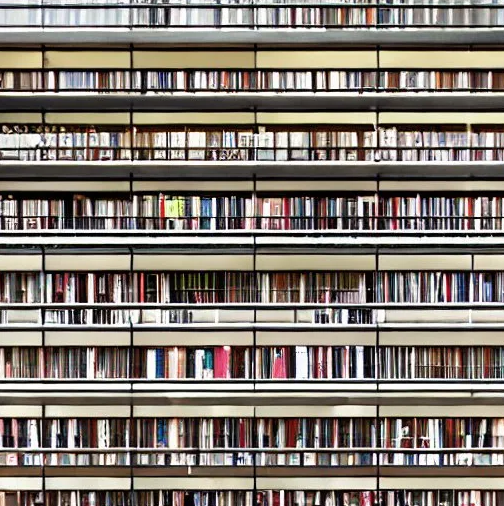
AI generated picture on the prompt: “Depiction of a wave of data powering sustainable cities” (Stable Diffusion)
Where should you start?
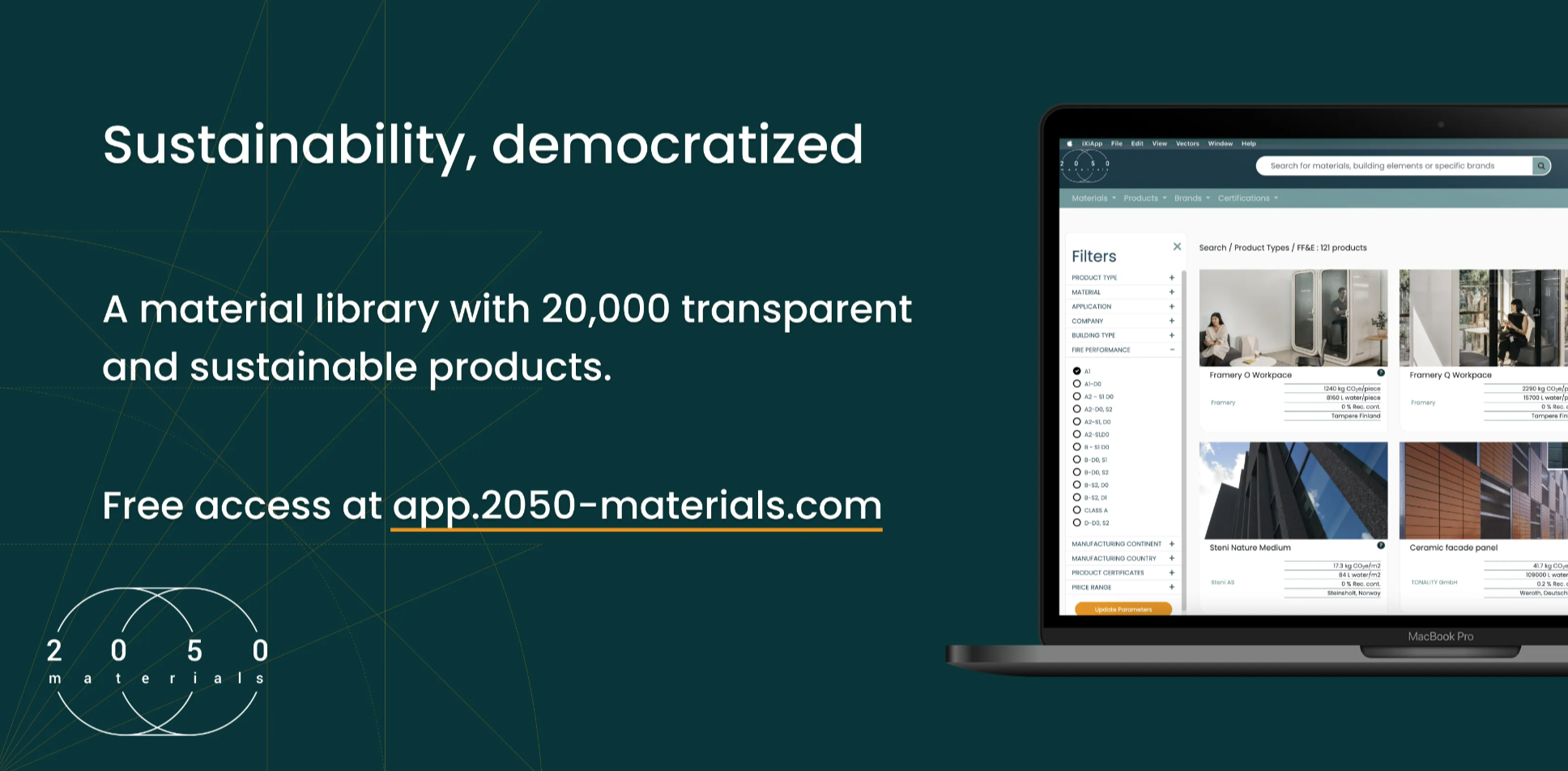
At 2050 Materials, we are building the library that will power the construction industry of the future. We’ve built a beautiful material library, paired with all the tools you need to discover and specify the right products on your project. But we don’t stop there. All the data is available through an easy-to-integrate API, which is already powering more solutions (from generative AI tools, to cost estimation software).
We are on a mission to use data for good, and we think you should join us!
More on the same topic here.
Related articles
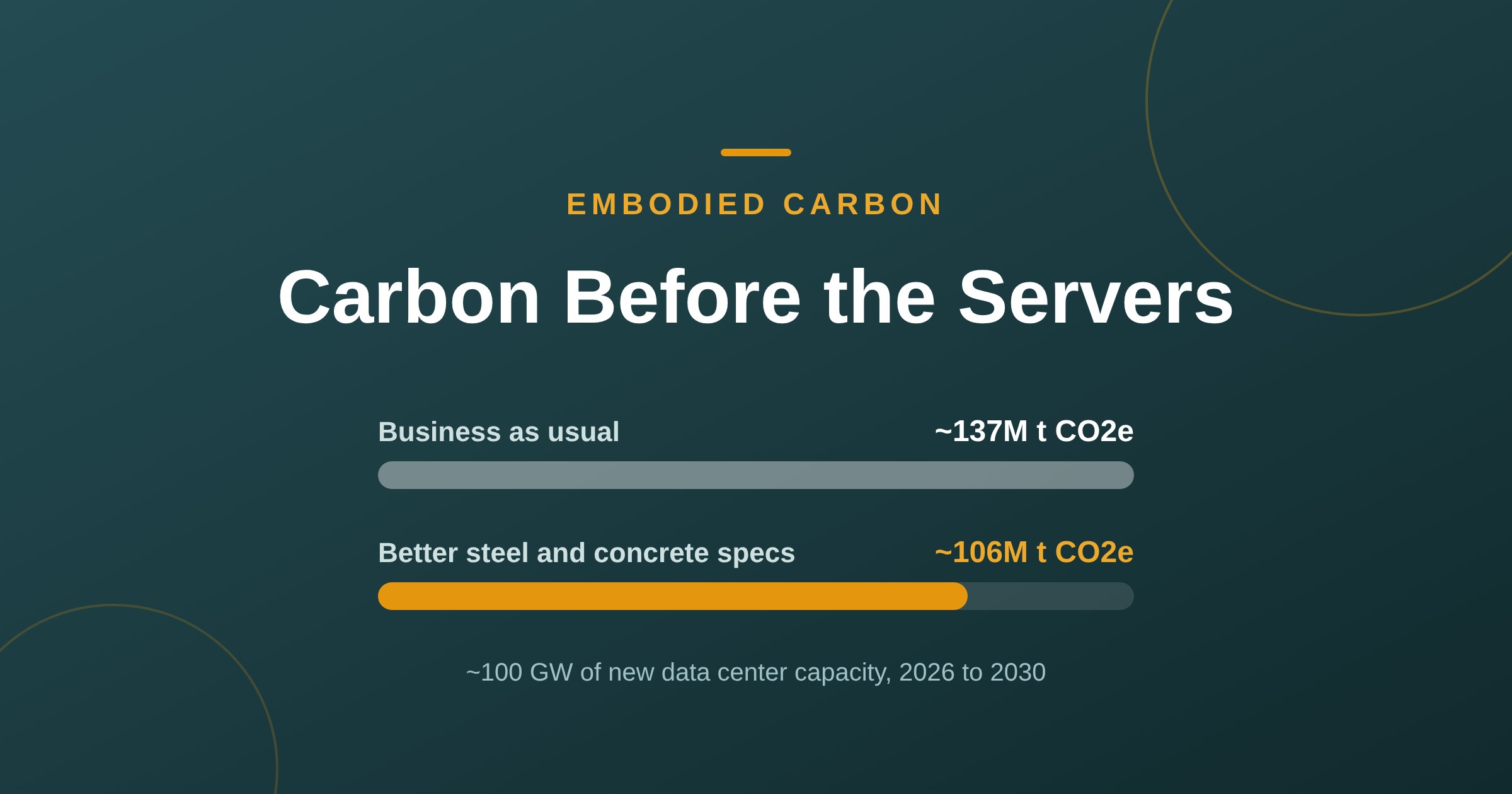
Data Centers’ Hidden 137M-Tonne Carbon Bill
New data centers could lock in ~137M tonnes of CO2e before a single server switches on. GGBS concrete and recycled steel could cut about 31M of it.
Read more
Built to Beat the Heat
This summer's drought wasn't a fluke, it was a preview. Here's the material data that actually decides whether a building shrugs off a heatwave or quietly cooks behind a great winter U value: decrement delay, solar reflectance, SHGC, and the real products behind each one.
Read more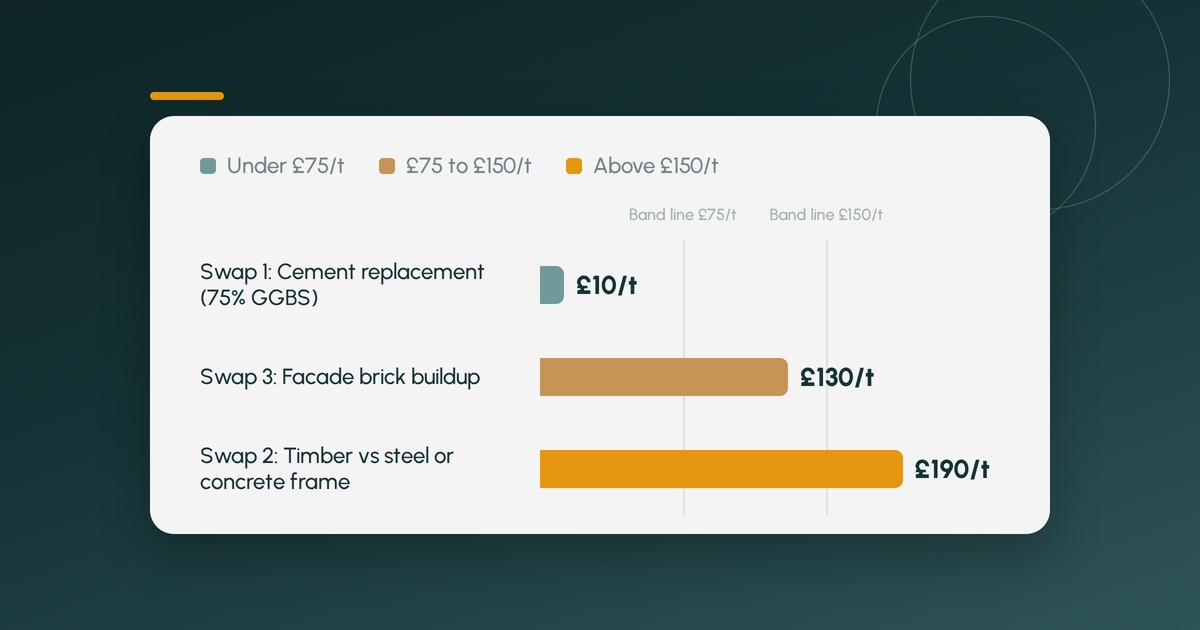
The Cost per Tonne Test for Embodied Carbon Swaps
Not every embodied carbon cut is worth paying for. Test any swap on cost per tonne of CO2e, see which band it falls in, and try the free calculator.
Read more