7 Products for Your Bathroom with Lower Environmental Impacts
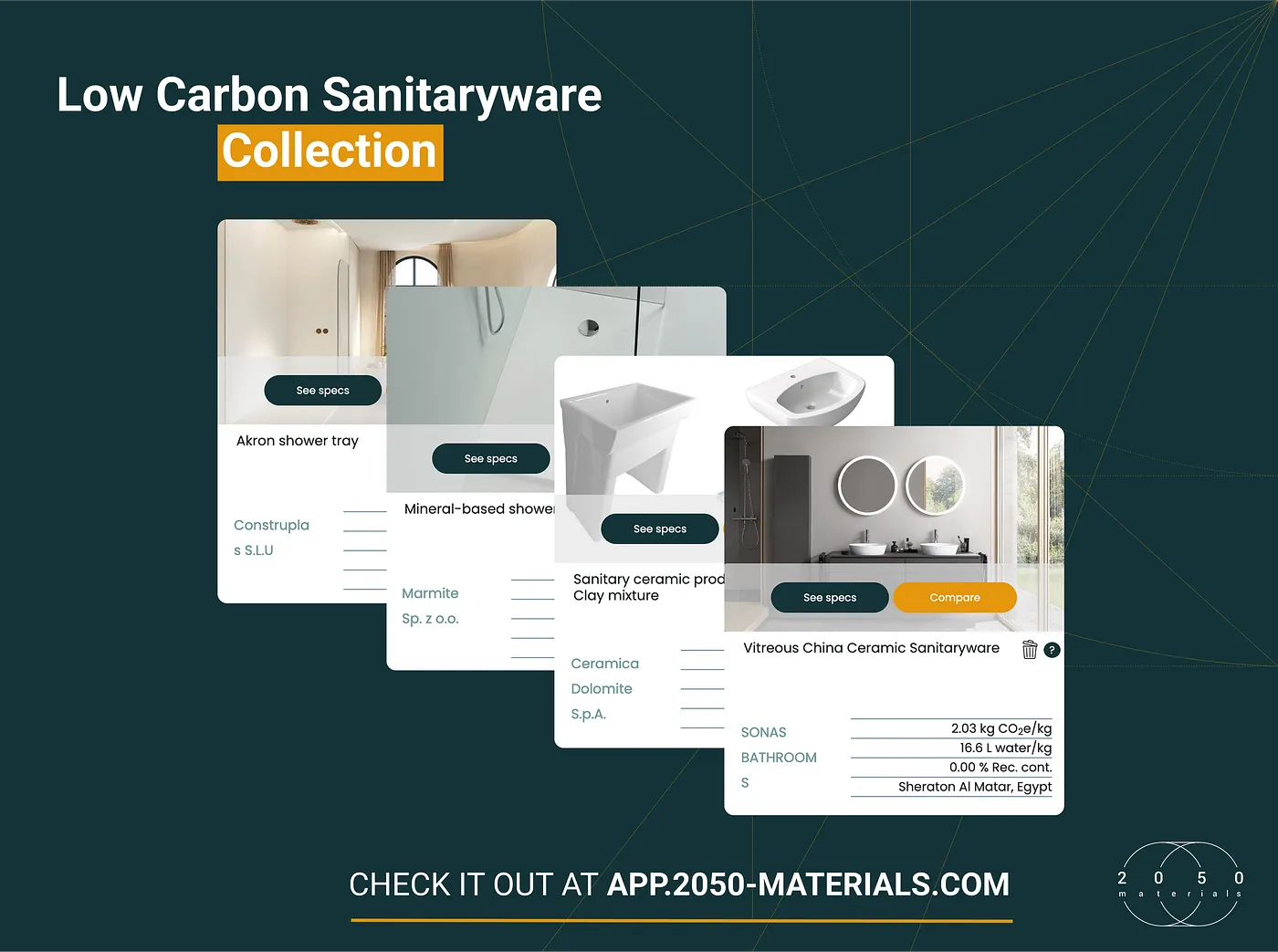
As the construction industry faces mounting pressure to reduce carbon emissions, even the most overlooked areas — like bathrooms — are undergoing transformation. Sanitaryware products, typically made from energy-intensive materials and processes, are now being reimagined with a low carbon footprint in mind. This shift is not only driven by climate goals but also by the growing demand for products that balance performance, design, and material responsibility.
In this article, we explore a collection of standout low carbon sanitaryware products currently featured on the 2050 Materials platform. Each product offers a meaningful reduction in embodied carbon through smart material choices, innovative manufacturing processes, or both. From advanced composites to refined ceramic blends, these bathroom essentials demonstrate how low carbon design can meet modern expectations — without compromise.
1. Akron Shower Tray by Construplas S.L.U
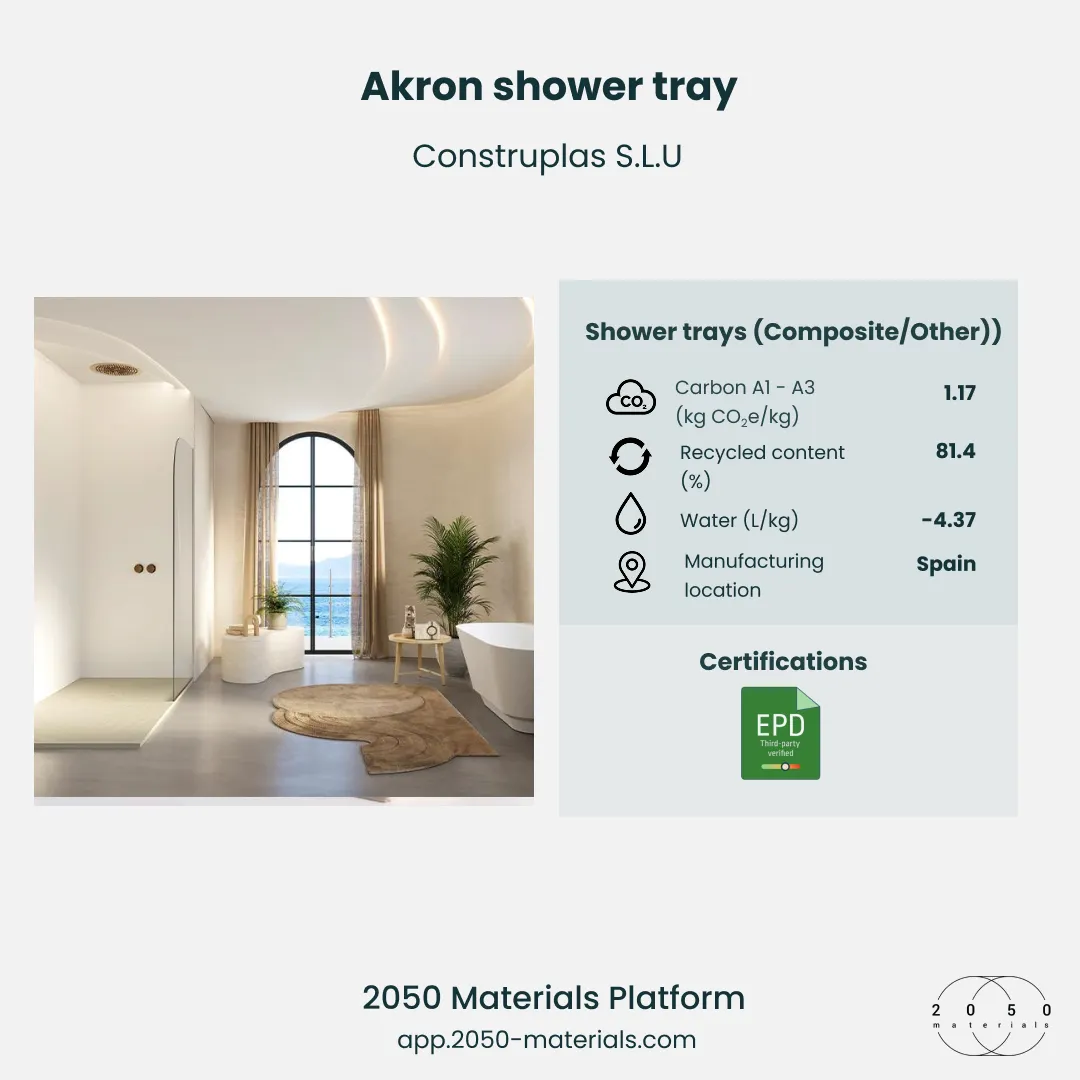
The Akron Shower Tray, produced by Spanish manufacturer Construplas S.L.U, is a low carbon alternative in the sanitaryware category thanks to its use of high-performance composite materials engineered for both durability and reduced environmental impact. The tray is made with Akron, a blend of polyurethane and mineral fillers with varied granulometry, creating a dense, solid structure. The surface is coated with a polyurethane acrylic layer, which ensures full integration with the substrate and boosts the product’s resistance to wear and chemicals.
Sustainability Performance and Advantages
- EPD certified
- Manufactured using polyether polyols
- High material efficiency and long lifecycle
- Reduced carbon footprint compared to traditional trays
Advantages
- Lightweight with high strength
- Easy to clean and durable
- Integrated surface finish
- No tiling or sealing needed
Use Cases
- Residential renovations
- Commercial restrooms
- Green building projects
2. Mineral-Based Shower Tray by Marmite Sp. z o.o. Press enter or click to view image in full size
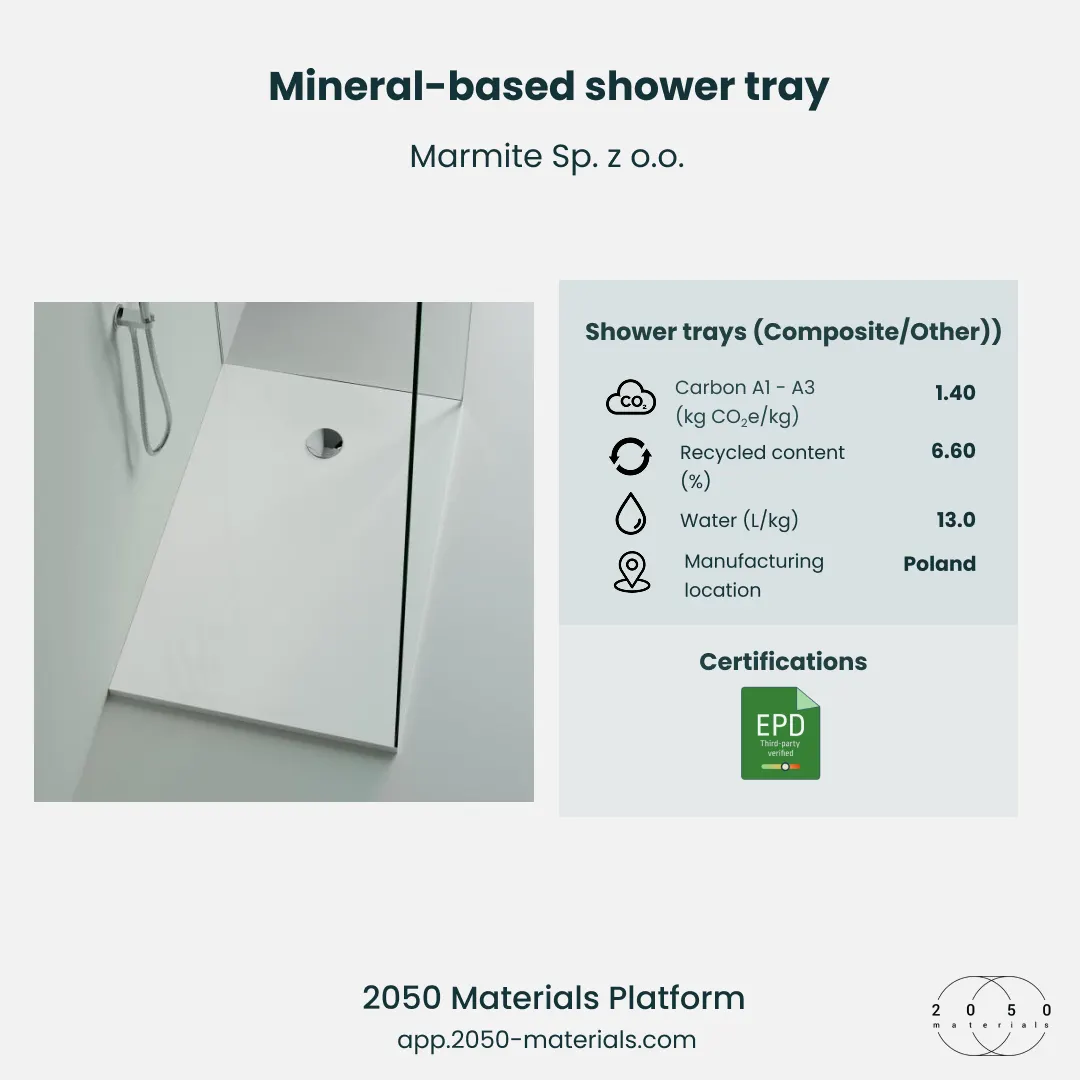
Marmite’s mineral-based shower trays by Marmite Sp. z o.o. are composed of dolomite stone and resin, forming a composite surface with a high-quality gelcoat finish. The Polish manufacturer offers flexible sizing and designs with tray weights ranging from 18 to 80 kg, supporting precise customization and minimizing waste.
Sustainability Performance and Advantages
- EPD certified
- Efficient use of dolomite, a naturally abundant material
- Durable gelcoat surface extends product lifespan
Advantages
- Low maintenance
- Customizable sizes
- Modern, sleek appearance
- Optimized for efficient logistics
Use Cases
- Modular bathrooms
- Prefabricated construction
- Large residential builds
3. Sanitary Ceramic Products with Fine Fire Clay Mixture by Ceramica Dolomite S.p.A.
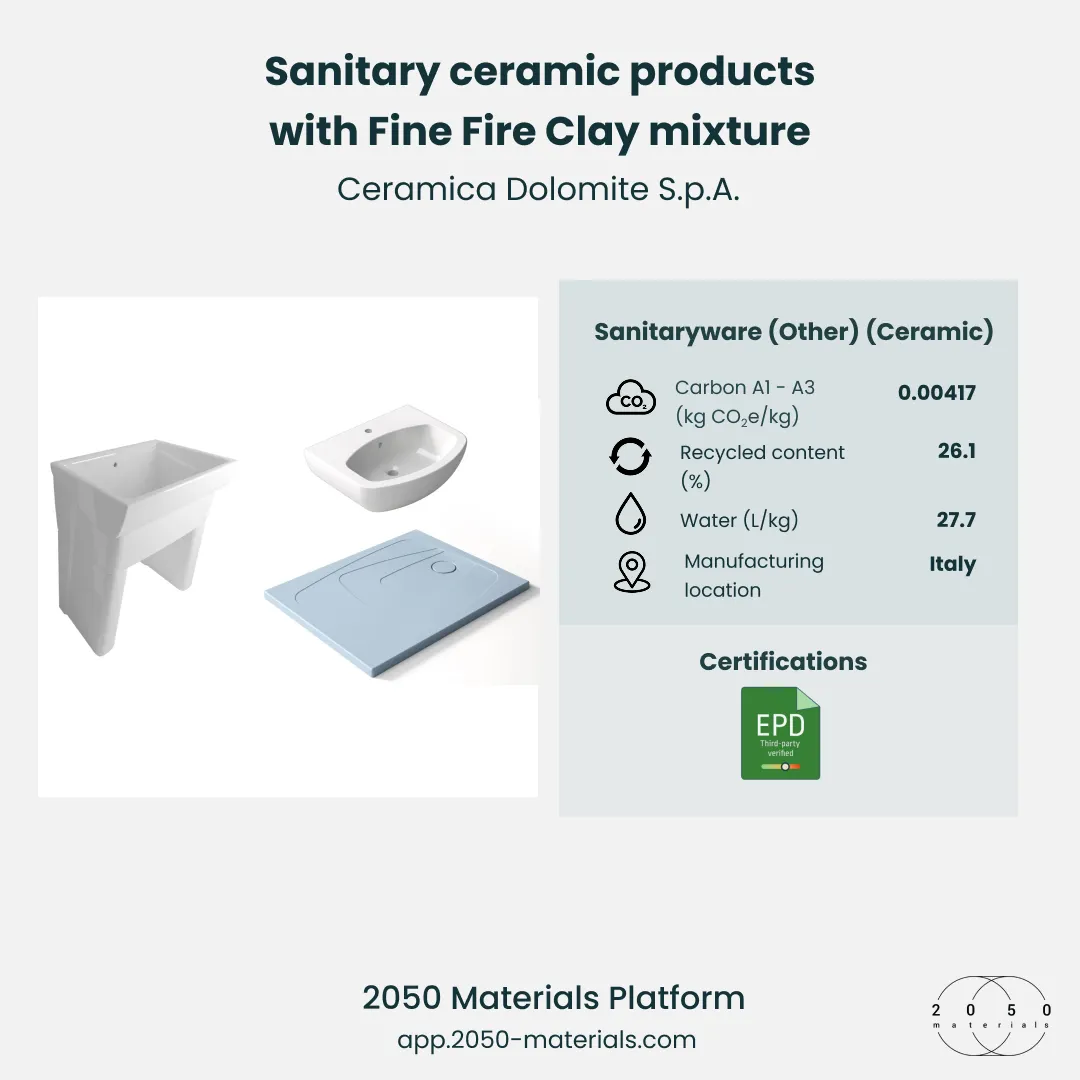
Using Fine Fire Clay (FFC), this ceramic sanitaryware from Ceramica Dolomite S.p.A. reduces energy use during firing while maintaining durability. FFC requires lower firing temperatures and allows for thinner wall sections, lowering embodied carbon.
Sustainability Performance and Advantages
- Reduced firing temperature
- Thinner, lighter products reduce material use
- Pressure casting improves efficiency
- Low lifecycle emissions
Advantages
- Durable surface finish
- Smooth glazing
- Long product life
- High precision molding
Use Cases
- Washbasins and toilets
- High-traffic facilities
- Resource-efficient buildings
4. Sanitary Ceramic Products with Vitreous China Mixture by Ceramica Dolomite S.p.A.
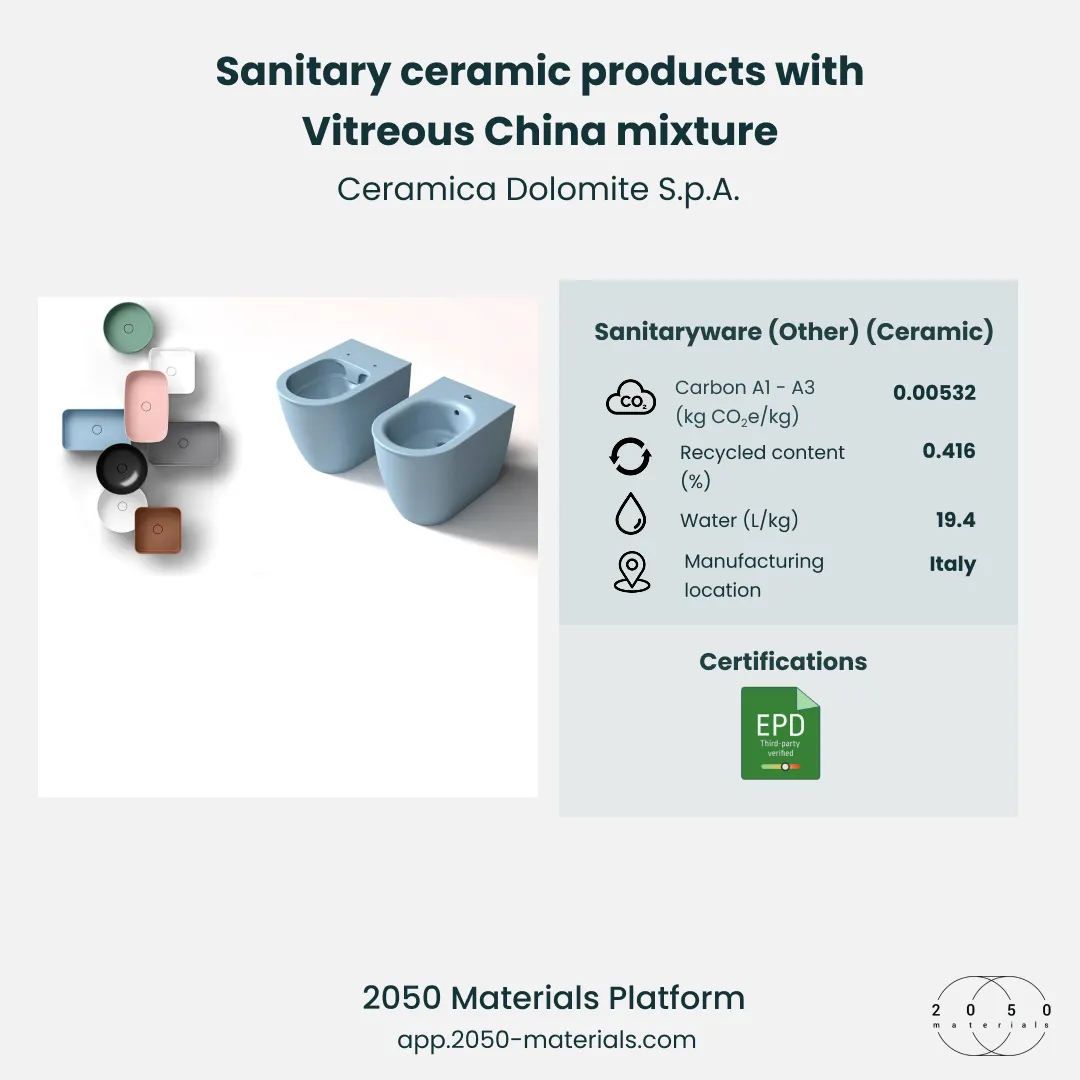
Also from Ceramica Dolomite, these products use a Vitreous China (VC) mix composed of natural clays and minerals. Though requiring higher firing temperatures, efficient material control and long-lasting finishes help lower total carbon footprint.
Sustainability Performance and Advantages
- High durability reduces replacement needs
- Pressure casting improves quality and reduces waste
- Advanced glazing increases resistance
Advantages
- Consistent finish
- Precision fitting
- Versatile design integration
- High wear resistance
Use Cases
- Residential bathrooms
- Public and commercial restrooms
- Durable fixture upgrades
5. Shower Trays Marble, Compact Marble & Granite by Marmolatek, S.L.
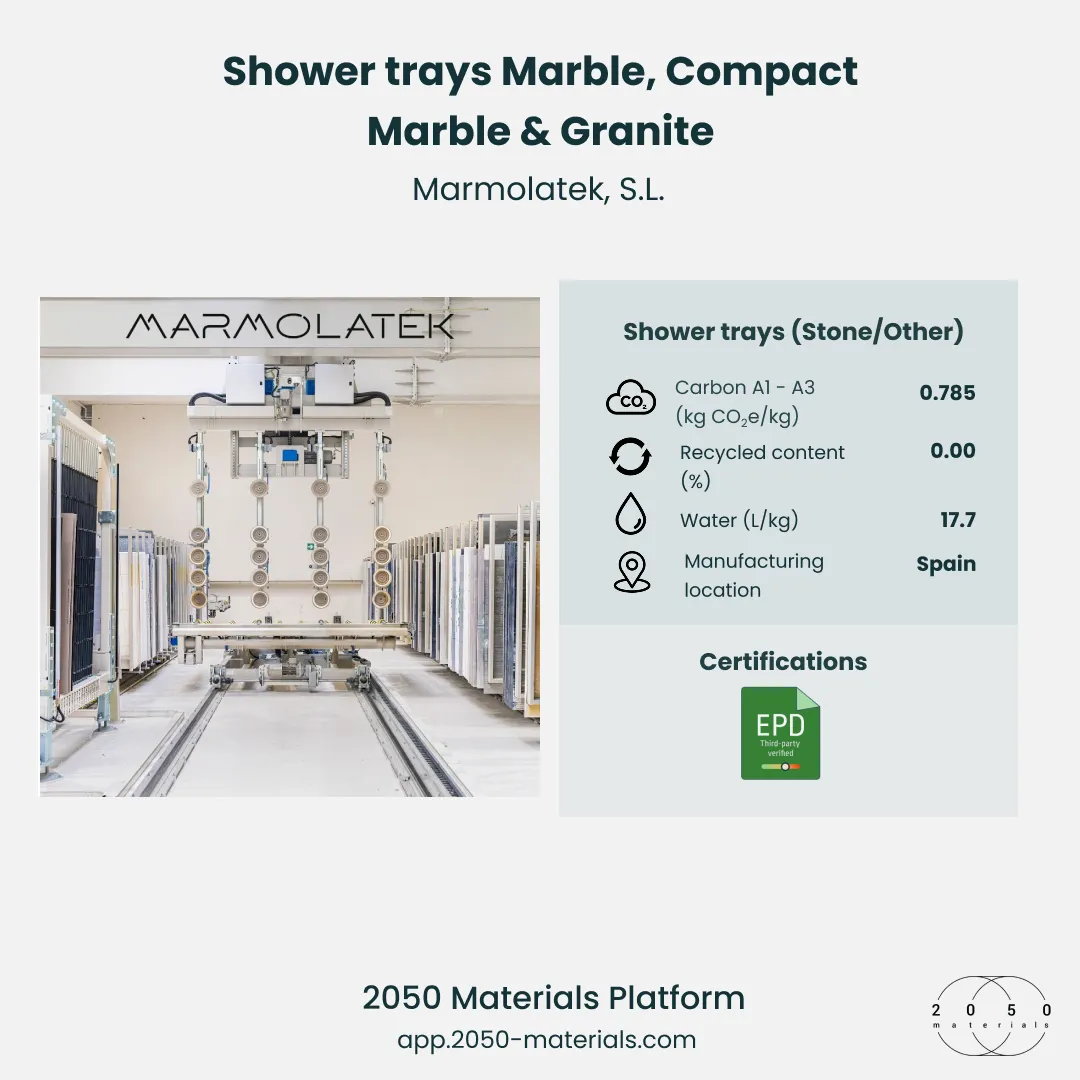
Crafted in Spain by Marmolatek, S.L. these trays feature natural materials such as marble, compact marble, and granite. Custom sizes and finishes eliminate the need for extra flooring materials.
Sustainability Performance and Advantages
- Uses low-impact natural stone
- Requires minimal processing
- Long life span lowers embodied carbon
- Recyclable post-use
Advantages
- Premium natural aesthetics
- Easy to integrate into modern or rustic designs
- No need for tiling
- Supports flush installation
Use Cases
- Designer residential bathrooms
- Hotels and spas
- Barrier-free shower designs
6. Vitreous China Ceramic Sanitaryware by SONAS Bathrooms
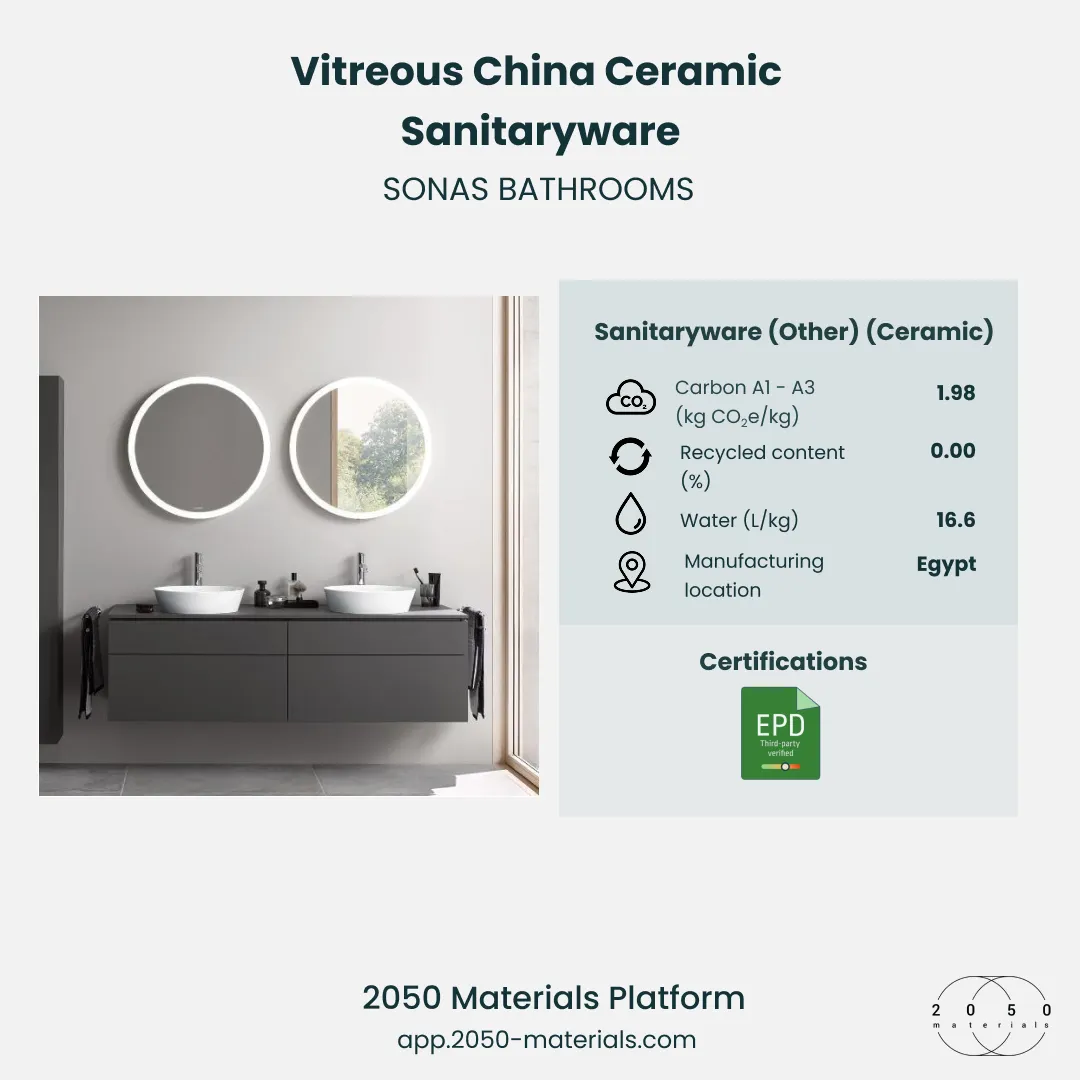
SONAS Bathrooms produces sanitaryware in Egypt using natural minerals like kaolin and quartz. These products are shaped and glazed by a combination of handwork and robotics, ensuring durability and quality.
Sustainability Performance and Advantages
- EPD certified
- Long lifespan due to full glazing
- Controlled manufacturing limits material waste
- Natural ingredients with low toxicity
Advantages
- Smooth, hygienic surfaces
- Stain and scratch resistance
- High-quality finish
- Consistent structural strength
Use Cases
- Hospitality projects
- Multi-unit developments
- Long-term public installations
7. Vitreous China & Fine Fire Clay Ceramic Sanitaryware by Eczacıbaşı Building Products
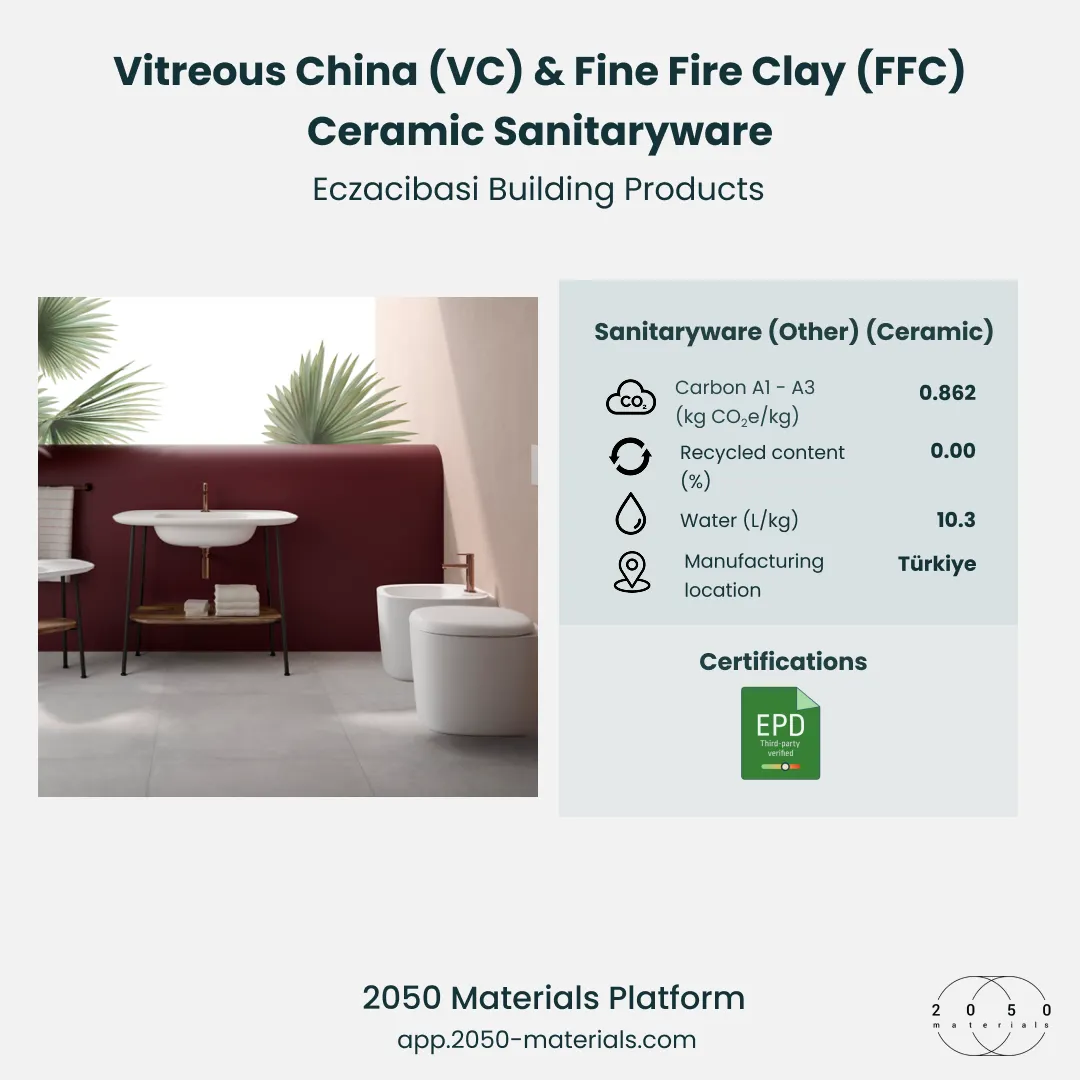
From Türkiye, Eczacıbaşı combines VC and FFC in their ceramics, balancing strength with material efficiency. Products are cast from clay and minerals and undergo drying and high-temperature glazing for resilience.
Sustainability Performance and Advantages
- Dual material strategy reduces material and energy use
- Warm air drying lowers energy demand
- EPD certification
- Optimized for lightweight strength
Advantages
- High resistance to cracking
- Adaptable to different bathroom styles
- Efficient production process
- Long product lifecycle
Use Cases
- New construction
- Public washrooms
- Adaptive reuse or retrofits
Rethinking Sanitaryware Starts with Better Materials
The shift to low carbon sanitaryware is not just about changing how bathrooms look, it’s about fundamentally transforming how they perform over their lifetime. Each of the products featured in this collection, represents a practical step forward in reducing embodied emissions through smart material choices, efficient manufacturing, and long-lasting performance.
For designers, specifiers, and sustainability-focused builders, these options are more than just alternatives, they’re the new standard.
To explore these products and more low carbon solutions, visit the 2050 Materials Public Collections. Every product is transparently profiled with environmental data, certifications, and technical specs, so you can make informed, impact-driven decisions for your next project.
Related articles
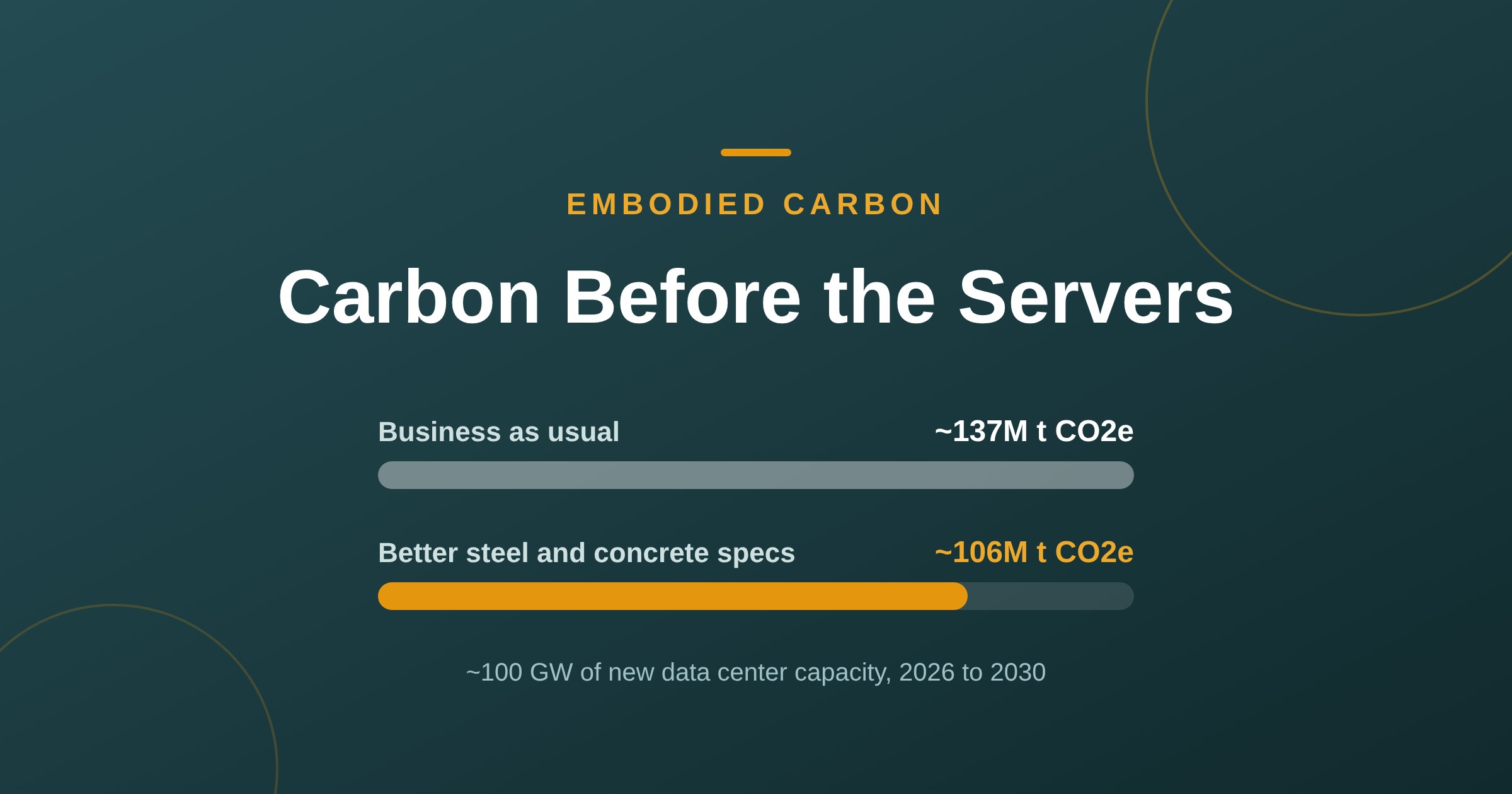
Data Centers’ Hidden 137M-Tonne Carbon Bill
New data centers could lock in ~137M tonnes of CO2e before a single server switches on. GGBS concrete and recycled steel could cut about 31M of it.
Read more
Built to Beat the Heat
This summer's drought wasn't a fluke, it was a preview. Here's the material data that actually decides whether a building shrugs off a heatwave or quietly cooks behind a great winter U value: decrement delay, solar reflectance, SHGC, and the real products behind each one.
Read more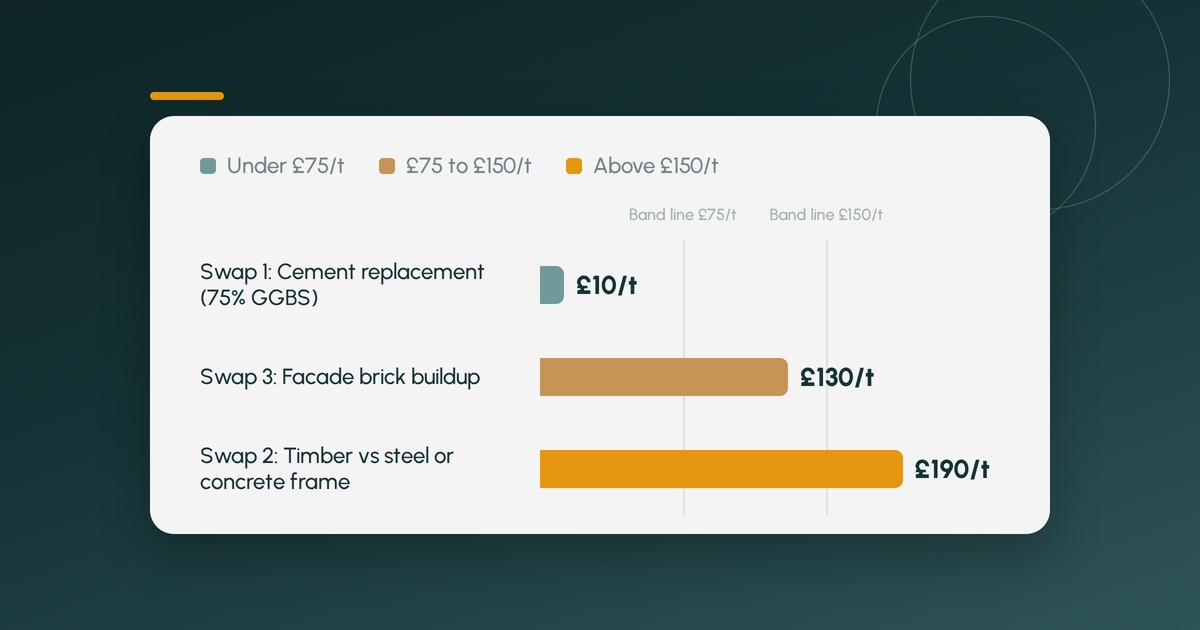
The Cost per Tonne Test for Embodied Carbon Swaps
Not every embodied carbon cut is worth paying for. Test any swap on cost per tonne of CO2e, see which band it falls in, and try the free calculator.
Read more