The Low-Hanging Environmental Wins: Solar Facades for Retrofits & Car Parks
Across Europe, existing buildings and ageing car parks are becoming one of the greatest climate opportunities. Most will require insulation upgrades, renewed façades, and improved operational energy performance. SolarLab’s building-integrated photovoltaic (BIPV) façade cladding turns this challenge into an architectural win: a next-generation cladding material that produces electricity, protects the envelope, and elevates the aesthetic all while paying for itself environmentally and financially.
Unlike traditional material choices with a high environmental footprint and require maintenance, SolarLab’s maintenance-free BIPV façades deliver free electricity and verified environmental performance with third-party certified Environmental Product Declaration (EPD: MD-23108-EN). The product replaces most conventional rainscreen materials with a long-lived, and power generating solution with an operational life of over 50 years and a 25 year power warranty.
Why Existing Buildings Are the Ideal Solar Façade Opportunity
1. Retrofit Façades: An upgrade in insulation, beauty, and resilience
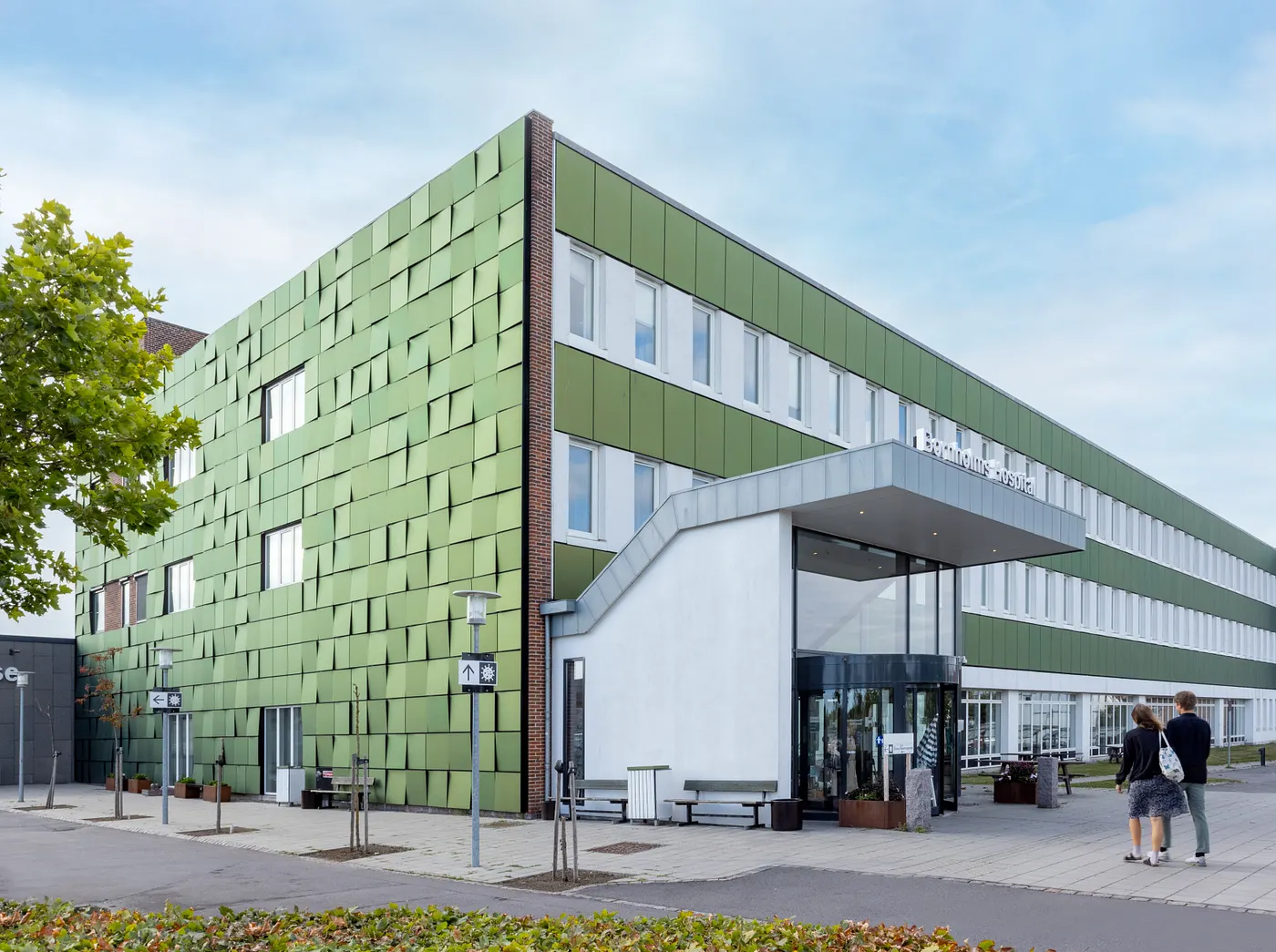
Bornholm Hospital — façade retrofit
As millions of buildings undergo energy upgrades, SolarLab’s BIPV system provides:
- High-performance cladding that protects exterior insulation layers
- Minimal maintenance and long service life (over 50 years)
- Custom colours, patterns, textures, shapes, gloss levels and finishes that enable seamless integration even on protected or historic buildings
- A transformative material that pays back both financially and environmentally, offsetting emissions many times during its life cycle through energy production
At Bornholm Hospital, SolarLab’s lightweight panels were mounted directly onto upgraded insulation, providing a durable rainscreen and generating clean electricity. The south façade features 500 uniquely angled modules and over 30 variants across the different facades, demonstrating the design freedom architects have when integrating energy production into existing envelopes.
2. Solar Car Parks: Simple Structures, High Energy Potential

Framingham Car Park solar façade
Car parks structurally robust, highly exposed, and increasingly used for EV charging offer some of the easiest wins for solar cladding.
- Large vertical exposure = ideal PV generation
- Durable and maintenance free cladding that shields concrete and steel while enhancing the visual identity, and ensuring natural ventilation
- Integrated electricity production directly supports EV charging demand
- Often politically and architecturally easier to upgrade than inhabited buildings
SolarLab’s BIPV makes car park upgrades not only sustainable and financially attractive, but visually transformative, turning simple utilitarian structures into architectural landmarks that generate power every day. Thanks to panel level power and safety management and careful engineering it integrates fire safety and resiliency without architectural compromise.
Design Freedom: Solar Façades With No Architectural Compromise

Stavanger City Hall
Aesthetic constraints are often a barrier to adopting solar cladding on existing buildings, especially protected ones. SolarLab directly addresses this by offering both ventilated rain-screen and curtain-wall solutions with unparalleled design freedom:
- Custom formats (360–4000 mm height, 350–2000 mm width)
- Bespoke shapes, cut sizes, and panel geometries
- A wide range of finishes: satin, matte, textured and patterned
- A wide range of material expressions: Metallic, iridescent, ceramic-like or graphic
- Controlled glare, reflectivity, and lustre; key for city centres or traffic-facing façades
- Fire performance classified as B-s1,d0 (EN 13501–1) and passed SP105, NFPA285, NFPA268, ASTM E84 as Class A
- Wind-load resistant assemblies tailored per project
This is why SolarLab is one of the few façade systems suitable for landmark buildings, civic buildings, and heritage settings, where both performance and appearance must be carefully balanced.

Verified Sustainability Performance
Beyond façades, SolarLab’s technology also extends to resilient roofing systems built for some of the world’s harshest weather conditions from the Polar cold to the sunny. The BIPV Cyclone-Resistant Roof System featured on the 2050 Materials Platform demonstrates how solar integration can go beyond aesthetics and energy production to deliver genuine climate-adapted performance tailored to the local climate conditions.
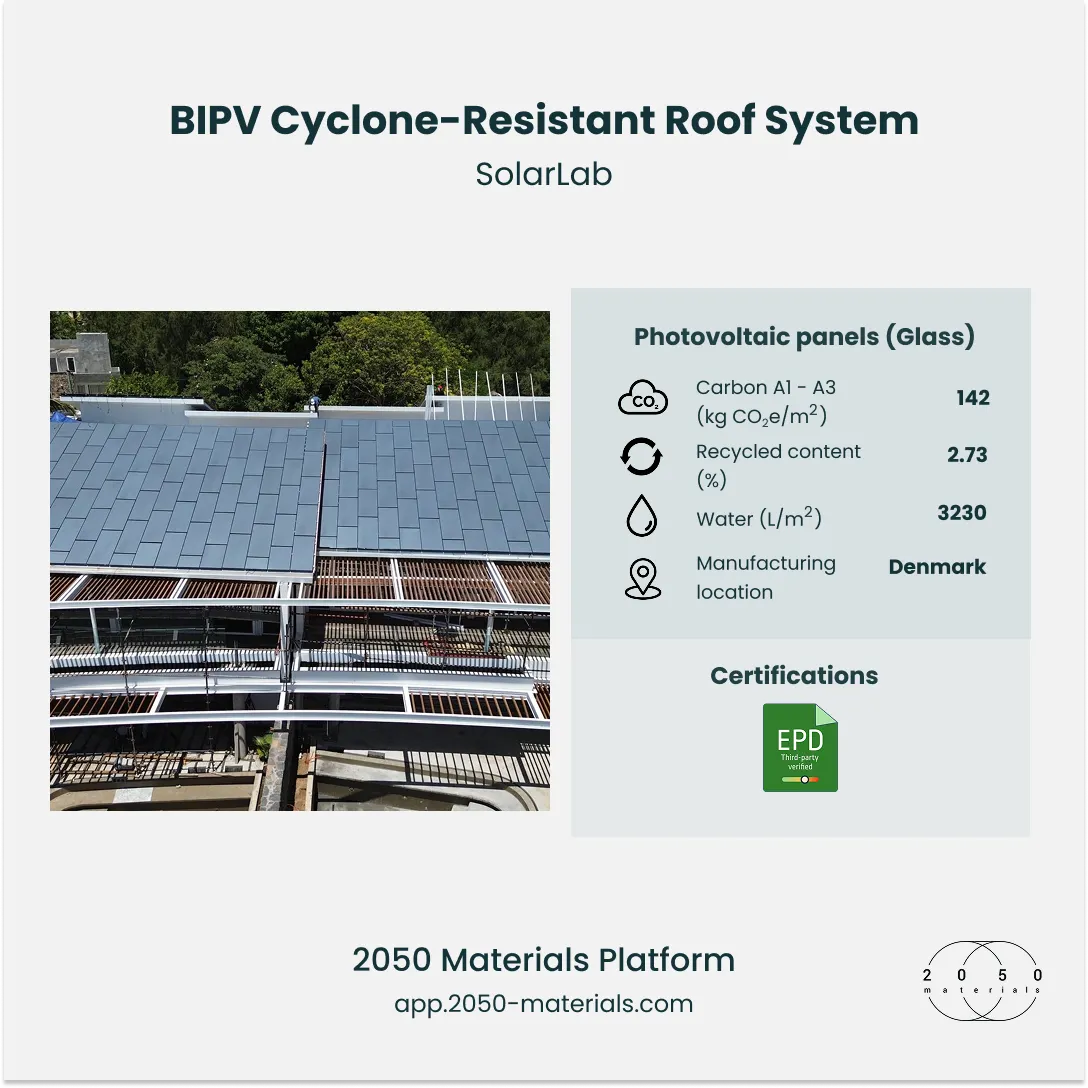
Designed and manufactured in Denmark, this lightweight photovoltaic roof cladding is engineered to withstand cyclone-level wind loads while providing long-term durability and clean electricity generation. With a fire performance classification of B-s1,d0, a life expectancy of more than 50 years and a 25 year warranty as an energy-producing unit, the robust material structure offers a reliable renewable solution for regions exposed to extreme weather events.
This system replaces conventional roof tiles or metal sheeting with a fully integrated BIPV surface, enabling buildings to generate energy while maintaining a strong, secure envelope. Thanks to its low mass per piece and thin profile, along with the broad design freedom it is suitable for both new builds and retrofits, especially in locations where traditional solar installations may not meet safety or performance requirements.
By pairing resilience with power generation, the Cyclone-Resistant Roof System expands the potential of solar cladding beyond façades alone, proving that even rooftops in high-risk zones can become productive, climate-responsive surfaces. It’s a compelling example of how SolarLab’s product family adapts to diverse building needs while maintaining the same principles of longevity, environmental payback, and design quality.
Supporting Tools: Making Solar Facades Easy to Specify
SolarLab removes complexity from the design and engineering process by offering:
- Free dynamic BIM objects
- Design guides and detailing libraries
- An online cost & performance calculator for early estimations
- Full design support, including detailed PV simulations, that quantify and visualise potential, as well as design assistance, reviews and feedback.
- EPD documentation enabling direct integration into LCA tools and compliance workflows
This ensures that design teams can make data-driven decisions from concept through construction.
Why SolarLab’s BIPV Is a “Material That Pays for Itself”
SolarLab’s system uniquely combines:
- Environmental payback: energy production offsets manufacturing impacts
- Financial payback: reduced grid energy use
- Material efficiency: replaces traditional façade materials, providing a dual function
- Longevity: cladding lifespan of over 50 years
- Aesthetic value: improves architectural quality instead of compromising it
Whether used on existing buildings or car parks, the system delivers a triple win: energy, resilience, and beauty.
Conclusion
Solar façade cladding represents one of the most accessible and impactful steps toward decarbonising the built environment, especially across the vast stock of existing buildings and car parks. SolarLab’s BIPV solutions combine architectural quality, proven environmental performance, and long-term economic value, delivering a building material that not only is beautiful and replaces traditional cladding, but actively generates clean energy for decades.
To explore SolarLab’s BIPV cladding in detail including full environmental performance you can view the product’s page and published EPD on the 2050 Materials Platform.
Related articles
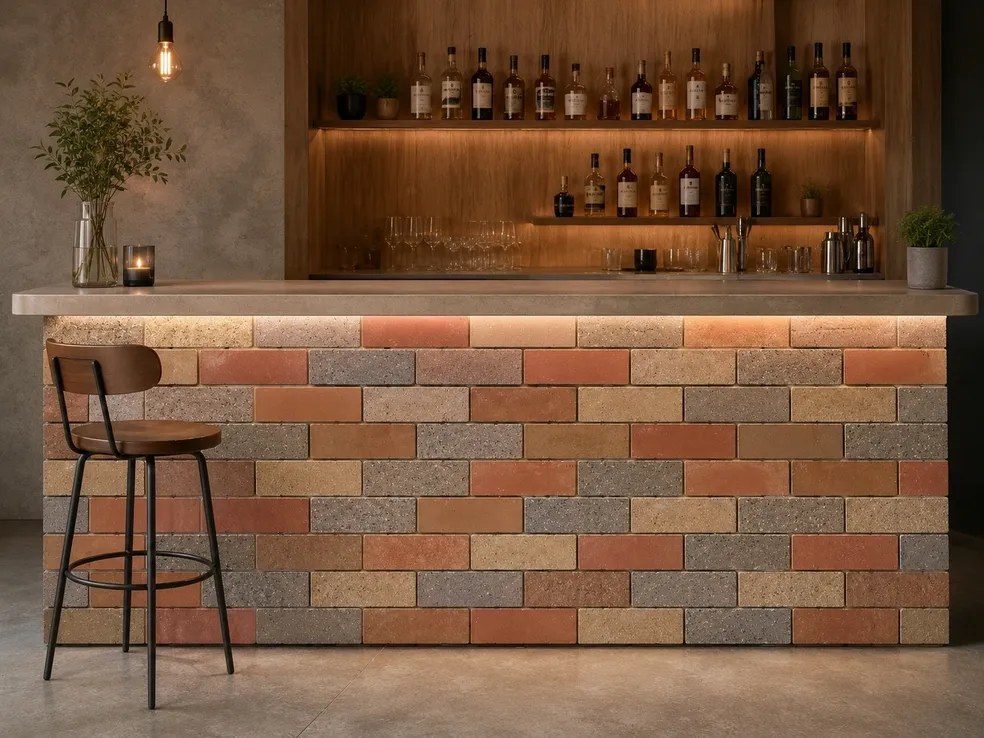
e4E Brick Slips: All the Brick, None of the Kiln
e4E makes brick slips from excavated soil, pressed rather than fired. See how they are made, the formats you can specify and the verified EPDs behind the range.
Read more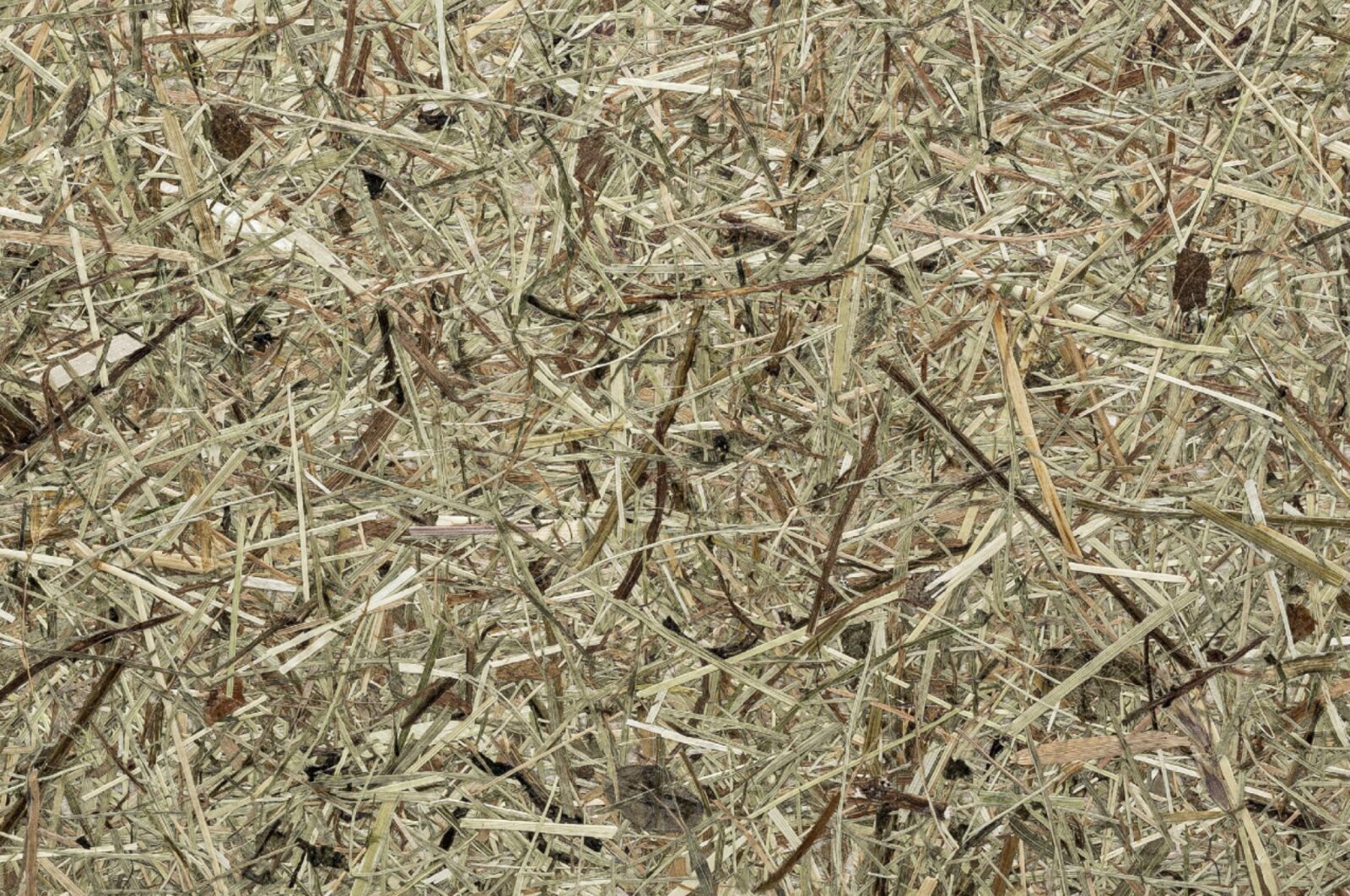
CaraGreen’s Organoid Wildspitze: A Wallcovering Grown, Not Manufactured
CaraGreen's Organoid Wildspitze is a wallcovering made from hand cut alpine hay, backed by a third party verified EPD showing 2.2 kg CO2e/m² GWP and stored biogenic carbon.
Read more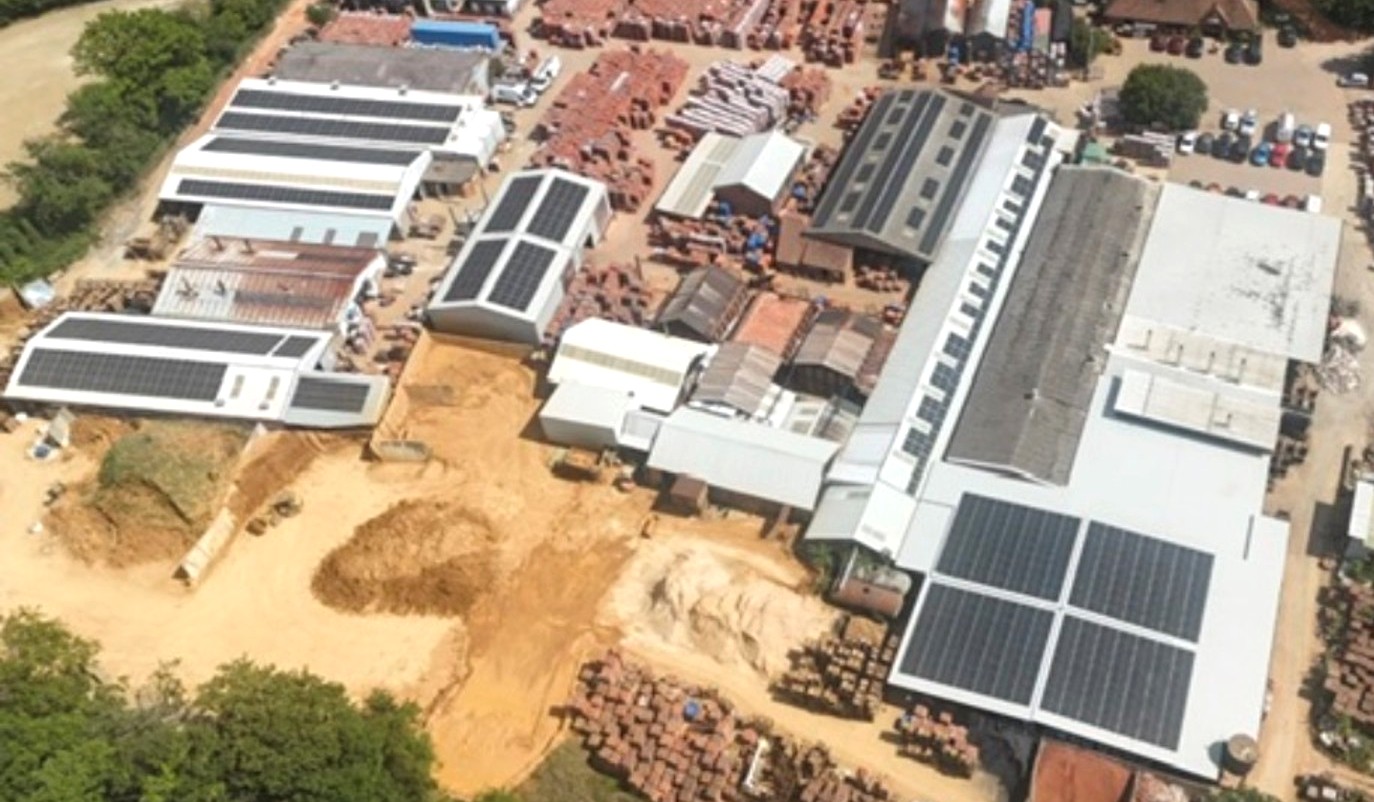
H.G. Matthews: Beyond the EPD
H.G. Matthews' new solar-biomass energy system at The Brickworks, Bellingdon is cutting diesel use and lowering embodied carbon, the latest step in a track record of measurable, verified environmental improvement backed by published EPDs.
Read more