Build like the year is 2050, today.
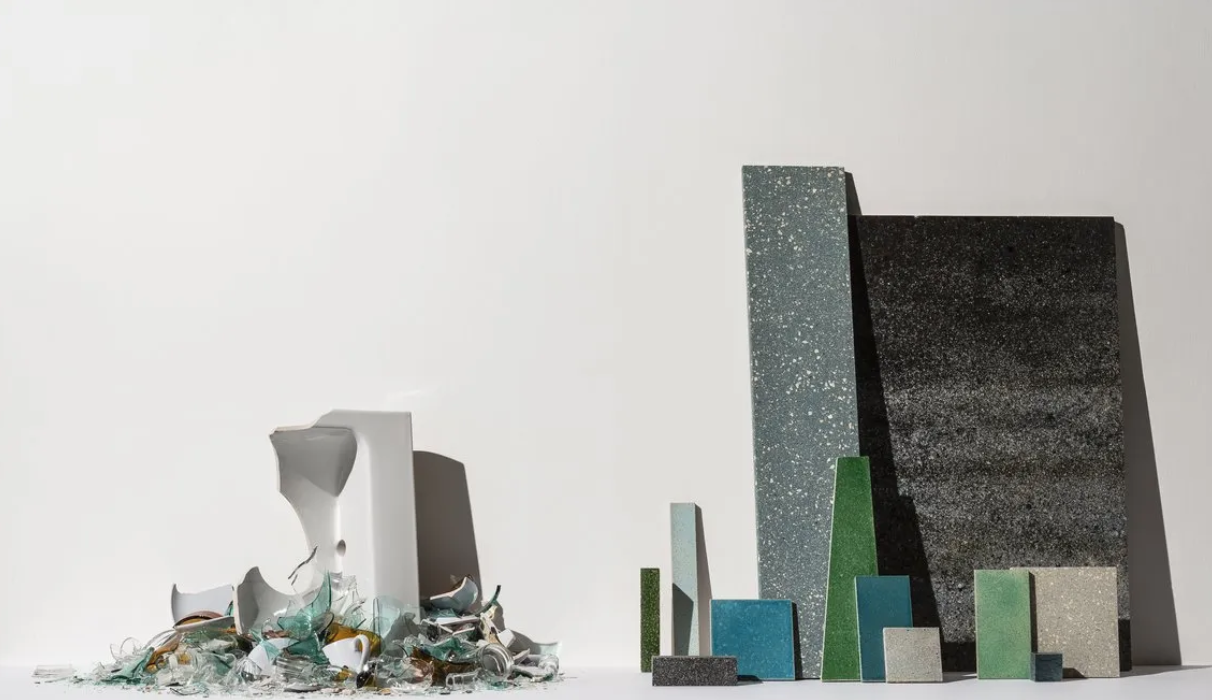
Photo courtesy of Alusid
 2050 is a number we hear a lot about these days, and for good reasons.
To keep global warming below 1.5 degrees, the world needs to secure global net zero by mid-century. This is exactly why a week ago governments from around the world gathered in Glasgow to set emission reduction targets with the goal of reducing the impacts of climate change.
What are companies doing?
Companies around the world are moving ahead by setting targets to reach net-zero emissions by 2050, or sometimes even by 2030. Such steps are necessary to ensure a better future.
However, not all commitments come with a plan…
Unfortunately, setting targets for 10, 20 or 30 years into the future allows us to assume the future will be very different from today. This means that we make big assumptions about carbon capture and storage technology, as well as large process improvements.
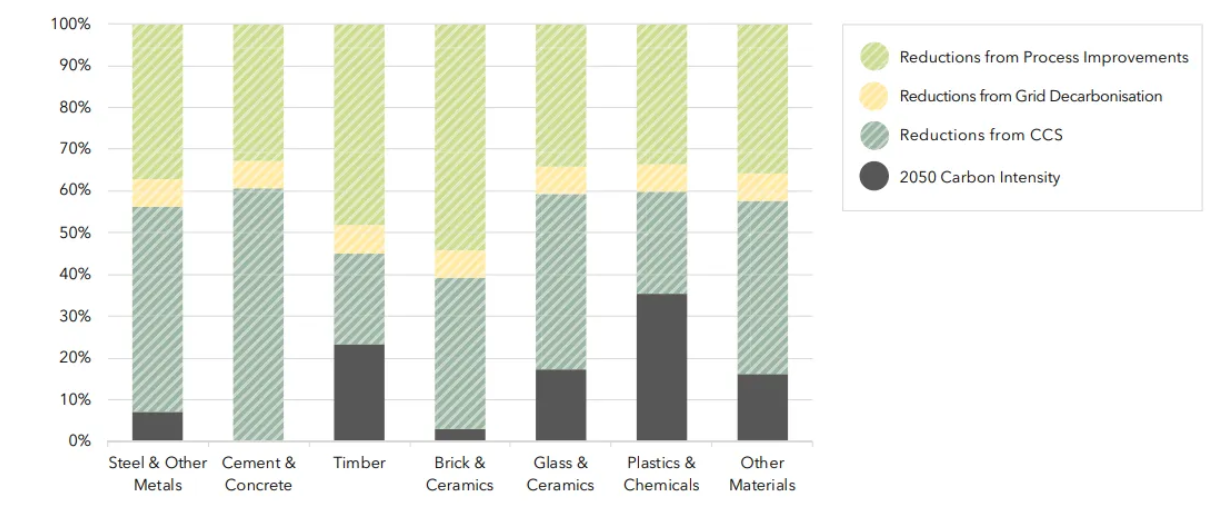
UKGBC, 2021: Carbon Intensity reduction (2050) breakdown per material category
2050 seems a bit far away, doesn’t it…?
It does, and it is.
We believe that thinking too far into the future often delays action that’s needed today.
When brainstorming on what to name our sustainable product comparison platform, our main goal was to remind the industry that solutions exist today.
We don’t need to wait for magical carbon capture and storage technology nor do we need to offset emissions for everything we do. Instead, what we need is the ability to find and compare solutions holistically as early as possible. It’s a big task, but we’re working on exactly that!
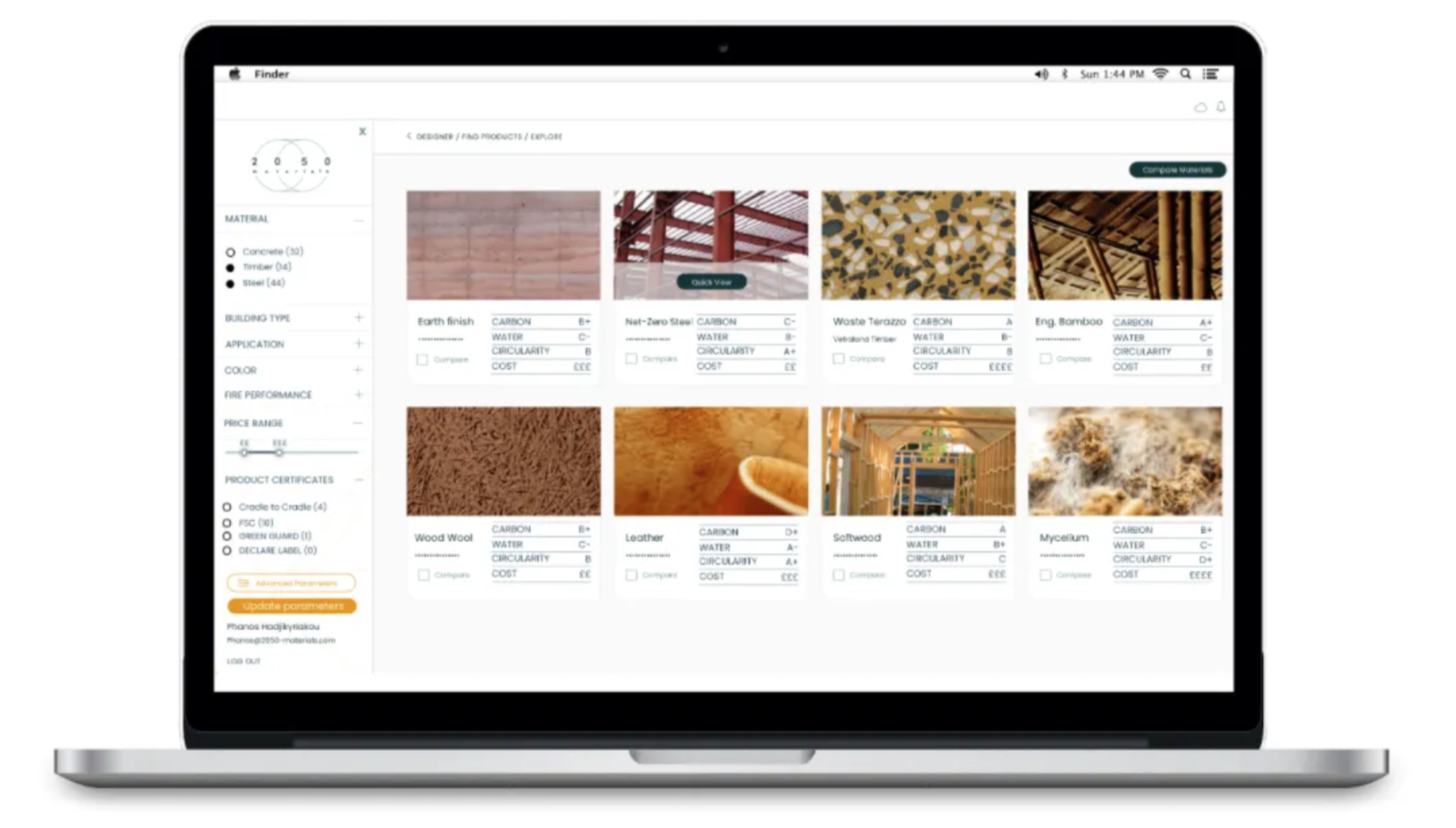
You can think of 2050 Materials as a materials platform or a time machine.
Instead of 2050 being a year far ahead into the future, we wanted it to be the place architects, designers and engineers go to find the most sustainable construction products on the market, today.
What are we working on?
We love materials.
And we love the people working on turning natural, abundant resources into the building products of the future.
The 2050 Materials platform shouts “change is here”!
We are launching soon and can’t wait to share it with you…
If you’re an architect or designer, follow us on LinkedIn to get updates and early access.
If you’re a manufacturer producing sustainable products and would like to be featured on the platform, drop us a line.
-Co-founder, Phanos Hadjikyriakou
Related articles
Built to Beat the Heat
This summer's drought wasn't a fluke, it was a preview. Here's the material data that actually decides whether a building shrugs off a heatwave or quietly cooks behind a great winter U value: decrement delay, solar reflectance, SHGC, and the real products behind each one.
Read more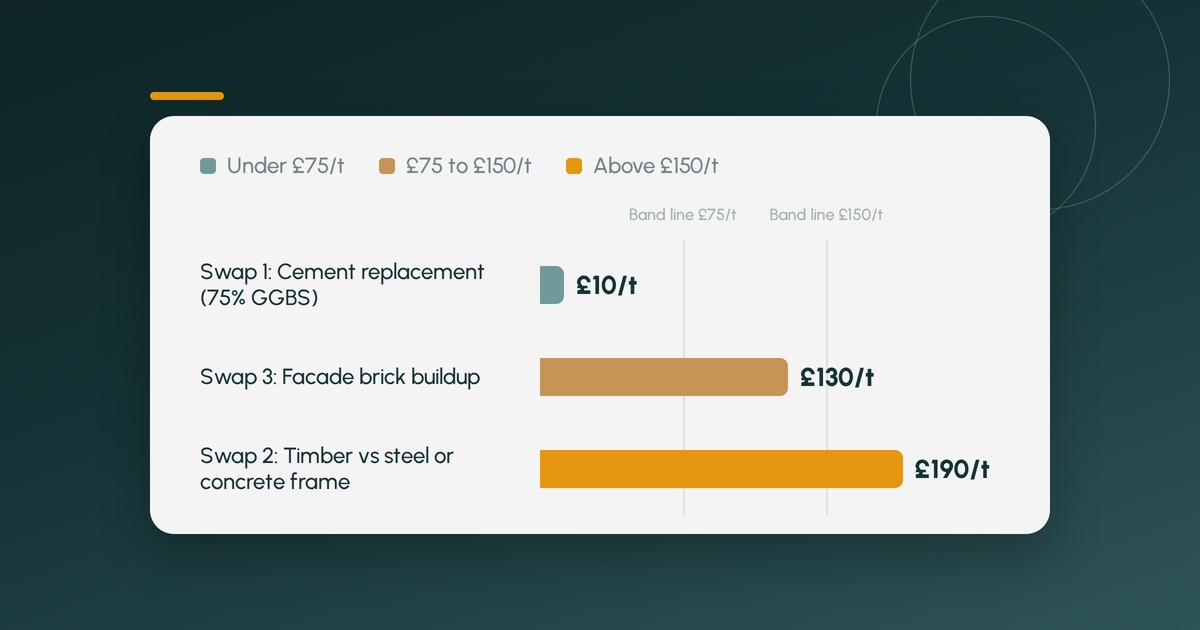
The Cost per Tonne Test for Embodied Carbon Swaps
Not every embodied carbon cut is worth paying for. Test any swap on cost per tonne of CO2e, see which band it falls in, and try the free calculator.
Read more
PFAS Compliance Meets Countdown
Sealants, membranes and insulation are next in line for PFAS restrictions. The window to get ahead of it, rather than scramble to catch up, is closing.
Read more