Retrofit · Heritage
Internal solid wall insulation
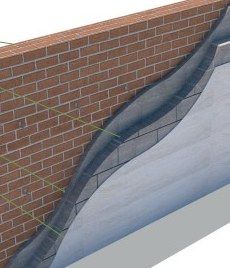
Keeps the outside of a period building intact. Approximate published U values of 0.58 (120 mm), 0.35 (200 mm) and 0.23 (300 mm).

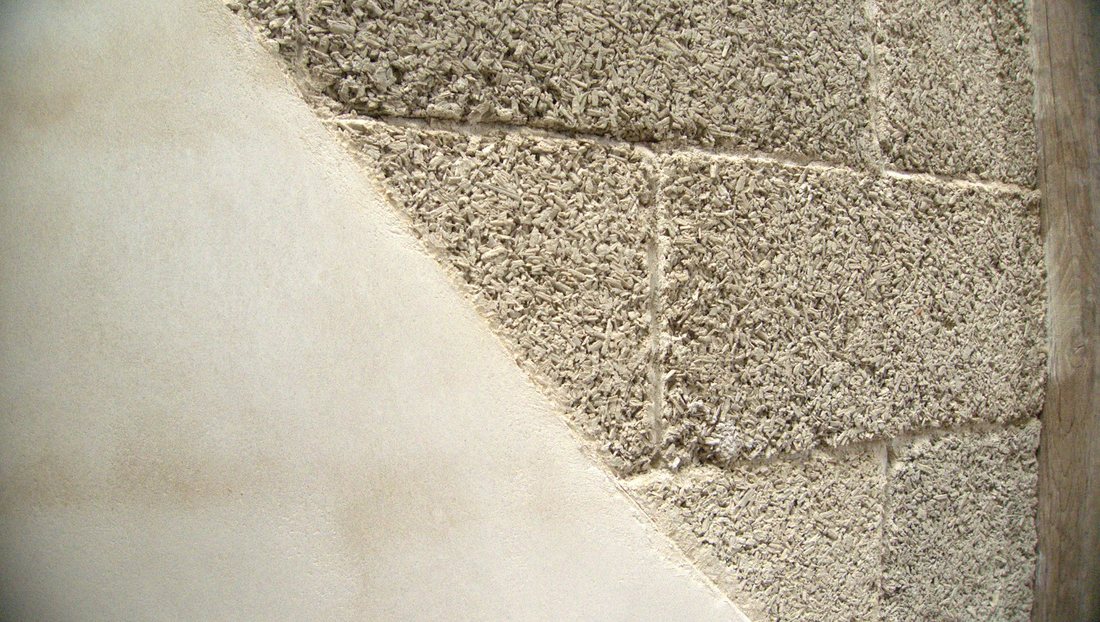
Six hempcrete blocks on 2050 Materials, one Italian recipe, and a surprisingly tidy dataset that shows specifiers exactly how carbon and water scale as a wall gets thicker.
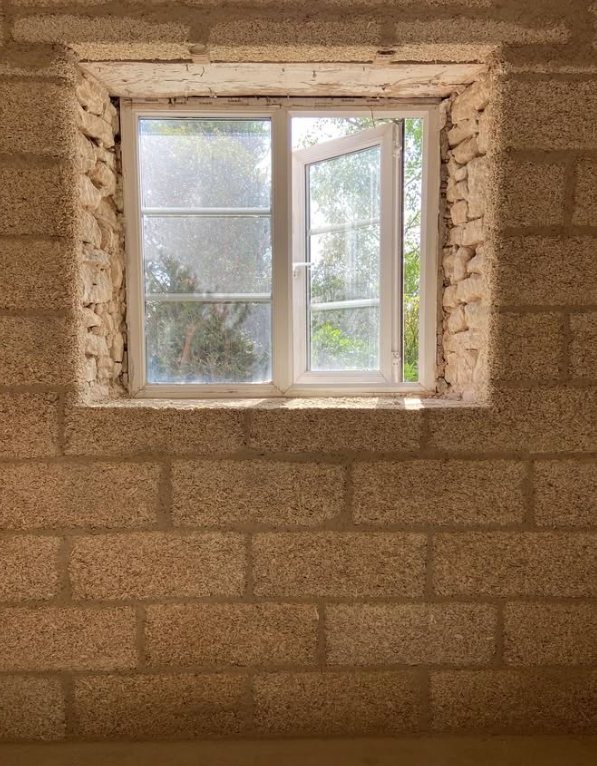
We have already told the story of The Hemp Block Company in an earlier profile and walked through its blocks at Ightham Mote. This time we are doing something different: reading the data. Line up the company’s six products on the 2050 Materials platform and a clear pattern appears, one that turns block thickness into the single most useful decision a specifier can make.
The Hemp Block Company is based in Chesham, Buckinghamshire, and calls itself “a carbon capture company; our bi-product is high performing and healthy homes!” Its team includes Sales Director Neil Stephen, Marketing Director Michael Reed and Technical Director Will Stanwix, who brings more than twenty years of hempcrete design, building and manufacturing experience.
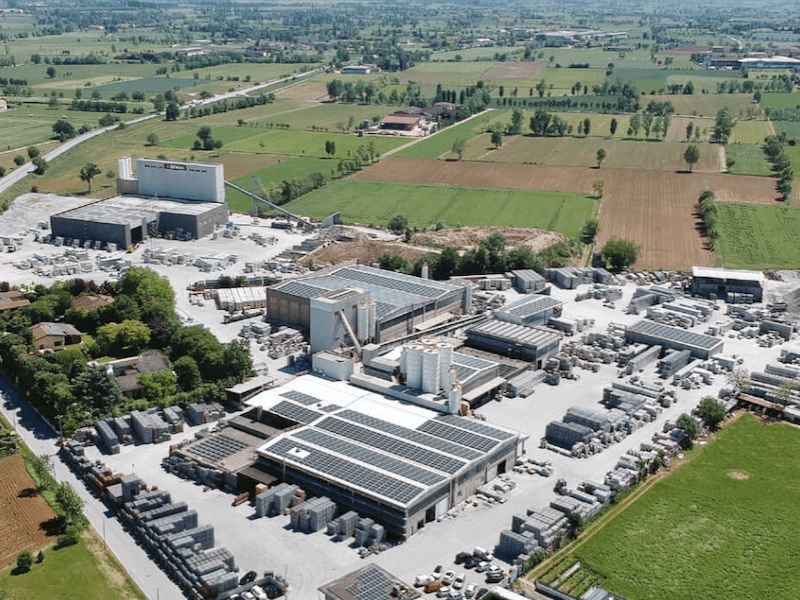
What is less often told is where the blocks come from. The company works with Italian manufacturer Senini and its Tecnocanapa range to bring Blocco Ambiente® hemp blocks to the UK, made from certified hemp shiv (the woody core of the stalk), hydrated dolomitic lime and microorganisms. According to Senini’s Environmental Product Declaration (EPD), the blocks are made in a cold process at its plant in Montichiari, near Brescia, then matured for three to six months, during which the lime draws CO₂ back out of the air.
That shared recipe is the key to everything that follows. Most sizes share a 20 × 50 cm face and differ only in thickness, so every product in the family behaves like a slice of the same material. For the 30 cm block, the EPD lists a dry density of 330 kg/m³ and a reaction to fire classification of B-s1, d0.
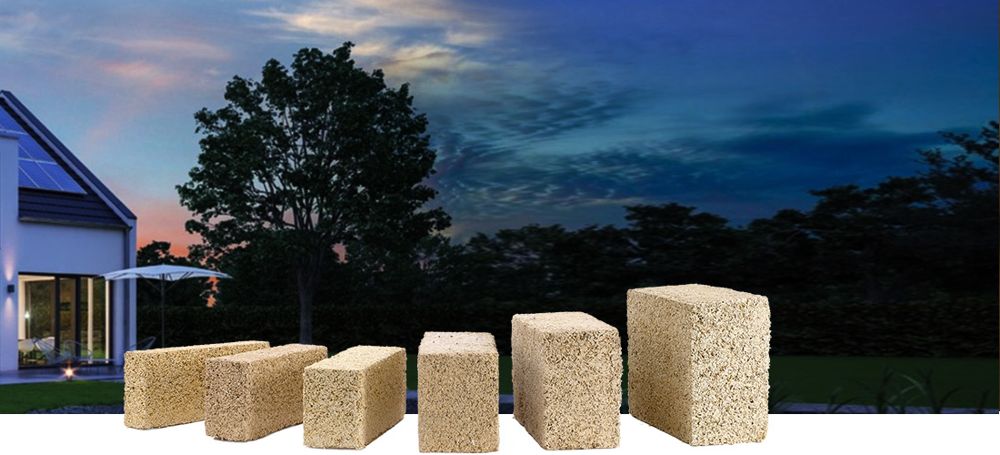
The Hemp Block Company lists six hempcrete insulation blocks on 2050 Materials: HB80, HB120, HB250, HB300, HB360 and HB400. Each entry reports embodied carbon and water use per square metre of wall. Divide each figure by the block thickness and the result does not move: 45.8 kg CO₂e and roughly 1,017 litres of water per cubic metre of block, every time. The reason is simple: every size is the same material. Senini’s EPD declares one unit, a square metre of wall 30 cm thick, and the HB300’s water figure on the platform matches it exactly. In practice, you can predict the footprint of any Hemp Block wall from its thickness alone.
Pick a thickness to see its embodied carbon and water per square metre of wall.
Carbon and water figures from the six product entries on the 2050 Materials platform.
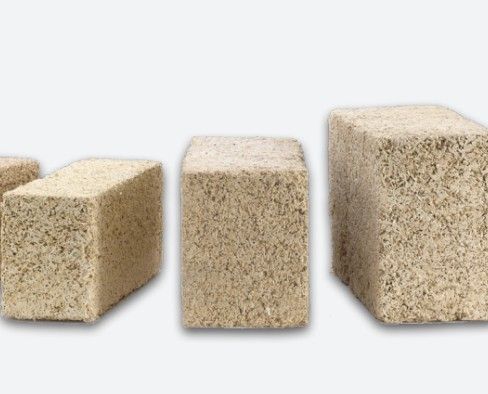
In November 2025 The Hemp Block Company announced that independent testing had put its hemp blocks at a thermal conductivity of 0.044 W/mK. The report, from CMR LAB in Vicenza and dated July 2025, tested a 400 mm wall of Blocco Ambiente blocks and bedding mortar in a guarded hot box, measuring a U value of 0.11 W/m²K. The company’s headline was simple: “less is now officially more.” For comparison, the 2022 EPD lists 0.07 W/mK for the 30 cm block.
Put that result next to the platform data. The HB400 carries 18.32 kg CO₂e per square metre, and the lab measured a total thermal resistance of 9.18 m²K/W for the same 400 mm wall. That works out at about 2 kg CO₂e for every unit of thermal resistance the wall provides.
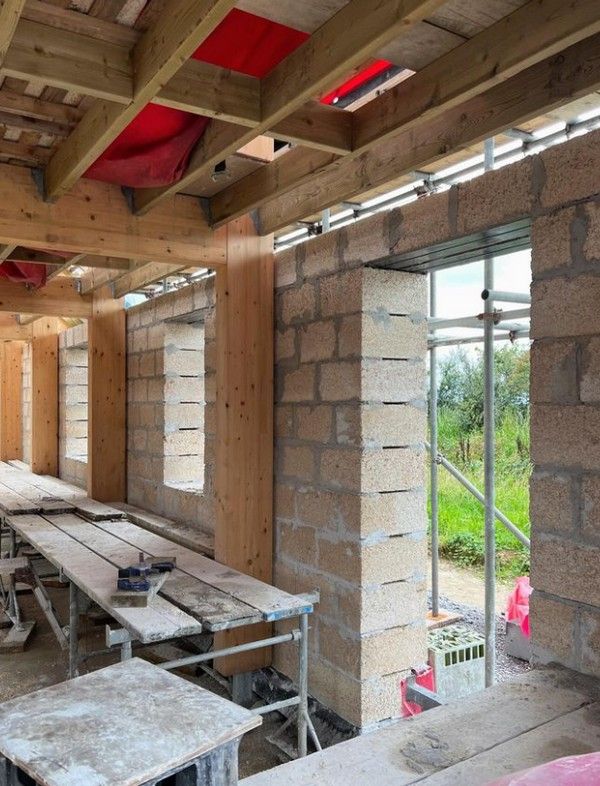
For context, the notional external wall in Part L of the Building Regulations in England (2021 edition) has a U value of 0.18 W/m²K, so the tested 400 mm wall, at 0.11, comes in well below it. Thinner blocks were not part of the 2025 test, so ask which conductivity value any U value calculation for them uses.
Every Hemp Block entry on 2050 Materials shows 0% recycled content. On a data sheet for steel or aluminium, a zero like that would be a warning sign. For a plant based block it means something quite different. Recycled content measures material recovered from previous use. Hemp shiv is a rapidly renewable crop product grown in a single season, and lime is a mineral binder. Neither is recycled, and neither needs to be for the block to score well on resource use. Read recycled content alongside renewable content and end of life options, rather than treating every zero the same way.
Senini’s EPD shows what sits behind the carbon numbers. In the production stage (modules A1 to A3), about 72 kg of fossil emissions per square metre of 30 cm wall are largely offset by roughly 66 kg of biogenic carbon uptake, most of it CO₂ absorbed by the hemp as it grew.
The EPD goes further. Each square metre of 30 cm wall leaves the factory holding 16.5 kg of biogenic carbon, equal to about 60.5 kg of CO₂. During its service life, carbonation of the lime draws down another 22.2 kg of CO₂ (module B1). Add every declared stage together, from production through end of life, and the EPD’s total comes to minus 13.3 kg CO₂e per square metre: across the stages it declares, the wall stores more carbon than it emits. When you model a Hemp Block wall, check which modules each figure covers so storage and emissions land in the right place in your LCA tool.
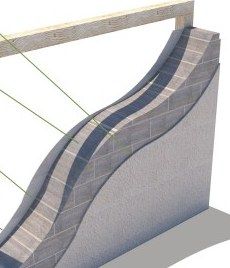
Because the blocks are not fully loadbearing, they work alongside a structural frame such as timber or steel. Matching the right wall type to the project is where the thickness data becomes a design tool.
Keeps the outside of a period building intact. Approximate published U values of 0.58 (120 mm), 0.35 (200 mm) and 0.23 (300 mm).
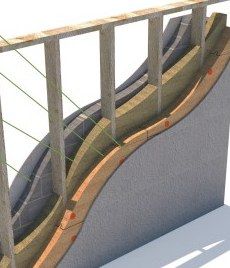
Fast construction and high thermal performance, with blocks tied to the frame.
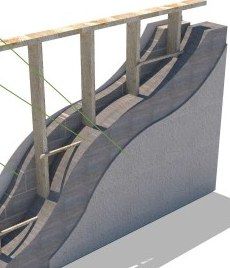
A monolithic wall combining insulation, thermal mass and carbon storage.
Lets exposed structural timber stay a design feature of the room.
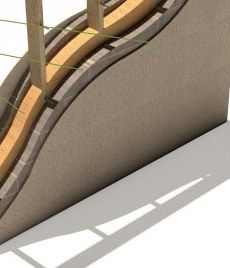
Blocks paired with hemp or woodfibre batts to suit custom wall requirements.
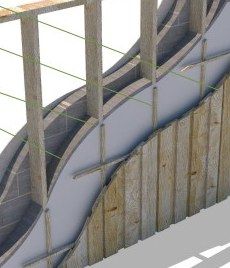
Depending on the build up, U values of around 0.12 W/m²K.
Wall diagrams: The Hemp Block Company. The range also includes lime mortars, vapour permeable renders and plasters, sprayed and cast hempcrete, and IndiTherm® hemp batts made from UK grown crops.
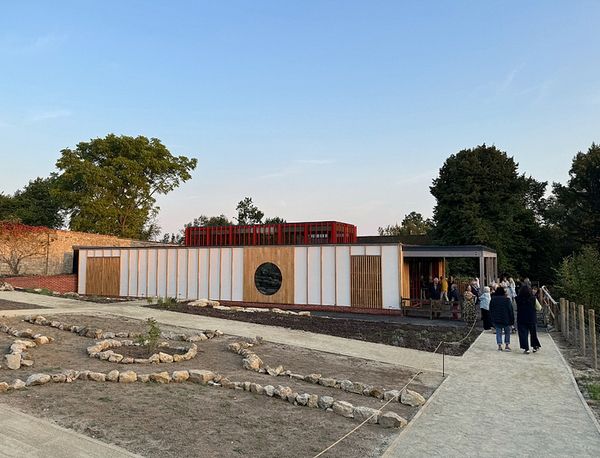
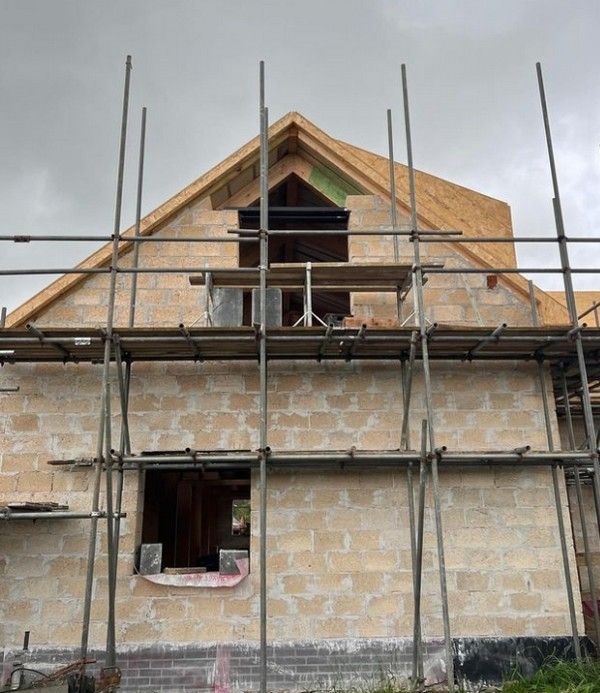
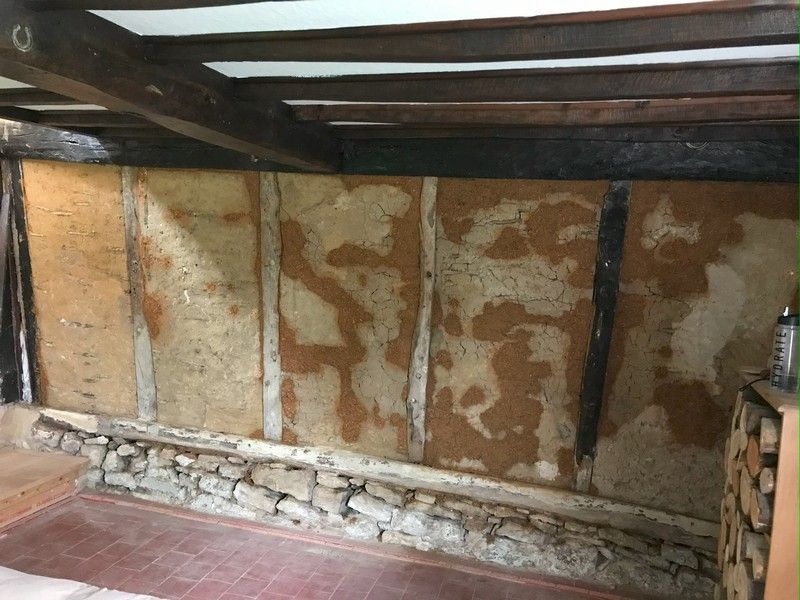
Our earlier coverage focused on homes and heritage: Ightham Mote, Padbury, Ley Hill and Bude. The company’s case study list now reaches into much larger buildings. It includes the new Velindre Cancer Centre in Cardiff, designed by White Arkitekter and under construction by Sacyr. White Arkitekter’s sustainability director Anna Graaf has described hemp as “regenerative, it can be grown over and over again.” The list also includes the new Sixth Form building at Glenthorne High School in Sutton, Surrey, designed by Plan A UK, where The Hemp Block Company supplied the blocks to MCS Construction for the wall structures; The Woodland Farm, a pegged oak frame self build in Pembrokeshire; and the 8 House development at Pearson Way in Neath by Wellspring Homes, which the company describes as the UK’s first private residential scheme built with solid wall hemp blocks.
Healthcare and education are demanding clients. They care about indoor air quality, acoustic comfort and long term maintenance as much as carbon, which is exactly where breathable, moisture buffering hempcrete earns its place.
The carbon and water figures in this article come straight from The Hemp Block Company’s product entries on the 2050 Materials platform, where every thickness can be checked, compared with other insulation and masonry options, and pulled directly into your workflow.
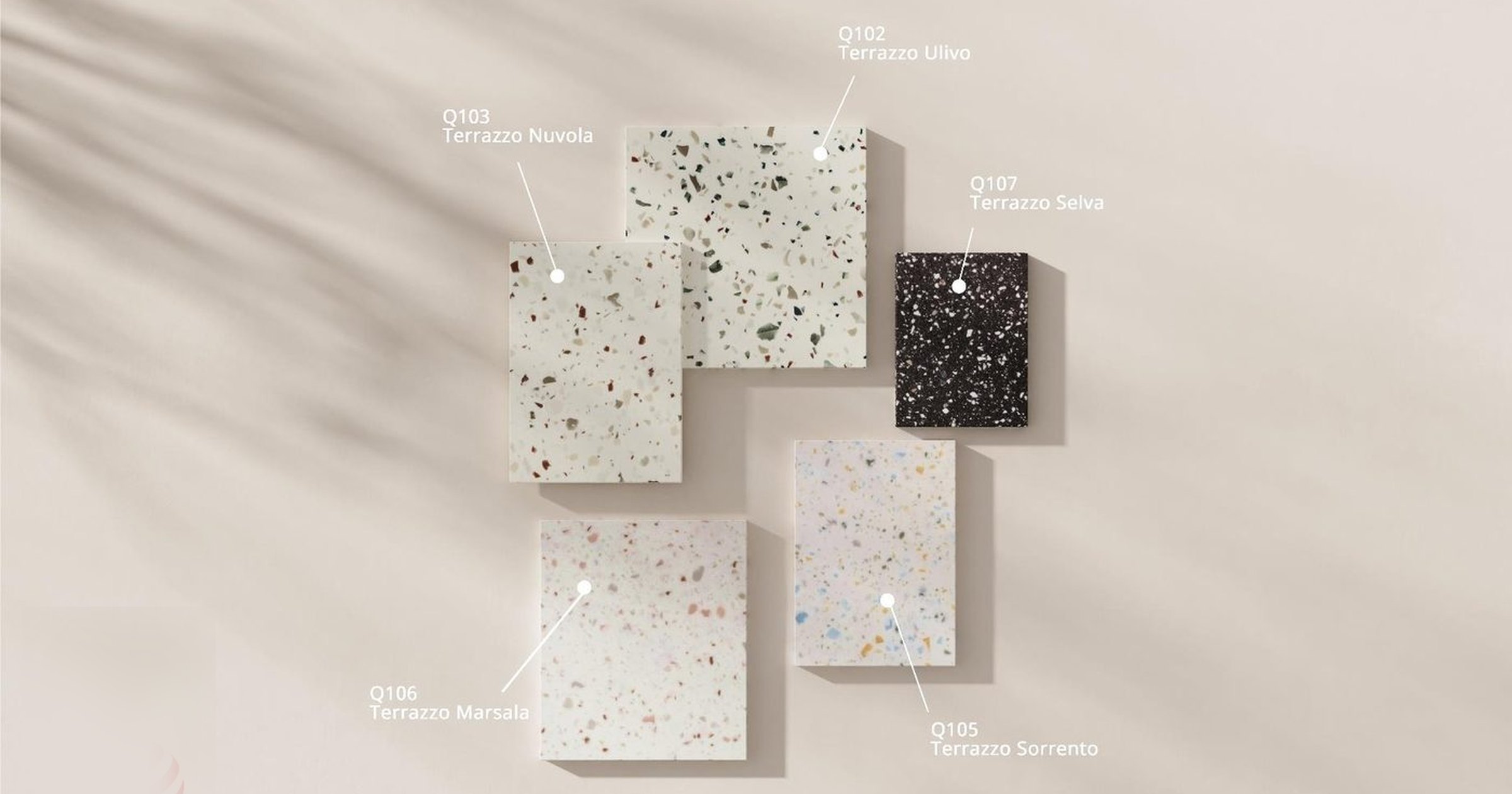
Five HIMACS Terrazzo colours won a Red Dot Design Award 2026, and four carry SCS-certified recycled content. See the full 2026 range and the EPD data behind it.
Read more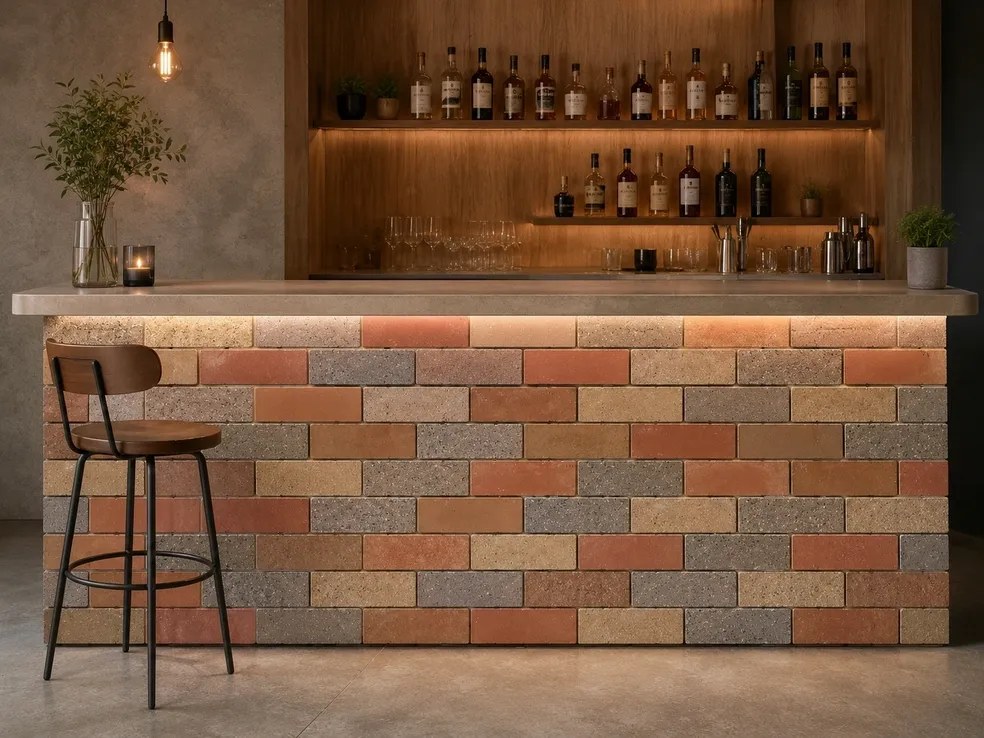
e4E makes brick slips from excavated soil, pressed rather than fired. See how they are made, the formats you can specify and the verified EPDs behind the range.
Read more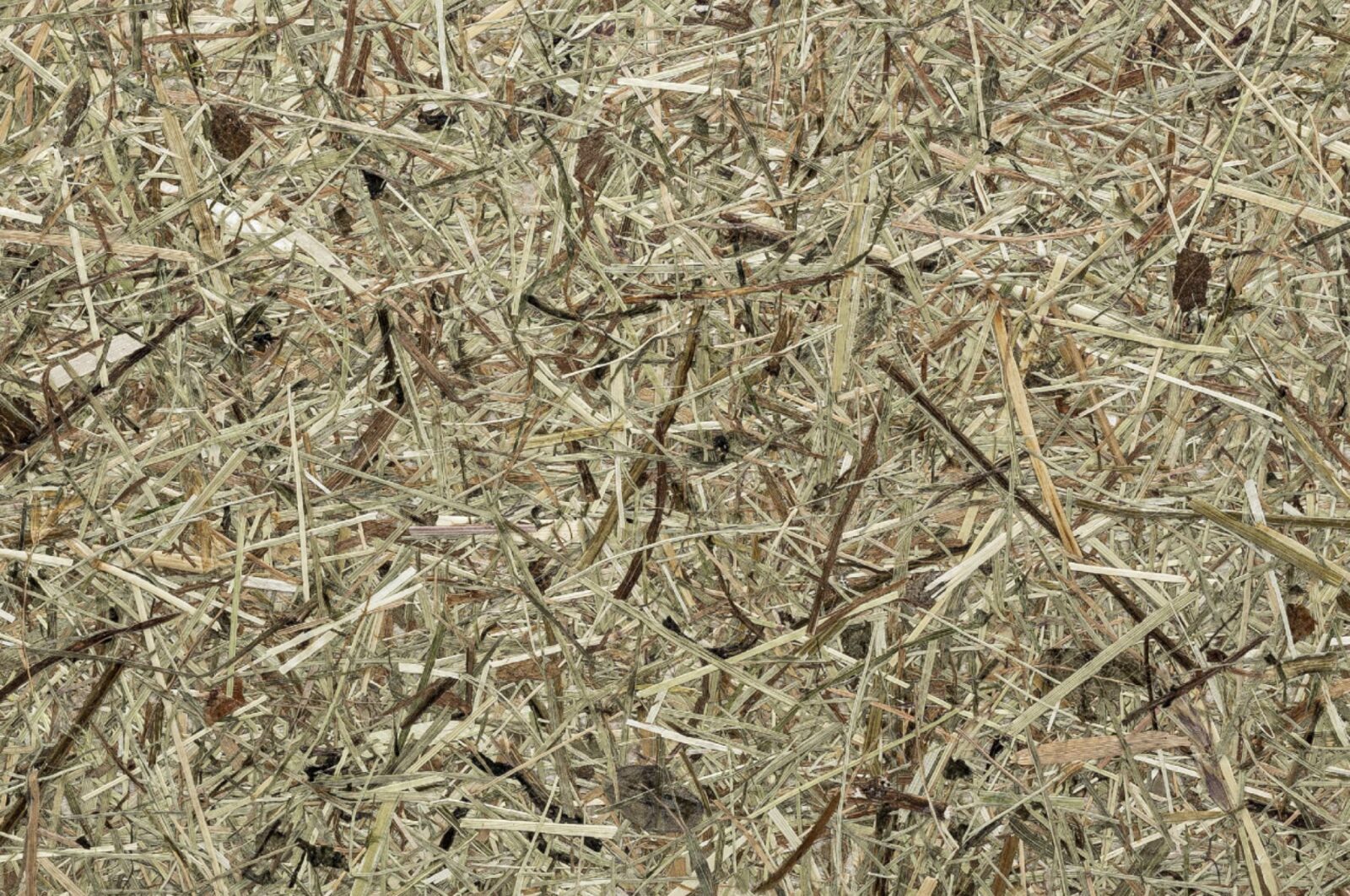
CaraGreen's Organoid Wildspitze is a wallcovering made from hand cut alpine hay, backed by a third party verified EPD showing 2.2 kg CO2e/m² GWP and stored biogenic carbon.
Read more