High-Performance Wood & Engineered Wood Products
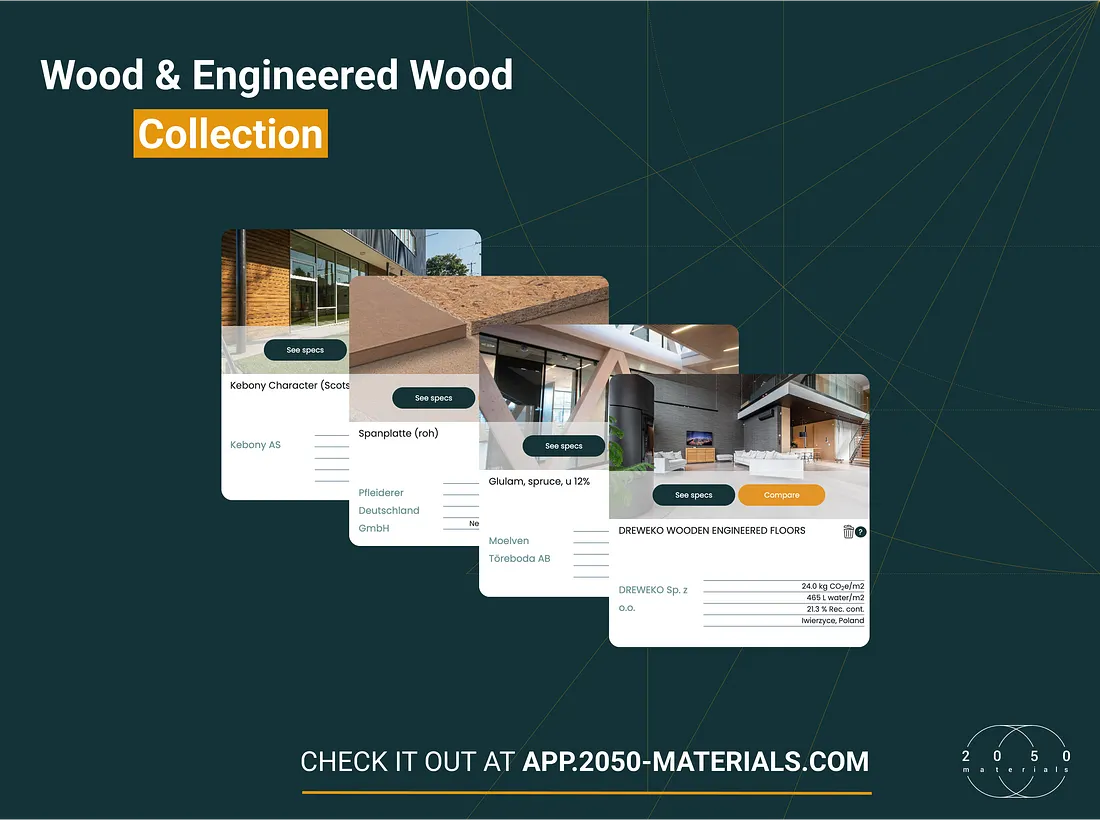
Engineered wood products are a cornerstone of modern construction, offering precision, strength, and versatility. As demand grows for high-performance materials, a new wave of wood-based solutions is standing out.
In this article, we explore a curated collection of high-performing engineered wood and timber-based materials. Whether you’re specifying for structure, interior finishes, or façade systems, these options represent leading choices from verified manufacturers across Europe.
Let’s break them down, product by product.
1. Spruce Cladding with Primer by G3 Gausdal Treindustrier SA
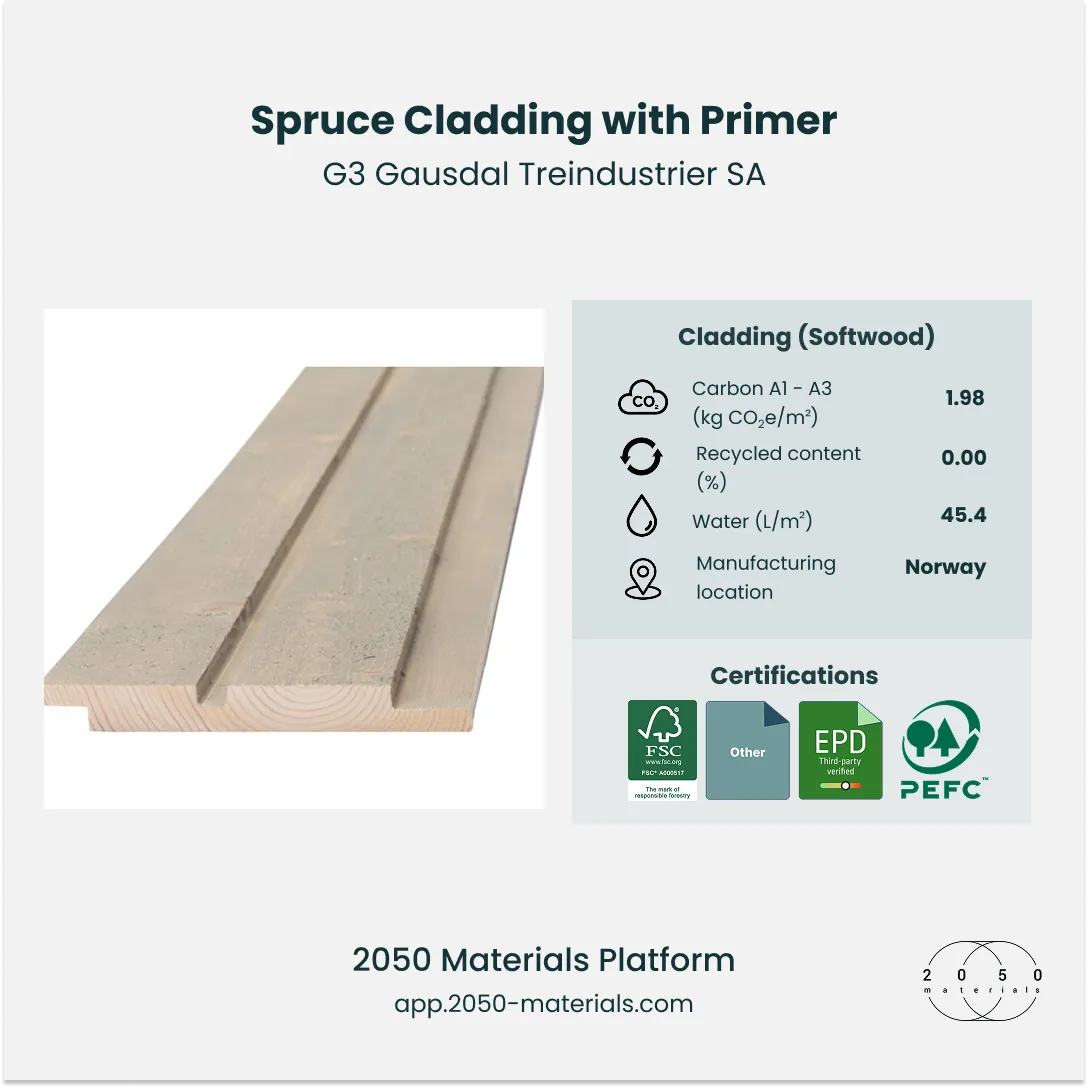
This exterior spruce cladding is pre-treated with a primer and intermediate coat, produced by G3 Gausdal Treindustrier in Norway. It adheres to industry standards for durability in outdoor environments.
Sustainability Performance
The product has an EPD and is certified under FSC and PEFC. Its low material weight combined with regional sourcing and processing practices contributes to a favorable carbon profile compared to denser façade systems.
Advantages
- Pre-coated for weather protection
- Lightweight and easy to install
- Made from regionally sourced spruce
- Suitable for cold and temperate climates
Use Cases
- Residential and commercial façades
- Refurbishment and cladding upgrades
- Natural-look exterior finishes
2. Kebony Character (Scots Pine) Decking by Kebony AS
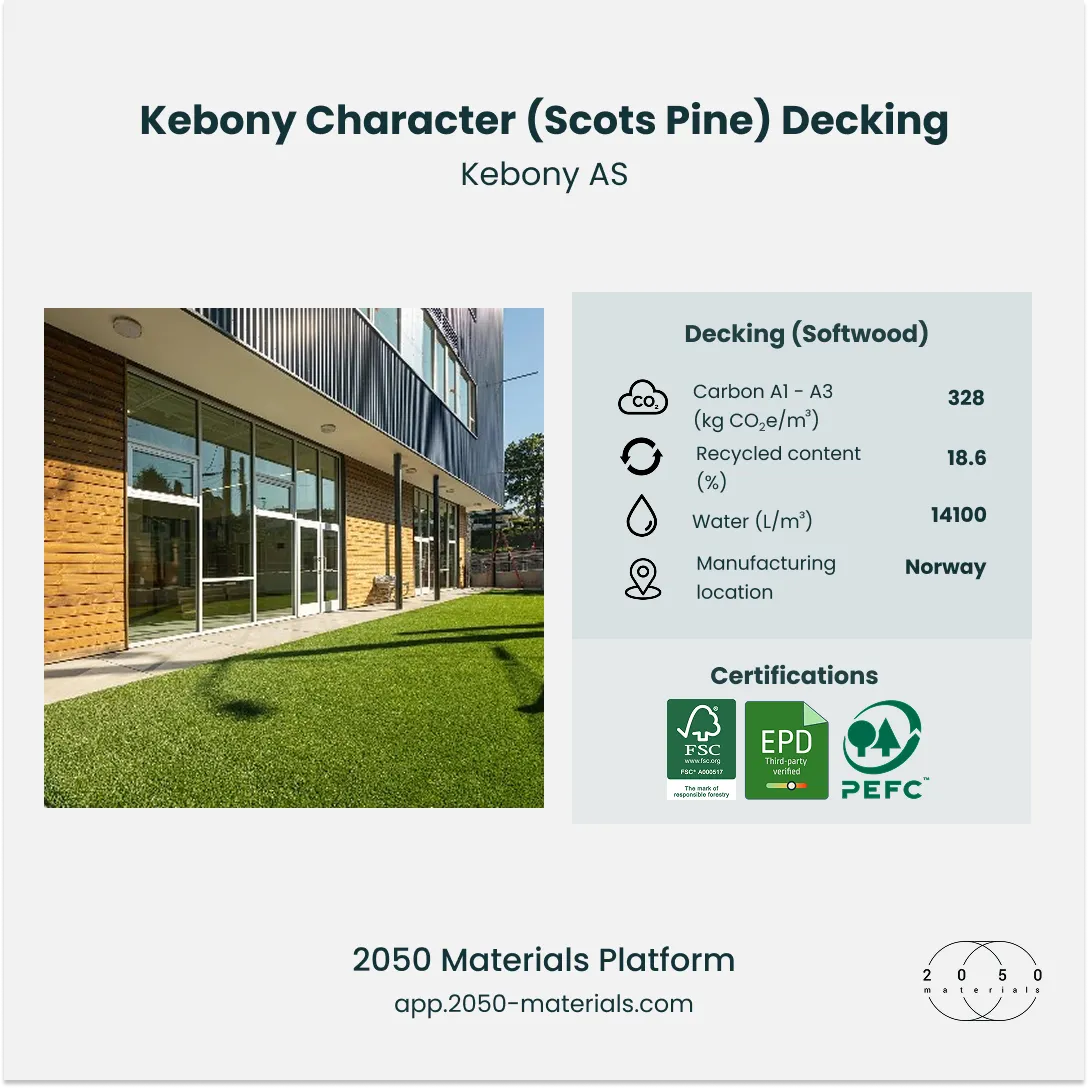
Kebony’s Character Decking is made from Scots Pine modified using a patented bio-based treatment. This process enhances the wood’s durability and lifespan without traditional tropical hardwoods.
Sustainability Performance
Backed by an EPD and FSC/PEFC certification, this decking stands out for its innovative use of renewable chemicals to strengthen wood from Scandinavian forests. The result is a highly durable product that competes with hardwood in performance.
Advantages
- Bio-based modification process extends lifespan
- Alternative to tropical hardwoods
- High durability and weather resistance
- Certified under FSC, PEFC, and EPD
Use Cases
- Exterior decking and terraces
- Coastal or humid environments
- Durable surfaces for high-traffic outdoor areas
3. Glulam, Spruce, u 12% by Moelven Töreboda AB
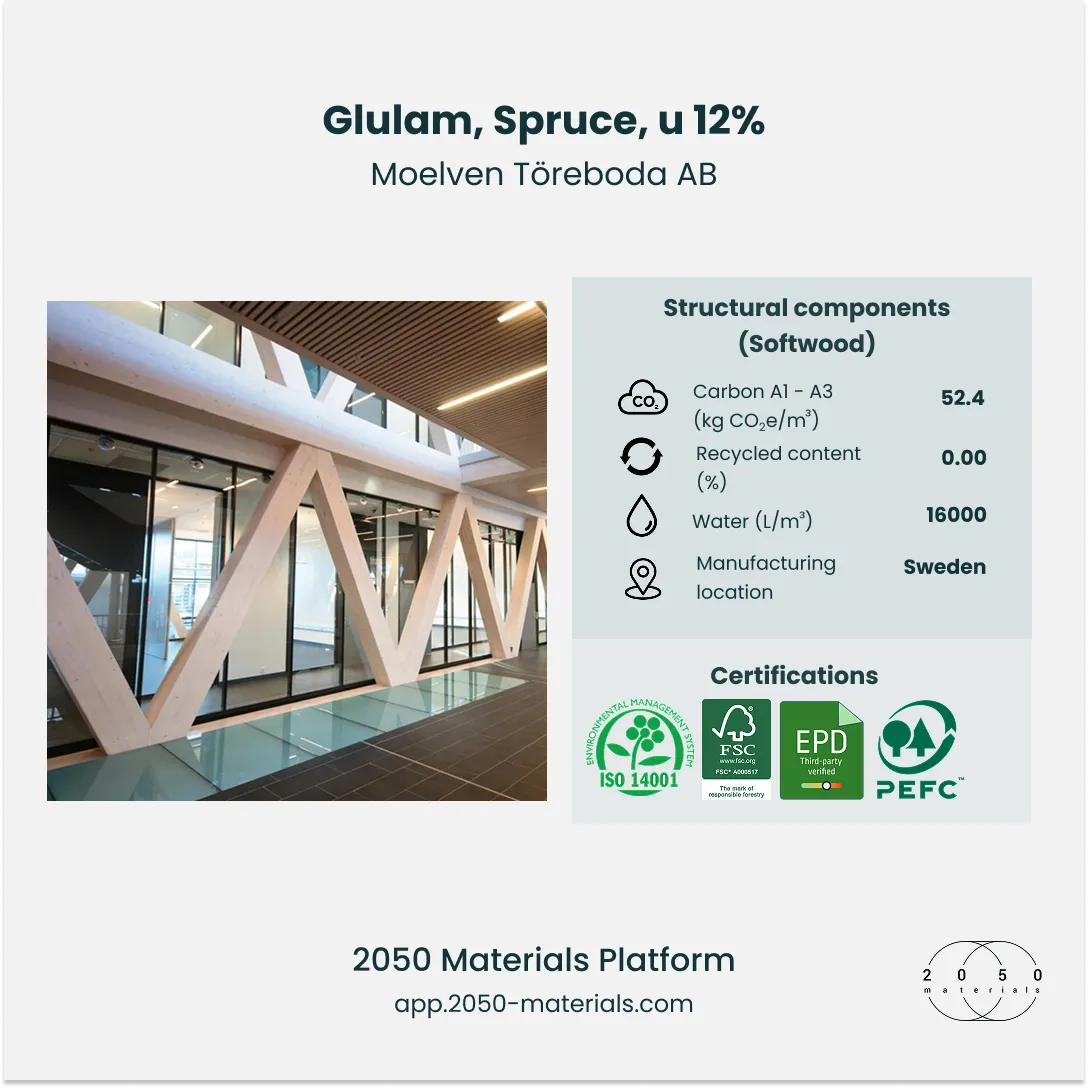
Produced in Sweden by Moelven Töreboda AB, this spruce-based glulam (glue-laminated timber) is intended for structural applications where performance and dimensional consistency are critical.
Sustainability Performance
With multiple certifications — EPD, FSC, PEFC, and ISO 14001 — this glulam product is verifiably lower impact than steel or concrete beams for similar structural roles. Spruce is sourced from sustainably managed forests and processed with strict moisture control (12%) to ensure quality and energy efficiency during manufacture.
Advantages
- High strength-to-weight ratio
- Less energy-intensive than concrete or steel
- Excellent for long-span applications
Use Cases
- Load-bearing beams in buildings
- Structural frames and trusses
- Architectural elements in visible timber designs
4. Spanplatte (roh) by Pfleiderer Deutschland GmbH
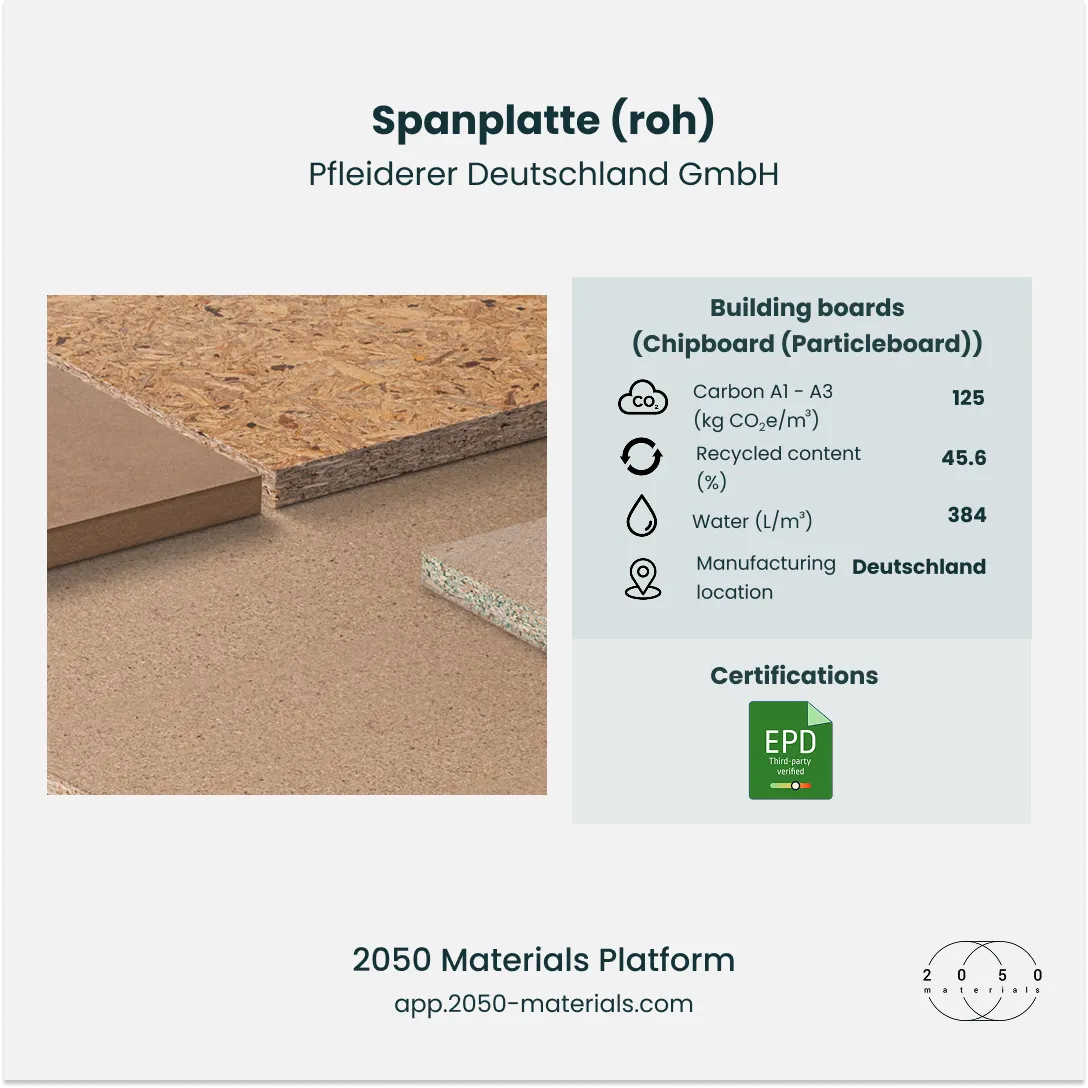
Pfleiderer’s raw particleboard, “Spanplatte (roh)”, is a versatile engineered wood product for structural and interior applications. Produced in Germany, it supports a wide range of use cases, from interior fittings to packaging.
Sustainability Performance
This product is covered by an EPD, ensuring verified data on its carbon impact. Particleboards maximize resource utilization and reducing waste as they make use of wood residues and byproducts.
Advantages
- Made using wood chips and byproducts
- Suitable for machining, coating, and lamination
- High material efficiency for large-scale projects
Use Cases
- Furniture and cabinetry
- Partition walls and dry construction
- Fire protection elements
- Formwork and temporary structures
5. Spaandex Particle Boards Type P6, 22 mm (DK) by Kronospan
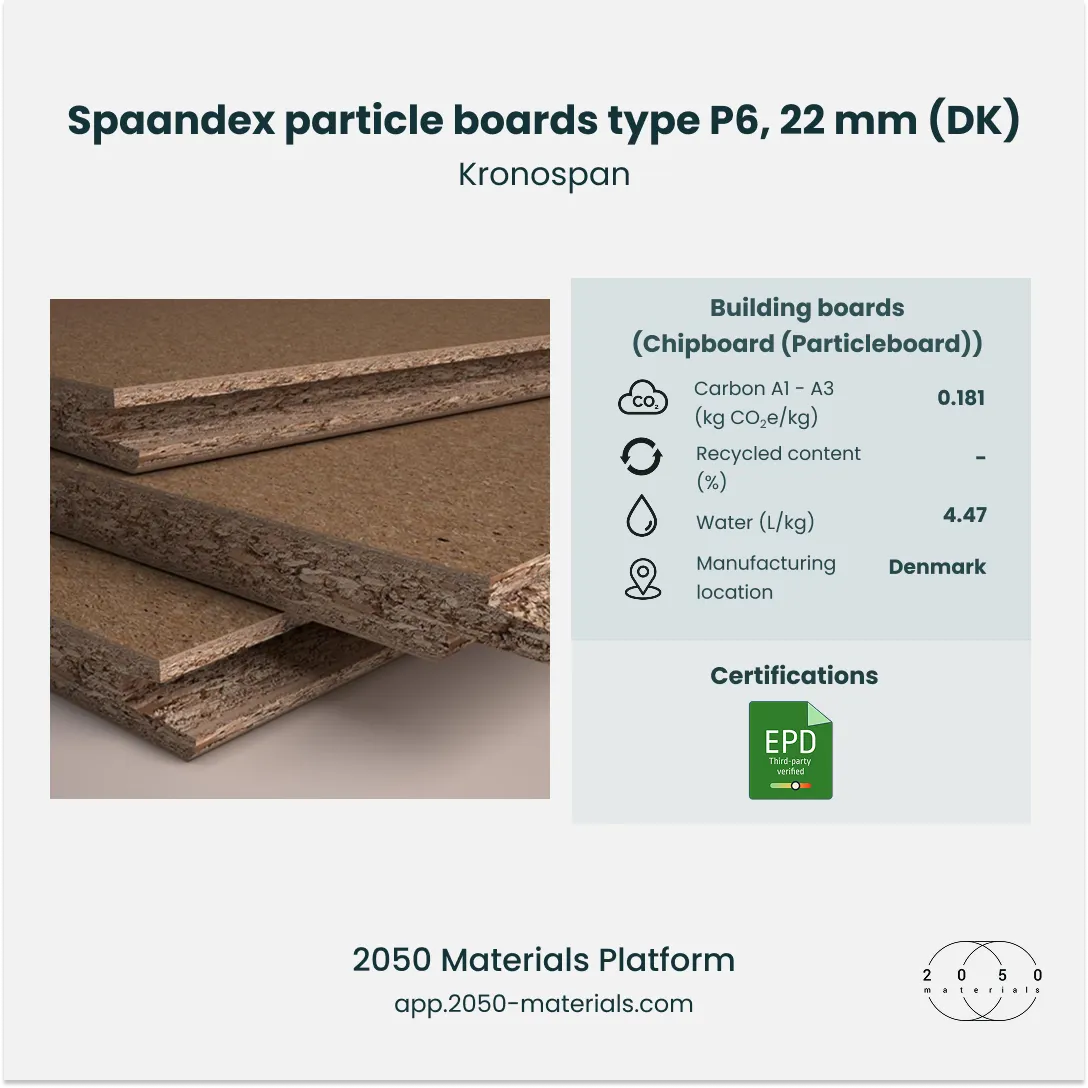
Kronospan’s P6-grade particle boards are engineered for heavy-duty load-bearing applications such as flooring, with specific relevance for use over underfloor heating systems.
Sustainability Performance
The product is backed by an EPD, ensuring transparency on its environmental performance and lifecycle impact.
Advantages
- Optimized for structural flooring applications
- High load-bearing performance (P6 rating)
- Compatible with heated floors
- Uniform density for stable performance
Use Cases
- Residential and commercial subfloors
- Renovation projects involving underfloor heating
- Structural interior partitions
6. Interior Spruce/Pine Panel (Surface Treated — MALT) by Bergene Holm AS
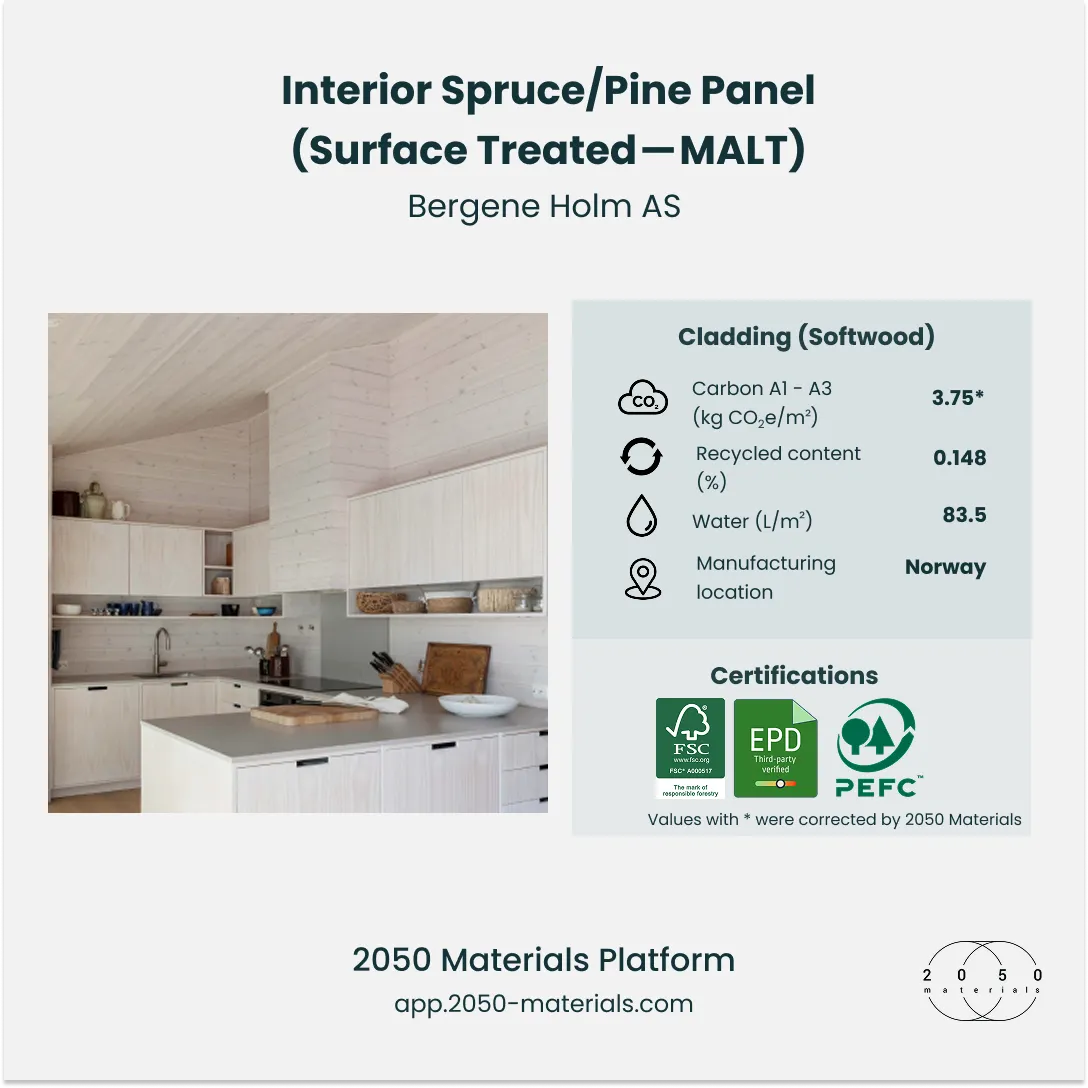
Bergene Holm’s interior paneling product is made from Norwegian spruce and pine, treated with water-based surface finishes in various stains or paints. It’s designed for wall and ceiling applications.
Sustainability Performance
Certified under EPD, FSC, and PEFC, this panel offers transparency in sourcing and manufacturing.
Advantages
- Water-based finishes reduce VOCs
- Made in compliance with Norwegian standards
- Available in multiple profiles and treatments
Use Cases
- Interior wall and ceiling coverings
- Decorative paneling in residential spaces
- Timber accents in commercial interiors
7. DREWEKO Wooden Engineered Floors by DREWEKO Sp. z o.o. Press enter or click to view image in full size
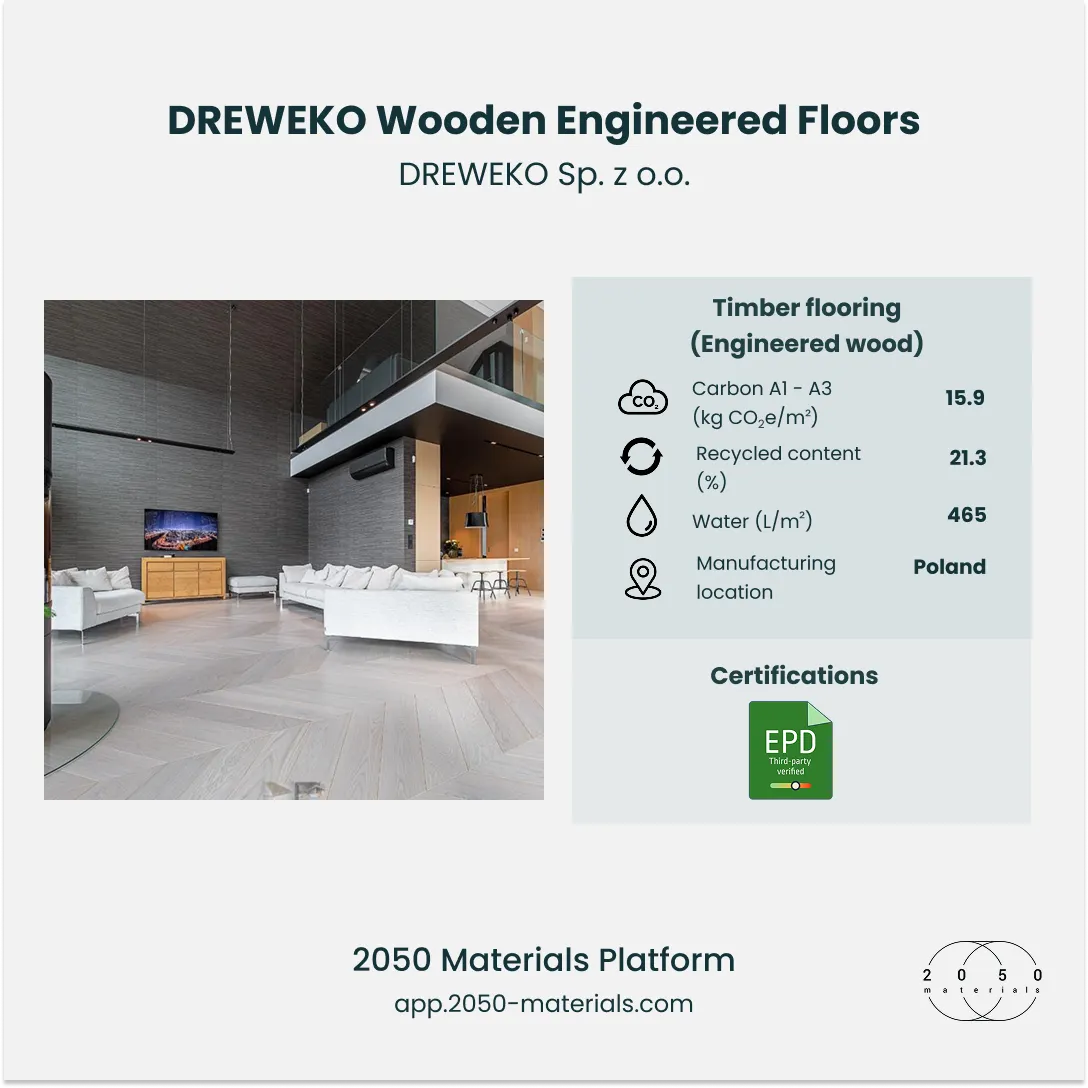
DREWEKO, a Polish flooring manufacturer, produces a wide range of oak-based engineered floors designed to match modern interior aesthetics. Their products combine precise craftsmanship with diverse finishes and grades.
Sustainability Performance
Engineered flooring, in general, requires less hardwood than solid planks, offering better material efficiency while still delivering durability and design appeal. It carries an EPD, offering verified data on its environmental performance.
Advantages
- Multiple finishes and grading options
- Available for residential and commercial use
Use Cases
- High-end residential interiors
- Office and hospitality design
- Refinishable floors for long-term projects
8. Engineered Wood Floors by Kährs
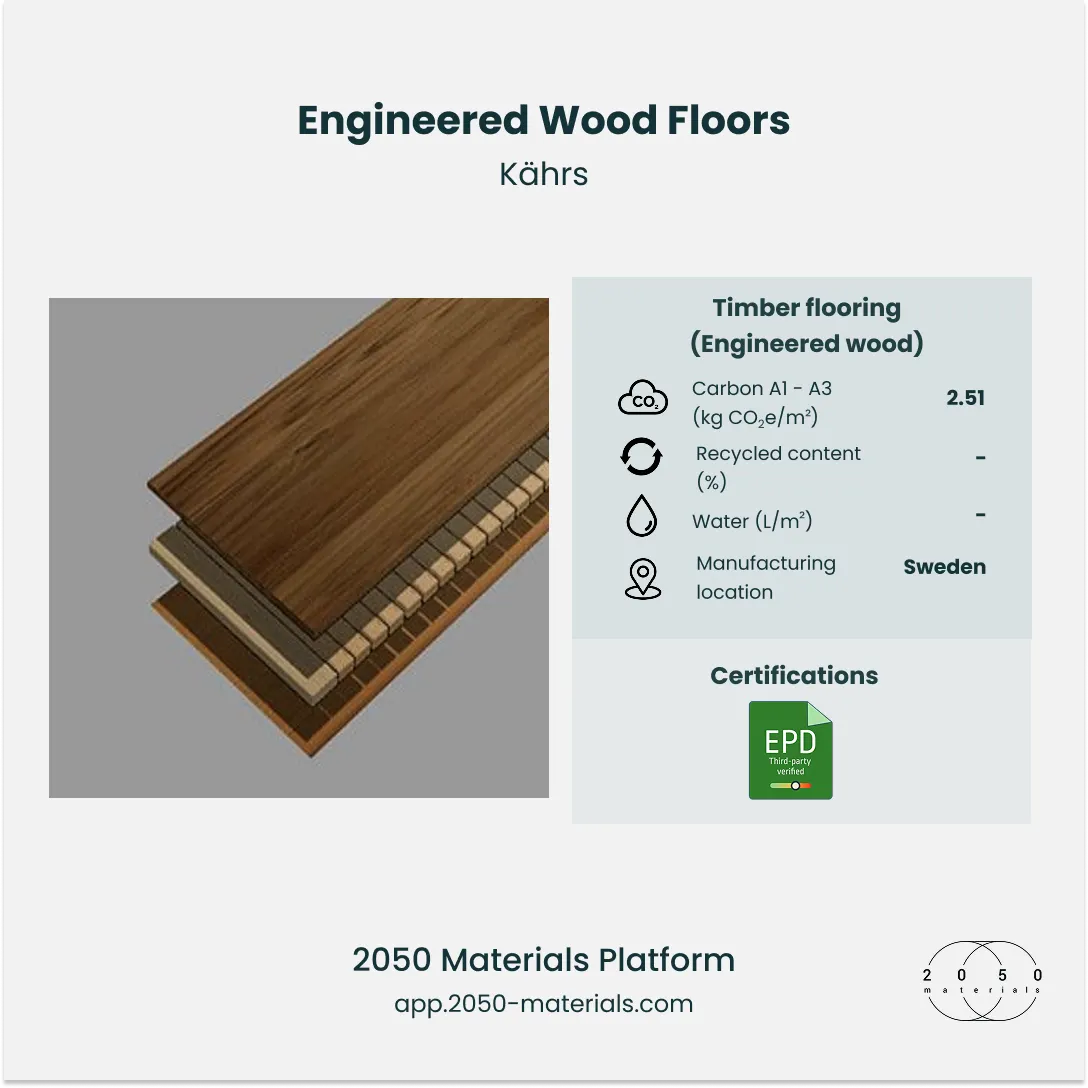
Kährs’ Engineered Wood Floors exemplify material efficiency and thoughtful product design. Manufactured in Sweden, these floors are built with a three-layer construction using pine or spruce lamella at their core — materials known for both strength and renewability.
Sustainability Performance
These floors are designed to use raw materials efficiently. The core layer reduces hardwood usage while retaining strength and stability. According to Kährs, the surface layer can be re-sanded up to four times, prolonging the product’s lifespan and lowering lifecycle emissions. Certified with an EPD, the material provides transparent insights into its lifecycle impact.
Advantages
- Three-layer design improves dimensional stability
- Re-sandable surface extends lifespan
- Core of pine/spruce uses fewer raw materials
- Available with oil or lacquer finishes
Use Cases
- Residential flooring in new construction or renovation
- Commercial interior flooring with moderate traffic
- Suitable for floating installation or glued application
What These Products Signal About the Future of Wood Materials
This collection of high-performance wood and engineered wood products reflects a clear direction for the building industry: smarter use of raw materials, longer product life cycles, and verifiable environmental data.
What sets these materials apart isn’t just technical capability — it’s traceability. With many products backed by Environmental Product Declarations (EPDs) and third-party certifications like FSC and PEFC, specifiers now have access to transparent data that supports low-impact design choices across residential, commercial, and structural applications.
The industry is shifting from generic wood solutions toward tailored, high-performance products that are efficient, durable, and grounded in material science. These products are leading that shift.
Browse more collections on the 2050 Materials Platform.
Related articles
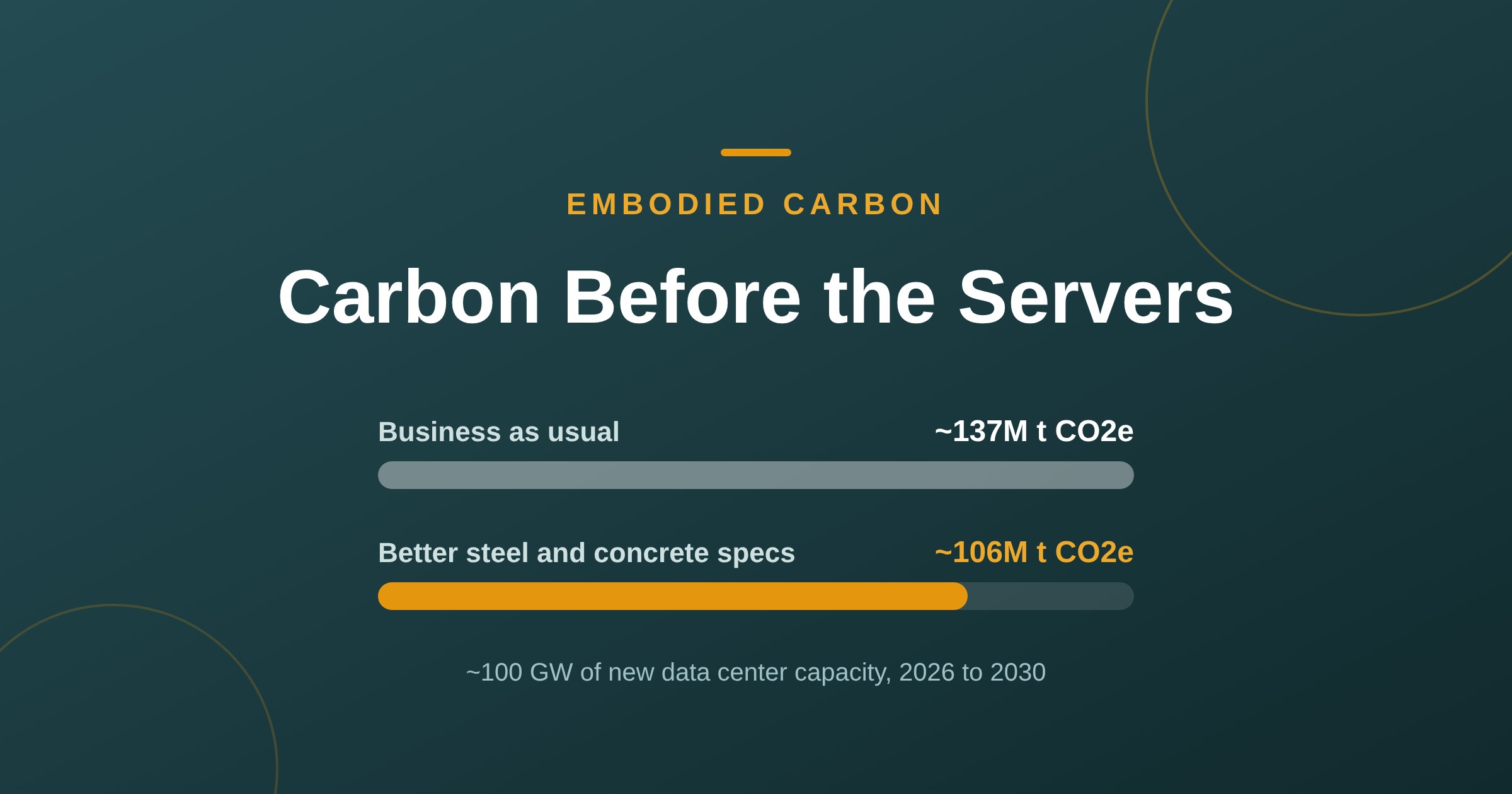
Data Centers’ Hidden 137M-Tonne Carbon Bill
New data centers could lock in ~137M tonnes of CO2e before a single server switches on. GGBS concrete and recycled steel could cut about 31M of it.
Read more
Built to Beat the Heat
This summer's drought wasn't a fluke, it was a preview. Here's the material data that actually decides whether a building shrugs off a heatwave or quietly cooks behind a great winter U value: decrement delay, solar reflectance, SHGC, and the real products behind each one.
Read more
The Cost per Tonne Test for Embodied Carbon Swaps
Not every embodied carbon cut is worth paying for. Test any swap on cost per tonne of CO2e, see which band it falls in, and try the free calculator.
Read more