Top Materials for Low-Impact Living Spaces

As the demand for low carbon living environments continues to rise, manufacturers are reimagining how everyday living space products are made. The shift toward circularity, transparency, and reduced embodied carbon is accelerating — and the market is responding with real solutions. From floor finishes and paints to acoustic mats, whiteboards, shelves and couches, these materials are showing how style and performance can coexist with a lower climate impact.
In this article and collection, we explore some of the most notable low carbon products in the Low-Impact Living Space Materials category, based on data from the 2050 Materials platform. Each of these products is designed with climate impact in mind, using more responsible materials, extending durability, or cutting down embodied emissions.
1. Highline Wool 1400 AB by Ege Carpets A/S
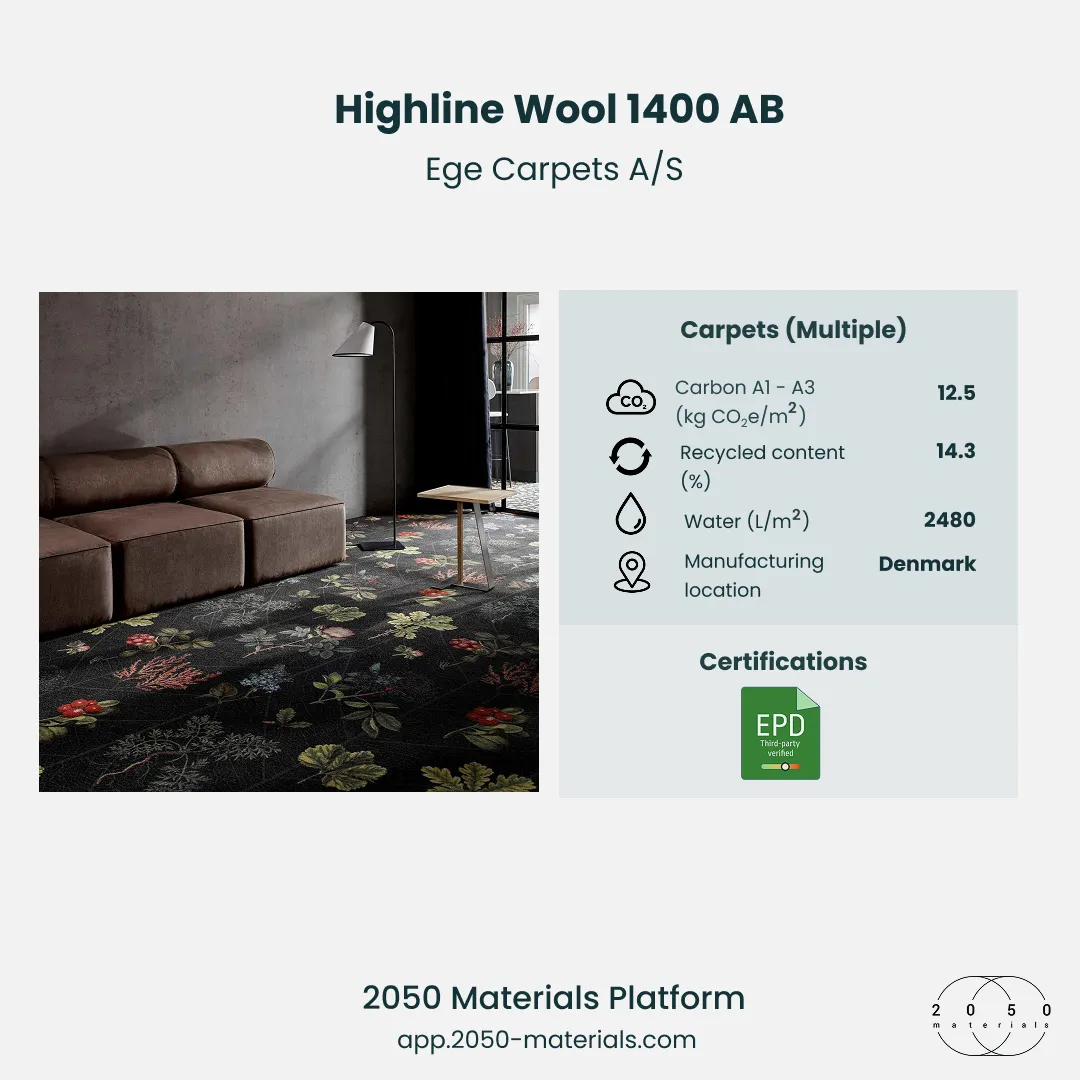
Manufactured in Denmark by Ege Carpets A/S, the Highline Wool 1400 AB is a tufted wall-to-wall carpet made with wool pile material and an acoustic backing. It uses the Millitron dyeing method and has a total thickness of approximately 12.5 mm with a surface pile mass of 1400 g/m². Classified under CEN/TS 15398 as Class 33, it is suitable for heavy commercial use. With correct installation and maintenance, the lifetime can range from 15 to 30 years.
Sustainability Performance
- Certified with an EPD.
- Made with wool pile material and acoustic backing.
- Classified Class 33 — Commercial Heavy.
- Lifetime 15–30 years depending on use and maintenance.
Advantages
- Constructed with natural wool pile.
- Includes acoustic backing.
- Designed with long technical lifetime.
Use Cases
- Commercial heavy-use areas.
- Wall-to-wall carpet installations.
- Residential interiors requiring durability and acoustic performance.
2. Marmoleum 2.5 mm by Forbo Flooring B.V.
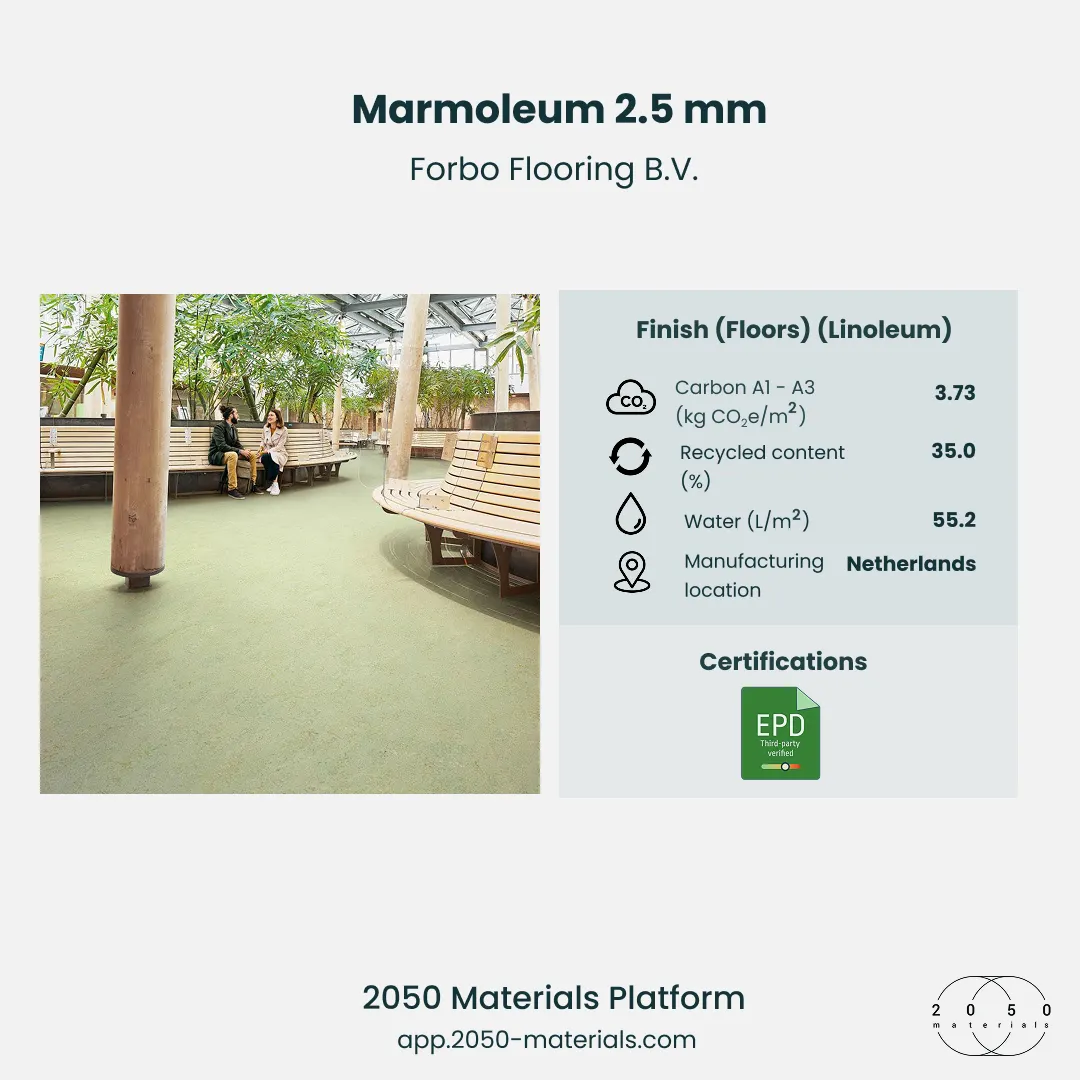
Produced by Forbo Flooring in the Netherlands, Marmoleum is a standout in low carbon flooring. Made from natural materials like linseed oil, jute, and wood flour, it’s a resilient and bio-based alternative to PVC or synthetic floors.
Sustainability Performance
- Certified with an EPD.
- Made from 100% natural materials: linseed oil, rosin, wood flour, jute.
- Complies with EN-ISO 24011 specifications for linoleum.
Advantages
- Low embodied carbon across production lifecycle.
- Durable and long-wearing.
- Wide variety of color and pattern choices.
Use Cases
- Perfect for modern living spaces.
- Great for open-plan apartments.
- Performs well in pet-friendly homes due to toughness.
3. Silicate Facade Paints KEIM Veramin by KEIMFARBEN GMBH
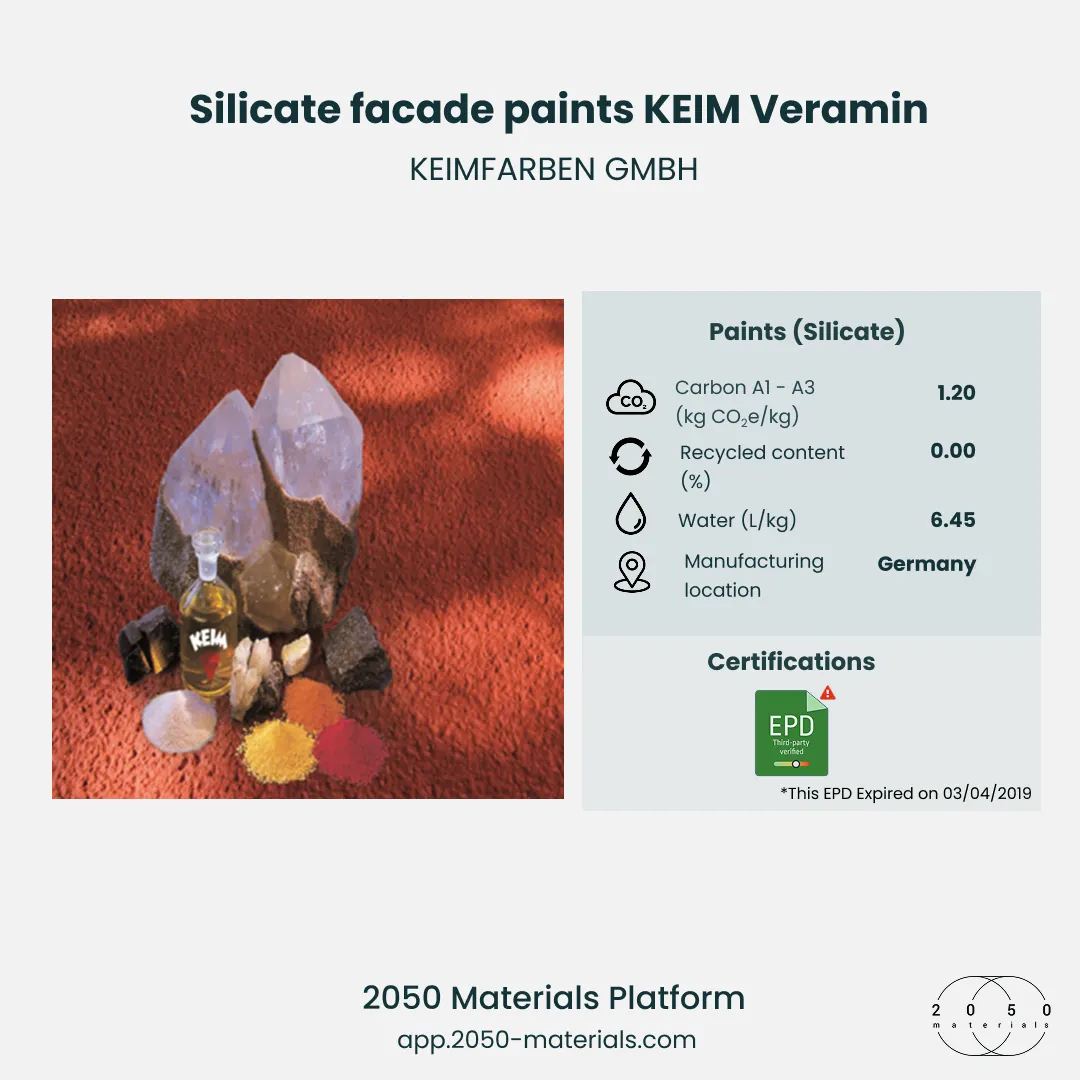
Manufactured by KEIMFARBEN in Germany, KEIM Veramin is a mineral-based silicate paint that supports the preservation and performance of facades.
Sustainability Performance
- Silicate paints are naturally mineral-based and often have lower embodied emissions than acrylic alternatives.
- Enhances durability of walls, potentially reducing the need for frequent repainting.
Advantages
- Contributes to improving serviceability of structures.
- Extends lifespan of facades.
Use Cases
- Suitable for facade applications.
- Can be used where extended durability is required.
4. Søuld Acoustic Mats — Flame Retardant by Søuld (Søuld Aps)

From Denmark, Søuld brings Søuld Acoustic Mats, made from seaweed-based natural materials. These panels combine acoustic performance with moisture regulation, heat retention, and natural fire resistance — a rare package in the insulation category.
Sustainability Performance
- Fully EPD-certified.
- Offers multi-functionality: thermal, moisture, and acoustic control.
Advantages
- Naturally fire retardant and mould-resistant.
- Regulates indoor humidity.
- Reduces need for synthetic insulation materials.
Use Cases
- Perfect for home theaters or music rooms.
- Useful in compact apartments to buffer sound.
- Can be integrated into modular wall designs.
- Can be used where moisture regulation and durability are important.
5. BOARDER by LINTEX AB
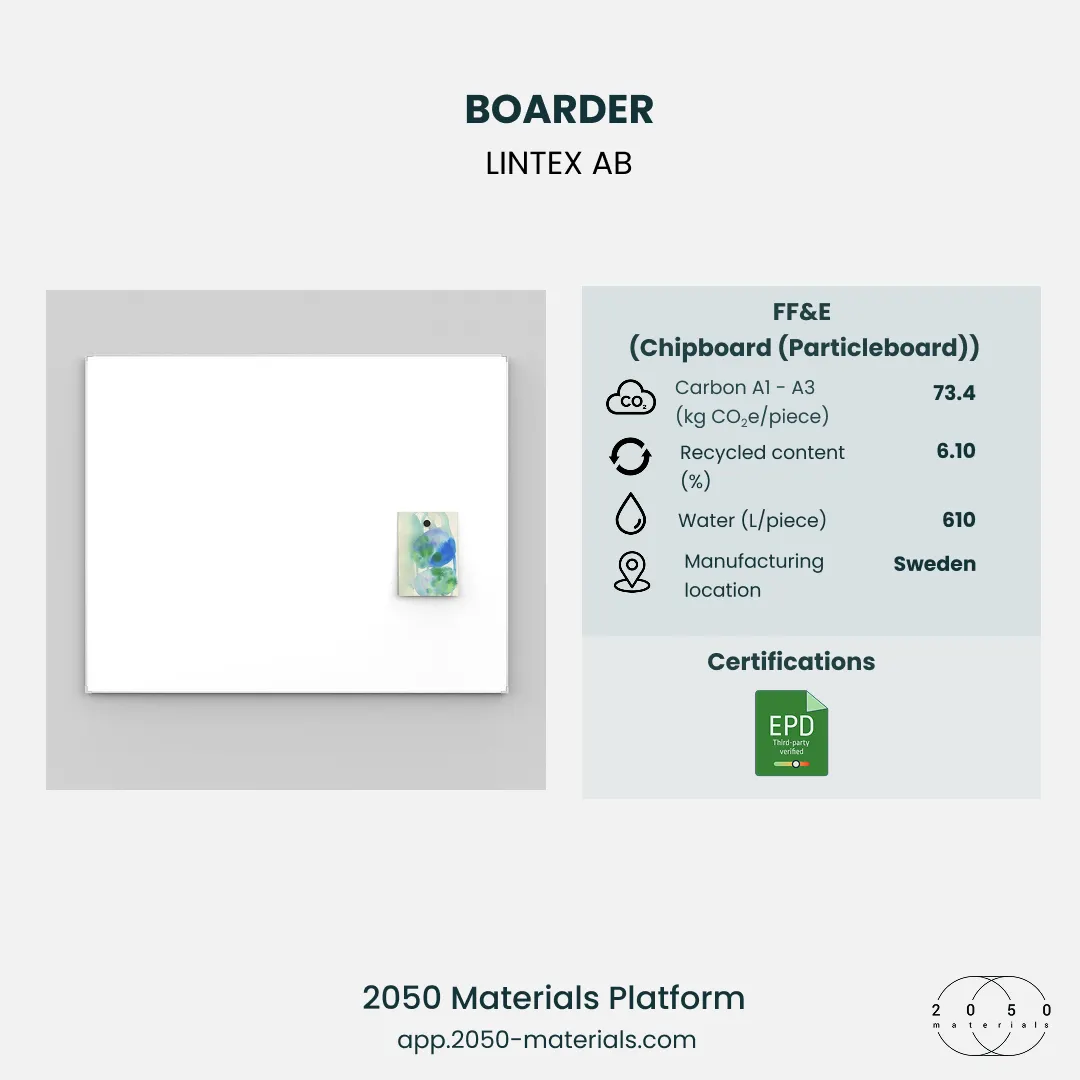
The BOARDER model from LINTEX AB uses chipboard (particleboard) as the core material. This choice allows for an aesthetic profile suitable for a variety of living spaces.
Sustainability Performance
- Certified with an EPD.
- Made with a chipboard (particleboard) core and ceramic steel surface.
Advantages
- Constructed with a ceramic steel layer for writing and erasing surfaces.
- Aluminium profile adds stability.
- Available in multiple sizes.
Use Cases
- Suitable for schools.
- Designed for offices.
- Used in conference premises.
6. Drawer Chest | Living by Bisley (Small Unit)
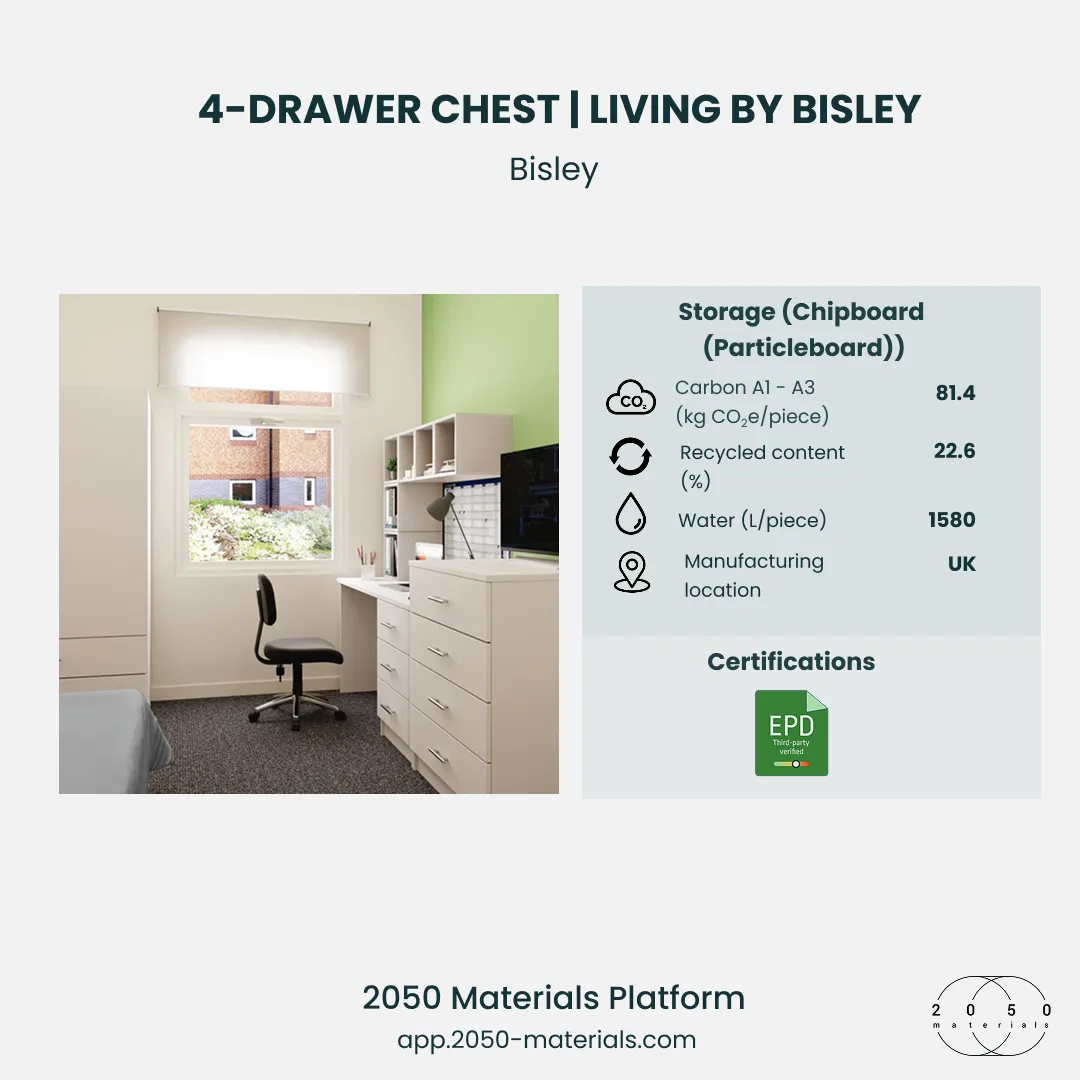
Manufactured by Bisley, this storage unit forms part of the Living by Bisley line — a wood-based furniture series designed to withstand daily wear while offering a more climate-conscious material profile. The unit uses chipboard (particleboard), which generally carries a lower carbon footprint than solid wood due to its use of wood waste and recycled inputs.
Sustainability Performance
- Holds an EPD, allowing for transparency in lifecycle emissions.
- Made from chipboard, a material typically made from wood by-products, contributing to circularity.
Advantages
- Designed for durability and longevity.
- Lightweight and modular, suitable for small spaces.
- Sourced and produced under UK manufacturing standards.
Use Cases
- Ideal for living spaces needing compact storage.
- Can double as a bedside table in small urban flats.
- Useful for student housing and short-term furnished rentals.
7. Note Shelf 1600 by Fora Form AS
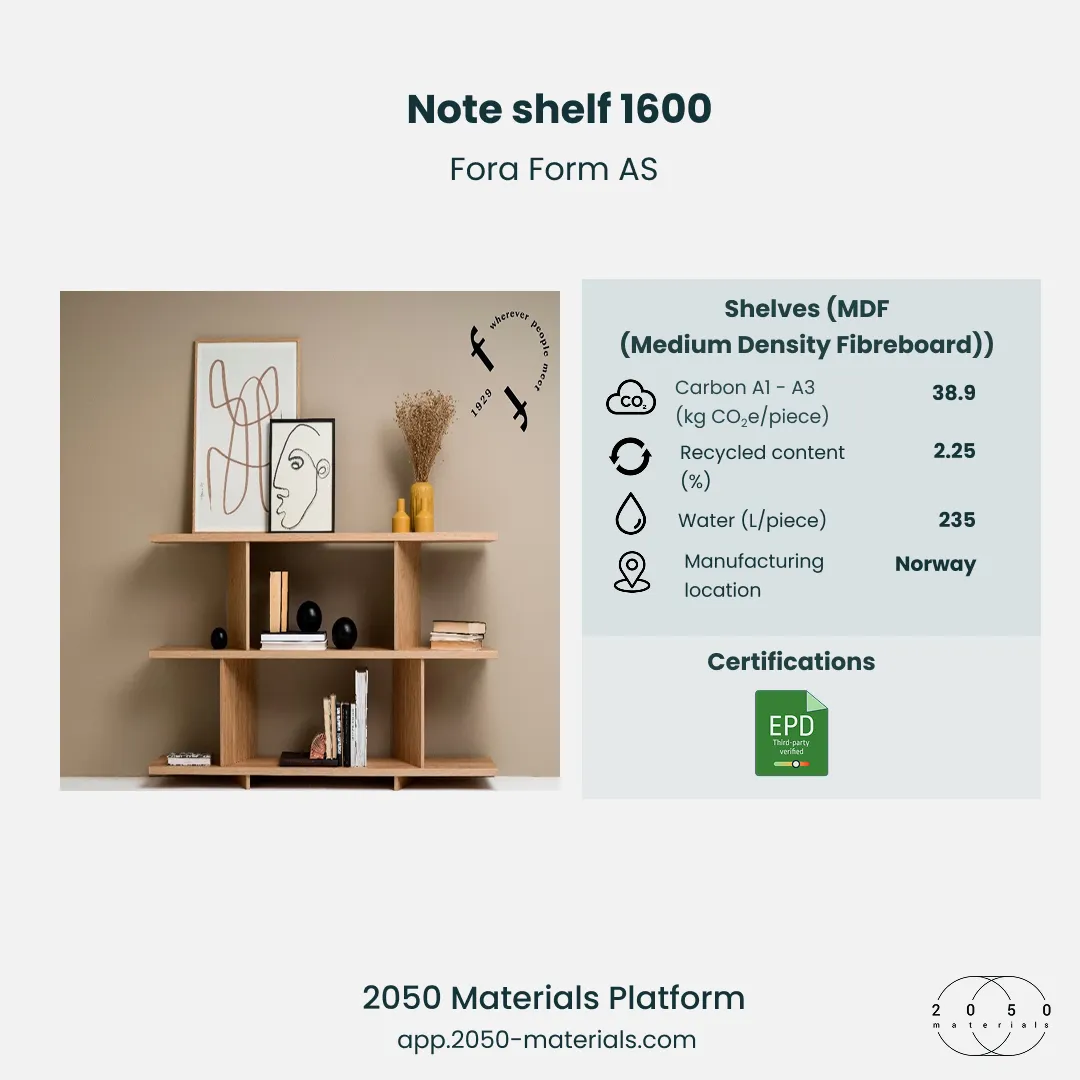
Fora Form AS, from Norway, presents the Note Shelf 1600 — a modular shelving system made with MDF plates and dowels. Designed for open-plan spaces, the shelf acts as both a functional divider and a message board.
Sustainability Performance
- Holds an EPD.
- Made from MDF, which has moderate embodied emissions when responsibly sourced.
- Designed for flexibility and multi-use.
Advantages
- Modular design for changing layouts.
- Visually communicates organizational or personal values.
- Doubles as a soft partition.
Use Cases
- Ideal for open living spaces.
- Functions well in studio apartments.
- Can separate work-from-home zones from social areas.
8. Senso 3 Seat Low Backrest by Fora Form AS
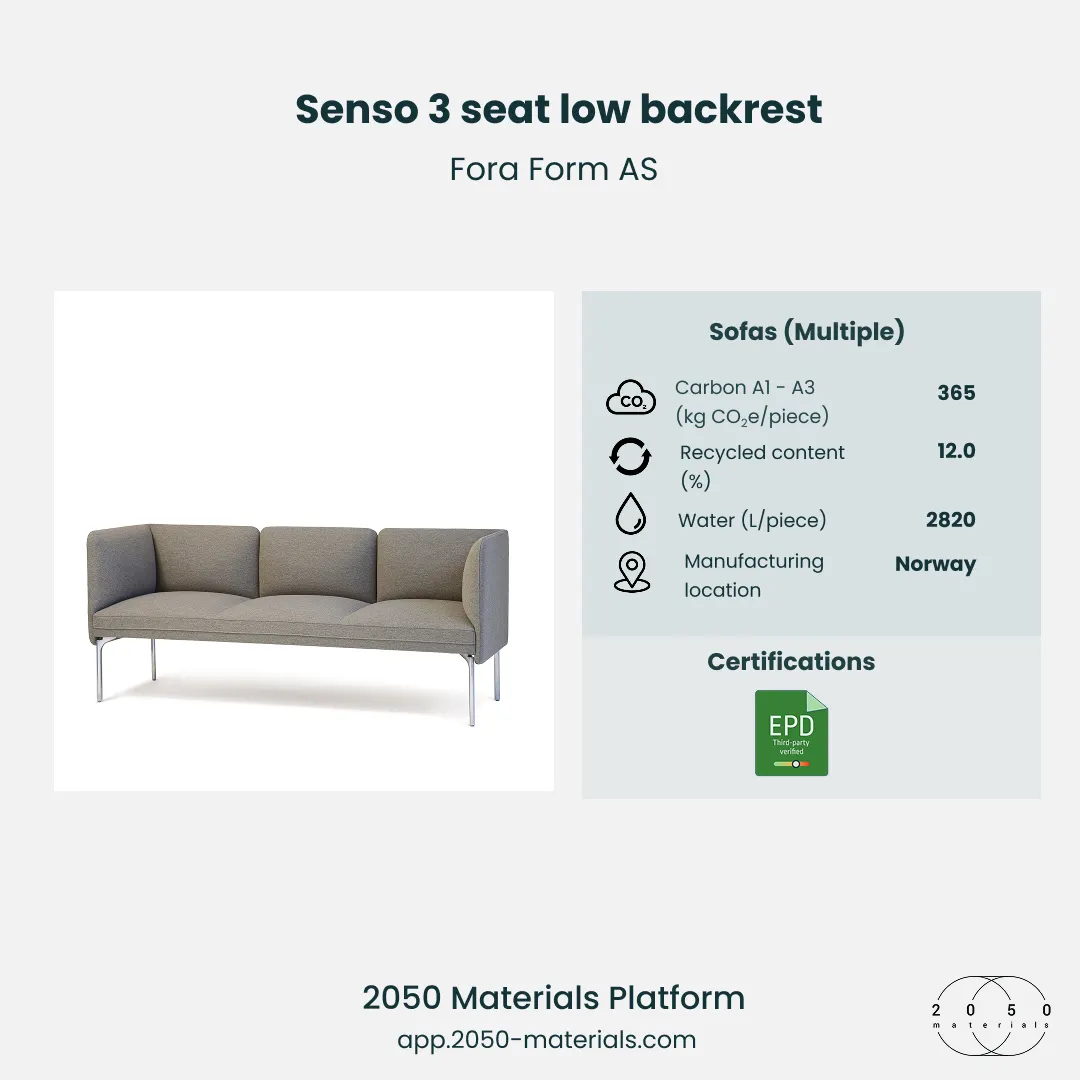
Another product by Fora Form AS, the Senso 3-Seat Sofa is a modular seating solution designed by Andersen & Voll. It prioritizes flexibility and universal design while balancing form and functionality.
Sustainability Performance
- Backed by an EPD.
- Steel frame with cold-cured foam, designed for longevity.
- Manufactured in Norway, adhering to Scandinavian design and environmental standards.
Advantages
- Modular and space-efficient.
- Universal design accommodates diverse users.
- Durable materials extend product life.
Use Cases
- Useful in communal living spaces.
- Fits collaborative lounge areas.
- Designed for modular seating arrangements.
9. Arris Sofa — Feather/Oak by MARK Product
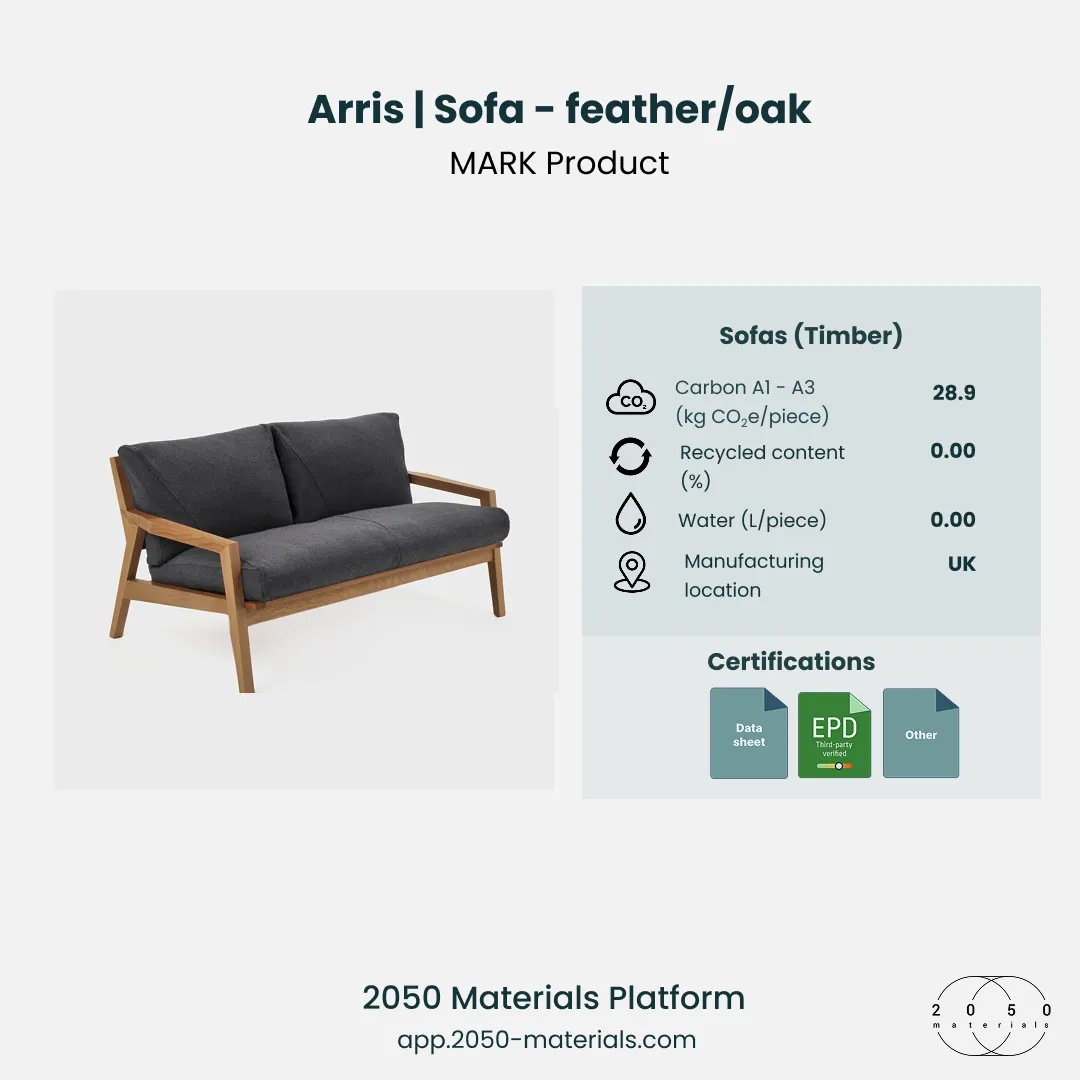
Crafted in the UK by MARK Product, the Arris sofa stands out for its transparent supply chain, extended product life, and focus on renewable materials. It combines FSC-certified timber with low-VOC finishes.
Sustainability Performance
- Certified with an EPD and a detailed data sheet.
- Built with FSC-certified timber.
- Designed with a 30-year life cycle and 10-year guarantee.
- Prioritizes renewable materials first, recycled second.
Advantages
- Low emissions due to natural material choices.
- Long lifespan reduces need for replacement.
- Lower indoor air impact due to low-VOC components.
Use Cases
- Ideal for residential living rooms and high-end rentals.
- Designed to withstand frequent use over decades.
Why These Materials Matter More Than Ever
As climate targets become more urgent and accountability across supply chains increases, the interior design and construction industries are being reshaped by a push toward lower embodied carbon. The materials featured in this collection represent a diverse mix of strategies —from advanced insulation and resilient flooring to modular, long-lasting furniture — that reduce the environmental burden of our living spaces.
What sets these products apart isn’t just their materials, but their verifiable impact. The majority are backed by Environmental Product Declarations (EPDs), offering full transparency on lifecycle emissions.
Whether you’re designing a new space or upgrading an existing one, these living space components are proof that climate responsibility can go hand-in-hand with quality and performance.
Discover more products with sustainable properties on the 2050 Materials Platform.
Related articles
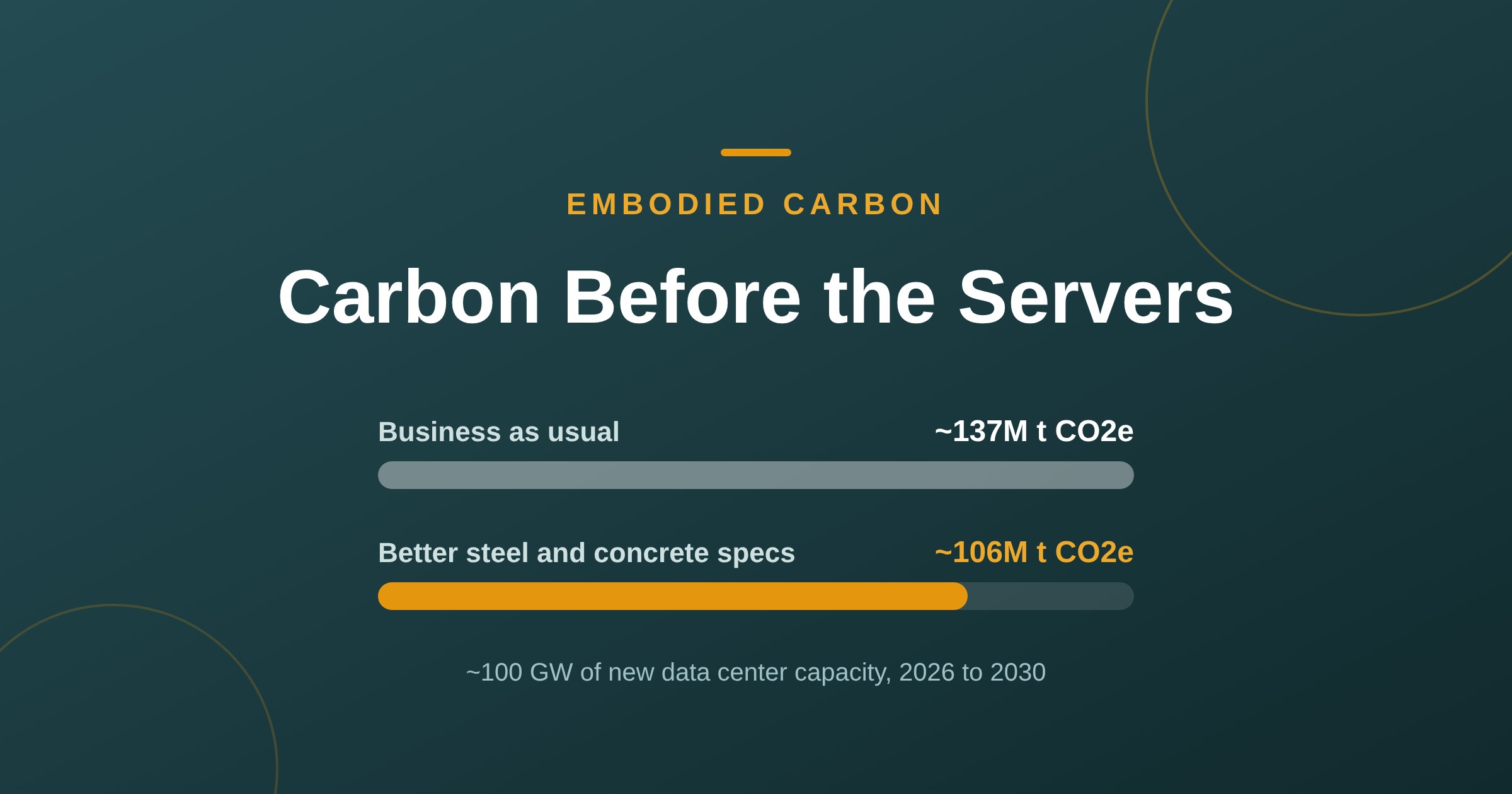
Data Centers’ Hidden 137M-Tonne Carbon Bill
New data centers could lock in ~137M tonnes of CO2e before a single server switches on. GGBS concrete and recycled steel could cut about 31M of it.
Read more
Built to Beat the Heat
This summer's drought wasn't a fluke, it was a preview. Here's the material data that actually decides whether a building shrugs off a heatwave or quietly cooks behind a great winter U value: decrement delay, solar reflectance, SHGC, and the real products behind each one.
Read more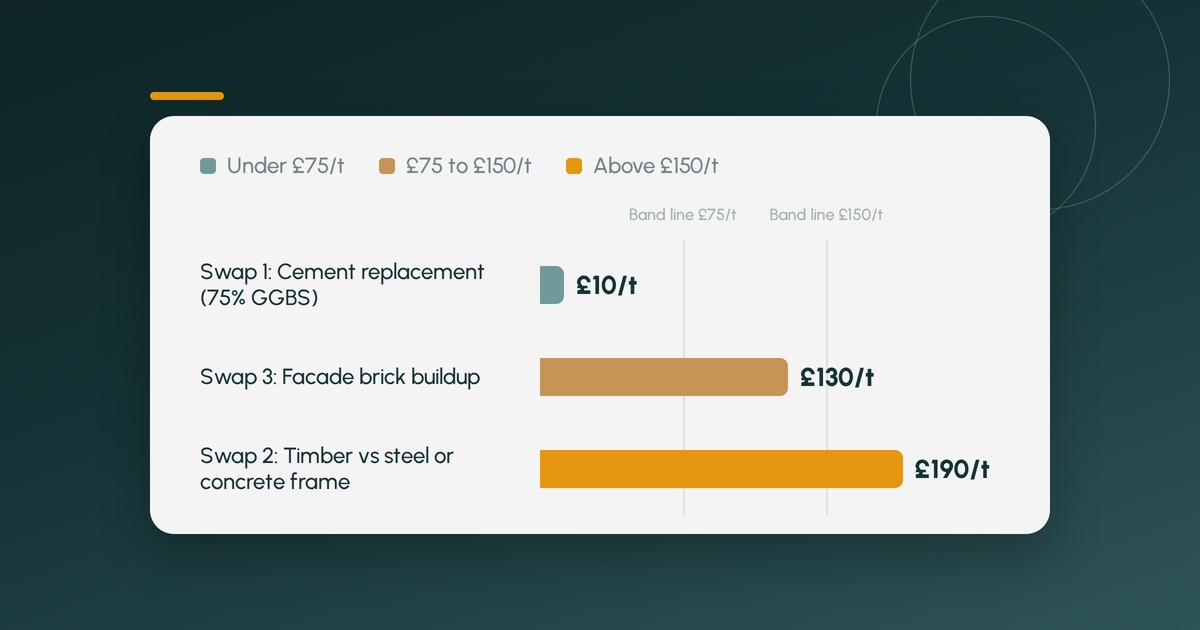
The Cost per Tonne Test for Embodied Carbon Swaps
Not every embodied carbon cut is worth paying for. Test any swap on cost per tonne of CO2e, see which band it falls in, and try the free calculator.
Read more