
Introducing the 2050 Materials SDK: Powerful API Access, Now Simpler Than Ever

Working with sustainability data shouldn’t require a data science degree—or a 5-person dev team just to decipher the docs.
That’s why we built the 2050 Materials SDK: a lightweight, developer-friendly toolkit that makes our powerful API accessible in just a few clicks.
Why we built it
We’ve seen it firsthand: integrating carbon data into your tools often means wrestling with poorly documented endpoints, inconsistent formats, and hours spent reverse-engineering what should be simple.
Our API is already one of the most robust sources of EPD and LCA data in the industry. But now, it’s also one of the easiest to use.
The 2050M SDK removes friction from the developer experience. No more guesswork—just structured access, working code snippets, and reliable results.
👉 Explore it here: sdk.2050-materials.com
🛠️ What the SDK does
Think of the SDK as a query builder + code generator for our API. It guides you through everything you need to:
✅ Authenticate using your developer token
🧱 Query product EPDs or generic material factors
🎯 Filter results by material, product type, certification, geography, and more
📦 Return structured JSON data, ready for analysis or integration
🧑💻 Copy ready-to-run code snippets in Python or JavaScript
You get instant access to real environmental performance data—without needing to learn the ins and outs of API design.
🚀 Key features
Here’s what you can do with the SDK:
🔑 Easy Authentication
Use your developer token to get a temporary API token. The SDK shows you exactly how to format requests and headers.
🧩 Filter Builders
Build queries using dropdowns for:
- Product types
- Material types
- Compliance schemes
- Certification sources
- Countries/regions
These map directly to our API’s parameters—no need to guess the right field names.
📊 Access Two Powerful Endpoints
- Product-level data – pull detailed, brand-specific EPDs from our structured dataset.
- Generic factors – use statistical carbon factors for early-stage modelling when specific EPDs aren’t available.
🧬 Built-in Code Generator
Every query comes with a copy-pasteable code snippet (Python or JS) that reproduces your request—perfect for dev teams building apps, BIM extensions, or internal tools.
🧠 Why this matters
EPDs are rich in data—but that data is often trapped in PDFs or siloed systems. Our API unlocks that data. And now, the SDK makes using that API dramatically easier.
You can go from idea to working integration in minutes, not days.
💨 Faster prototyping for LCA tools
📐 Smarter design decisions, earlier in the process
🧠 Reproducible, standards-compliant data access
🌍 Try it out today
The SDK is free to use, open to all 2050M developer accounts, and built to scale with your projects.
Start building here 👉 sdk.2050-materials.com
Or explore the full docs at docs.2050-materials.com
💬 Questions? Feedback?
We’re actively improving the SDK based on user feedback. If there’s a feature you want—or something unclear—let us know at api@2050-materials.com
The data is powerful. Now, using it is easy.
Related articles
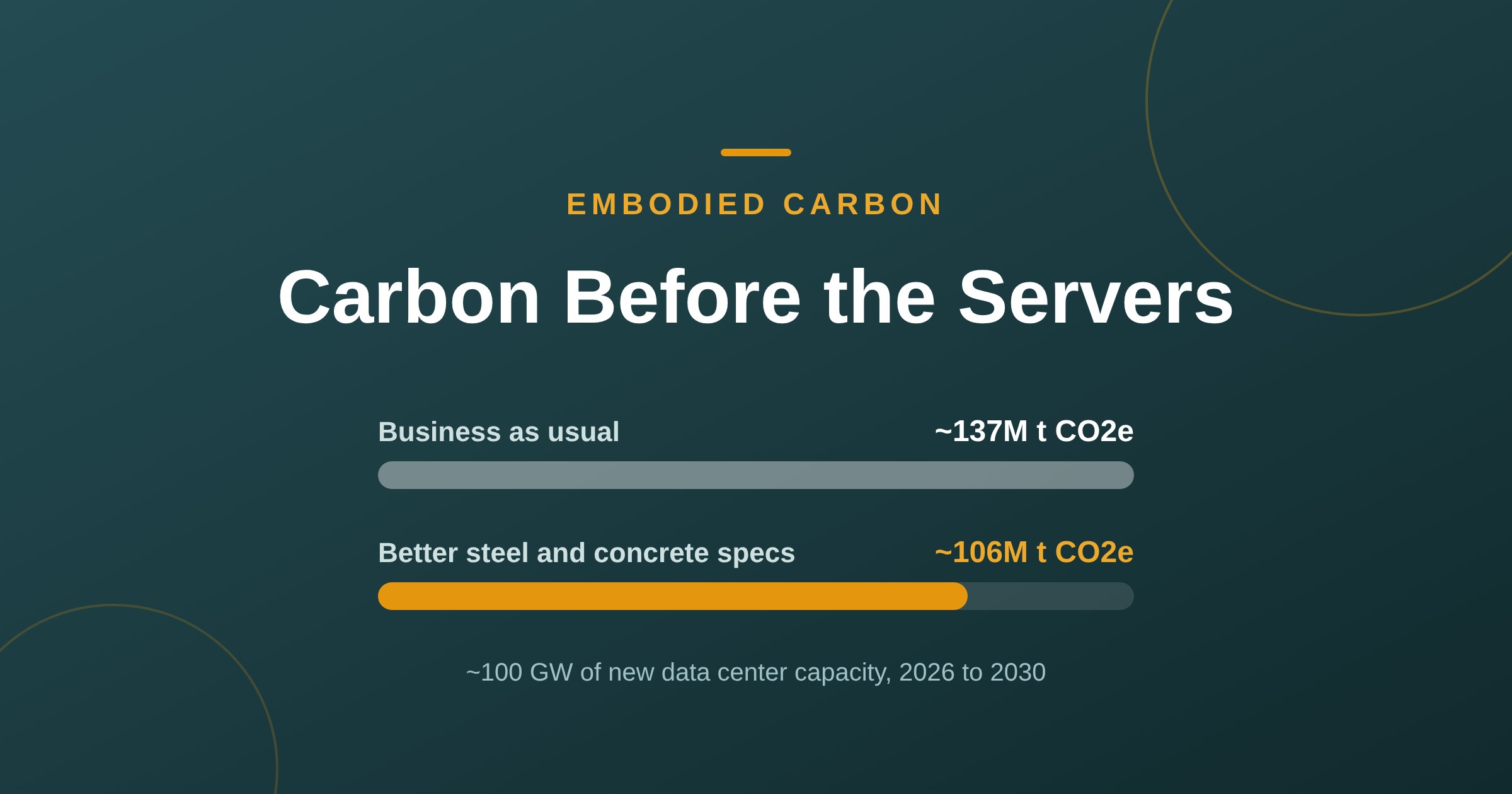
Data Centers’ Hidden 137M-Tonne Carbon Bill
New data centers could lock in ~137M tonnes of CO2e before a single server switches on. GGBS concrete and recycled steel could cut about 31M of it.
Read more
Built to Beat the Heat
This summer's drought wasn't a fluke, it was a preview. Here's the material data that actually decides whether a building shrugs off a heatwave or quietly cooks behind a great winter U value: decrement delay, solar reflectance, SHGC, and the real products behind each one.
Read more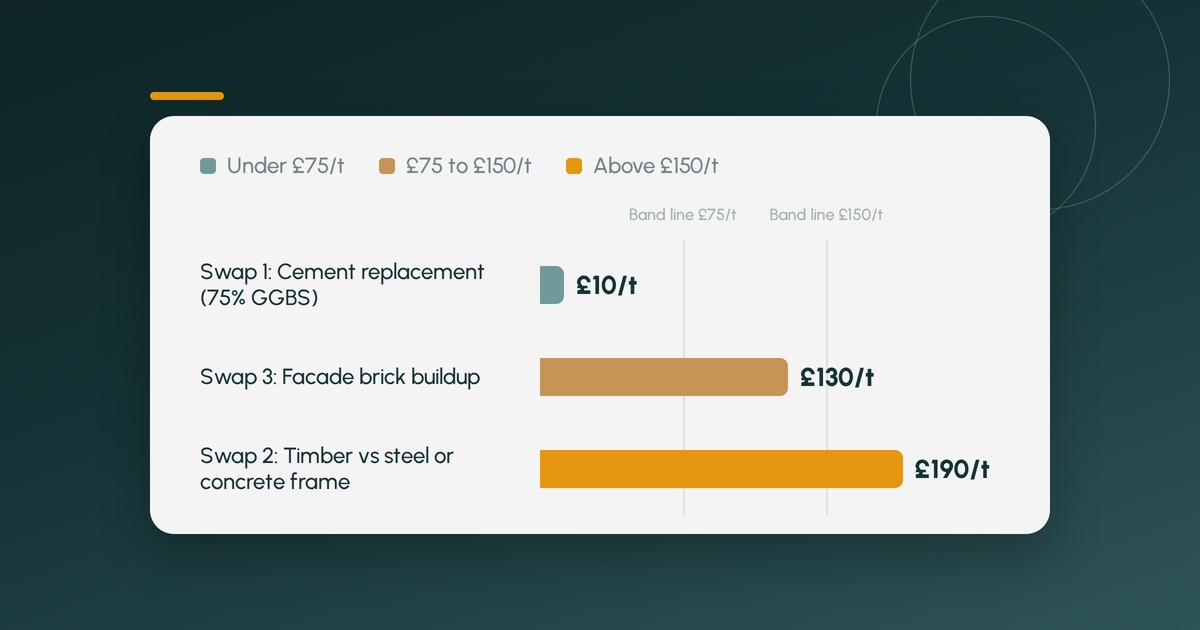
The Cost per Tonne Test for Embodied Carbon Swaps
Not every embodied carbon cut is worth paying for. Test any swap on cost per tonne of CO2e, see which band it falls in, and try the free calculator.
Read more