Low Carbon Innovations in Circular Insulation Materials

The shift toward low carbon construction has accelerated rapidly in recent years, driven by regulatory pressure, carbon accounting frameworks, and increased awareness of the environmental impact of building materials. Within this movement, insulation materials are receiving renewed attention, not just for their role in operational energy efficiency, but also for the embodied carbon they carry from cradle to gate.
Circular and low carbon insulation solutions are emerging as essential tools for reducing the overall carbon footprint of buildings. From products made with recycled glass cullet to cellulose sourced from waste paper, manufacturers are innovating in both materials and production methods. These next-generation insulation products combine thermal and acoustic performance with reduced emissions and enhanced circularity.
This article explores a curated collection of standout insulation products in the Circular & Low Carbon Insulation Materials category, featured on the 2050 Materials platform. Each product is profiled with a breakdown of its material composition, environmental performance, and most suitable applications. These are not just alternatives, they are leading examples of how insulation can contribute meaningfully to a low carbon built environment.
1. CLASSIC 037 by Knauf Insulation Sprl

CLASSIC 037, developed by Knauf Insulation Sprl, is a high-performance unfaced glass mineral wool insulation product designed for internal partitions. Manufactured using ECOSE® Technology, a bio-based binder free from formaldehyde and phenol, this product emphasizes low emissions during production and installation.
This product is manufactured in European plants, with this specific product originating from the Czech Republic.
Sustainability Performance
- ECOSE® Technology eliminates harmful chemical binders, improving indoor air quality and reducing manufacturing emissions
- Holds an Environmental Product Declaration (EPD), which quantifies its environmental impact across its lifecycle
- Manufactured regionally in Europe, which can support reduced transportation emissions depending on the project site
Advantages
- High recycled content
- Low-emission bio-based binder (ECOSE®)
- Proven thermal and acoustic insulation performance
- Certified environmental transparency (EPD)
Use Cases
- Internal partition walls in residential, commercial, and mixed-use buildings
- Acoustic upgrades in renovation projects
- Projects pursuing green building certifications
- Applications where low VOC materials are required
Discover more about this product on the 2050 Materials Platform.
2. Cloisolène LV Laine de verre 45 mm by Saint-Gobain Isover

Cloisolène LV Laine de verre 45 mm, manufactured by Saint-Gobain Isover, is a lightweight glass wool insulation panel designed for interior partition applications. The product is available in 45 mm thickness and is particularly valued for its balance of thermal resistance and ease of handling on-site. It is manufactured in France and is backed by a full Environmental Product Declaration (EPD).
Sustainability Performance
- Manufactured using a blend of virgin sand and recycled glass cullet, improving circularity
- The mineral wool mat structure reduces heat transfer through effective air trapping, enhancing operational energy performance
- Covered by an Environmental and Health Product Declaration (FDES), enabling easy comparison with other low carbon materials
- Manufactured locally in France, reducing transport emissions for European projects
Advantages
- Good thermal performance in a compact 45 mm profile
- Uses recycled glass materials to reduce embodied carbon
- Lightweight and easy to handle on-site
- Documented environmental performance through FDES/EPD
Use Cases
- Partition wall insulation in residential and commercial buildings
- Lightweight applications requiring thinner insulation solutions
- Projects seeking low carbon interior products for certifications
- Renovation works where ease of installation is essential
Discover more about this product on the 2050 Materials Platform.
3. EXPERT IPB 037, FHP 037 by Knauf Insulation

EXPERT IPB 037, FHP 037 is a high-performance glass mineral wool insulation product manufactured by Knauf Insulation. Offered primarily as a slab, it’s optimized for use in internal partition walls. This product stands out for its exceptional use of recycled content, with up to 80% external cullet (recycled glass), and is bound using ECOSE® Technology, a plant-based binder that contains no added formaldehyde or phenol.
Produced in the Czech Republic, this solution combines material circularity with proven insulation performance.
Sustainability Performance
- Contains a minimum of 92% inert materials, largely composed of recycled glass
- Uses ECOSE® Technology, reducing embodied emissions and improving health and safety during installation
- Manufactured in Europe, supporting lower transportation-related emissions for regional projects
Advantages
- Very high recycled content in the material mix
- Low emission binder improves air quality and installation safety
- Format (slab) offers consistent density and acoustic performance
- Environmental data available via EPD
Use Cases
- Internal partitions in commercial, educational, and residential projects
- Projects aiming to reduce embodied carbon without compromising insulation performance
- Situations where slab-form insulation is preferred over roll-form
- Applications requiring clear material traceability and low emission specifications
Discover more about this product on the 2050 Materials Platform.
4. ISOVER ACOUSTIC by Saint-Gobain Finland Oy

ISOVER ACOUSTIC, produced by Saint-Gobain Finland Oy, is a mineral wool insulation product designed for soundproofing interior partitions. It’s manufactured using natural raw materials such as sand and recycled glass cullet, processed via fusion and fiberizing techniques. The result is a soft, elastic mineral wool mat that provides effective acoustic and thermal insulation while supporting material circularity.
Sustainability Performance
- Produced from a combination of natural raw materials and recycled cullet, improving resource efficiency
- Designed with a porous structure, enhancing insulation by trapping air and absorbing sound waves
- Manufactured locally in Finland, potentially lowering transportation emissions in Nordic markets
Advantages
- Dual acoustic and thermal performance in a single product
- Uses recycled materials, reducing dependency on virgin inputs
- Manufactured in Finland, supporting regional low carbon goals
- EPD-certified for transparent carbon reporting
Use Cases
- Acoustic insulation in interior partition walls of residential, office, or hospitality buildings
- Projects in Nordic or EU markets with transportation-sensitive carbon targets
- Developments seeking to reduce indoor sound transmission without compromising material sustainability
- Applications where lifecycle data is required for certification or compliance
Discover more about this product on the 2050 Materials Platform.
5. Isover Acoustic Partition Roll (APR 1200) — 25 mm by Saint-Gobain Isover UK Limited

The Isover Acoustic Partition Roll (APR 1200) — 25 mm, developed by Saint-Gobain Isover UK Limited, is a glass mineral wool roll tailored for acoustic insulation in internal partition walls and separating floors. Manufactured in England, the roll is designed in 600 mm widths for an easy friction fit between standard stud centres, reducing installation time and material waste on-site.
Sustainability Performance
- Produced with glass wool, incorporating recycled cullet to reduce reliance on virgin raw materials
- Contributes to the reduction of embodied carbon through efficient material sourcing and local UK manufacturing
- The friction-fit roll design minimizes cutting waste, improving material efficiency during installation
Advantages
- Supplied in 600 mm widths for easy installation with minimal cutting
- Durable acoustic insulation with long-term performance
- Contains recycled content, lowering embodied emissions
- Certified through EPD for environmental accountability
Use Cases
- Internal stud walls in residential, commercial, or public buildings
- Timber joist separating floors requiring acoustic insulation
- Projects targeting reductions in construction waste and carbon
- Applications where sound attenuation and fast installation are priorities
Discover more about this product on the 2050 Materials Platform.
6. Loose Fill Cellulose Insulation by Ekovilla Oy

Loose Fill Cellulose Insulation, produced by Ekovilla Oy, is a thermal insulation material composed primarily of recycled newspaper fibres with natural additives. This product is used as a loose-fill material, making it adaptable for various cavity and roof insulation applications.
Sustainability Performance
- Manufactured from recycled newspaper, reducing raw material demand and maximizing circular use
- Additives used are generally low-impact, contributing to lower embodied carbon during production
- Holds a verified EPD, covering a range of environmental indicators over a 50-year service life
- As a loose-fill material, it supports flexible installation with reduced cutting waste
Advantages
- High recycled content using post-consumer paper waste
- Suitable for irregular spaces and retrofits due to loose-fill application
- Excellent thermal insulation with minimal environmental impact
- Long service life (50 years) verified in the EPD
Use Cases
- Attic floor insulation in residential buildings
- Wall cavities and pitched roofs in new construction or retrofits
- Sprayed wall insulation for improved coverage in complex geometries
- Projects seeking to reduce lifecycle emissions using bio-based materials
Discover more about this product on the 2050 Materials Platform.
7. MBI Unfaced by Saint-Gobain Fiberglass Isover (Colombia)

MBI Unfaced, developed by Saint-Gobain Fiberglass Isover, is a mineral wool insulation product manufactured in Colombia for both building and industrial applications. It is designed for thermal insulation in walls, pitched roofs, floors, as well as mechanical systems like pipes and boilers.
Sustainability Performance
- Reduces operational energy demand by improving insulation in building envelopes and mechanical systems
- Manufactured using recycled glass where available, improving circularity in the production phase
- Product longevity contributes to long-term carbon savings over the building’s lifespan
Advantages
- Long service life (50+ years), reducing the need for replacement
- Suitable for a wide variety of applications, including industrial insulation
- EPD-certified for carbon footprint visibility
- Manufactured by a globally recognized brand with regional expertise
Use Cases
- Wall, roof, and floor insulation in commercial or industrial buildings
- Mechanical insulation in piping, boilers, and HVAC systems
- Fire-resistant applications requiring non-combustible materials
- Projects in Latin America seeking proven low carbon insulation solutions
Discover more about this product on the 2050 Materials Platform.
8. Optima Smart by İzocam Ticaret ve Sanayi A.Ş

Optima Smart, developed by İzocam Ticaret ve Sanayi A.Ş, is a thermal insulation product made from glass mineral wool, engineered for a wide range of building envelope applications. Manufactured in Türkiye, the product offers a balance of low carbon performance, acoustic control, and fire resistance.
Sustainability Performance
- Incorporates recycled glass, contributing to circularity and reducing the use of virgin raw materials
- Manufactured in Türkiye, supporting local sourcing and reduced transport-related carbon emissions in regional projects
- EPD-certified, providing detailed lifecycle emissions data for carbon accounting
- Contributes to energy efficiency and fire safety in building applications
Advantages
- Uses recycled inputs for reduced material-related emissions
- Offers both thermal and acoustic insulation benefits
- Manufactured regionally to lower transport-related impacts
- Certified environmental performance via EPD
Use Cases
- Wall and roof insulation in residential, commercial, and public buildings
- Interior partitions needing acoustic control and thermal comfort
- Projects seeking to meet green building certification standards
- Regional developments in Türkiye and surrounding markets
Discover more about this product on the 2050 Materials Platform.
Looking Ahead: The Role of Low Carbon Insulation in Future-Ready Buildings
As the building industry intensifies its focus on carbon reduction, insulation materials will play a critical role, not only in minimizing operational energy loss, but also in lowering embodied emissions at the product level. The eight materials featured in this collection demonstrate that circularity and carbon performance can go hand in hand. From cellulose made from recycled newspapers to mineral wool containing high volumes of recycled glass, manufacturers are proving that innovation in insulation is possible without compromising performance or safety.
The continued adoption of low carbon insulation solutions will be essential for achieving climate targets in both new construction and retrofits. By specifying materials with transparent environmental declarations, recycled content, and regionally sourced production, designers and developers can make measurable progress toward a lower carbon built environment. Check out our Illustrated Guides to Insulation Materials that offer visual guides to understand the variety of insulation materials, their carbon and thermal performance and their classification per resource origin.
Related articles
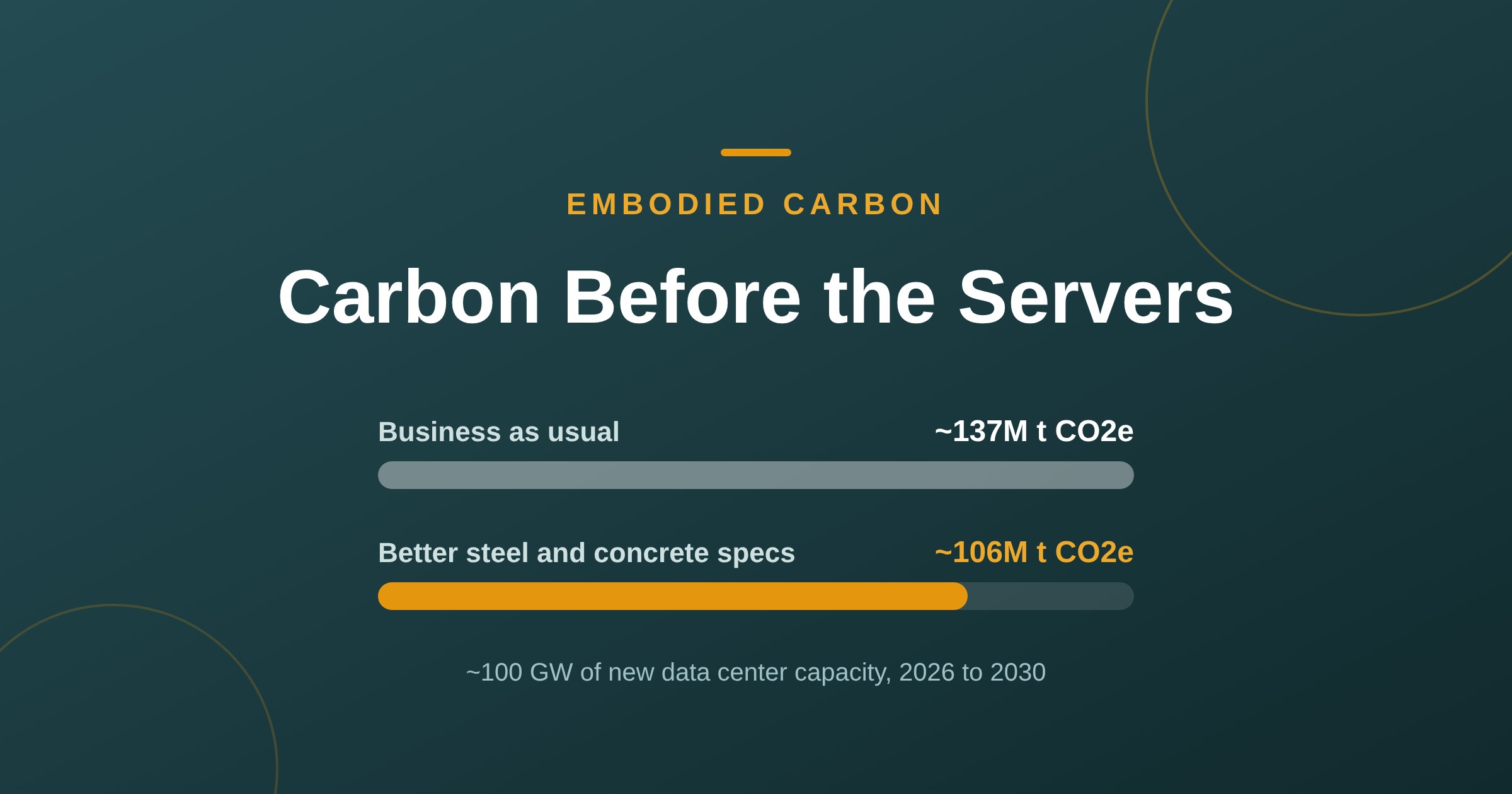
Data Centers’ Hidden 137M-Tonne Carbon Bill
New data centers could lock in ~137M tonnes of CO2e before a single server switches on. GGBS concrete and recycled steel could cut about 31M of it.
Read more
Built to Beat the Heat
This summer's drought wasn't a fluke, it was a preview. Here's the material data that actually decides whether a building shrugs off a heatwave or quietly cooks behind a great winter U value: decrement delay, solar reflectance, SHGC, and the real products behind each one.
Read more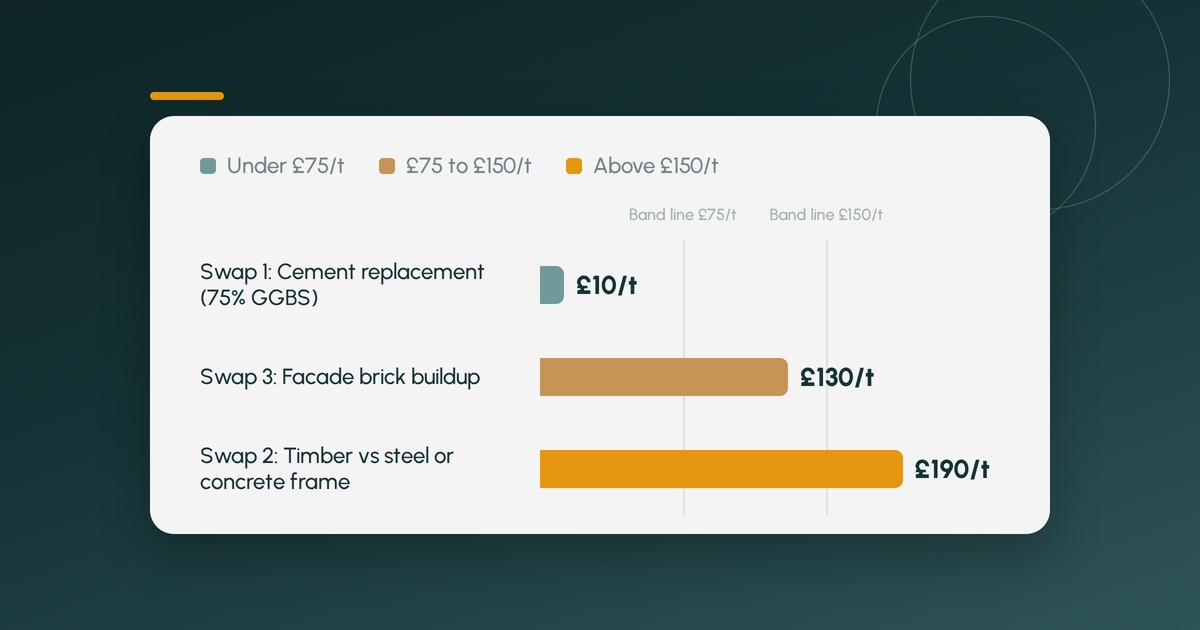
The Cost per Tonne Test for Embodied Carbon Swaps
Not every embodied carbon cut is worth paying for. Test any swap on cost per tonne of CO2e, see which band it falls in, and try the free calculator.
Read more