8 Low Carbon Adhesives & Sealants for Carbon-Conscious Design

When we talk about lowering the carbon footprint of buildings, adhesives and sealants rarely get top billing. But these behind-the-scenes materials are fundamental to how buildings are put together. From tiling and cladding to insulation and waterproofing, adhesives and sealants bind the materials that shape our built environment. And increasingly, they’re doing it with a lighter climate footprint.
The construction industry is under growing pressure to decarbonize fast. That pressure has extended beyond steel and concrete into every corner of the materials space. Adhesives and sealants are being re-engineered to deliver not just performance, but lower embodied carbon, improved durability, and compatibility with evolving energy-efficiency systems.
This article and collection explores 8 adhesives and sealants that are ahead of the curve. Each product featured has quantifiable low carbon benefits and Environmental Product Declarations (EPDs) to back it up. They span cement-based mortars, polymer gels, and sealing tapes, and are sourced from manufacturers in Europe and Asia who are pushing for carbon-conscious design.
1. SCG Tile Adhesive Pink 20 Kg by SCG Cement

The SCG Tile Adhesive Pink is a pre-mixed cement-based adhesive designed for ceramic tile applications. Manufactured by SCG Cement in Thailand, this product is intended for professional tiling installations and is part of SCG’s broader commitment to reducing carbon in the building materials sector.
Sustainability Performance
SCG Cement is widely recognized for its low carbon innovations. The adhesive itself benefits from optimized formulations that reduce clinker content and leverage efficient production processes, all aimed at minimizing embodied carbon. This product has an EPD that offers transparency.
Advantages
- Reduced cement content lowers embodied emissions
- Designed for high performance and long-lasting adhesion
- Pre-mixed format reduces on-site waste and variability
Use Cases
- Wall and floor tiling for ceramic applications
- Suitable for residential and commercial interiors
- Ideal for fast-track renovation projects
2. TABICOL® by Placo SAINT-GOBAIN

TABICOL® is a gypsum-based adhesive manufactured by Placo SAINT-GOBAIN in Spain. It’s formulated specifically for bonding plaster, brick, and large-format partitions with a performance-first approach that doesn’t compromise its low carbon credentials.
Sustainability Performance
TABICOL® comes with an EPD via INIES (France’s national environmental database), confirming its carbon data and third-party verified impacts. Gypsum adhesives typically offer a lower embodied carbon footprint compared to cement-based options, and Saint-Gobain’s focus on optimizing raw material use and energy efficiency enhances that further.
Advantages
- Gypsum-based for inherently lower carbon footprint
- Designed for minimal operator downtime
- Excellent bond strength for heavy-duty applications
Use Cases
- Partition installation in commercial or residential buildings
- Ideal for large-format brick and plaster panels
- Suitable for fast-track interior projects
3. THERMABOND FIX by TITAN Cement Company

THERMABOND FIX is a polymer-modified cementitious adhesive mortar developed for use with EPS thermal insulation boards. It’s designed by TITAN Cement Company, a major player in low-carbon cement innovation.
Sustainability Performance
TITAN Cement is known for reducing CO₂ across its cement production through alternative fuels, clinker reduction, and energy-efficient kilns. THERMABOND FIX comes with an EPD and benefits from these upstream efficiencies, positioning it as a lower carbon alternative to conventional insulation adhesives.
Advantages
- Polymer-modified for improved adhesion and elasticity
- Supports energy-efficient insulation systems
- Durable under thermal stress and moisture exposure
Use Cases
- Bonding EPS boards in External Thermal Insulation Composite Systems (ETICS)
- Ideal for both retrofit and new-build facades
- Suitable for use under render systems
4. UltraGel® Pro by Litokol Lab S.p.A.

UltraGel® Pro is a multi-polymer adhesive gel manufactured by Litokol Lab S.p.A. in Italy. It’s engineered for ceramic tile installations, particularly in damp environments and over underfloor heating systems.
Sustainability Performance
UltraGel® Pro carries a verified EPD and complies with UNI EN 12004 (D2TE) standards. It features zero vertical slip and extended open time, meaning reduced material waste and improved precision, key traits in carbon-conscious building.
Advantages
- Gel formulation allows for better spread and control
- Excellent for overlays and complex substrates
- Longer working time reduces waste
Use Cases
- Tile installation in kitchens, bathrooms, and spa areas
- Suitable for underfloor heating systems
- Great for renovations requiring precision application
5. ULTRALITE S1 FLEX ZERO by Mapei GmbH

ULTRALITE S1 FLEX ZERO is a lightweight, cement-based adhesive developed by Mapei GmbH in Germany. It’s ideal for installing ceramic and stone tiles, especially large-format ones.
Sustainability Performance
This product is EPD-certified and includes Low Dust technology, high yield, and deformability (classified S1). Mapei’s production processes prioritize carbon reduction through lightweight fillers and improved raw material efficiency, contributing to its lower embodied carbon profile.
Advantages
- Lightweight composition reduces material use
- High back-buttering performance minimizes adhesive thickness
- Compliant with strict EU sustainability standards
Use Cases
- Large-format tile installation in high-traffic zones
- Suitable for vertical surfaces with zero vertical slip
- Compatible with underfloor heating
6. VARIO® KB1 Single-Sided Adhesive Tape by Saint-Gobain ISOVER

VARIO® KB1 is a single-sided sealing tape from Saint-Gobain ISOVER. It’s designed for airtight membrane-to-membrane connections — a small product with a big impact on building energy performance.
Sustainability Performance
VARIO® KB1 comes with an EPD, confirming its low carbon credentials. It supports airtight construction, reducing thermal losses and moisture buildup, which in turn improves the longevity and energy performance of the building envelope.
Advantages
- Airtight sealing for improved building energy efficiency
- Quick application with split-backing design
- Reduces risk of mould and condensation
Use Cases
- Membrane connections in timber and lightweight structures
- Ideal for passive house and airtight retrofits
- Moisture management systems
7. webercol supergel futuRE by Saint-Gobain WEBER CEMARKSA, S.A.

Webercol supergel futuRE is an advanced, lightweight adhesive gel created by Saint-Gobain WEBER. It’s ideal for ceramic tile applications, including areas with high thermal variation.
Sustainability Performance
This product has an EPD and is engineered for flexibility and long-term performance, especially on exposed facades and radiant flooring. Its lightweight formulation reduces material demand, helping cut embodied emissions.
Advantages
- Highly flexible for dynamic building envelopes
- Lightweight and non-slip for easier handling
- Excellent workability for fast installations
Use Cases
- Facade cladding with ceramic tiles
- Underfloor heating systems
- High-variation temperature environments
8. X-Gel® — by Litokol Lab S.p.A.

X-Gel® is a fluid-thixotropic adhesive from Litokol Lab S.p.A. in Italy. Designed for ceramic, porcelain, and natural stone installations, it balances creaminess with extreme adhesion, ideal for challenging applications.
Sustainability Performance
With an EPD and proprietary Fluidotixo® technology, X-Gel® achieves full surface wetting with minimal waste. Its long open time (over 40 minutes) and high yield improve on-site efficiency, contributing to lower operational emissions.
Advantages
- 100% wetting capability ensures full adhesion
- Thixotropic yet fluid for precise application
- Maintains shape with zero vertical slip
Use Cases
- Wall and floor tiling with ceramic or natural stone
- Overlays on existing substrates
- Use in both residential and commercial builds
The Next Layer of Carbon-Conscious Construction
Adhesives and sealants don’t usually take the spotlight in low carbon building, but maybe they should. These eight products are leading the way in rethinking what performance means in a decarbonizing industry: not just strength and durability, but light footprints, clean manufacturing, and lifecycle transparency.
They’re proof that low carbon construction isn’t just about swapping materials, it’s about re-engineering the entire assembly. One layer, one bond at a time.
Related articles
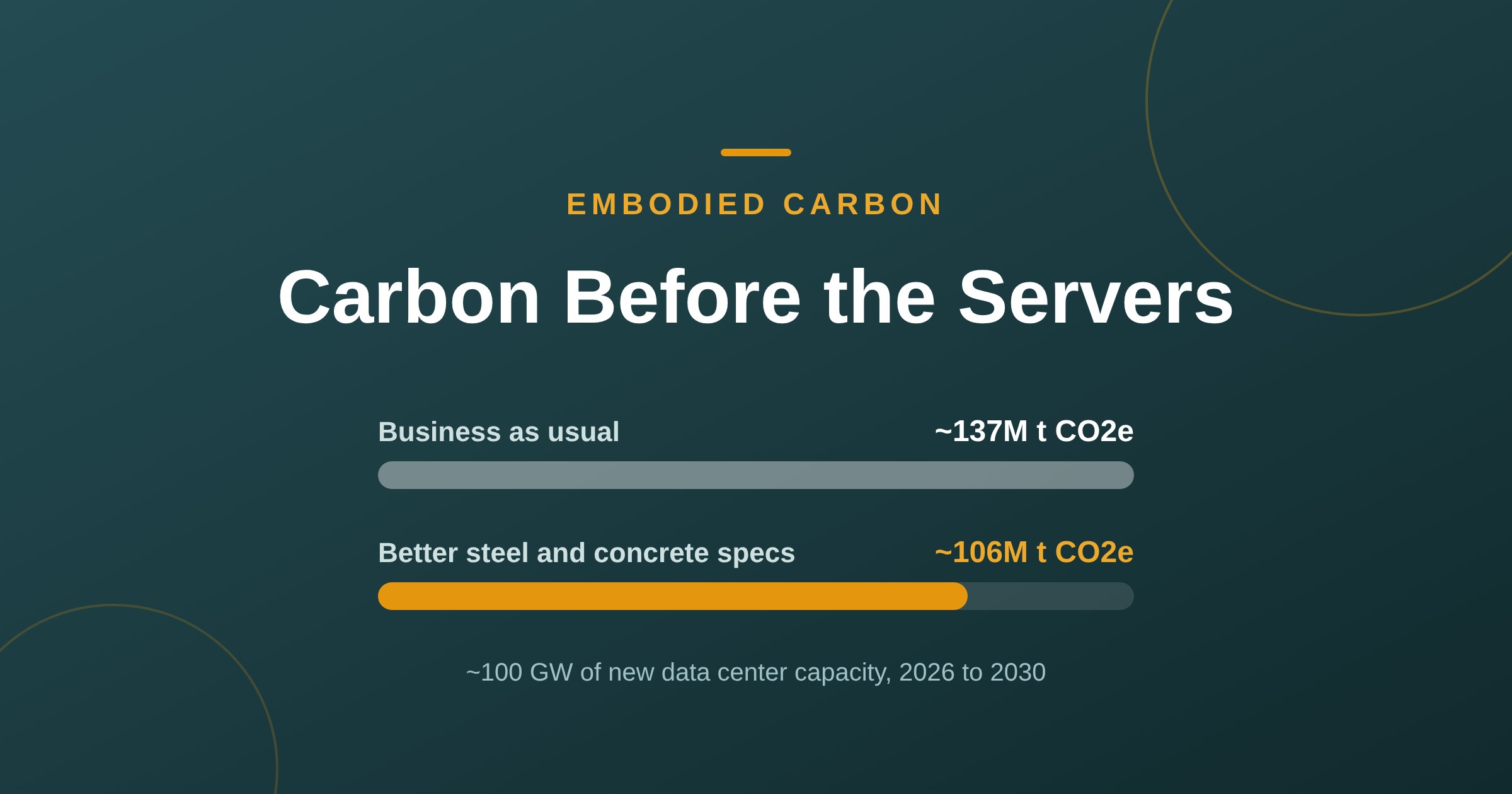
Data Centers’ Hidden 137M-Tonne Carbon Bill
New data centers could lock in ~137M tonnes of CO2e before a single server switches on. GGBS concrete and recycled steel could cut about 31M of it.
Read more
Built to Beat the Heat
This summer's drought wasn't a fluke, it was a preview. Here's the material data that actually decides whether a building shrugs off a heatwave or quietly cooks behind a great winter U value: decrement delay, solar reflectance, SHGC, and the real products behind each one.
Read more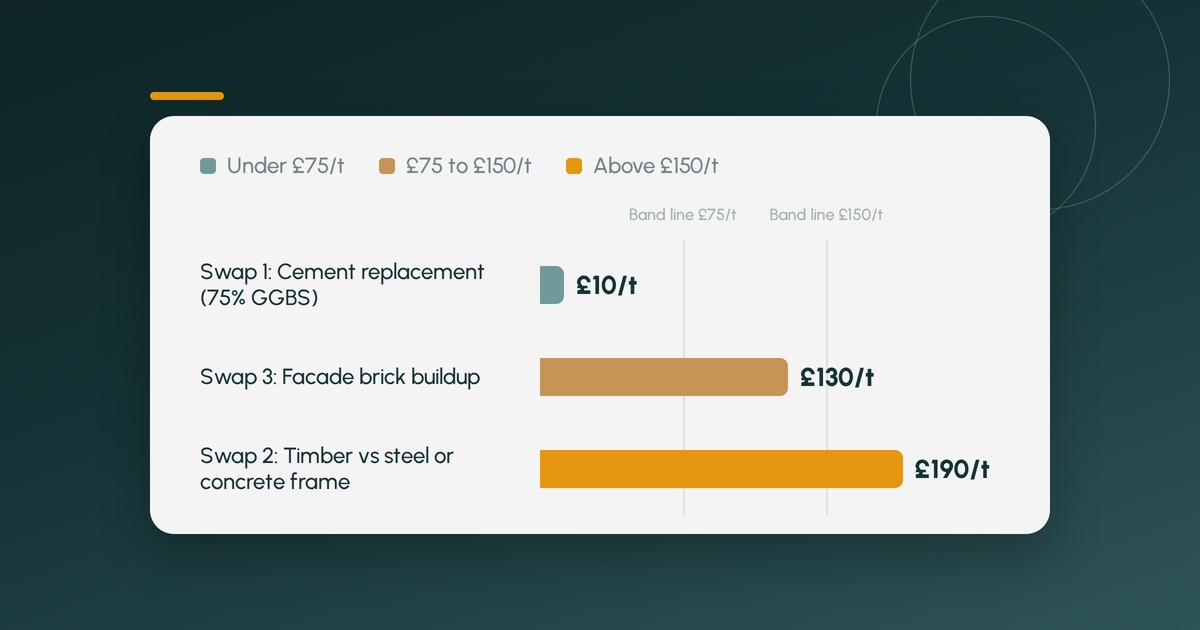
The Cost per Tonne Test for Embodied Carbon Swaps
Not every embodied carbon cut is worth paying for. Test any swap on cost per tonne of CO2e, see which band it falls in, and try the free calculator.
Read more