Carpets and Textiles: Shaping the Future of Interiors

Carpets and textiles are often overlooked when discussing material emissions, yet they represent a significant share of embodied carbon in interior fit-outs and commercial flooring. Traditionally manufactured with high-impact synthetic fibers, chemical dyes, and energy-intensive processes, these products have posed a hidden challenge in reducing emissions across the built environment. But a new wave of low carbon carpet and textile innovations is changing the equation.
This article and collection explores a curated selection of products that stand out for their reduced carbon footprint, smart use of recycled materials, and future-oriented design.
Each product listed below is evaluated based on its carbon-conscious design, material inputs, and use cases — offering architects, designers, and specifiers a clear look at what low carbon choices look like in the carpets and textiles category.
1. DESSO Recharge by TARKETT
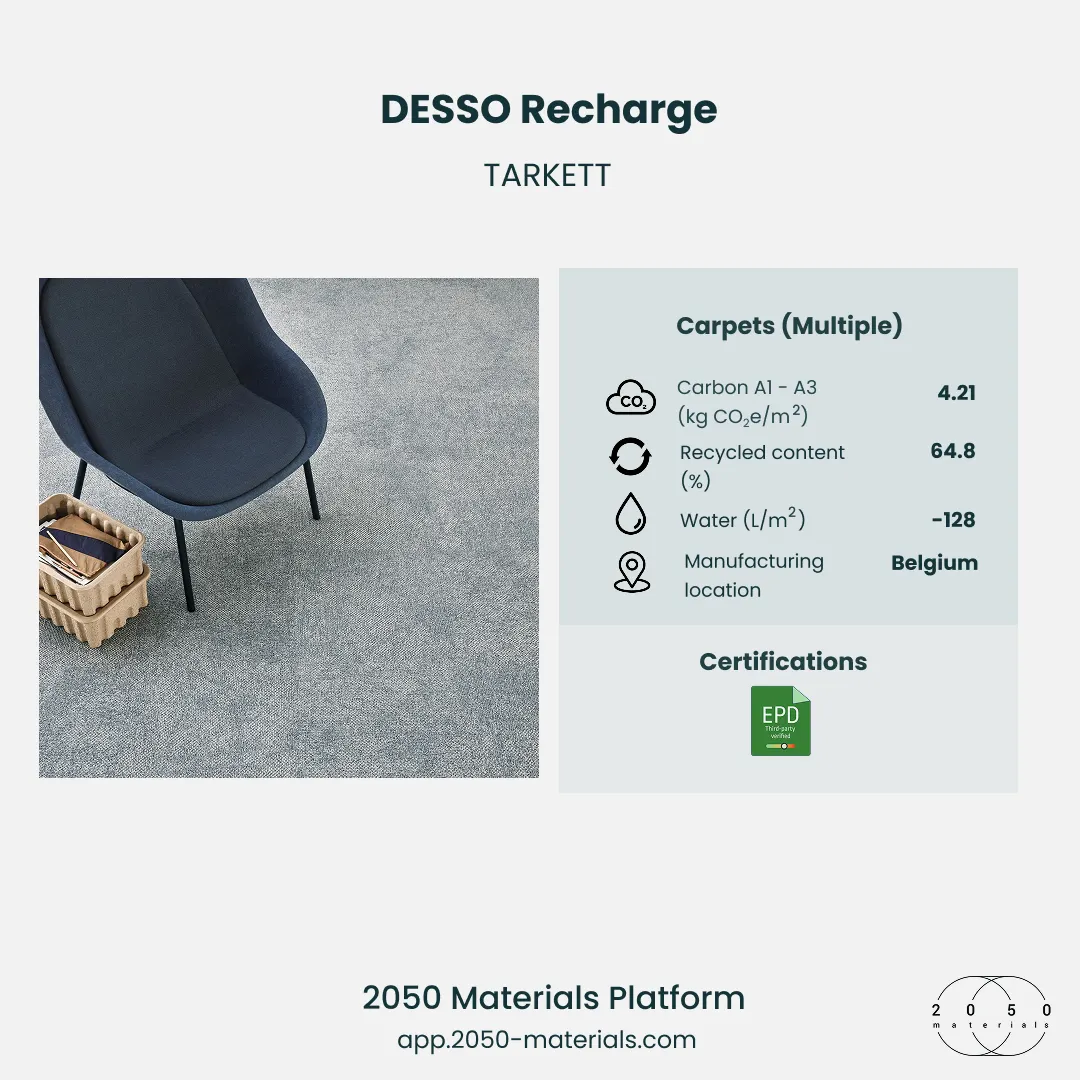
DESSO Recharge, developed by TARKETT in Belgium, is a modular carpet tile that combines performance with circular material innovation. It features DESSO EcoBase® backing, a 100% recyclable substrate designed for closed-loop reuse. The carpet surface is made using solution-dyed ECONYL® nylon, regenerated from waste sources like fishing nets and industrial plastics. Compliant with EN 1307, these loose-laid tiles have a recommended service life of 10 years, making them suitable for durable, flexible flooring installations.
Performance
DESSO Recharge achieves a lower-than-average carbon footprint for its category through smart material choices and design. ECONYL® nylon significantly cuts emissions compared to virgin alternatives, while the EcoBase® backing is engineered to be recyclable without downcycling. Together, these components contribute to both reduced embodied carbon and end-of-life circularity. The product is verified through an Environmental Product Declaration (EPD), offering transparency on material impacts and lifecycle performance.
Advantages
- Uses 100% regenerated ECONYL® nylon yarn
- Includes 100% recyclable DESSO EcoBase® backing
- Covered by a certified EPD
- Engineered for closed-loop recycling
- Compliant with EN 1307 durability standards
Use Cases
- Corporate and commercial offices
- Educational buildings and libraries
- High-traffic hospitality zones
- Retrofit flooring projects
- Interiors targeting green building standards
Find out more about this product on the 2050 Materials platform.
2. Highline 630 WT by Ege Carpets A/S
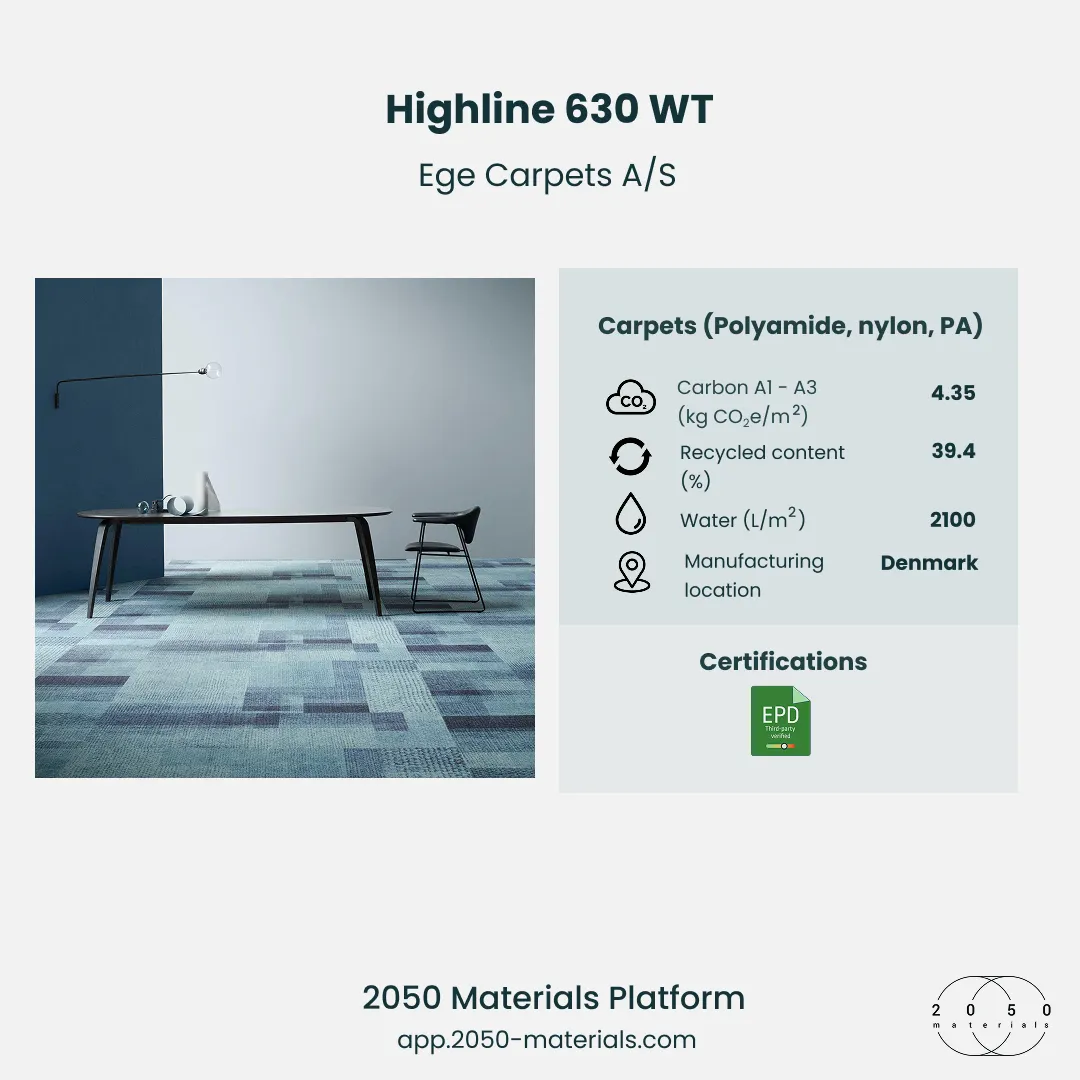
Highline 630 WT is a high-performance, wall-to-wall carpet solution from Ege Carpets A/S, designed with both durability and impact reduction in mind. Manufactured in Denmark, this tufted carpet features recycled polyamide 6 (PA6) in the pile material and a woven textile backing, offering a balance of resilience and reduced carbon intensity. The product is dyed using the Millitron® method, a precision dyeing technology that minimizes dye waste and water usage. With a surface pile mass of 630 g/m² and a total thickness of approximately 6.5 mm, it meets Class 33 — Commercial — Heavy use classification under CEN/TS 15398.
Performance
Highline 630 WT delivers strong technical performance with a conscious material approach. Its use of recycled polyamide 6 significantly reduces the carbon footprint typically associated with nylon carpets. The Millitron® dyeing method offers higher dye precision while reducing water consumption and chemical discharge compared to traditional methods. With an extended technical lifespan — often exceeding 15 years — this product provides a long-term flooring solution with minimized environmental impact. The carpet is backed by an Environmental Product Declaration (EPD) for transparency.
Advantages
- Made with recycled polyamide 6 (PA6) yarn
- Durable woven textile backing
- Precision-dyed with Millitron® technology
- Certified for heavy commercial use (Class 33)
- Backed by a verified EPD
Use Cases
- Office buildings and meeting rooms
- Hotels and hospitality lounges
- Retail interiors and showrooms
- Cultural institutions and galleries
- Long-term commercial fit-outs
Find out more about this product on the 2050 Materials platform.
3. CQuest™Bio Carpet Tiles by Interface
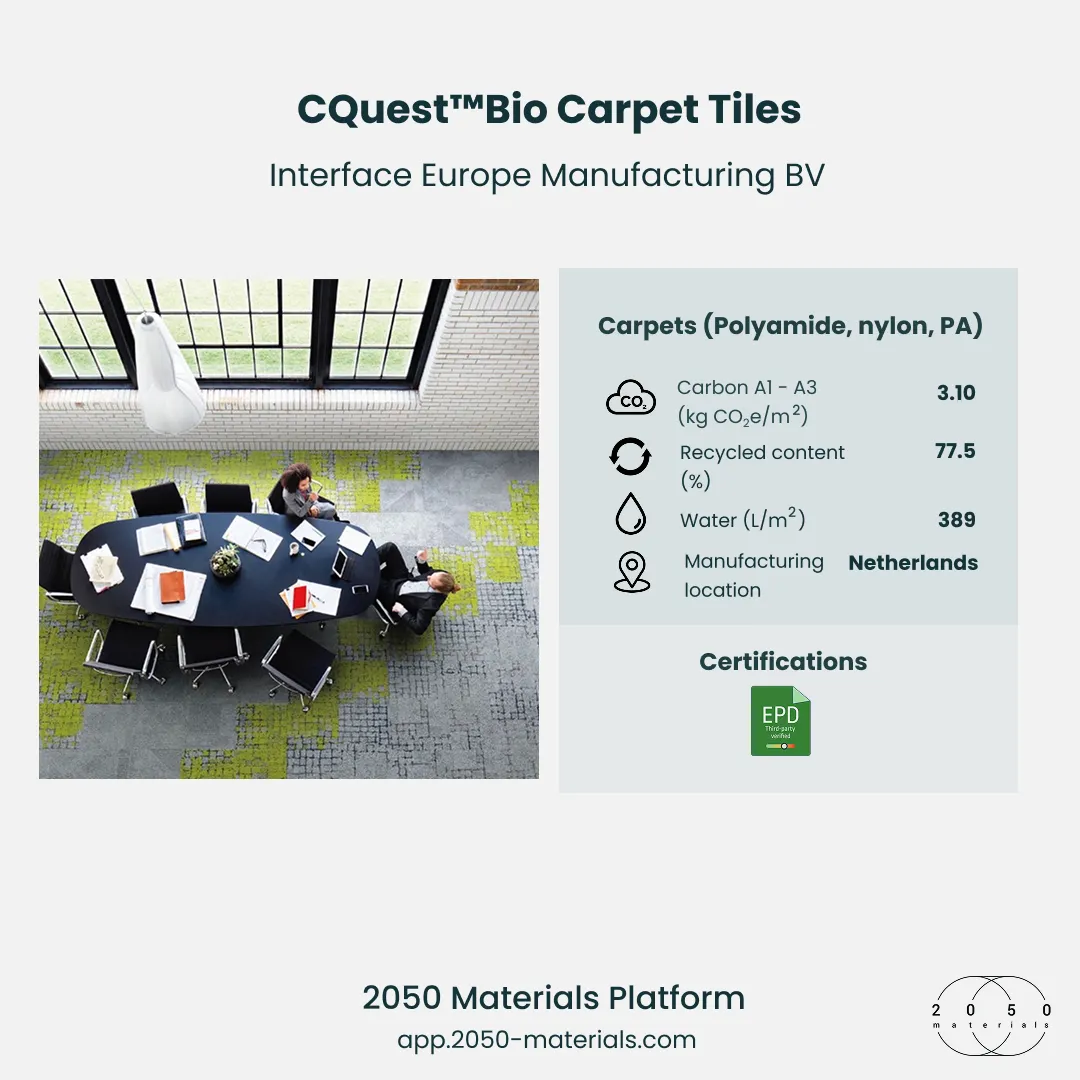
CQuest™Bio carpet tiles are developed by Interface Europe Manufacturing BV, integrating recycled materials at every layer of their construction. The product features a 100% recycled polyamide 6 (PA6) tufted loop pile and a CQuest™Bio backing, which incorporates recycled polyester fleece.
Performance
The use of 100% recycled PA6 yarn helps avoid the significant emissions of virgin nylon production. The CQuest™Bio backing system also reduces dependency on virgin materials and fossil fuels, contributing to a lower embodied carbon profile. Interface’s long-standing product stewardship programs and take-back schemes further support material recovery and reuse. The product is documented through an EPD registered in the Netherlands.
Advantages
- Made with 100% recycled PA6 yarn
- CQuest™Bio backing uses recycled polyester fleece
- Complies with NF EN 1307 and NF EN 14041 standards
- Covered by an EPD
- Modular format allows easy replacement and reuse
Use Cases
- Modular office fit-outs
- Education campuses
- Retail spaces
- Workspaces pursuing low carbon targets
- Flooring designed for circular recovery
Find out more about this product on the 2050 Materials platform.
4. Rewind Dilour by BFS Europe NV
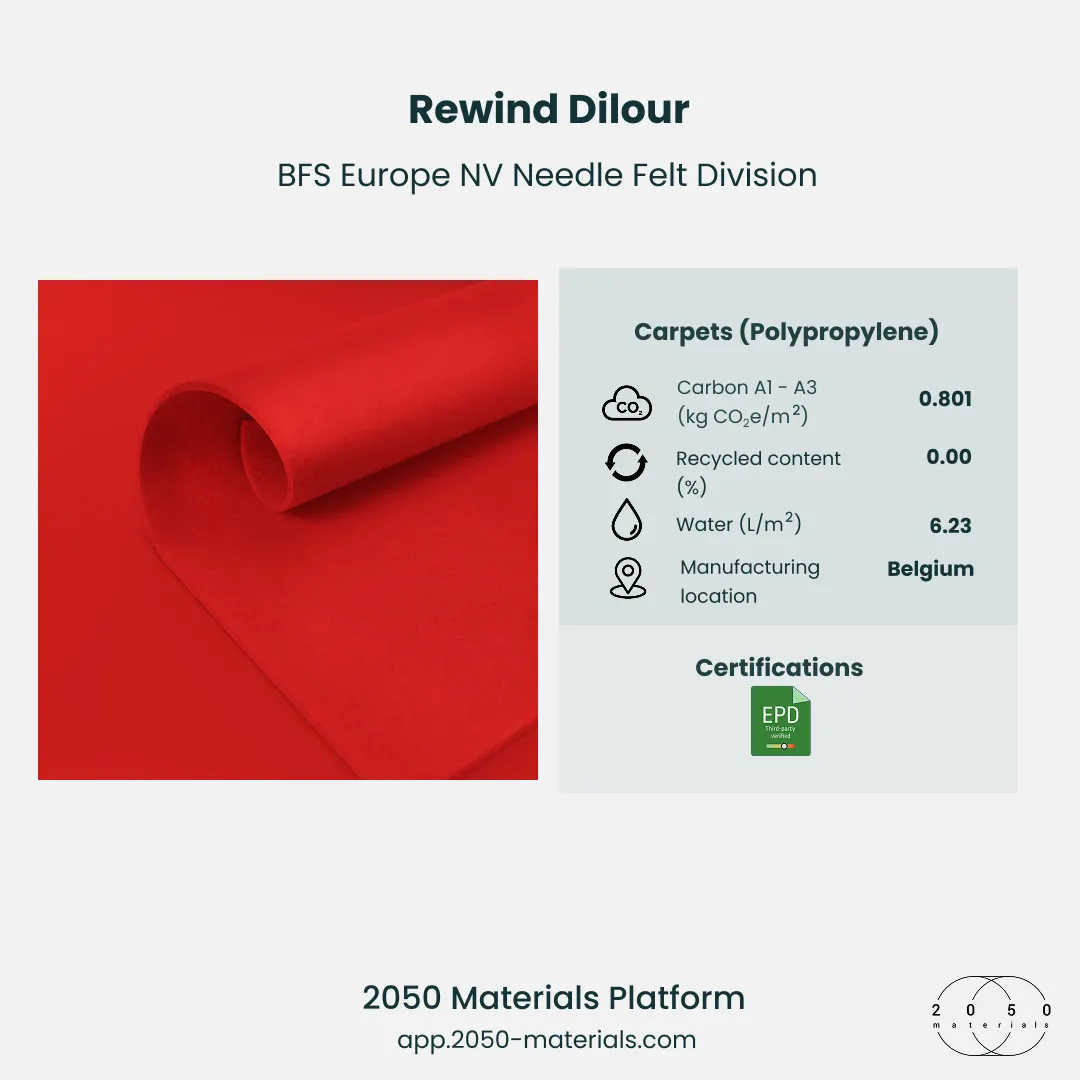
Rewind Dilour, manufactured in Belgium by BFS Europe NV, is an event carpet made entirely from 100% polypropylene (PP) fibers. It’s designed for temporary applications such as exhibitions, conferences, and pop-up installations. The production process is both latex-free and waterless, drastically reducing environmental impact compared to conventional event carpets.
Performance
Rewind Dilour’s low carbon profile is achieved through its minimalist, single-material construction and its no-water, no-latex manufacturing process. This simplifies end-of-life recycling and lowers energy intensity. Backed by an EPD, the product is a leading option in the temporary flooring segment for projects with carbon-conscious targets.
Advantages
- Made from 100% polypropylene fibers
- Manufactured without water or latex
- Easy to recycle after short-term use
- Lightweight and simple to install
- Backed by a certified EPD
Use Cases
- Trade shows and fairs
- Temporary event flooring
- Product exhibitions
- Corporate functions
- Temporary retail fit-outs
Find out more about this product on the 2050 Materials platform.
5. Rewind Flat by BFS Europe NV
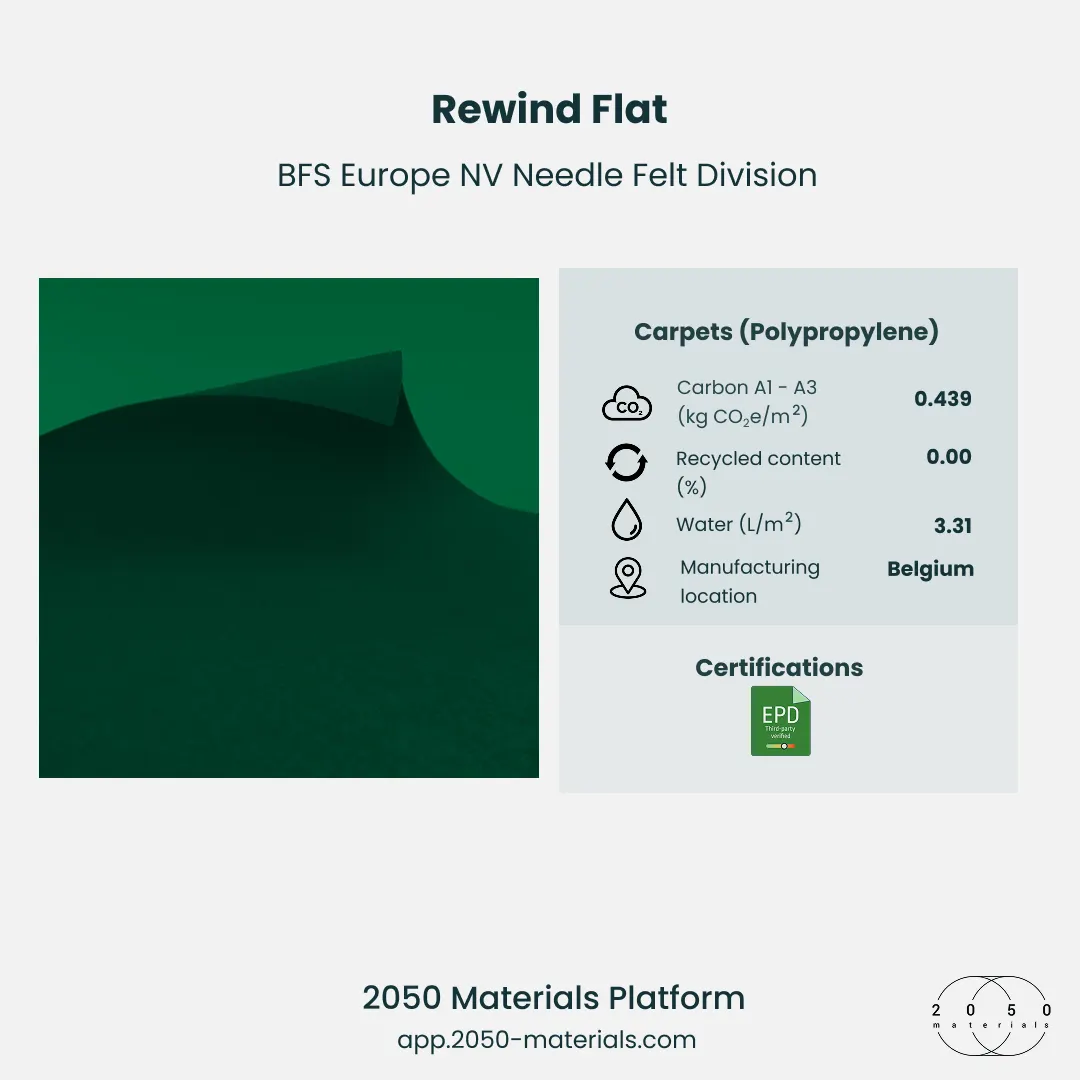
Rewind Flat is a variant of the Rewind product line, also made from 100% polypropylene (PP) and manufactured without the use of water or latex. Produced by BFS Europe NV, this carpet is designed specifically for temporary event flooring with emphasis on recyclability and logistical efficiency.
Performance
Similar to Rewind Dilour, this product’s low carbon footprint stems from its mono-material structure and clean, efficient manufacturing process. Verified with an EPD, Rewind Flat contributes to reduced environmental impact in short-term applications.
Advantages
- Single-material design: 100% polypropylene
- Waterless and latex-free production
- Lightweight for transport and setup
- Fully recyclable post-use
- Supported by an EPD
Use Cases
- Conference and event spaces
- Exhibition flooring
- Temporary interior fit-outs
- Brand activations
- High-turnover flooring needs
Find out more about this product on the 2050 Materials platform.
6. TaskWorx® Carpet Tile by Shaw Contract
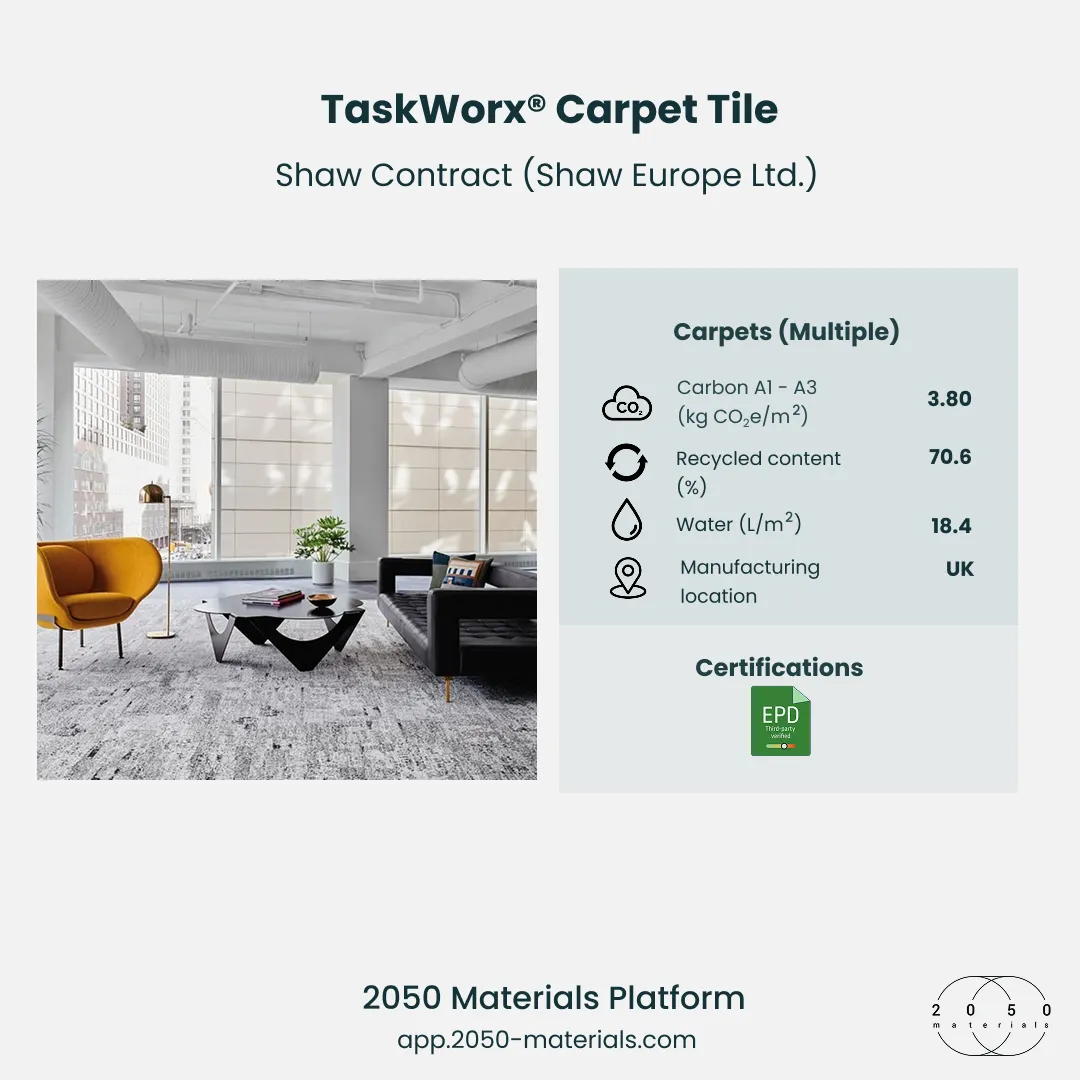
TaskWorx® carpet tiles, by Shaw Contract (Shaw Europe Ltd.), are designed with a 100% recycled Nylon 6 face fiber (EcoSolution Q100™) and the TaskWorx® backing system, which features a modified bitumen base with recycled mineral fillers. It’s intended for high-traffic commercial spaces and aligns with green building standards.
Performance
The product’s strength lies in its material recovery strategy and extended lifecycle performance. Both the face fiber and the backing use significant amounts of recycled content, contributing to lower embodied carbon. The product is verified with a detailed EPD for transparency.
Advantages
- Face fiber: 100% recycled Nylon 6
- Backing: natural recycled filler and textile layer
- Long lifespan for commercial durability
- Modular design allows targeted replacement
- Documented with an EPD
Use Cases
- Office interiors
- Public institutions
- Schools and universities
- Healthcare waiting areas
- Projects targeting LEED or BREEAM
Find out more about this product on the 2050 Materials platform.
7. Kugelgarn Reval® by Fabromont AG
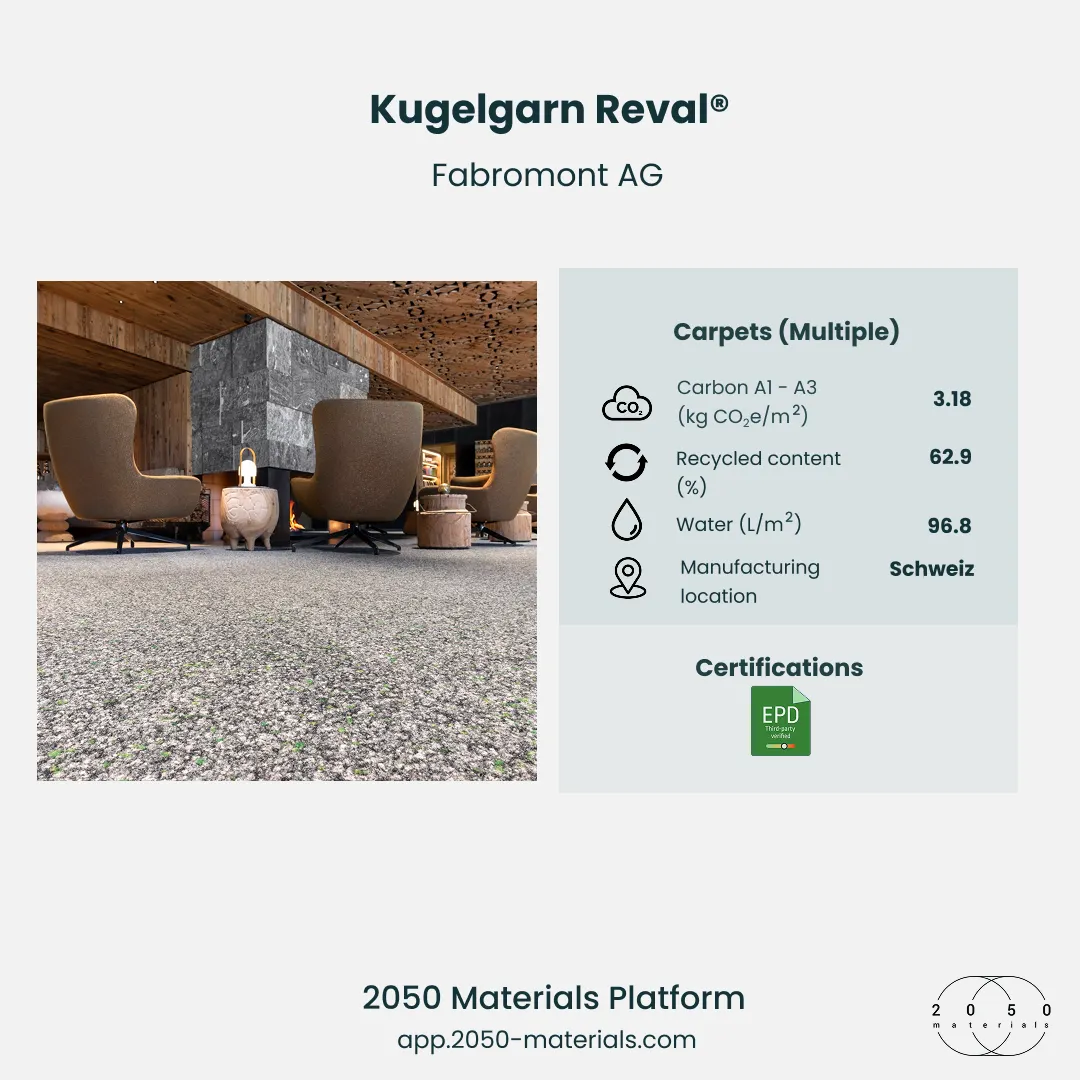
Kugelgarn Reval® is a needle fleece carpet produced by Fabromont AG. It uses spin-dyed, recycled polyamide 6 for the pile layer and features a structured surface of fiber balls, which enhances resilience in heavy-traffic areas. The product has 59% total recycled content and complies with EN 1307 Class 33 for commercial use.
Performance
Kugelgarn Reval® is engineered for longevity and low visual wear in high-traffic zones. The use of recycled, spin-dyed PA6 fibers improves UV resistance and reduces emissions related to dyeing and fiber production. Verified by a Swiss EPD, the product provides performance with measurable impact reduction.
Advantages
- Made with 59% recycled content
- Spin-dyed polyamide 6 pile layer
- Highly durable surface for traffic-heavy zones
- Verified through a Swiss EPD
- Latex backing for stability
Use Cases
- Airports and transport hubs
- Schools and libraries
- Government buildings
- Healthcare corridors
- Museums and public institutions
Find out more about this product on the 2050 Materials platform.
Rethinking Performance Through Material Intelligence
As the construction industry moves toward lower embodied carbon targets, flooring products particularly carpets and textiles, have emerged as impactful intervention points. What was once a high-emission category due to the prevalence of virgin synthetics and complex backings is now evolving through data-backed design and material reuse.
Across the products reviewed, clear trends emerge: the integration of recycled polyamide (PA6) and polypropylene fibers, the use of recyclable or bitumen-free backing systems, and water- and chemical-saving dyeing processes. These choices are not only reducing emissions per square meter but also improving circularity and easing compliance with evolving sustainability benchmarks.
Environmental Product Declarations (EPDs) have played a critical role in validating performance, allowing project teams to compare materials based on actual life cycle impact. As specifications become more data-driven, products with clear carbon advantages and third-party transparency will continue to lead in responsible procurement decisions.
This new generation of carpet and textile products shows that emissions reduction doesn’t require sacrificing quality or design intent. Instead, it demands smarter material choices, lifecycle thinking, and a commitment to performance beyond the surface.
Discover the full collection and compare products on the 2050 Materials Platform.
Related articles
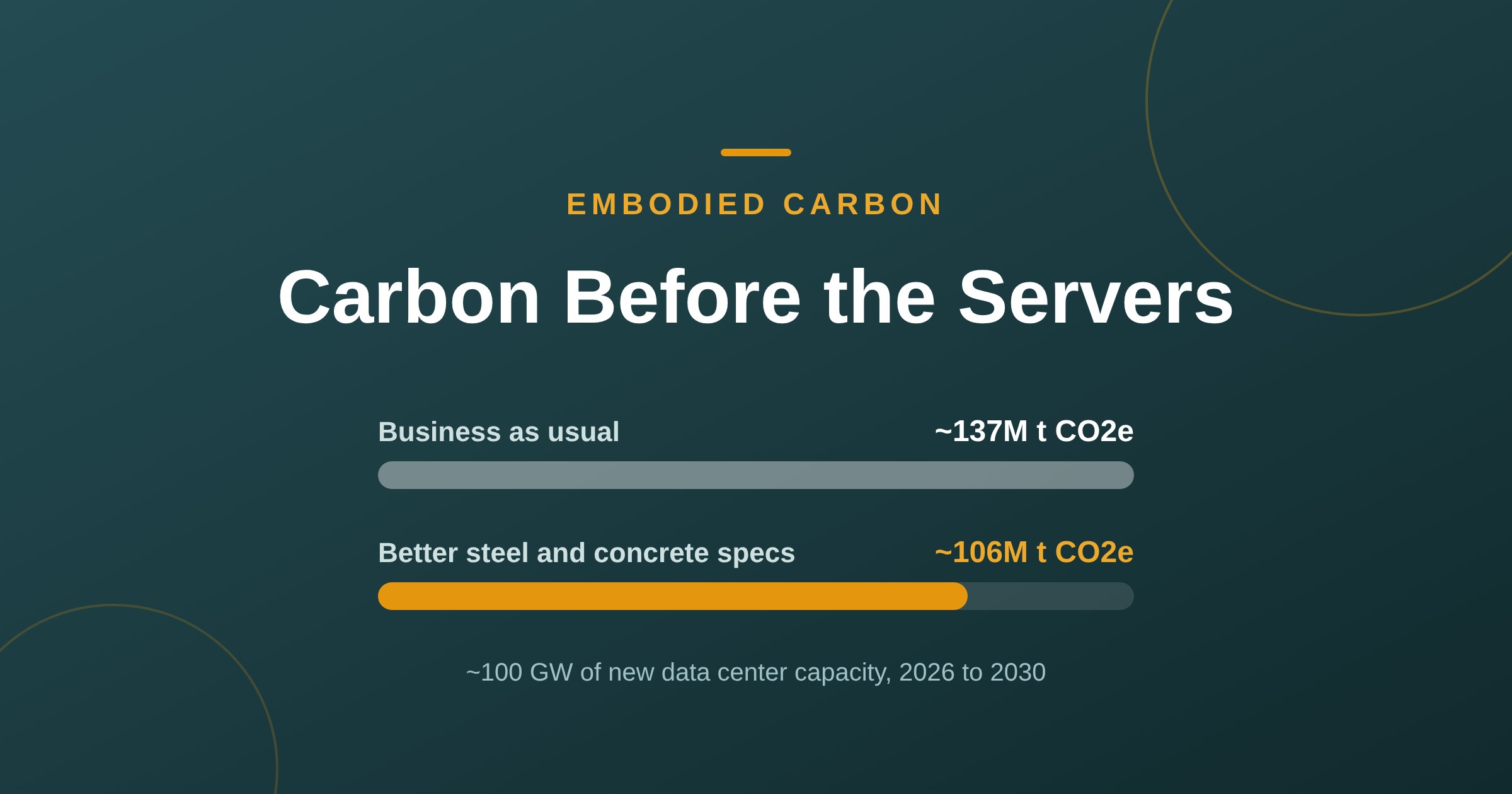
Data Centers’ Hidden 137M-Tonne Carbon Bill
New data centers could lock in ~137M tonnes of CO2e before a single server switches on. GGBS concrete and recycled steel could cut about 31M of it.
Read more
Built to Beat the Heat
This summer's drought wasn't a fluke, it was a preview. Here's the material data that actually decides whether a building shrugs off a heatwave or quietly cooks behind a great winter U value: decrement delay, solar reflectance, SHGC, and the real products behind each one.
Read more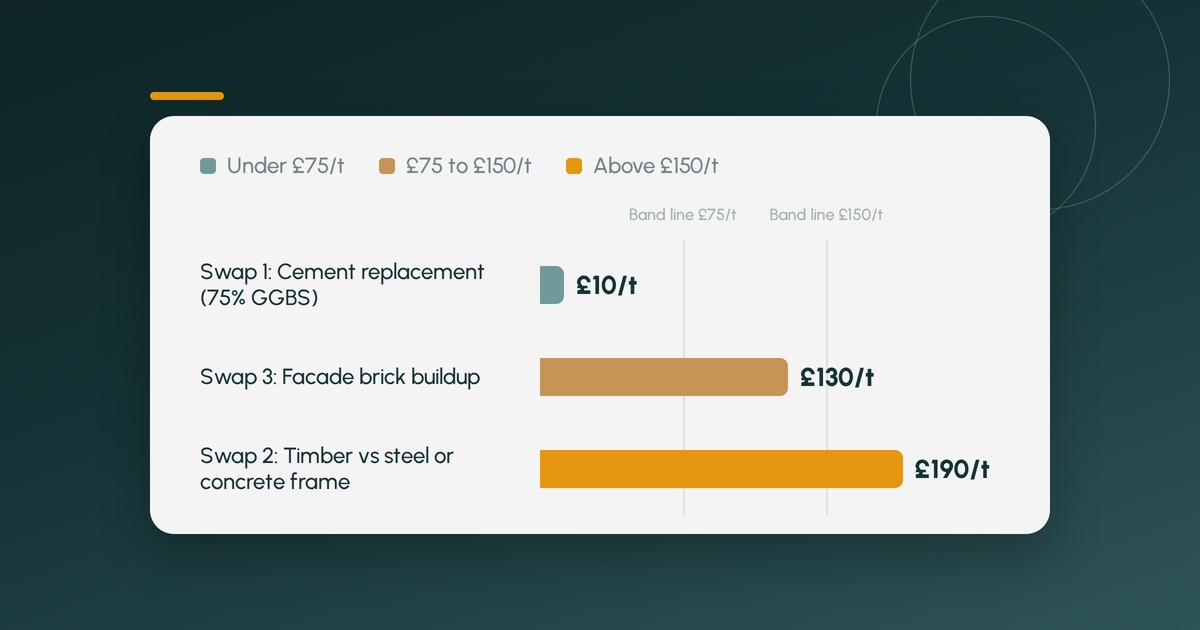
The Cost per Tonne Test for Embodied Carbon Swaps
Not every embodied carbon cut is worth paying for. Test any swap on cost per tonne of CO2e, see which band it falls in, and try the free calculator.
Read more