Sustainable Materials: Building a New Economy
The Times They Are A-Changin
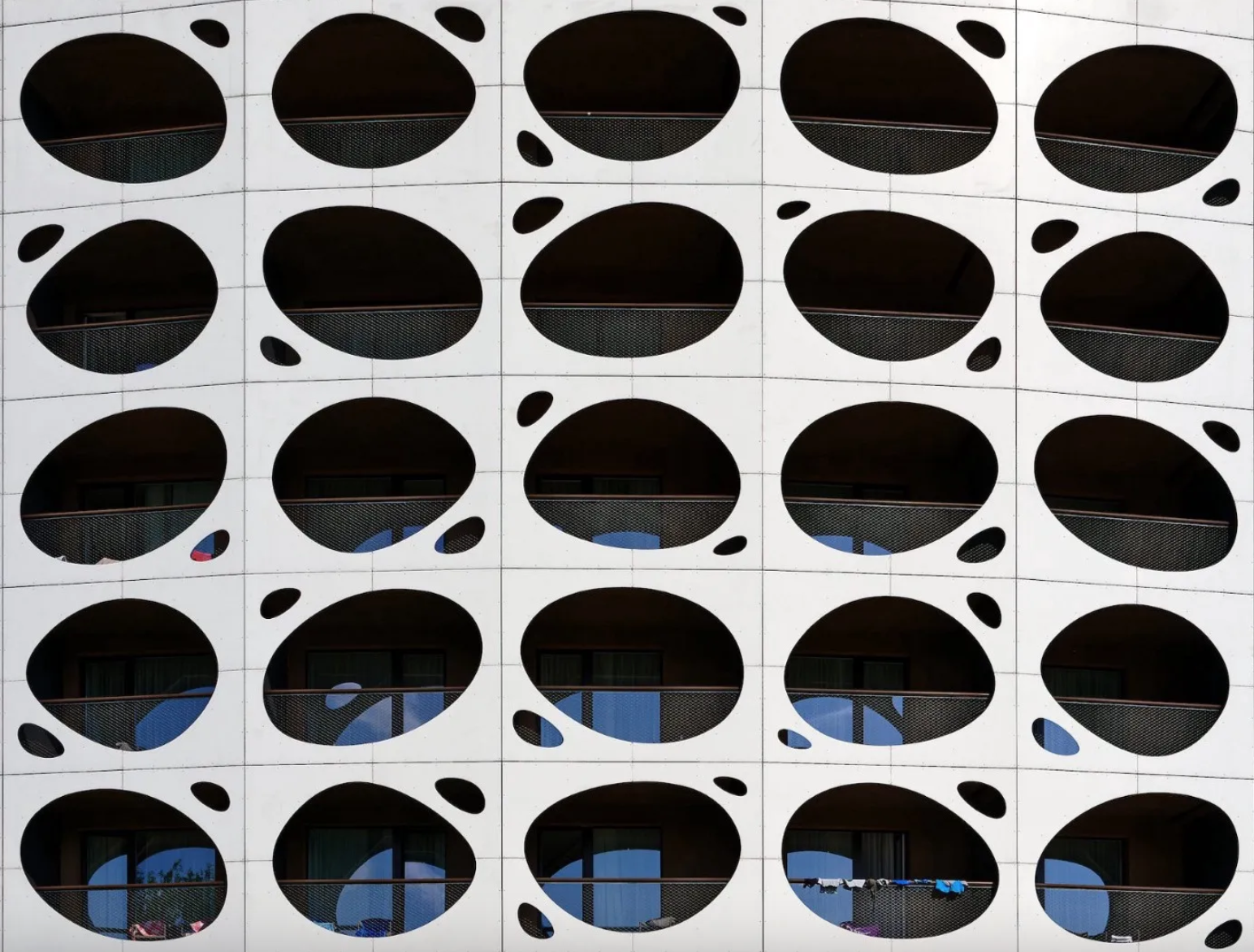
The most cutting-edge structures are being constructed with the most basic building materials available. Architects have changed their focus to better create built environments for people and the planet in response to an environmental crisis. The outcomes frequently appear to be “green-washed,” ignoring the underlying causes of ecological hardship. The goal of environmentally conscious architecture must be to revolutionize both the built environment and how people use it, rather than to undo the effects of the ecological catastrophe.
 A transition that will be a philosophical, moral, technological, and political leap into a future of environmental resilience is predicted in essays from the book The Art of Earth Architecture: Past, Present, Future.

Lot’s of Work To Do
The repercussions of the industrial revolution are still being felt in the building business, giving the impression that it is stuck in the past. Industrialized building materials are nevertheless employed excessively in society, frequently under the guise of reason, which contributes to climate change. Environmental contamination is a result of industrial material production. Even if they are touted as sustainable, certain materials take a lot of energy to produce or maintain. The environmental impact of waste creation, which varies among building materials, can be significant.

Source: RESET Embodied Carbon and Circularity in Office Interiors: Part 1
Natural isn’t Always Healthy
Industrial materials and the techniques used in their production pose a threat to public health as well. Even “natural” materials could be intrinsically dangerous to employ. A naturally occurring mineral known as asbestos is a known carcinogen and has been linked to thousands of fatalities worldwide. Throughout all stages of the building life cycle, from construction and use to demolition and disposal, building materials have an impact on people’s health. Unfortunately, the majority of building materials that contain dangerous chemicals are affordable, adaptable, and simple to use. The usage of such materials is supported by the industry’s heavy subsidies. If you want to find out more about the health impacts of building materials, check out this article.
We’re Here to Help
This is why 2050 Materials exist, to guide architects and designers through the most sustainable and beautiful materials for a better environment.
The core of all work at 2050 Materials revolves around these problems and their mitigation. The starting point to sustainable and healthy material selection is the availability of data.
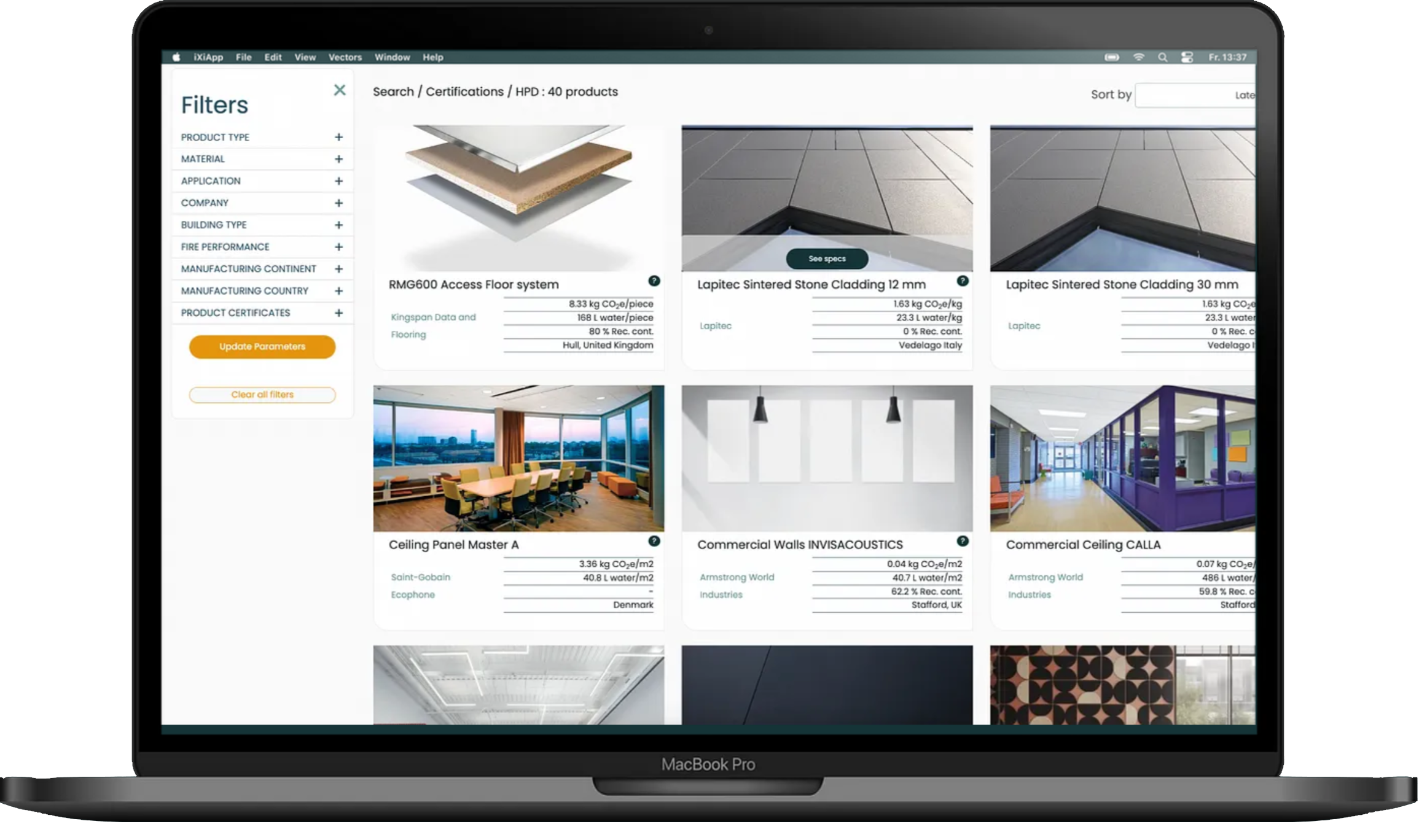
With the tools for evaluation and an extensive product library, 2050 Materials democratises these kinds of assessments for the sector. It aims to inform designers, architects, and builders about the importance of using healthy materials in the first place.

Related articles
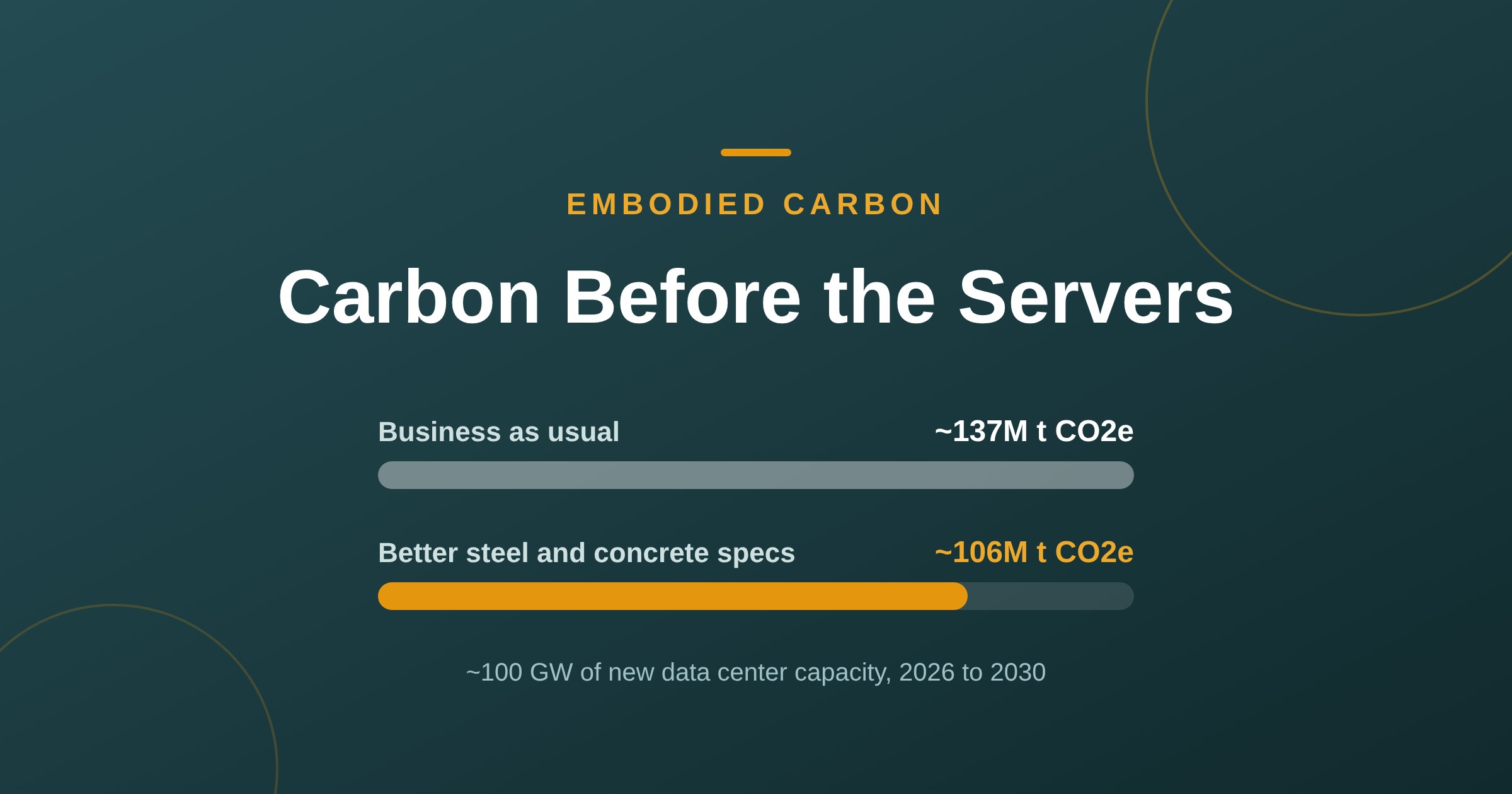
Data Centers’ Hidden 137M-Tonne Carbon Bill
New data centers could lock in ~137M tonnes of CO2e before a single server switches on. GGBS concrete and recycled steel could cut about 31M of it.
Read more
Built to Beat the Heat
This summer's drought wasn't a fluke, it was a preview. Here's the material data that actually decides whether a building shrugs off a heatwave or quietly cooks behind a great winter U value: decrement delay, solar reflectance, SHGC, and the real products behind each one.
Read more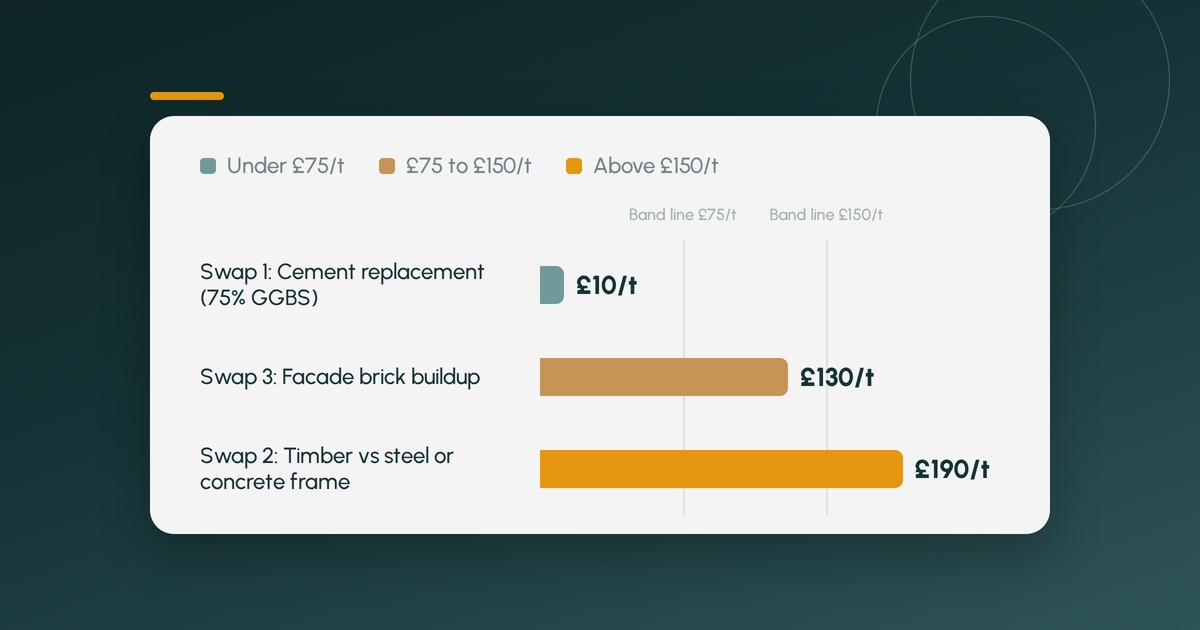
The Cost per Tonne Test for Embodied Carbon Swaps
Not every embodied carbon cut is worth paying for. Test any swap on cost per tonne of CO2e, see which band it falls in, and try the free calculator.
Read more