Darney Sandstone: Measurable Carbon Savings
A small footprint can still deliver big performance gains, especially when material choices are made early and intentionally.
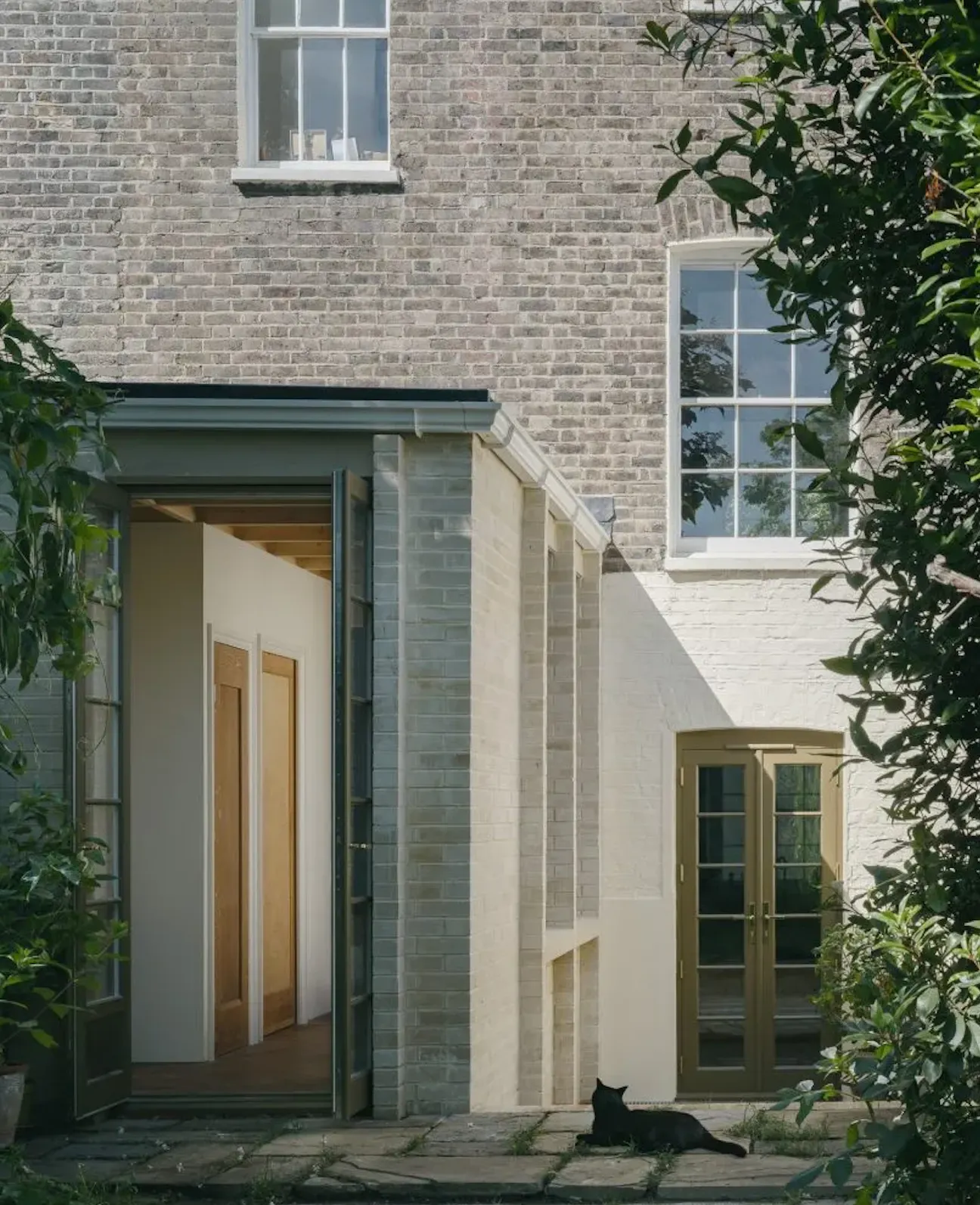
Completed in June 2025, this 7 sqm lower-ground extension to a Grade II-listed Georgian terrace in Mile End, London shows how natural stone brick can significantly reduce embodied carbon while expanding design possibilities. Designed by Studio Folk with Charlotte Moore Studio, the project uses Darney Heritage Sandstone brick by Hutton Stone consistently across the exterior.
A single material, used consistently
The extension replaces a smaller structure on the same footprint, introducing new lower-ground facilities including a utility room, WC and cloakroom, alongside a full refurbishment of the basement level. A new external stair improves access, while a sunken patio brings daylight deep into the plan and creates a more direct connection between house and garden.
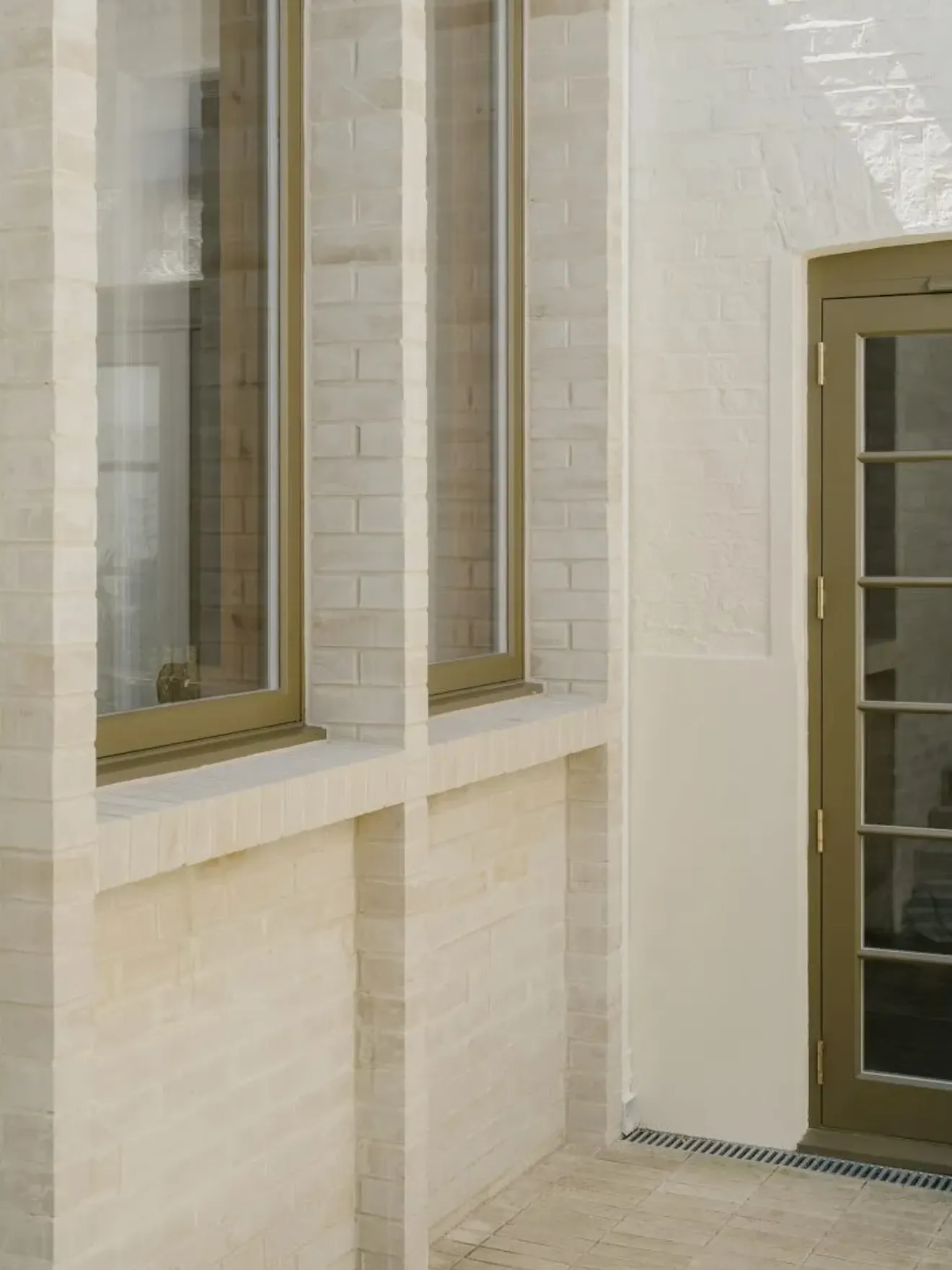
Darney Heritage Sandstone brick was used across walls, pilasters and lintels, extending seamlessly into the steps and landscaping. This consistent application allowed the façade, outdoor space and architectural detailing to read as a single, unified intervention, a quality that is harder to achieve with mixed material palettes.
Designed for longevity and adaptability
Squared pilasters and lintels were detailed to allow in-situ carving at later stages, an approach inspired by historic cathedral construction where ornamentation evolves over time. Studio Folk is collaborating with stone sculptor Edgar Ward to develop bespoke relief carvings for future phases, extending the building’s life cycle rather than locking it into a fixed aesthetic.
Internally, an exposed structural timber frame introduces warmth to the compact plan and complements the vertical rhythm of the existing terrace. Changes in level, generous ceiling heights and enlarged openings help the extension feel larger than its footprint, framing views through to the garden from the front door.
Quantifying the carbon impact
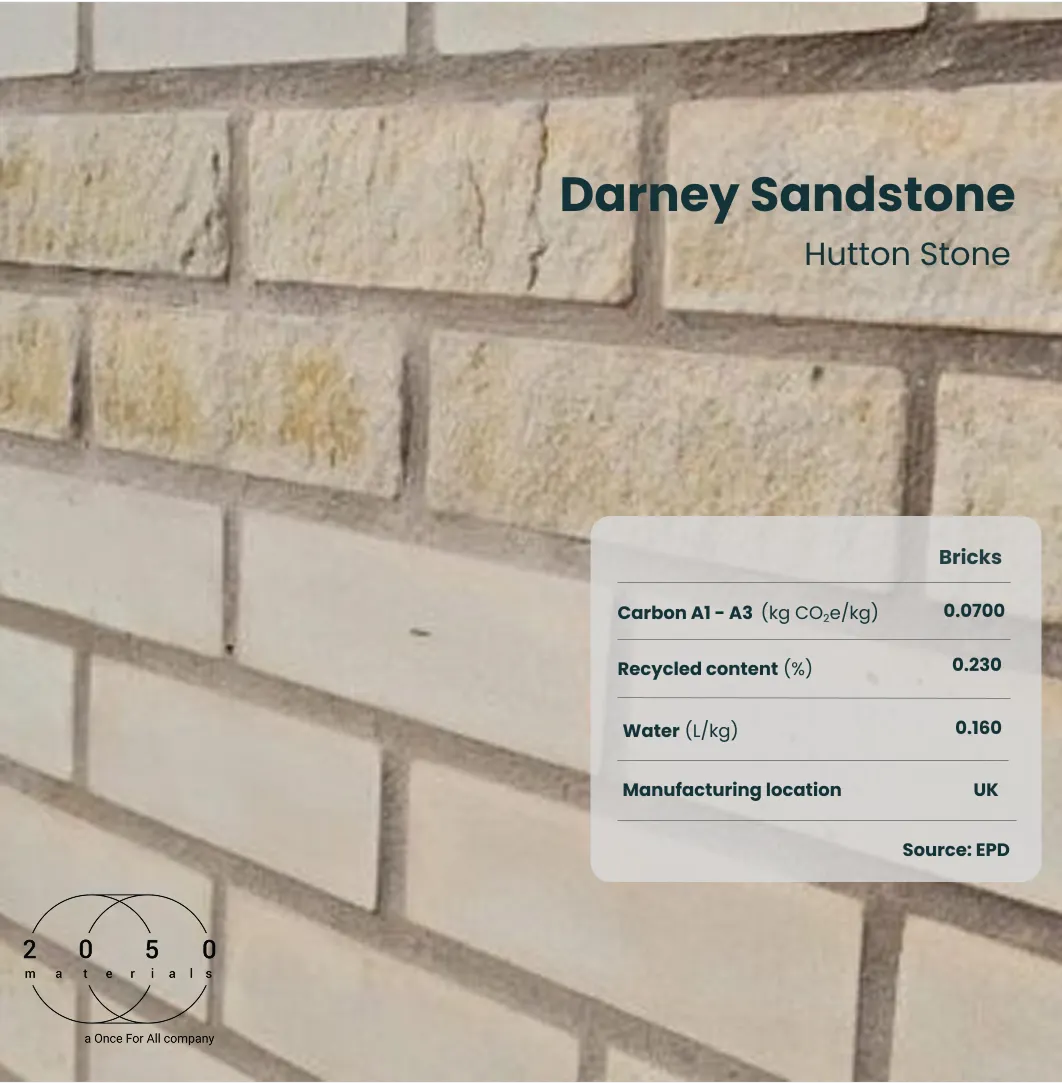
Crucially, the material decision delivered clear environmental benefits. Studio Folk calculated that switching from fired clay brick to natural stone reduced embodied carbon by at least 75%.
 We proposed Hutton Stone’s Darney brick early in the design process, aligned with our shared ambition with the client to minimise embodied carbon and prioritise natural materials.
— Edward Powe, Managing Director, Studio Folk
We proposed Hutton Stone’s Darney brick early in the design process, aligned with our shared ambition with the client to minimise embodied carbon and prioritise natural materials.
— Edward Powe, Managing Director, Studio Folk
While construction methods were comparable to clay brickwork, stone required slightly greater care during storage and handling, a manageable trade-off given the performance gains.
A scalable alternative to clay brick
Fired clay bricks remain the UK’s dominant construction material, with billions produced annually and associated emissions in the millions of tonnes of CO₂e. By contrast, locally sourced stone benefits from shorter supply chains, lower transport emissions, and minimal processing particularly when specified as structural or facing brick rather than decorative cladding.
This project demonstrates that stone brickwork is not limited to large civic buildings or heritage restorations. It can be practically specified on small-scale residential projects, offering both architectural flexibility and measurable carbon reductions.
Studio Folk now specifies stone brick as its default external material, a shift that reflects growing confidence in natural stone as a low-carbon, future-proof alternative for contemporary construction.
Verified Data for Low-Carbon Specification
At 2050 Materials, we partner with manufacturers like Hutton Stone because their products combine material performance with verified environmental transparency. Hutton Stone provides Pre Verified Environmental Product Declarations that enable designers and specifiers to assess embodied carbon and other key metrics with confidence.
Visit our platform and discover the full range of products by Hutton Stone.
Related articles
e4E Brick Slips: All the Brick, None of the Kiln
e4E makes brick slips from excavated soil, pressed rather than fired. See how they are made, the formats you can specify and the verified EPDs behind the range.
Read more
CaraGreen’s Organoid Wildspitze: A Wallcovering Grown, Not Manufactured
CaraGreen's Organoid Wildspitze is a wallcovering made from hand cut alpine hay, backed by a third party verified EPD showing 2.2 kg CO2e/m² GWP and stored biogenic carbon.
Read more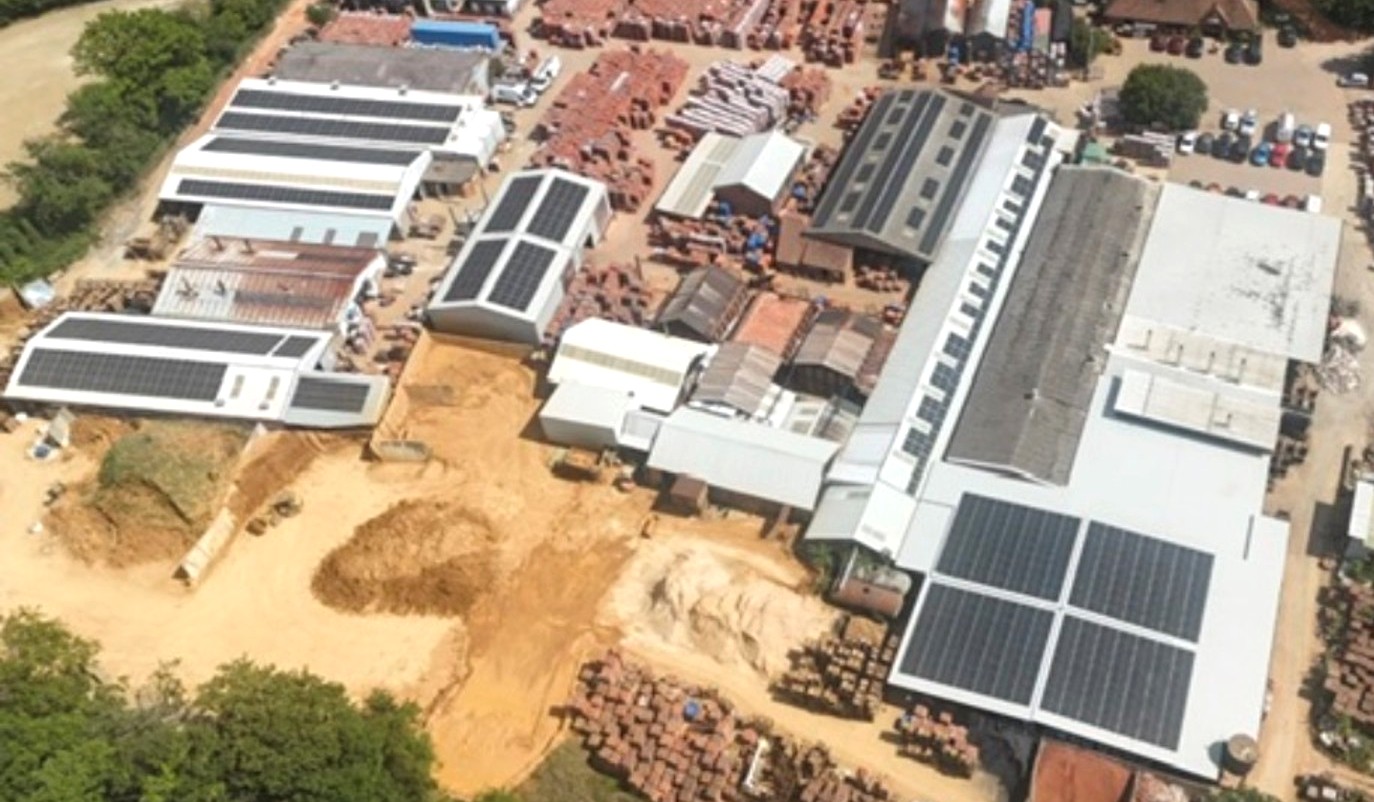
H.G. Matthews: Beyond the EPD
H.G. Matthews' new solar-biomass energy system at The Brickworks, Bellingdon is cutting diesel use and lowering embodied carbon, the latest step in a track record of measurable, verified environmental improvement backed by published EPDs.
Read more