The Resilient Cork Collection: 10 Cork Products Worth Knowing
Cork has a strange resume for a construction material. It never asks a tree to die for it. The bark is stripped from Quercus suber every nine years or so, and the tree just grows another coat. What is left behind is light, naturally water and fire resistant, and riddled with millions of tiny air filled cells, which is why it has been quietly excellent at insulating things, wine bottles, shoe soles, spacecraft heat shields, for a very long time.
Construction is only the latest chapter. Because the raw material keeps growing back rather than getting felled, many cork based products can show a genuine biogenic carbon benefit on their EPDs: carbon locked into the bark during its working life, sitting alongside the more familiar fossil footprint of processing, binders, and transport. The result is a category where low carbon is not just a marketing phrase. It shows up in the data.
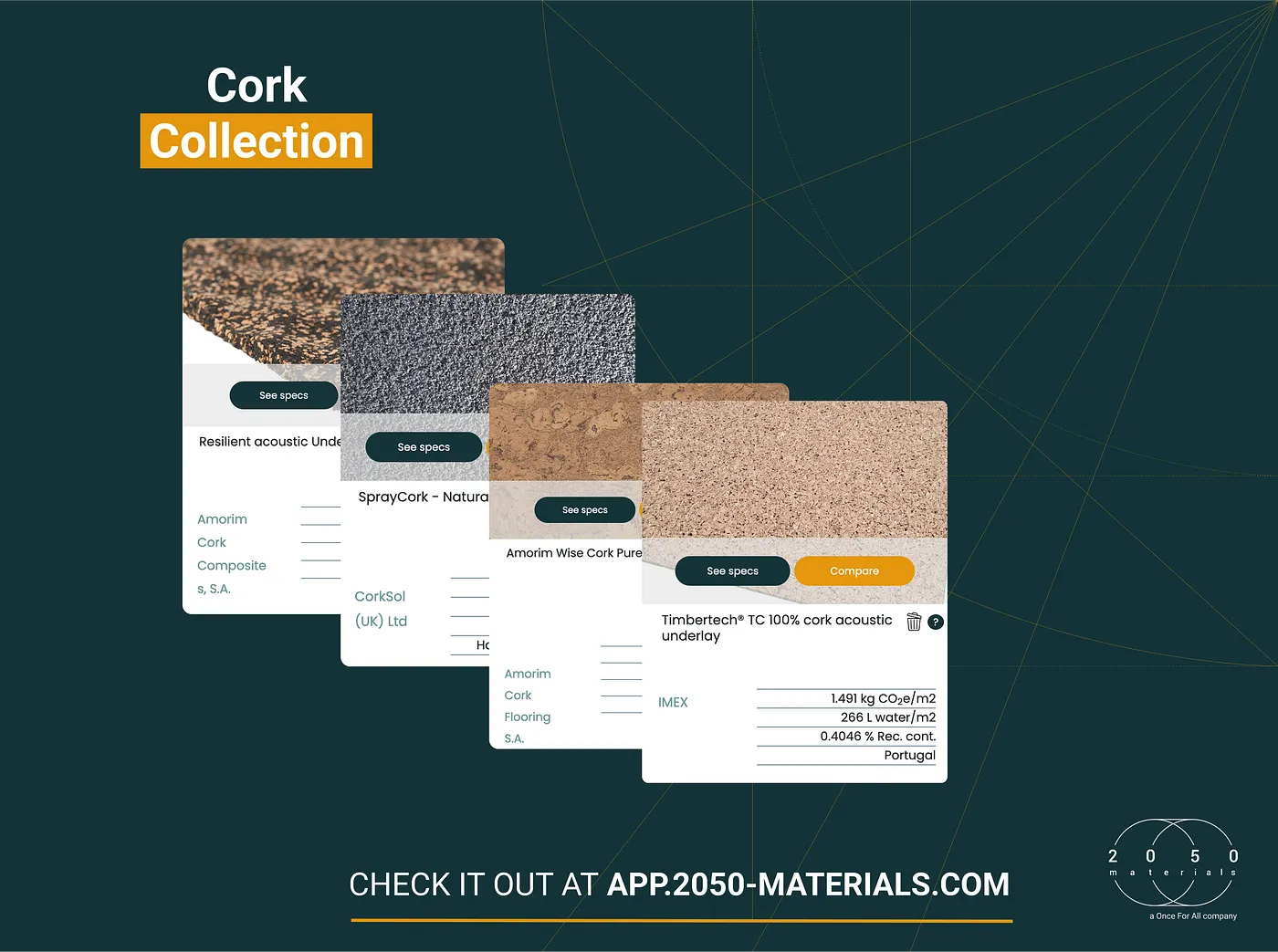
This collection features ten cork products live on the 2050 Materials Platform: underlays, prefinished floors, lightweight mortars, acoustic panels, a sprayed coating, and a resilient underscreed, made by long standing cork specialists alongside manufacturers building cork into products of their own. One raw material, six very different jobs.
1. Agglomerated Cork Rolls by SEDACOR
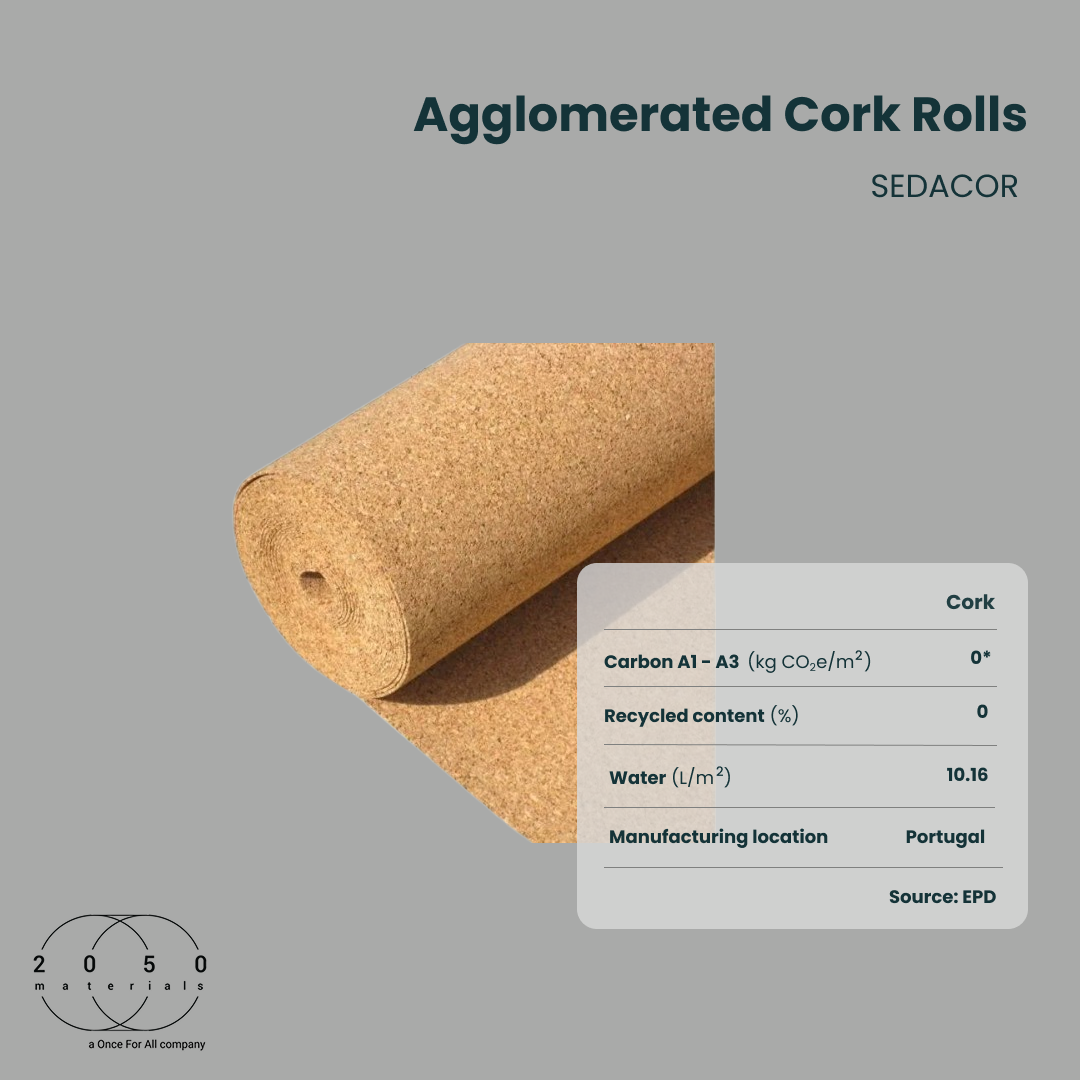
Made by SEDACOR, based in São Paio de Oleiros, Portugal, part of the JPS Cork Group.
Roll it out, forget it exists. That is the whole job description for this underlayment, which sits quietly between a structural floor and whatever floating floor goes on top, absorbing impact noise and doing it without a single synthetic input. Its EPD lands net negative, meaning the carbon stored in the bark outweighs what the manufacturing releases.
Why it is interesting
• EPD verified carbon footprint that lands net negative
• Anti static and hypoallergenic, a friendly surface for sensitive interiors
• Low water use in production
• Long estimated service life for a product you will never see again
Use cases
• Beneath floating floor systems
• Residential and light commercial buildups
• Anywhere impact noise between storeys is a concern
2. Amorim Wise Cork Pure PU PF by Amorim Cork Flooring
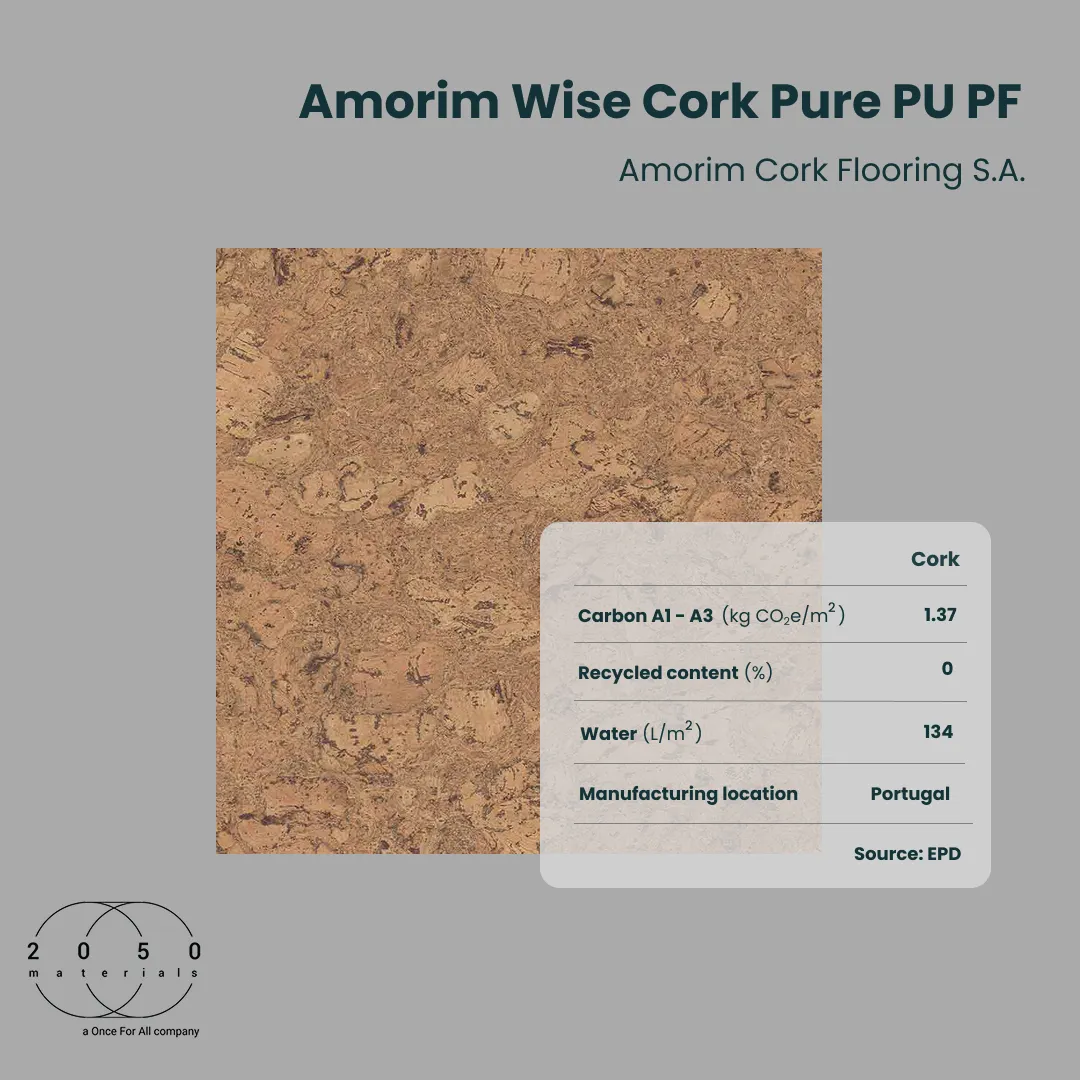
Made by Amorim Cork Flooring, based in São Paio de Oleiros, Portugal, part of Corticeira Amorim.
A genuine cork veneer under a polyurethane finish, built for the rooms people actually spend time in. It looks like a natural floor because it is one, and it behaves like a durable one because of what is laminated on top. The EPD tells a two part carbon story: a real manufacturing footprint, with a meaningful chunk of it offset by biogenic carbon stored in the cork.
Why it is interesting
• Genuine cork veneer, not a printed lookalike
• Biogenic carbon storage documented alongside standard EPD reporting
• Fire performance rated for residential use
• Thermal and acoustic comfort baked in, no extra underlay required
Use cases
• Living areas and bedrooms
• Renovation projects wanting a natural material finish
• Anywhere underfoot warmth matters as much as looks
3. Amorim Wise Cork Pure UV by Amorim Cork Flooring
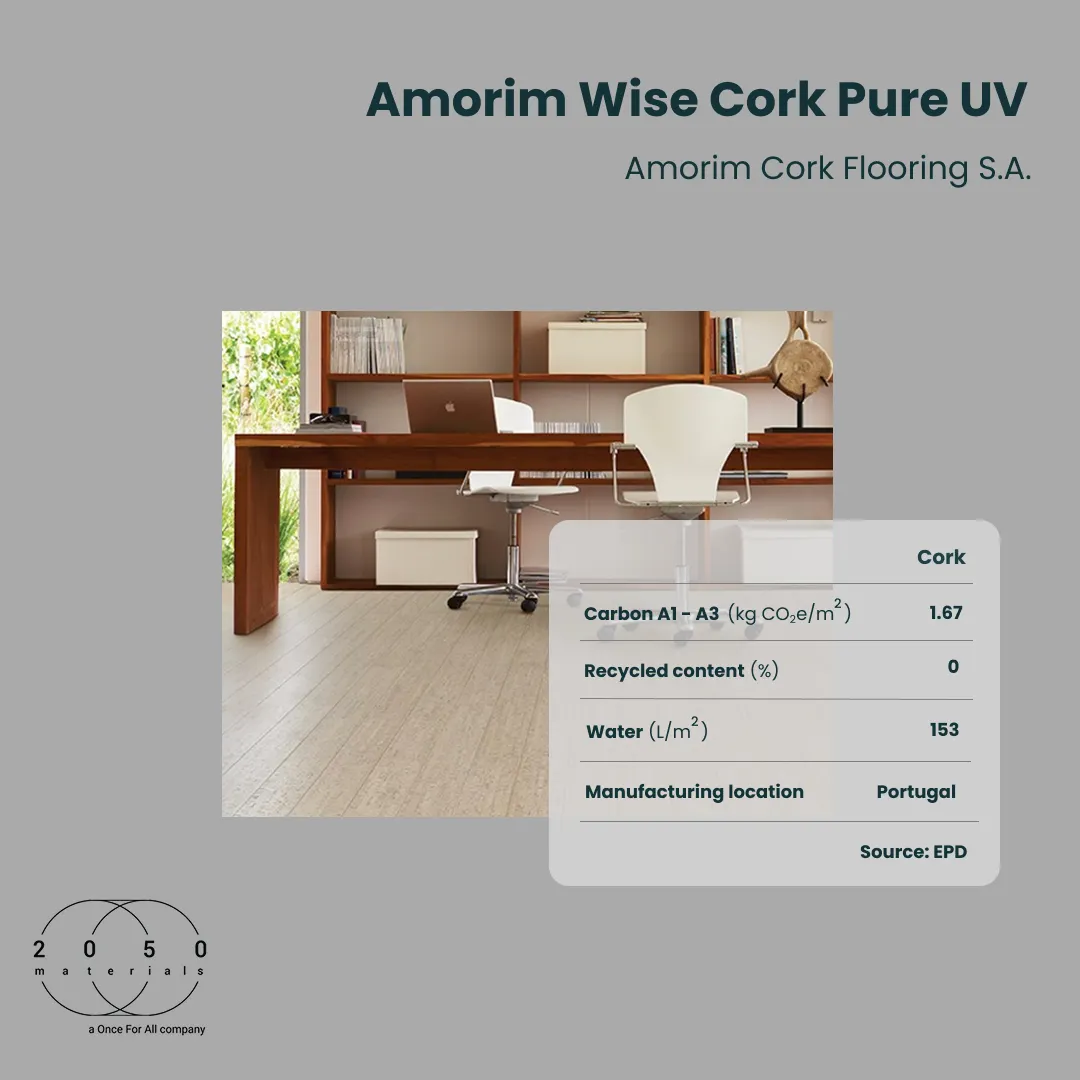
Made by Amorim Cork Flooring, based in based in São Paio de Oleiros, Portugal.
Genuine cork veneer finished with a UV cured varnish, built to shrug off office and retail foot traffic. It is a neat demonstration of how cork can be tuned for a demanding service life just by changing what sits on top of it: the finish takes the wear, and the natural comfort of the cork underneath stays exactly as it is.
Why it is interesting
• UV finish engineered for higher traffic environments
• Fire performance rated for commercial use
• Independently verified environmental data
• Retains cork’s natural acoustic dampening
Use cases
• Offices and retail interiors
• Commercial floors with heavy daily foot traffic
• Spaces where acoustic comfort is a spec requirement
4. BECORK FLOOR by Seciltek
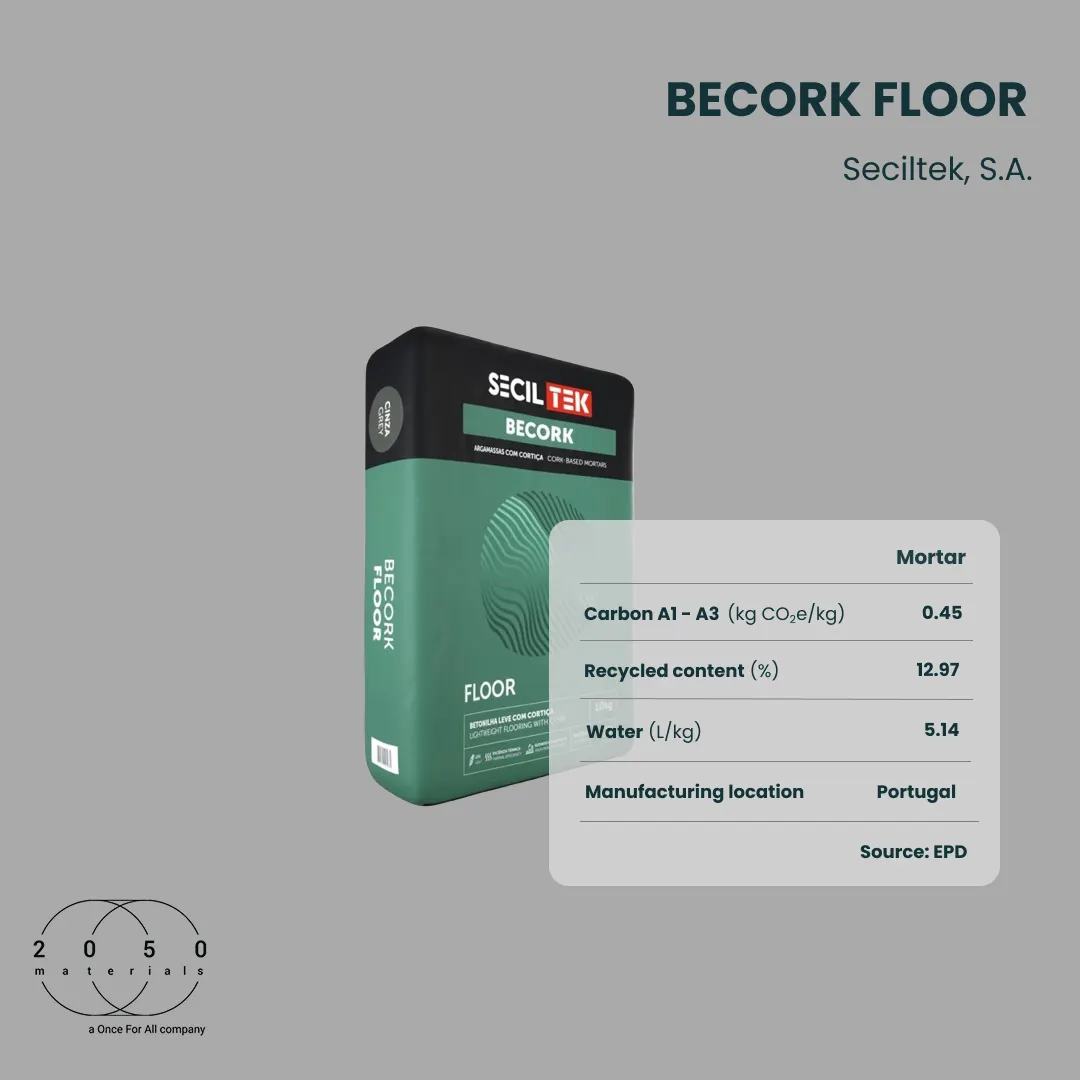
Made by Seciltek, based in Leiria, Portugal.
Not every cork product wants to be seen. This one gets buried. It is a lightweight levelling and filling screed, mixed with cork and calcareous aggregates, that sits under ceramic or wood floors doing the unglamorous work of making everything above it flat and quiet. Its EPD records a substantial store of biogenic carbon in the cork, and there is real recycled content built into the mix.
Why it is interesting
• Cork aggregate brings thermal and acoustic performance to a levelling layer
• Lightweight formulation keeps loading down on the structure
• Meaningful recycled content designed into the mix
• Suitable both indoors and outdoors
Use cases
• Levelling ahead of tile or timber flooring
• Renovations needing a lightweight floor buildup
• New builds targeting better acoustic separation between floors
5. BECORK RENDER by Seciltek
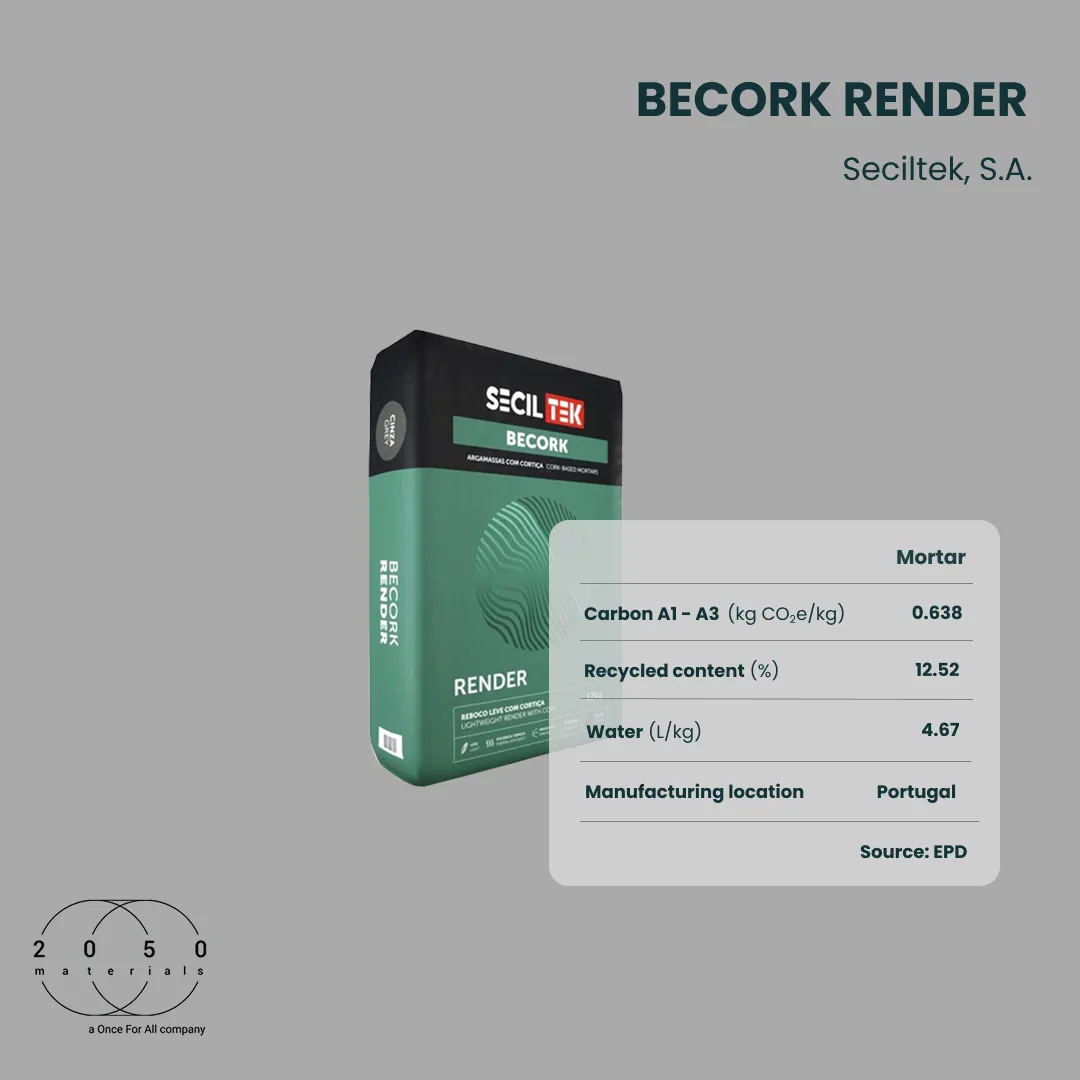
Made by Seciltek, based in Leiria, Portugal.
The facade version of the same idea: a hydraulic binder render mortar with cork standing in for some of the usual aggregate, built to the standard rendering and plastering rules so it is a straight swap rather than a specification headache. It is also remarkably frugal on water in production, which matters more than it sounds like once you are mixing at scale.
Why it is interesting
• Cork aggregate lifts thermal and acoustic performance of rendered facades
• Compliant with standard rendering and plastering mortar rules
• Low water use in production
• Lightweight mix keeps dead load down on substrates
Use cases
• Exterior render systems on masonry facades
• Retrofit insulation upgrades where added weight is a constraint
• Projects wanting a standard compliant, lower carbon binder system
6. GENCORK Acoustic Wall Panel by Gencork
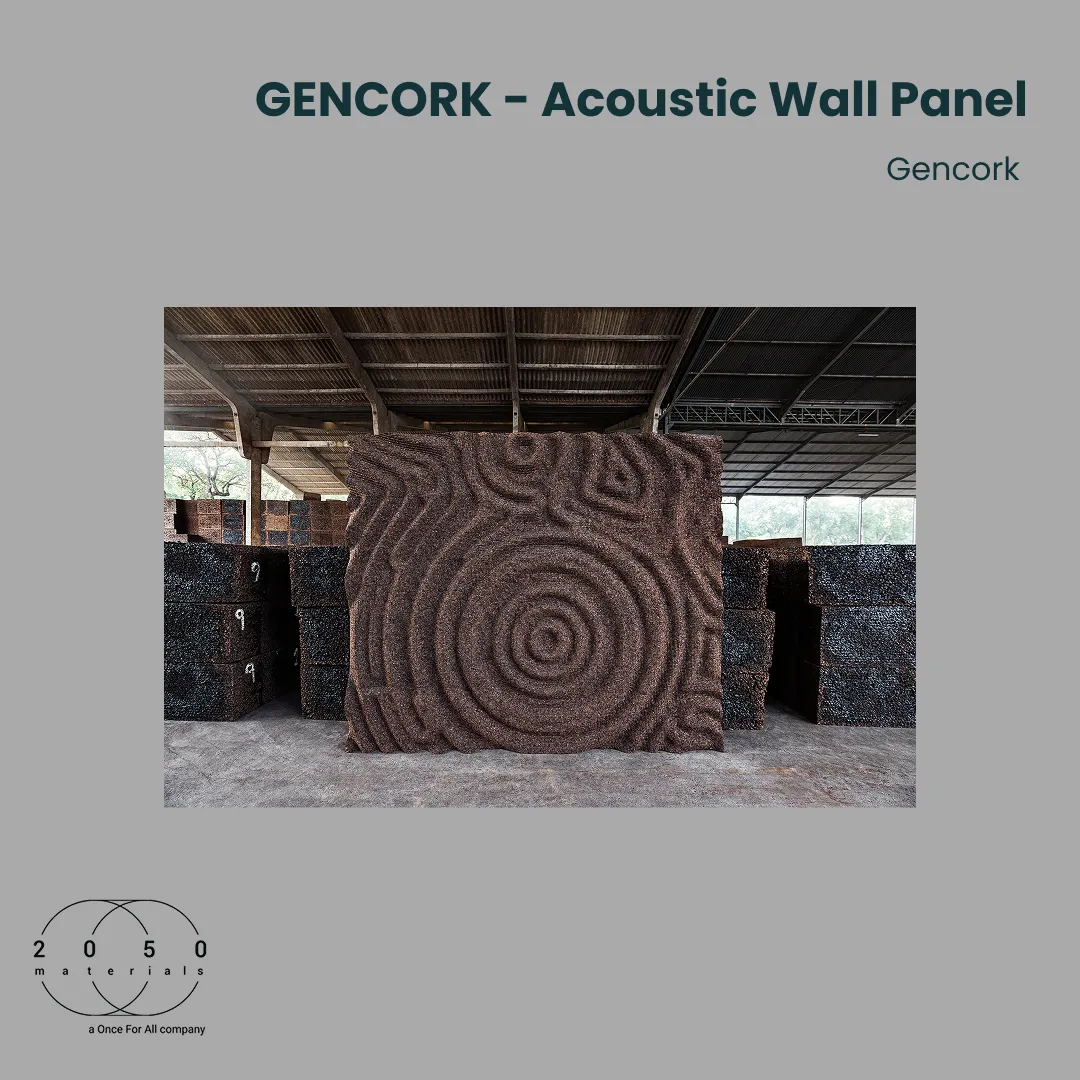
Made by Gencork, based in Portugal.
This is the one built for showing off. Gencork runs cork panel fabrication through a computational design process, generating a family of rippled, patterned surfaces from a single material system, part acoustic treatment, part feature wall. It is cork used as a design language rather than a hidden layer, and it shows how far the material can travel once digital fabrication gets involved.
Why it is interesting
• Computational design generates varied patterns from one material system
• Cork’s natural acoustic absorption in a genuinely design led format
• A digitally fabricated use of cork beyond flooring and insulation
• Surface pattern can be tailored to the space it goes into
Use cases
• Feature acoustic walls in offices, hospitality, and cultural spaces
• Projects where pattern and visual design carry equal weight to performance
7. Resilient Acoustic Underscreed U85 [4/2] by Amorim Cork Composites
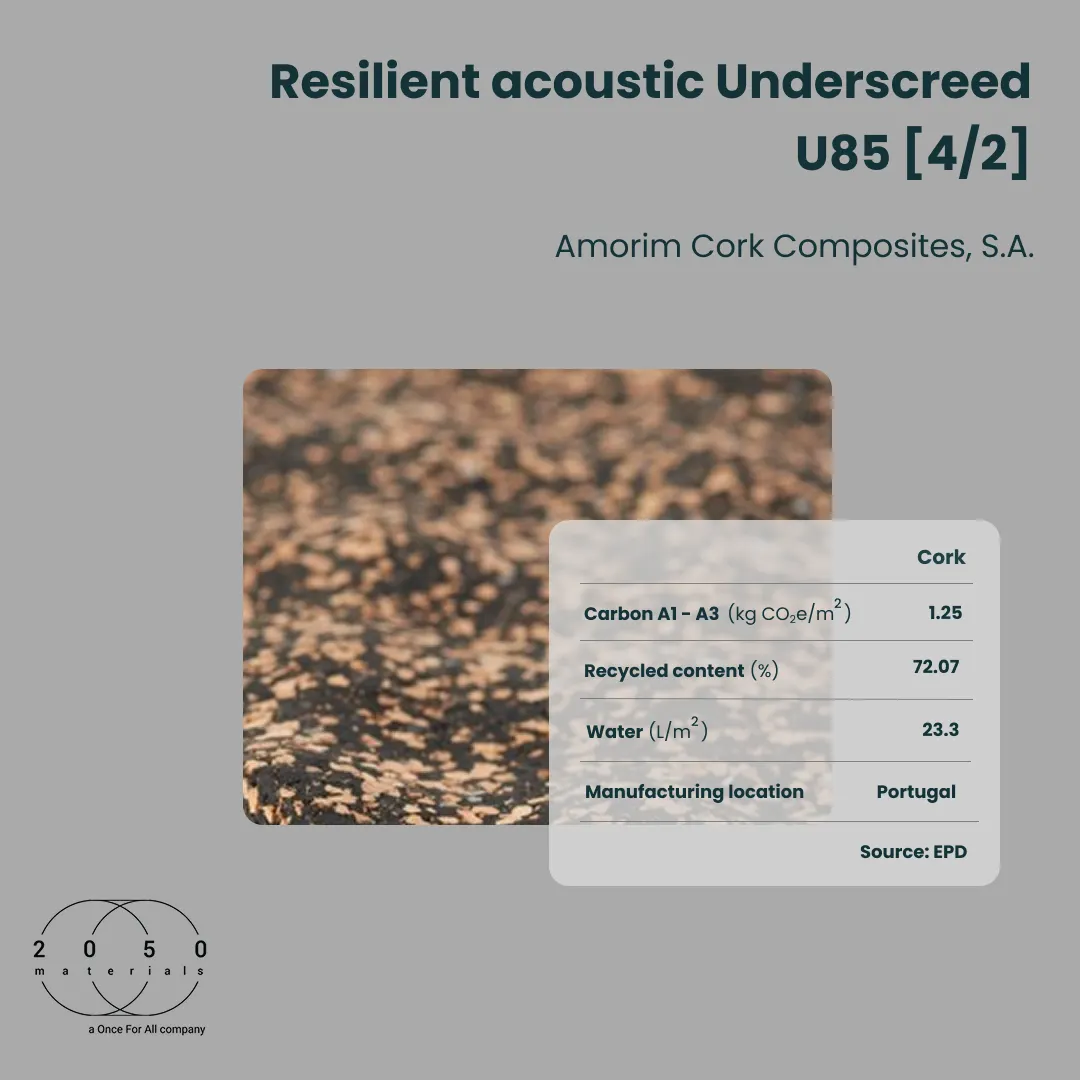
Made by Amorim Cork Composites, based in Mozelos, Portugal.
Agglomerated natural cork blended with recycled polyurethane foam and recycled rubber, installed between slab and screed purely to stop impact noise from becoming everyone’s problem. Three material streams, two of them recovered waste and one of them carbon storing, add up to a recycled content figure that does most of the talking.
Why it is interesting
• High recycled content, combining three waste and bio based streams
• Purpose built to cut percussion and impact noise between floors
• Independently verified environmental data
• A genuinely circular use of pre and post consumer waste alongside virgin cork
Use cases
• Acoustic underscreed layers in multi storey residential and mixed use buildings
• Renovations targeting better impact noise ratings
• Specs prioritising recycled content alongside verified carbon data
8. Sahara Wall Panel by Abstracta
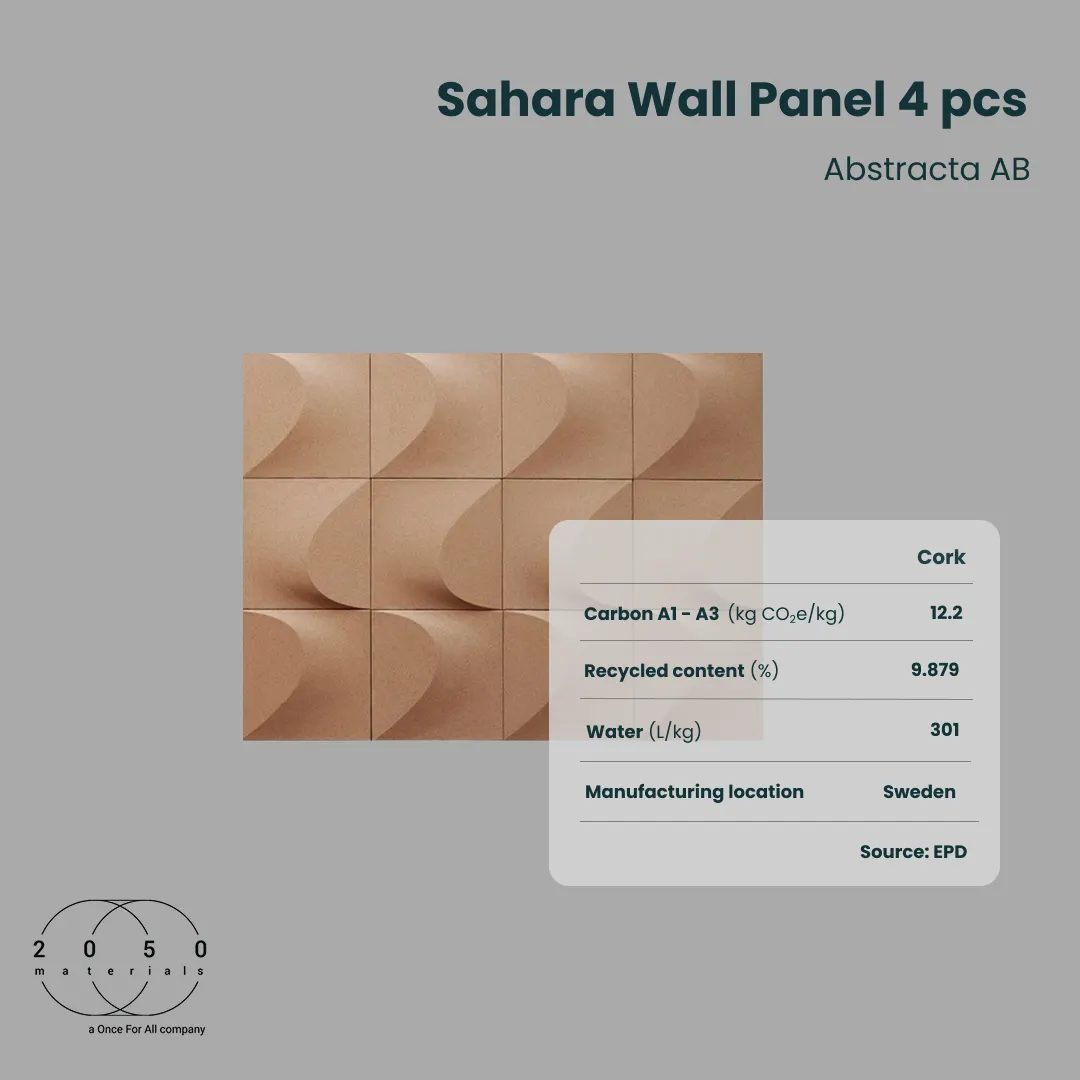
Made by Abstracta AB, based in Lammhult, Sweden, designed by Gabriel Tan.
Wine cork production leaves waste behind, and this panel is what a Portuguese factory’s offcuts look like after a Swedish designer gets involved: a sculpted, dune like surface that doubles as sound diffusion and reads as art. Its EPD records a healthy store of biogenic carbon in the cork alongside the manufacturing footprint.
Why it is interesting
• Turns wine cork manufacturing waste into a design led acoustic product
• Sculptural surface geometry that also diffuses sound
• Recognisable designer aesthetic built on a byproduct material stream
• Biogenic carbon storage documented in its EPD
Use cases
• Acoustic feature walls in offices and hospitality interiors
• Projects wanting a visually distinctive, texture driven treatment
• Specs where circular sourcing is part of the design story
9. SprayCork Natural by CorkSol Press enter or click to view image in full size
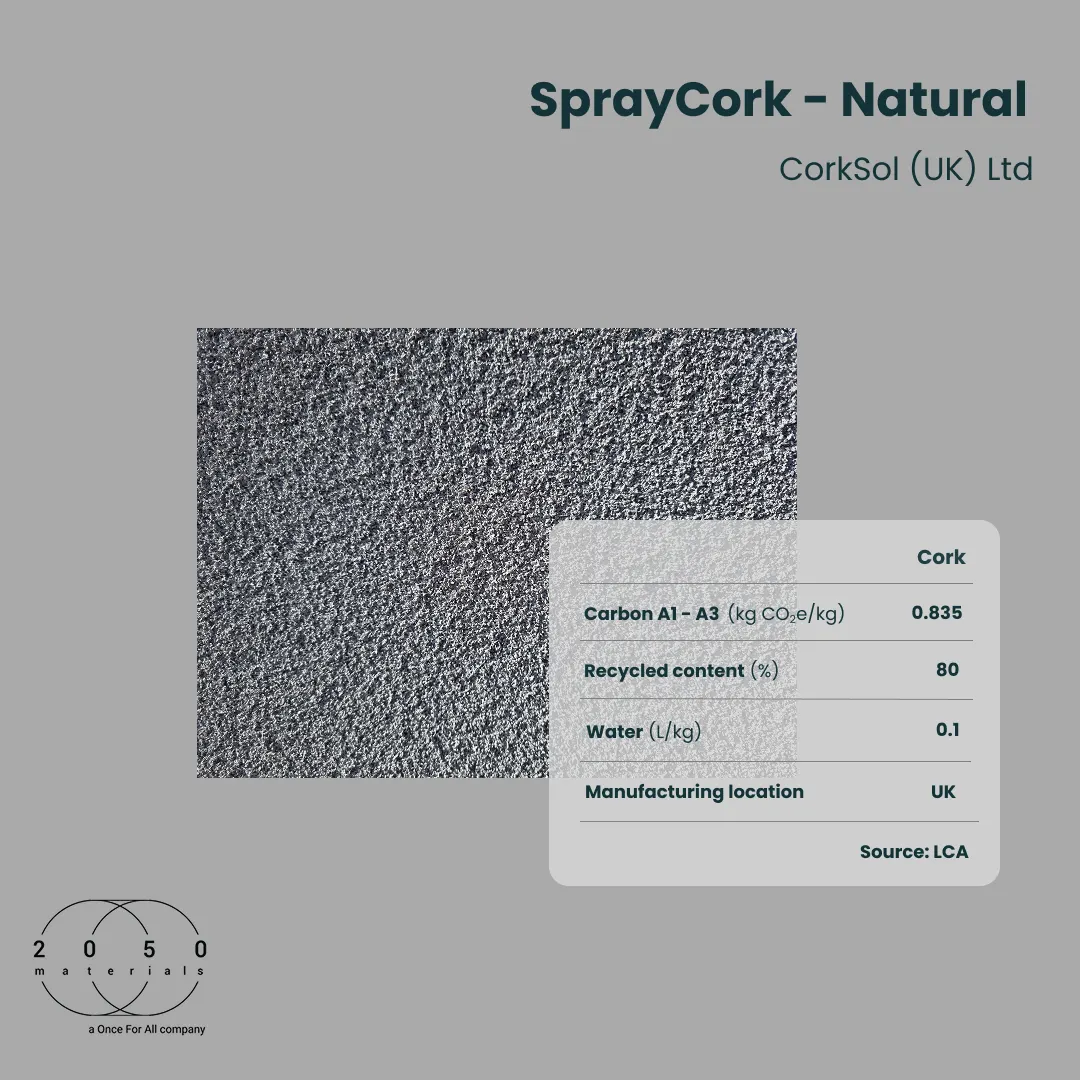
Made by CorkSol (UK) Ltd, based in Halifax, United Kingdom.
Cork, but out of a spray gun. This coating gets applied straight onto walls for insulation and weatherproofing, on new builds and retrofits alike, without asking anyone to install rigid boards. It carries a high recycled content and uses barely a drop of water to make, a genuinely strange combination for a wet applied product.
Why it is interesting
• High recycled content in a sprayed, field applied format
• Very low water use in production
• Suitable for both new construction and retrofit
• Backed by a long manufacturer warranty
Use cases
• Sprayed insulation and weatherproofing on residential and commercial facades
• Retrofits favouring an applied system over rigid boards
• Renovation work needing minimal disruption to existing substrates
10. Timbertech TC 100% Cork Acoustic Underlay by IMEX
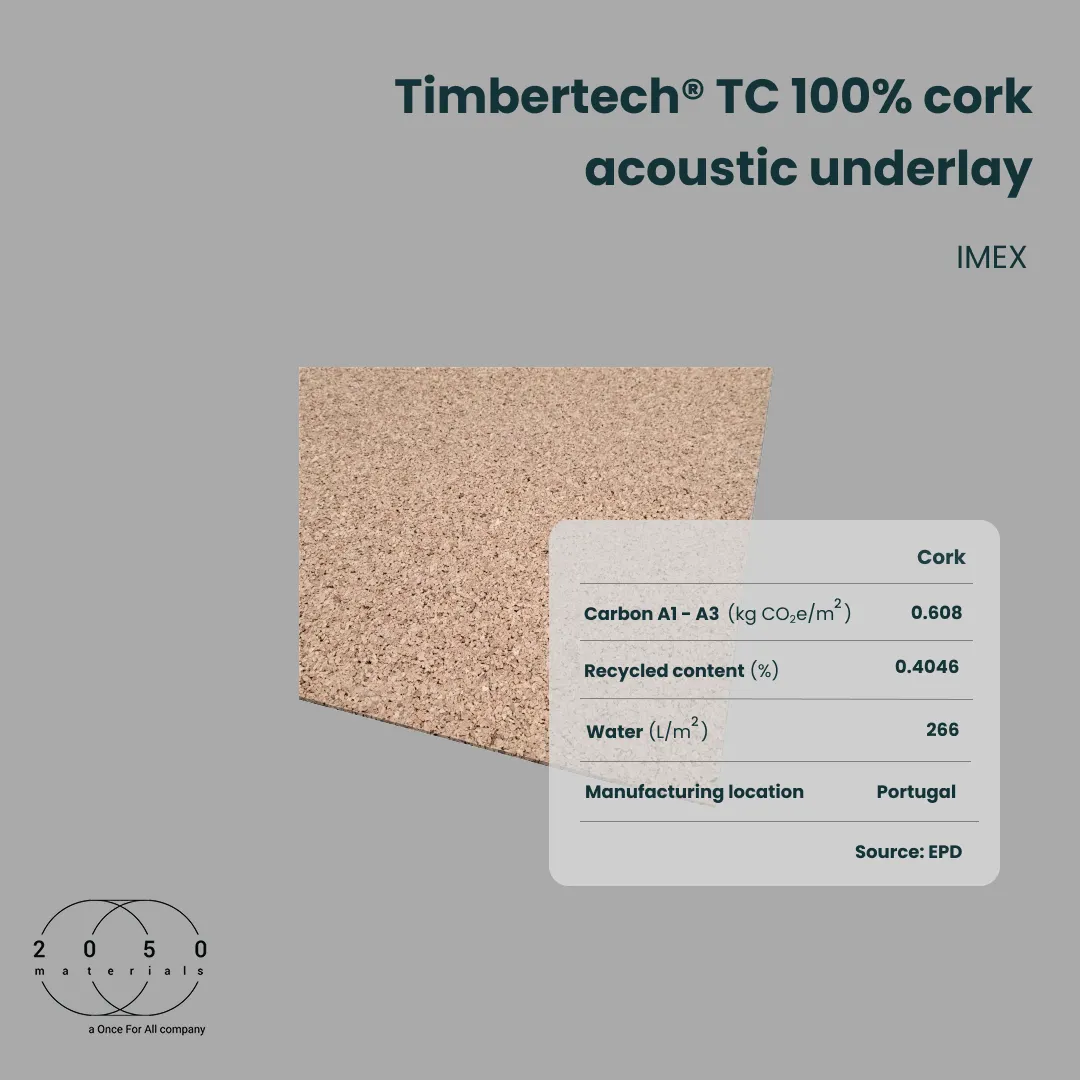
Made by IMEX, a Swedish company with manufacturing in Portugal.
A thin cork underlay that sits beneath carpet, wood, or vinyl equally well, dampening sound and softening every step above it. Its EPD shows biogenic carbon storage on top of a long estimated service life, so it is built to outlast several generations of whatever flooring gets laid on top of it.
Why it is interesting
• Compatible with carpet, wood, and vinyl finishes alike
• Long estimated service life relative to its slim profile
• Biogenic carbon storage documented alongside standard EPD reporting
• Verified by an independent LCA practitioner
Use cases
• Underlayment beneath carpet, timber, or vinyl flooring
• Projects wanting a long life underlay rather than a replaceable one
• Buildups needing acoustic comfort across multiple finish options
Beyond the Bottle Stopper: What Cork Brings to Construction
Ten products, one raw material, remarkably little overlap in how it gets used. What ties an agglomerated cork roll to a computationally patterned wall panel is not a shared manufacturing process. It is cork’s cellular structure showing up, again and again, as acoustic and thermal performance packed into something thin and light.
Several products here report biogenic carbon storage on their published EPDs, with carbon locked into the bark during its working life sitting alongside the footprint of processing and transport. Others build their case on recycled content, folding recycled rubber, polyurethane foam, and wine cork waste in alongside the cork itself. The BECORK mortars show a third path: cork slipped into conventional screed and render systems without asking anyone to change how they build.
That range is the real story. Cork arrives in this collection as a hidden underlay, a finished floor, a levelling screed, a sprayed facade coating, a resilient acoustic layer, and a sculpted wall panel. As more cork manufacturers publish EPDs, specifiers gain an increasingly clear basis for weighing performance alongside the carbon and circularity credentials behind a material that has been part of construction for centuries.
Discover more collections with innovative products on the 2050 Materials blog.
Related articles
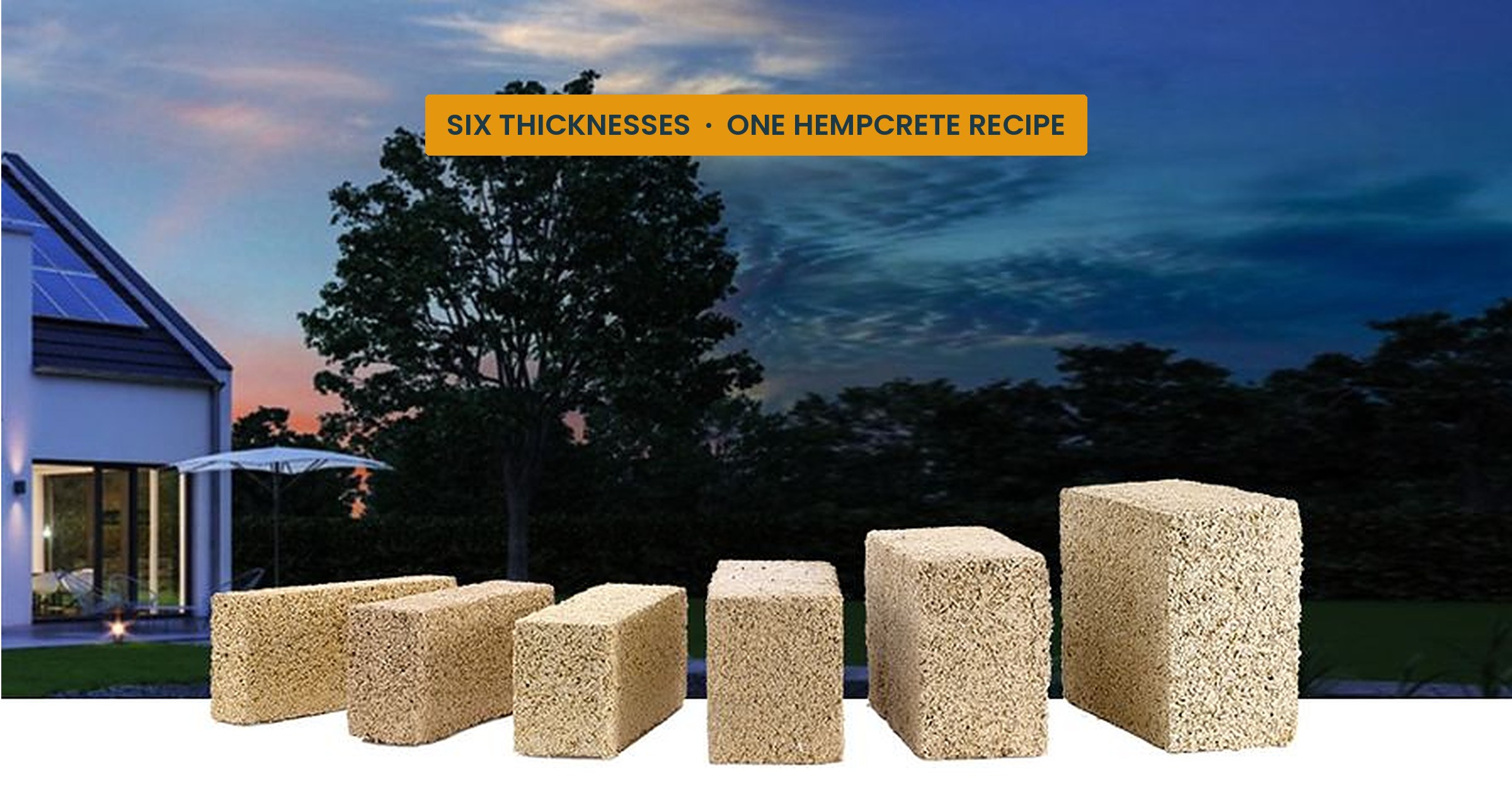
Hempcrete blocks: reading the Hemp Block data
Six hempcrete blocks, one Italian recipe: The Hemp Block Company data on 2050 Materials shows carbon and water scale exactly with wall thickness.
Read more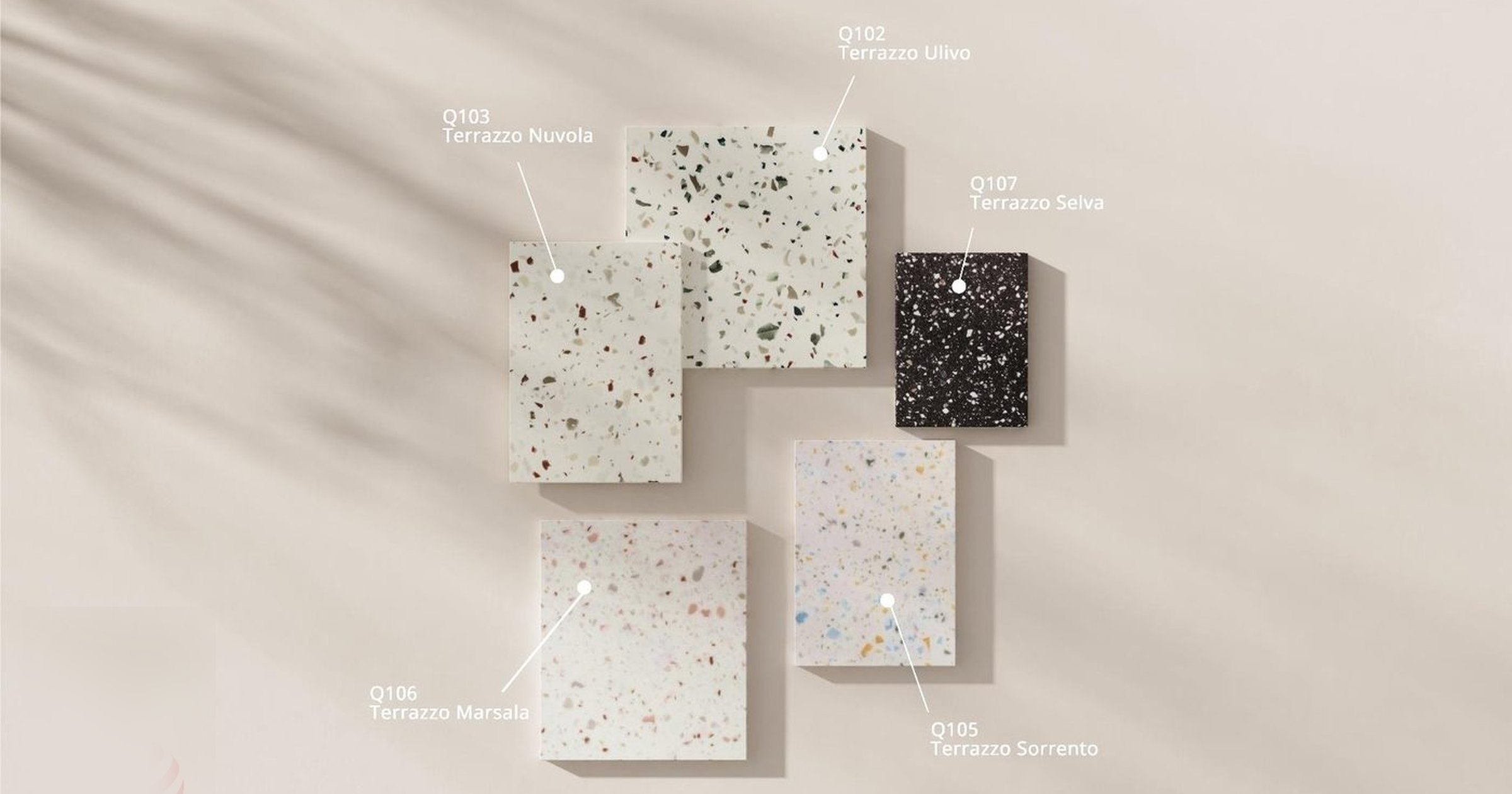
Inside HIMACS’ 2026 range: 15 new colours, five Red Dot wins
Five HIMACS Terrazzo colours won a Red Dot Design Award 2026, and four carry SCS-certified recycled content. See the full 2026 range and the EPD data behind it.
Read more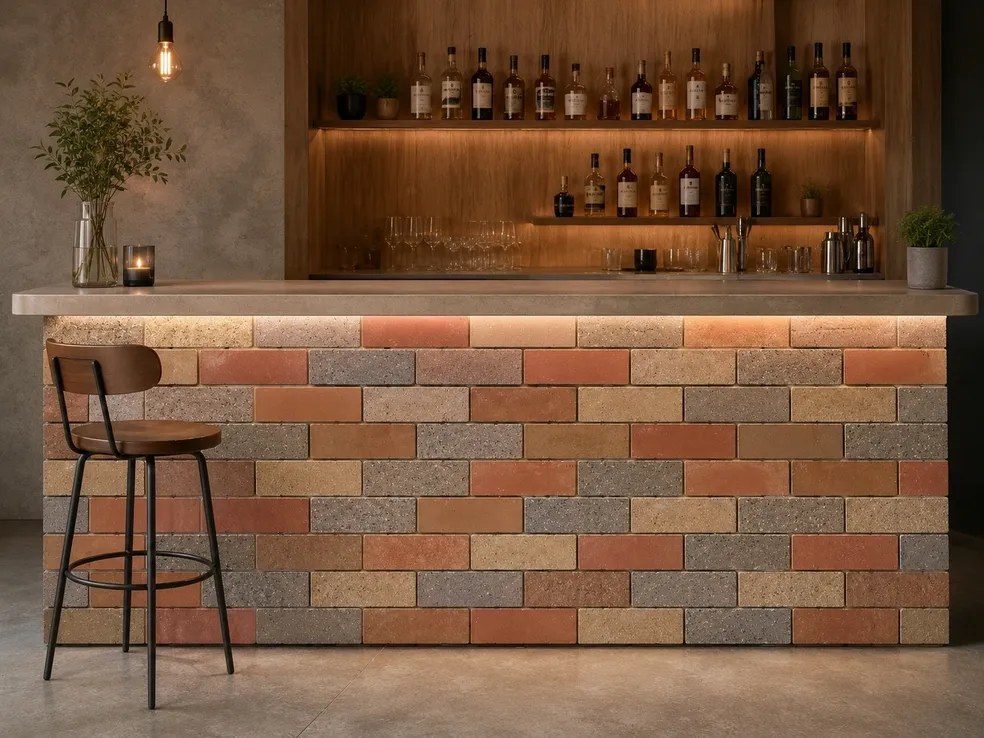
e4E Brick Slips: All the Brick, None of the Kiln
e4E makes brick slips from excavated soil, pressed rather than fired. See how they are made, the formats you can specify and the verified EPDs behind the range.
Read more